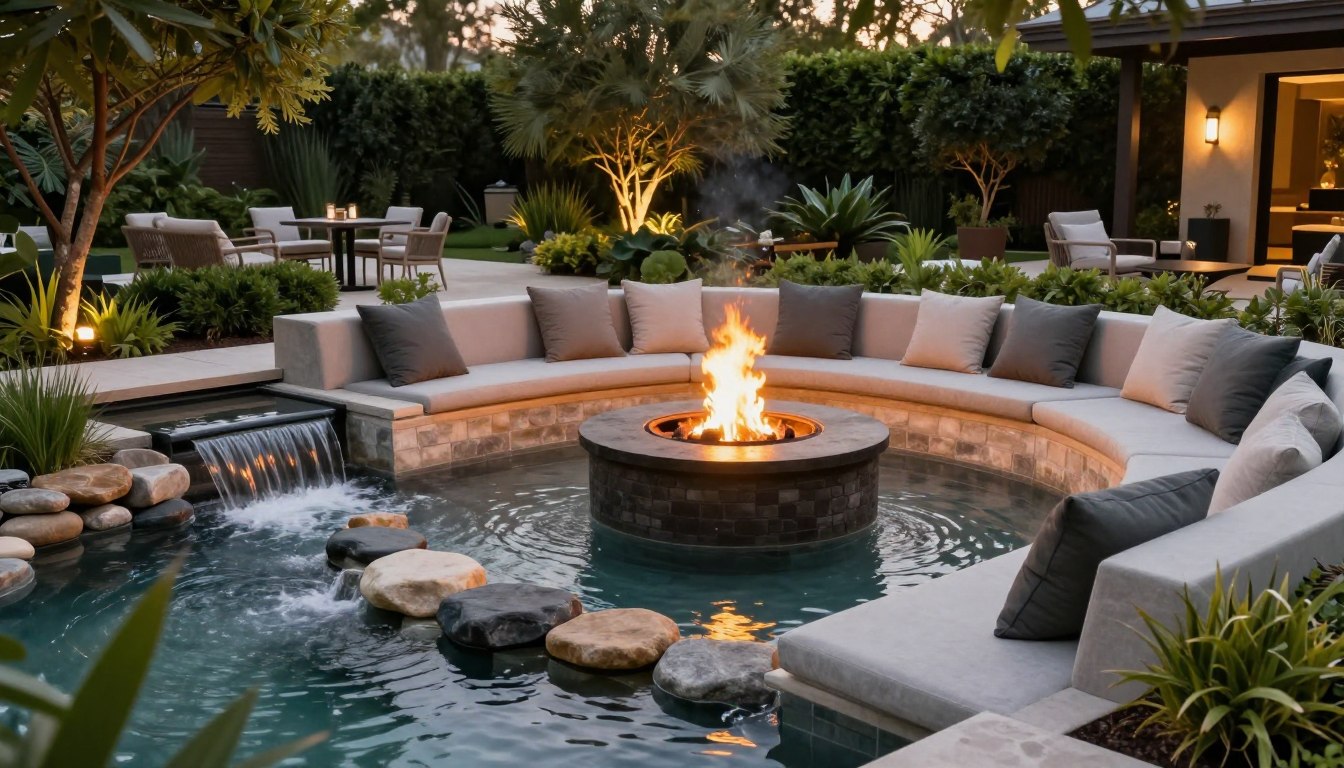
Have you ever wondered how much transforming your backyard into a stunning retreat will actually cost? As homeowners increasingly seek to elevate their outdoor spaces, the demand for captivating fire and water elements is soaring in 2026. This guide is designed to provide you with everything you need to know about integrating these striking pool water feature into your home.
From design inspiration to material selection, we’ll cover it all. You’ll discover how elements like waterfalls and fire bowls can enhance the look and sensory experience of your outdoor area. Plus, we’ll break down the price ranges for popular options, from budget-friendly fountains starting around $17 to premium LED waterfalls exceeding $1,000.
By the end of this guide, you’ll have the knowledge to budget, design, and install pool that add value and enjoyment to your outdoor oasis. Let’s dive into the exciting world of outdoor enhancements!
Key Takeaways
Explore the growing demand for outdoor enhancements in 2026.
Learn about design inspiration and material options.
Understand price ranges for various outdoor elements.
Get practical advice for new builds and renovations.
Discover essential considerations for maintenance and efficiency.
Understanding the Popularity of Pool Features in 2026
In 2026, the allure of shimmering water features has transformed backyards into serene retreats. These captivating elements have evolved from mere luxury add-ons to essential components of outdoor design. Homeowners are now seeking multi-sensory experiences that engage sight, sound, and touch.
The soothing sound of cascading water creates a spa-like atmosphere, promoting relaxation and mental well-being right at home. Modern water feature serve as stunning focal points, elevating the overall look of a swimming area and making it the centerpiece of outdoor entertaining.
Additionally, the integration of LED lighting has expanded the appeal of these elements. Homeowners can now enjoy dramatic nighttime displays with vibrant color effects. This trend has been fueled by social media and home improvement shows, making feature a status symbol in luxury outdoor living.
Features like bubblers and deck jets add playful interactivity for families. Fire and water bowls offer a sophisticated dual-effect that captivates guests. Even small water elements can transform a basic setup into a customized oasis, making them accessible to a wider range of budgets and backyard sizes.
Moreover, the psychological benefits of moving water cannot be overlooked. The presence of flowing water is known to reduce stress and improve mood, contributing to the growing popularity of these elements in residential settings.
Water Feature Type
Key Characteristics
Benefits
Waterfalls
Cascading water
Creates a calming atmosphere
Bubblers
Gentle water jets
Interactive play for children
Deck Jets
Sleek arcs of water
Enhances visual appeal
Fire Bowls
Combines fire and water
Creates a dramatic effect
Exploring Different Types of Pool Water Features
Enhancing your outdoor space with captivating elements can transform it into a true oasis. Various types of features can elevate the aesthetic and sensory experience of your backyard. Here’s a closer look at some popular options that homeowners are considering in 2026.
Waterfalls: Natural and Cascading Designs
Natural rock waterfalls are among the most sought-after enhancements. These features mimic the beauty of mountain streams, utilizing real or faux rock formations. They often integrate seamlessly into grotto-style setups, creating a dramatic and organic look.
Prices for basic waterfall models vary:
12-inch: $169 – $195
24-inch: $235 – $265
36-inch: $325 – $382
48-inch: $393 – $432
60-inch: $507
72-inch: $638
Waterslides for Family Fun and Appeal
Waterslides bring exhilarating fun to any backyard. They can be customized with materials like NPT pool tile and sourced from trusted brands such as S.R. Smith. Installation requires careful depth calculations to ensure safety for all ages.
Scuppers and Cascades: Elegant Wall-Mounted Features
Scuppers serve as elegant wall-mounted features that add a touch of sophistication. Available in various finishes and sizes, they enhance the overall design. Cascades, also known as sheer descent waterfalls, produce a clean, horizontal sheet of water, perfect for contemporary settings with stone or ledger stone walls.
Rain Curtains and Sheer Descent Waterfalls
Rain curtains create a stunning visual effect by dropping a wall of water from a pergola or raised beam. These features are often associated with high-end Glam-style pools. Prices for sheer descent units start around $441 for a 3-foot model.
Outdoor Showers as Complementary Water Features
Outdoor showers blend functionality with design. They can be freestanding or enclosed and constructed from materials like pipe, wood, stone, concrete, or tile. These showers offer a refreshing rinse before and after swimming.
Bubblers and Gushers for Shallow Areas
Bubblers, also known as gushers, are ideal for shallow areas like tanning ledges or beach entries. These features use adjustable jets to shoot water upward, creating a playful atmosphere. LED-compatible models, such as the Hayward ColorLogic Bubbler, are available for around $80.
Fountains: Artistic Water Displays
Fountains add artistic flair to any outdoor space. They range from floating units to in-ground installations and can even improve filtration and chemical balance. Basic models start as low as $17, making them accessible for various budgets.
Deck Jets: Sleek Water Arcs from Pool Decking
Deck jets, or laminar jets, create sleek arcs of water that shoot from pool decking or hidden landscape spots. Popular brands include Pentair, Jandy, and Hayward, with individual jet units priced around $115.
Spillover Spas and Integrated Water Features
Spillover spas are integrated features where a raised spa cascades into the main pool. This design allows for decorative tile customization while creating both visual appeal and soothing sounds.
Statuary and Sculptural Water Fountains
Statuary and sculptural fountains can serve as striking focal points. These stationary sculptures often feature motifs like dragons, lions, or abstract designs in steel or copper, enhancing the artistic vibe of your outdoor area.
Fire and Water Bowls: Stunning Dual-Effect Features
Fire and water bowls combine the mesmerizing effects of both elements. For instance, the Pentair MagicFlame is available in various finishes, including Bronze and Pewter, with textures like lava rock or fire glass. These features create a captivating contrast at the edge of your outdoor space.
As you consider which elements to include, remember that the right combination can enhance both the beauty and functionality of your backyard retreat. For more inspiration and ideas, check out this resource.
Cost Breakdown: How Much Do Water Features Typically Cost?
Understanding the costs associated with outdoor enhancements can help you make informed decisions. In 2026, various factors influence the pricing of captivating elements. This section breaks down the expenses into materials, installation, and maintenance.
Materials and Design Complexity
The price of outdoor elements varies widely based on materials and design. For instance, basic waterfalls start at approximately $169 for a 12-inch unit. However, prices can exceed $1,099 for larger LED-integrated models. Material choices, such as natural stone or copper, significantly impact the final cost.
Custom designs, like rock waterfalls with grottos, require extensive masonry and artistic labor. This complexity can drive prices higher compared to prefabricated sheer descent units, which offer a more budget-friendly option.
Installation and Labor Expenses
Installation costs can vary based on the existing setup. Adding new features to an existing swimming area often incurs additional expenses. This is due to the need for retrofitting plumbing, electrical work, and potential deck modifications.
Labor costs may also vary by region and the complexity of the installation. Always consider these factors when budgeting for your outdoor enhancements.
Additional Equipment and Maintenance Costs
Some high-flow features, like waterfalls, may require dedicated booster pumps. These pumps can add several hundred dollars to your project. Additionally, variable speed pool pumps may provide long-term energy savings.
Maintenance costs should not be overlooked. Features like fountains can lead to increased evaporation of about one inch of water per week. This can result in higher water bills and chemical usage over time.
For a realistic budget, consider the following ranges:
Simple deck jet installation: $500 – $1,000
Medium waterfall feature: $2,000 – $5,000
Full grotto with multiple features: $10,000 – $30,000 or more
Moreover, fire and water bowls, such as the MagicFlame, come with premium costs due to dual plumbing and gas line requirements. Many homeowners find the visual effects justify the investment.
Integrating LED lighting can also increase upfront costs, with LED waterfall units priced $300 – $600 more than non-lit versions. Always obtain multiple quotes from professionals to ensure you’re getting the best value.
Design Tips for Effective Integration of Pool Features
Incorporating captivating elements into your outdoor design can elevate the overall experience of your backyard. Best practices suggest integrating water features during the initial design phase of a new swimming pool build. This ensures seamless connections with the pool structure, plumbing, and electrical systems.
When selecting water features, consider the overall aesthetic of your outdoor space. Choose elements that complement your backyard’s architectural style. For instance, a natural rock waterfall fits well in rustic designs, while sleek deck jets enhance modern looks.
Using water features as focal points can draw the eye effectively. Position a cascading waterfall at the deep end or center fire and water bowls on raised pillars flanking the pool entry. This creates an unforgettable visual impact.
Layering multiple water features can provide a multi-sensory experience. Combine the soothing sound of a sheer descent waterfall with the visual arc of deck jets and the playful splash of bubblers in a shallow tanning ledge. This combination enriches the ambiance.
Scale and proportion are crucial. Oversized features can overwhelm a small swimming area, while undersized elements may get lost in a large backyard. Striking the right balance is essential for a harmonious design.
Landscape design plays a significant role in pool features enhancement. Use tropical plants, stone accents, and strategic lighting to frame the elements, creating a cohesive outdoor environment. Complementary materials like ledger stone, natural rock, or decorative tile on raised bond beams and walls can achieve a polished look.
Even in retroactive installations, a skilled pool professional can creatively incorporate water into an existing setup. They can work with the current pump and filtration systems to bring your vision to life.
How to Add Water Features to an Existing Pool
Transforming your existing pool into a stunning retreat with captivating elements is entirely feasible. However, it requires careful planning and professional expertise. Adding features like waterfalls or bubblers can enhance the overall experience of your backyard.
Before you start, it’s essential to assess your current setup. A qualified pool professional can analyze your existing pool’s mechanics, including drainage, filtration, and pump capacity. This evaluation ensures that the addition of new elements won’t overwhelm your system.
Here are some key considerations when adding features to your swimming area:
Confirm that adding water to an existing pool is possible, but requires a professional assessment of the current mechanics.
A pool professional must determine if your existing pump can handle the added volume or if a dedicated booster pump is necessary, especially for high-flow elements like waterfalls.
Retrofitting deck jets involves core drilling into the existing decking or walls to install jet housings and running new plumbing lines.
Adding a spillover spa is more complex and requires structural modifications and integration with the current circulation system.
Bubblers and gushers are among the easiest features to add, as they can be installed in shallow areas with minimal disruption.
Waterslides need precise depth calculations to ensure safety; the deep end must meet the minimum depth requirements for the specific slide model.
Fire and water bowls can be added to the pool edge or adjacent pillars, but gas lines and electrical connections must be handled by licensed professionals.
While retroactive installation is more involved than adding features during initial construction, skilled contractors can achieve stunning results.
Incorporating these elements can transform your existing pool into a resort-like oasis. For more insights on integrating water features, check out this resource.
Choosing the Right Pool Pump and Filtration for Water Features
Selecting the right pump is crucial for ensuring your outdoor features operate effectively. When adding a feature that includes water, it’s vital to determine if your existing pump can handle the increased volume. For example, waterfalls require significant power to function properly.
In many cases, a dedicated booster pump is necessary for high-flow elements like waterfalls, rain curtains, and multiple deck jets. Consulting with a pool professional is essential to assess your current setup and determine if an additional pump is needed.
Variable speed pumps are particularly beneficial for outdoor features. They allow homeowners to adjust flow rates, creating effects that range from a gentle trickle to a powerful cascade. This flexibility maximizes energy efficiency and enhances the overall experience.
Interestingly, fountains and similar elements can improve your pool’s filtration. They increase water circulation and turnover, helping to distribute chemicals evenly and reduce stagnant areas. This can lead to a healthier swimming environment.
It’s also important to consider plumbing design. Properly sized suction and return lines ensure that features operate at their intended flow rates without straining the equipment. A qualified pool professional can calculate the total dynamic head and flow requirements to specify the correct pump size and type.
Advanced automation systems from brands like Pentair, Jandy, and Hayward offer convenient control over pump speeds and feature valves via smartphone apps. This adds a level of precision and ease to managing your outdoor elements.
Keep in mind that undersized pumps may lead to disappointing performance, while oversized pumps can waste energy and create excessive noise. When budgeting for installations, factor in the cost of pump upgrades or additional pumps, as this equipment is vital for long-term reliability.
Feature Type
Recommended Pump Type
Key Considerations
Waterfalls
Booster Pump
High flow rate required
Fountains
Variable Speed Pump
Improves filtration
Deck Jets
Variable Speed Pump
Adjustable flow for effects
Rain Curtains
Booster Pump
Consistent water flow needed
Enhancing Your Pool with LED Lighting
Imagine your outdoor space transformed into a captivating nighttime spectacle. With the right lighting, your stunning design can truly shine after dark. Don’t let your beautiful features fade into the darkness; instead, illuminate them with vibrant pool lighting.
LED lighting dramatically enhances the ambiance of your backyard. Illuminated waterfalls, deck jets, and bubblers create a completely different look after sunset. Here are some exciting options to consider:
The CMP Brilliant Wonders series features LED-integrated waterfalls. These come in sizes from 12 to 48 inches, with built-in color-changing LEDs that illuminate the cascading water for a mesmerizing effect.
Hayward ColorLogic Bubblers offer optional color kits, allowing homeowners to add vibrant lighting to shallow water features. The light glows through the bubbling water, creating a magical appearance in tanning ledges and beach entries.
Pentair MagicFlame fire and water bowls create a stunning dual effect at night. The dancing flames reflect off the water surface, while optional LED lighting adds color to the bowl basin.
Positioning LED lights strategically can highlight the texture and movement of water. For example, uplighting a rock waterfall accentuates the stone surfaces, while backlighting a sheer descent makes the water sheet glow.
Modern LED lighting systems offer millions of color options and programmable light shows. These can be synchronized with water features for entertaining and special occasions.
Integrating LED lighting during the initial installation is more cost-effective than retrofitting later. Many water feature units now come with factory-installed LEDs for seamless integration.
LED lighting is energy-efficient and long-lasting. It consumes a fraction of the electricity of traditional incandescent lights while providing brighter, more vibrant illumination for your outdoor features.
By incorporating LED lighting, you not only enhance the beauty of your outdoor elements but also improve nighttime visibility and safety. For more information on how to effectively add lighting to your features, check out this resource.
Safety Considerations When Installing Water Features
When planning to install captivating elements in your outdoor space, safety should always be a top priority. This is especially true for households with children or frequent guests who may be tempted to climb on rock waterfalls or other structures.
Pools that have diving boards or waterslides must meet strict depth requirements. Typically, the deep end should be between 7.5 to 9 feet. A qualified pool professional must verify these dimensions before installing any feature that encourages entry into the water.
Applying anti-slip treatments or textured surfaces to rock waterfalls and grotto steps is essential. These areas can become slippery, especially where water features create wet walking surfaces. Taking these precautions helps prevent slips and falls.
All electrical components for water features must be installed by licensed professionals. This includes pumps, LED lighting, and fire bowl igniters. Compliance with National Electrical Code requirements for pool environments is critical for safety.
Regular cleaning and maintenance are vital to prevent algae buildup and debris accumulation in equipment. These conditions can create slippery surfaces and harbor bacteria, posing risks to users.
Fire and water bowls require additional safety measures. Proper gas line installation, adequate ventilation, and clear signage are necessary to warn guests that the bowls and surrounding surfaces may be hot.
Installing clearly visible depth markers and safety signage near water features is advisable. Establishing pool rules that prohibit climbing, diving in shallow areas, or tampering with equipment can enhance safety.
Professional installation by a reputable pool contractor is the best way to ensure all safety standards are met. This guarantees that the water features operate reliably without posing risks to swimmers.
Safety Consideration
Description
Depth Requirements
Ensure pools with diving boards meet 7.5 to 9 feet depth at the deep end.
Anti-Slip Surfaces
Apply treatments to rock waterfalls and wet areas to prevent slips.
Electrical Safety
Install all electrical components by licensed professionals per safety codes.
Regular Maintenance
Clean features regularly to prevent algae and debris buildup.
Fire Bowl Safety
Ensure proper gas line installation and provide ventilation.
Maintaining Your Pool for Longevity and Performance
To keep your outdoor elements in top shape, regular maintenance is essential. This ensures that your captivating features remain functional and visually appealing over time. Cleaning your water features regularly helps prevent algae and debris buildup that can affect performance.
Water features can lead to evaporation, typically around one inch per week. Homeowners should monitor water levels frequently and adjust chemical balances to prevent scaling and algae growth. Here are some effective maintenance practices to follow:
Conduct weekly inspections of pump strainer baskets, jet nozzles, and waterfall weirs. Remove leaves, debris, and mineral deposits that can clog the system.
Clean different types of features appropriately. For example, use a soft brush and mild cleaner on rock waterfalls to avoid damaging the stone surface. Flush deck jet lines to prevent blockages.
Remember that fountains and waterfalls improve water circulation and filtration. This helps distribute chemicals evenly and reduces the workload on the main filtration system.
In colder climates, winterize your features by draining all lines, removing and storing pumps indoors, and covering exposed equipment to prevent freeze damage.
Schedule annual professional service for complex features. This includes inspecting pump seals, LED lighting connections, and gas lines for fire bowls to ensure safe and efficient operation.
Use the correct water chemistry for pools with features. Aeration from waterfalls and fountains can raise pH levels, necessitating more frequent testing and adjustment.
Invest in high-quality equipment from reputable brands. Following manufacturer maintenance guidelines will extend the lifespan of your features and protect your investment.
By adhering to these maintenance tips, you can ensure that your outdoor elements remain beautiful and functional for years to come. For more information on maintaining your outdoor features, check out this resource.
Maintenance Task
Frequency
Purpose
Inspect pump strainer baskets
Weekly
Remove debris to ensure optimal flow
Clean jet nozzles
Weekly
Prevent blockages and maintain water flow
Flush deck jet lines
Monthly
Prevent clogs and ensure proper function
Winterize features
Seasonally
Protect equipment from freeze damage
Popular Trends in Pool Design for 2026
The design trends for outdoor enhancements in 2026 reflect a blend of luxury and functionality. Fire and water bowls are the defining trend of the year. Products like the Pentair MagicFlame offer customizable finishes, creating a stunning juxtaposition of flames dancing atop a pool of water. This combination brings a luxurious resort aesthetic to any backyard.
Additionally, Glam style pools are gaining popularity. These features often include rain curtains that drop from pergolas or elevated beams. The result is a high-end, theatrical water wall effect that pairs beautifully with LED lighting and modern architecture.
Minimalist deck jets are also trending in contemporary designs. These sleek, laminar arcs are often hidden in the landscape or decking, creating surprising water effects that appear to come from nowhere. Homeowners appreciate the sophisticated look they provide.
Moreover, integrated smart technology is on the rise. This allows homeowners to control water features, pump speeds, LED lighting colors, and even fire bowl ignition from a single smartphone app or home automation system. Convenience and efficiency are key in modern outdoor design.
Naturalistic designs remain popular as well. Real rock waterfalls, boulder accents, and lush tropical landscapes create a lagoon-style backyard escape that blends seamlessly with the environment. This trend appeals to those seeking a more organic look.
Multi-functional water features are also gaining traction. For instance, spillover spas serve as both relaxing hot tubs and cascading water features, maximizing utility and visual appeal. Homeowners enjoy the versatility these elements bring to their swimming areas.
Energy efficiency is a growing concern. Eco-friendly water features, such as variable speed pumps and solar-powered LED lighting systems, are becoming more sought after. Environmentally conscious homeowners are keen to invest in sustainable options.
Finally, custom statuary and sculptural water features are becoming statement pieces in high-end pools. Abstract metal designs in copper or stainless steel add an artistic, gallery-like quality to the backyard, enhancing the overall aesthetic.
Trend
Description
Key Features
Fire and Water Bowls
Combine flame and water for a stunning effect
Customizable finishes, dramatic aesthetics
Glam Style Pools
Features rain curtains for a theatrical look
Pairs with LED lighting, modern architecture
Minimalist Deck Jets
Sleek arcs create surprising water effects
Hidden in landscape or decking
Integrated Smart Technology
Control features via smartphone apps
Convenience and efficiency
Naturalistic Designs
Blend with the environment for a lagoon feel
Real rock waterfalls, lush landscapes
Multi-Functional Features
Spillover spas serve dual purposes
Relaxation and cascading water
Energy Efficiency
Focus on eco-friendly options
Variable speed pumps, solar lighting
Custom Statuary
Artistic pieces enhance aesthetics
Abstract designs in metal
Environmental and Energy Efficiency Considerations
Choosing the right equipment for your outdoor enhancements can significantly impact energy consumption and environmental sustainability. Variable speed pool pumps stand out as the most energy-efficient option for operating various elements. These pumps allow homeowners to run features at lower speeds during off-peak hours, which helps reduce electricity costs.
Fountains and waterfalls not only add beauty but also play a practical role. They can naturally cool the temperature of your swimming area during the hottest summer days. This cooling effect comes from increased aeration and evaporation, which can reduce the need for energy-intensive mechanical chillers.
While it’s true that these captivating elements can lead to evaporation, the loss is typically about one inch of water per week. Using a pool cover when features are not in use can help mitigate this loss and decrease chemical consumption.
Modern LED lighting is another essential consideration. These lights consume up to 80% less energy than traditional incandescent bulbs and have a much longer lifespan. This makes them an environmentally responsible choice for illuminating your outdoor features at night.
When selecting equipment, look for Energy Star certified pool pumps and components. Additionally, designing the plumbing for your features with minimal bends and proper pipe sizing can reduce friction loss and improve hydraulic efficiency.
Integrating water elements with solar heating systems can enhance the overall efficiency of your setup. The increased circulation from fountains and waterfalls helps distribute solar-heated water evenly throughout your area.
Some municipalities offer rebates or incentives for installing energy-efficient equipment, including variable speed pumps and LED lighting. These programs can help offset the initial investment in eco-friendly components.
Finally, collaborating with pool professionals who prioritize sustainable design practices is vital. They can specify the right-sized equipment and suggest native landscaping that requires less irrigation, further promoting an eco-friendly backyard.
Consideration
Description
Variable Speed Pumps
Energy-efficient choice for operating features at lower speeds.
Fountains & Waterfalls
Cool pool water naturally, reducing reliance on chillers.
Water Conservation
Use pool covers to mitigate evaporation and chemical loss.
LED Lighting
Consumes less energy and lasts longer than traditional bulbs.
Energy Star Equipment
Opt for certified pumps and components for efficiency.
Solar Heating Integration
Enhances circulation and distributes heat evenly.
Municipal Incentives
Rebates for energy-efficient equipment can offset costs.
Sustainable Design
Work with professionals for eco-friendly landscaping.
Working with Professionals: Finding the Right Pool Feature Installer
When enhancing your backyard with captivating elements, finding the right installer is crucial. Homeowners should seek professionals who specialize in designing and installing outdoor enhancements. This expertise ensures that your project is executed with proper hydraulic design, structural integration, and aesthetic appeal.
Start by checking the credentials and certifications of potential contractors. Look for portfolios showcasing previous water feature projects. This helps you find examples of work similar to your desired style, whether it’s natural rock waterfalls, modern deck jets, or fire and water bowl installations.
Utilizing manufacturer dealer locators, like the Pentair Find A Dealer tool, can connect you with authorized professionals. These experts are trained in installing specific equipment brands and can provide warranty-backed workmanship.
It’s important to obtain detailed written quotes from multiple contractors. Ensure these quotes include line-item breakdowns for materials, labor, equipment, and any necessary upgrades to existing systems. This transparency helps you understand the overall price and scope of work.
Reading customer reviews and asking for references from past clients is invaluable. Pay attention to feedback regarding communication, timeliness, and post-installation support. Remember, the lowest price isn’t always the best value. Prioritize quality workmanship and reliable equipment for years of trouble-free operation.
Establish a clear contract that outlines the scope of work, timeline, payment schedule, and warranty terms before any work begins. This protects both you and the contractor, ensuring everyone is on the same page.
Lastly, maintain open communication with your chosen professional throughout the design and installation process. Asking questions and reviewing progress ensures the final result aligns with your vision for your backyard oasis.
Key Consideration
Description
Experience
Seek professionals with specific experience in water feature design and installation.
Credentials
Check certifications and portfolios for similar projects.
Quotes
Obtain detailed written quotes from multiple contractors.
Reviews
Read customer feedback and ask for references.
Contract
Establish a clear contract outlining scope, timeline, and warranty.
Frequently Overlooked Details When PlanningWater Features
Planning captivating outdoor elements requires attention to several often-overlooked details. Homeowners should consider these aspects to enhance their backyard experience fully.
First, don’t forget nighttime lighting for water features. Even the most stunning waterfall or deck jet installation will disappear into darkness without proper LED illumination. Highlighting these designs after sunset can elevate the ambiance significantly.
Additionally, consider the sound level of water features during planning. A powerful waterfall may create more noise than desired in a small backyard. Conversely, a gentle sheer descent might be too quiet to mask neighborhood sounds.
Access for maintenance is frequently forgotten. Equipment such as pumps, valves, and junction boxes should be positioned in easily reachable locations. Avoid burying or hiding them behind immovable landscape elements.
It’s also essential to address safety. Rock waterfalls and grottos can become slippery with algae growth. Specifying anti-slip treatments or textured surfaces during design is crucial, especially in households with children or elderly swimmers.
Moreover, the visual impact of water features from inside the home is often overlooked. Positioning features to be visible through windows or sliding glass doors extends the enjoyment of the backyard design year-round.
Wind patterns are another important consideration. Deck jets and fountains can be blown off course by prevailing breezes, wasting water and creating wet spots on decking or landscape areas.
Additionally, the weight of water features, particularly large rock waterfalls and raised spas, requires adequate structural support. Ensure the pool shell and decking are engineered to handle the additional load.
Homeowners should verify local building codes and permit requirements before installing water features. Some municipalities have regulations regarding pool modifications, electrical work, and gas lines for fire features.
Finally, a common oversight is installing a beautiful waterfall without upgrading the pool pump. This can result in a disappointing trickle instead of the powerful cascade envisioned, which could have been avoided with proper planning.
Consideration
Description
Nighttime Lighting
Illuminate features to enhance visibility and ambiance.
Sound Levels
Evaluate the noise produced by water features in small spaces.
Maintenance Access
Position equipment for easy reach and upkeep.
Anti-Slip Treatments
Specify textured surfaces for safety, especially for children.
Visual Impact
Ensure features are visible from inside the home for year-round enjoyment.
Wind Patterns
Consider how breezes may affect water features and landscaping.
Structural Support
Ensure adequate support for heavy features like waterfalls.
Building Codes
Verify local regulations regarding installations and modifications.
Pump Upgrades
Plan for pump capacity to match the desired water flow.
Conclusion
Ready to elevate your backyard with stunning outdoor enhancements? Adding captivating elements can transform an ordinary space into a beautiful oasis. The investment in these enhancements is worthwhile, offering a multi-sensory experience that delights all who visit.
Prices for these elements vary widely. Simple fountains can start as low as $17, while elaborate grotto installations may reach up to $30,000. This range ensures there’s something for every budget.
As you plan, consider your design goals. Whether you desire the natural charm of rock waterfalls or the sleek elegance of deck jets, choose features that enhance your overall aesthetic. Working with qualified professionals is crucial for proper installation and safety compliance.
Integrating LED lighting and energy-efficient pumps can maximize enjoyment while minimizing costs. Regular maintenance, including cleaning and monitoring water chemistry, will protect your investment and keep your features performing beautifully.
Consult with a local builder to explore possibilities for adding water features to your backyard. With thoughtful planning and expert guidance, you can create the resort-style environment of your dreams.
FAQ
What are the most popular types of outdoor water features?
Popular types include waterfalls, fountains, and deck jets. Each offers unique aesthetics and sounds that enhance the ambiance of your backyard.
How much do pool water features typically cost?
Costs vary based on design complexity and materials used. Basic features can start around a few hundred dollars, while elaborate designs may exceed several thousand.
Can I add water features to an existing swimming pool?
Yes, many features can be integrated into existing setups. Consult with a professional to assess the best options for your current design.
What maintenance is required for pool water features?
Regular maintenance includes cleaning filters, checking pumps, and ensuring the feature is free of debris. Seasonal inspections are also recommended for longevity.
How do I choose the right pump for my water feature?
Selecting the right pump depends on the size and type of feature. Consult with a specialist to determine the appropriate flow rate and power for optimal performance.
Are there energy-efficient options for pool water features?
Yes, many modern pumps and lighting options are designed for energy efficiency. Look for ENERGY STAR-rated equipment to reduce energy consumption.
What safety considerations should I keep in mind?
Ensure that all features are installed with safety in mind, including proper drainage and secure placements to prevent accidents, especially for children.
How can I enhance my water features with lighting?
LED lighting can create stunning effects and highlight features at night. Consider installing underwater lights or accent lights to enhance the visual appeal.
What trends are emerging in water feature design for 2026?
Current trends include naturalistic designs, sustainable materials, and integrated features that combine fire and water for dramatic effects.
How do I find a professional installer for my water features?
Look for licensed contractors with experience in water feature installations. Check reviews and ask for portfolios to ensure quality workmanship.
Have you ever wondered how the right elements can transform your outdoor space into a luxurious retreat? Incorporating fire and water feature into your landscape design creates a sophisticated atmosphere. These installations significantly enhance the overall aesthetic appeal of luxury yards.
By blending the raw energy of flames with the calming flow of water, homeowners can create stunning focal points. These elements invite relaxation and enjoyment, making any backyard feel like a high-end getaway. Choosing the right products can elevate your outdoor living space, providing both visual interest and serene relaxation.
Whether you want to discuss specific installation requirements or seek guidance on product selection, help is available. You can call 702-233-2379 for special pricing on luxury outdoor installations. Free shipping is offered on most products to the lower 48 states, making it easier to create your dream yard.
Key Takeaways
Outdoor fire and water features or elements create a sophisticated atmosphere in luxury yards.
These installations serve as stunning focal points for outdoor spaces.
Homeowners can receive professional guidance on product selection.
Transforming a standard backyard into a retreat is achievable with the right choices.
The Allure of Fire and Water Features
Picture a luxurious outdoor area that combines the allure of flames with the serenity of flowing water. Fire and water elements create a stunning visual experience, drawing attention and admiration. Their dynamic interaction mesmerizes guests during evening gatherings in your private backyard oasis.
Modern water installations are designed to provide a multisensory experience. The soothing sound of running water complements the warmth of flickering flames, enhancing the overall ambiance. This unique combination fosters a natural gathering point for friends and family, making outdoor living more enjoyable.
The contrast between bright flames and reflective water surfaces adds depth to any landscape design. Homeowners often notice that these elements significantly enhance their daily outdoor experience, creating a peaceful environment for relaxation. For more inspiration on integrating these elements, check out fire and water feature.
Design Inspirations for Luxury Yards
Imagine transforming your outdoor space into a luxurious haven with the right design elements. Homeowners today seek to blend modern aesthetics with timeless appeal. This combination enhances the beauty of their yards while providing comfort and functionality.
Modern trends emphasize clean lines and minimalist shapes. These designs seamlessly integrate outdoor fire elements with the natural surroundings. This creates a fluid transition between indoor comfort and the beauty of the outdoors.
Classic designs often incorporate materials like stone or copper. These materials ensure that installations remain timeless. Designers suggest balancing the intensity of flames with the gentle flow of water for a harmonious look.
Choosing high-quality elements is essential. This investment guarantees that your outdoor decor remains a stunning centerpiece for years to come.
Design Style
Key Characteristics
Materials Used
Modern
Clean lines, minimalist shapes
Glass, steel
Classic
Timeless appeal, rich textures
Stone, copper
Transitional
Blend of modern and classic
Wood, composite
Fire Water Bowls: A Stunning Combination
Elevate your backyard experience by incorporating stylish and functional outdoor features. Fire water bowls are a perfect example of how design can blend beauty with utility. These stunning elements serve as both a source of warmth and a tranquil water display.
When considering placement, these bowls offer remarkable versatility. You can position a fire water bowl on a patio, pool deck, or garden area, creating an inviting focal point. The 29″ Corinthian fire water bowl is ideal for compact spaces, while the 42″ Large Barbados bowl makes a grand statement.
Shape and size options abound, ensuring you find the perfect fit for your outdoor decor. Whether you choose the 30″ Florencia or the 36″ Ecuador, each bowl is crafted for elegance and durability. These fire water bowls are engineered for performance, making them reliable additions to your landscape.
Fire and Water Fountains: Creating Captivating Ambiance
Consider how an elegant fountain can elevate your backyard’s allure. A fire fountain serves as a sophisticated focal point, offering daytime elegance through its architectural structure and the gentle sound of flowing water. This unique feature enhances the visual appeal of any outdoor space.
During the evening, a fire fountain creates nighttime magic. The dancing flames reflect off the water, beautifully illuminating the surrounding landscape. This captivating ambiance invites relaxation and conversation among guests.
The design of a fire fountain ensures a consistent water flow while providing a warm and inviting glow. Homeowners choose this feature for its unique combination of light and sound, enhancing their outdoor experience. Investing in a high-quality fire fountain guarantees that your outdoor area remains a captivating destination throughout the year.
Self-Contained Fire and Water Features: Seamless Integration
Transforming your outdoor space can be as simple as adding self-contained elements that blend beauty with function. These installations provide an effortless way to enjoy both warmth and tranquility. The right product can serve as a stunning centerpiece, enhancing the overall aesthetic of your garden or patio.
The Taylormade Landscapes® offers a captivating 360-degree display, making it perfect for open-air settings. Priced from $12,190.00, it ensures that everyone can appreciate its beauty from any angle. For a more sophisticated option, the Taylormade Landscapes® distributes water evenly in four directions, priced at $14,950.00.
Each self-contained feature is designed for easy installation, eliminating the need for complex plumbing. High-quality pumps ensure consistent water circulation, enhancing your outdoor experience. Maintenance is also straightforward, with accessible components for cleaning and efficiency.
Enjoy a comprehensive 360-degree display with the Evolution 360 fire water feature.
Experience a multi-directional design.
Easy installation means no complicated plumbing is required.
High-quality pumps guarantee consistent water flow.
Maintenance is simple, ensuring long-term operational efficiency.
Outdoor Fire Elements: Elevating Patio Designs
Transform your patio into a captivating gathering space with the addition of outdoor fire elements. These installations not only provide warmth but also create a focal point that draws guests together, enhancing social interactions.
By incorporating water alongside your outdoor fire, you achieve a harmonious balance that promotes relaxation. This combination offers a serene environment, perfect for unwinding after a busy day.
Our diverse product range includes various outdoor fire designs, allowing for customization to fit your patio’s dimensions and style. When you view our gallery, you’ll see how outdoor fire can be beautifully paired with water elements for a cohesive look.
These durable features are crafted to withstand the elements, ensuring your patio remains a stunning and functional space for all your social events.
An outdoor fire element serves as the perfect anchor for your patio, drawing guests toward a warm and inviting social gathering space.
By integrating water features alongside your outdoor fire, you create a balanced environment that promotes relaxation after a long and busy day.
Our product range includes various outdoor fire designs that can be customized to fit the specific dimensions and style of your patio area.
When you view our gallery, you will see how an outdoor fire can be paired with water elements to create a cohesive look.
These features are designed to withstand the elements, ensuring that your patio remains a beautiful and functional space for all your social events.
Water Features for Luxurious Backyards
Creating a serene oasis in your backyard is achievable with the right water elements. Installing water features near your pool area creates a luxurious atmosphere that mimics the high-end aesthetic of a five-star resort or spa. A pool fire bowl adds a dramatic element to your water features, reflecting the flickering flames across the surface of the swimming pool.
When you view our portfolio, you will find water features specifically engineered for safe installation on the perimeter of a residential pool. These installations operate seamlessly with your pool equipment, ensuring that the water flow is both consistent and quiet.
Adding these water features to your pool deck transforms the entire backyard into a sophisticated sanctuary for evening swimming and outdoor entertainment.
Water Feature Type
Benefits
Ideal Placement
Pool Fire Bowl
Dramatic visual impact
On pool deck
Waterfall
Soothing sounds
Near pool edge
Fountain
Elegant focal point
Garden area
Concrete and Stainless Steel: Material Choices for Fire and Water Features
Choosing the right materials can significantly enhance the appeal of your outdoor space. Two popular options for fire and water installations are concrete and stainless steel. Each material offers unique benefits that cater to different aesthetic preferences and functional needs.
Concrete for Bold Statements
Concrete fire water units provide a bold, architectural statement. They work exceptionally well in modern landscapes with minimalist design elements and clean lines. This rugged material can withstand the elements, ensuring longevity and durability.
Stainless Steel for Sleek Appeal
Stainless steel is a preferred material for those seeking a sleek appeal. It offers superior resistance to corrosion and harsh weather conditions. When you view our product options, you can choose between the rugged texture of concrete designs or the polished finish of stainless steel.
Material
Key Characteristics
Best Use
Concrete
Bold, durable, architectural
Modern landscapes
Stainless Steel
Sleek, corrosion-resistant
Contemporary settings
Both
Long-lasting, versatile
Varied outdoor spaces
Both concrete and stainless steel fire water features are built to last. Selecting the right material depends on your personal style. Concrete offers a natural look, while stainless steel provides a contemporary, industrial aesthetic.
Integrating Fire and Water Features with Landscape Design
Imagine a landscape where the elements of warmth and tranquility blend seamlessly, creating a breathtaking outdoor retreat. Successful landscape design requires careful placement of these elements to ensure they harmonize with existing plants and hardscape materials. This thoughtful integration enhances the overall aesthetic of your outdoor space.
A cohesive outdoor look is achieved when the design of your fire and water installations complements the architectural style of your primary residence. When you view your landscape plan, consider how the light from the flames will interact with the flowing water at different times of day.
Professional design advice can help you integrate the features into your garden, ensuring that the water flow and flames are positioned safely. By focusing on design, you can create a seamless transition between your home and the natural beauty of your outdoor living environment.
Design Element
Integration Tips
Benefits
Fire Pits
Place near seating areas
Encourages social gatherings
Waterfalls
Position for visibility
Creates soothing sounds
Fountains
Use as focal points
Enhances visual appeal
Maximizing Ambiance: Setup and Best Practices
The right arrangement of elements can significantly enhance the atmosphere of your outdoor space. Proper setup is essential for both aesthetics and safety. Optimal placement of your fire and water installations is critical, ensuring that flames are kept away from overhanging trees or structures.
Regular maintenance is vital for the long-term use of your features. This includes cleaning the water pump and checking the fire ignition system. You can call 702-233-2379 to speak with a specialist about the best practices for maintaining your specific product.
When you view the area where you intend to install your feature, ensure there is adequate space for both the water basin and fire components. Proper setup ensures that the flames dance beautifully over the water, creating the desired ambiance while maintaining a safe outdoor area.
Optimal placement is critical for safety.
Regular maintenance is essential for longevity.
Call local experts for assistance with safety protocols.
Ensure adequate space for both components.
Proper setup enhances the visual appeal and safety.
Aspect
Details
Importance
Placement
Away from overhanging trees
Prevents fire hazards
Maintenance
Cleaning and checks
Ensures longevity
Space
Room for water and fire
Enhances safety and aesthetics
Commercial Insights and User Experience
Investing in high-quality outdoor installations can significantly boost the appeal of your property. These enhancements are particularly valuable in the luxury market, where unique installations are highly sought after. Homeowners and commercial property owners alike can benefit from the added value these elements provide.
A positive user experience is guaranteed when you select products that are easy to operate and require minimal ongoing maintenance. This simplicity allows owners to enjoy their outdoor spaces without constant upkeep. When you view the impact of these installations, it becomes clear that they elevate the perceived worth of any property.
These outdoor elements also serve as a unique selling point for homeowners. In a competitive real estate market, distinguishing your property can lead to quicker sales and higher offers. Investing in premium installations ensures a lasting experience that continues to provide enjoyment and value for many years to come.
Benefit
Description
Impact on Property
Enhanced Value
High-quality installations are appealing to buyers.
Increases marketability
User Experience
Easy to operate and maintain.
Improves enjoyment
Unique Selling Point
Stand out in a competitive market.
Leads to quicker sales
Choosing the Right Fire and Water Feature for Your Space
Selecting the perfect outdoor elements can transform your space into a luxurious retreat. When choosing between various installations, consider the specific style and function that best suits your unique outdoor living area.
Our collection includes the outdoor plus maya series, which offers exceptional customization options for those seeking a specific look. If you encounter a page blocked extension or a blocked extension, please try disabling extensions to view our full range of fire products.
For those interested in the essex fire water line, our specialists at 702-233-2379 can provide detailed pricing and availability information. Budget considerations are also important, and we offer free shipping on orders over $99 to help you maximize your investment in these premium installations.
If you see a page blocked or a blocked extension blocked message, simply refresh your browser to continue browsing our high-quality water fire products. The outdoor plus maya design is a popular choice for those who want a reliable and stylish feature for their backyard.
Our team is ready to assist you in selecting the perfect installations that align with your budget and design preferences for your home.
Consideration
Details
Benefits
Style
Choose elements that complement your outdoor theme.
Enhances overall aesthetic appeal.
Function
Determine the primary use of the feature.
Ensures practicality and enjoyment.
Customization
Explore options for personalized designs.
Creates a unique outdoor experience.
Conclusion
Creating a luxurious outdoor retreat is possible by incorporating stunning elements that captivate the senses. Integrating these captivating installations enhances both relaxation and the overall value of your property. By carefully selecting the right product, you can ensure your outdoor space remains beautiful and functional for years to come.
We encourage you to view our full collection to find the perfect design that matches your personal style and architectural requirements. Whether you choose a fire bowl or a fountain, these elements provide a unique experience for all your outdoor social gatherings.
Thank you for exploring our guide on how to elevate your home with the timeless and elegant combination of fire and water.
Have you ever wondered why homeowners are increasingly opting for pondless outdoor water features in their backyards? In 2026, the trend is soaring as individuals seek to create tranquil spaces that offer both beauty and serenity. These installations not only enhance the aesthetic appeal of a garden but also provide a soothing atmosphere without the complexities of traditional setups.
Modern designs often utilize premium materials like cast stone, ensuring that each fountain stands the test of time. With minimal upkeep required, these elegant choices are perfect for those who want the charm of flowing water without the hassle of maintenance. As you explore the latest trends, you’ll discover how a well-placed fountain can transform any space into a luxurious escape.
Key Takeaways
Demand for water features has surged as homeowners seek tranquility in their backyards.
Modern designs often use durable materials for lasting beauty.
Minimal upkeep makes pondless designs a popular choice.
A high-quality fountain can elevate the aesthetic of any area.
Choosing the right feature balances design with the calming sound of water.
Introduction: A New Wave of Garden Serenity
The allure of serene gardens is drawing homeowners to modern water installations. In 2026, the trend of incorporating stylish fountains continues to rise. These installations create a peaceful escape, transforming any standard garden into a luxurious retreat.
Minimal upkeep is a key factor in the popularity of these modern designs. Homeowners appreciate the ease of maintaining a fountain without the labor-intensive tasks often associated with traditional setups. This allows them to enjoy their garden space without constant worry.
Additionally, selecting the right fountain can significantly enhance the overall value of your outdoor living area. A well-placed outdoor water features not only adds aesthetic appeal but also contributes to a calming atmosphere. If you experience a page blocked extension, try disabling extensions to view the details on how to maintain your new garden fountain.
Designing Your Garden Oasis with Pondless Features
A thoughtfully designed garden oasis starts with the perfect water fountain. A well-placed fountain acts as a primary focal point, drawing the eye and creating a sense of balance. This can transform your outdoor space into a tranquil retreat.
Pondless designs allow for creative landscape integration. These fountains do not require a large basin, making them ideal for modern, space-conscious gardens. They provide the beauty of flowing water without the extensive maintenance of traditional setups.
When selecting a fountain, consider its size and style to ensure it complements your existing landscape. Proper positioning is crucial to maximize visual impact. If you encounter a page blocked extension, try disabling extensions to view the details on how to integrate a fountain into your backyard space.
Our experts suggest that a well-chosen fountain can elevate any small garden area. This minimal effort can significantly enhance both beauty and value. By integrating a modern water feature, you create a stunning focal point that brings your garden to life.
The Rise of Outdoor Water Features in 2026
As we move through 2026, many are discovering the benefits of adding elegant water installations to their landscapes. The demand for unique fountains has surged, as homeowners seek to create serene spaces that enhance their gardens.
Key trends are driving this popularity. For instance, the use of sustainable materials like cast stone is appealing to eco-conscious buyers. These durable options not only look stunning but also withstand various weather conditions.
Additionally, Outdoor Fountain Pros has been a leader in this industry for over 16 years. They provide expert guidance in selecting the perfect water fountain for your needs. If a page blocked extension occurs, try disabling extensions to view the page details and explore their latest collection of outdoor fountains.
With free shipping and no sales tax on most orders, finding the right fountain has never been easier. Their wide range of innovative options allows you to customize the design to fit your space perfectly.
Various Styles: Bubbling, Pouring, and Cascading Fountains
The growing trend of unique fountain designs is captivating homeowners across the nation. With a variety of styles available, selecting the right one can enhance your garden’s ambiance.
Bubbling fountains often resemble bird baths, making them a charming addition. They typically feature a central stream that adds a simple yet effective touch to any outdoor space.
Pouring fountains recycle water through multiple bowls, creating a soothing sound that enhances the atmosphere. These designs not only look beautiful but also provide a calming experience.
For those interested in tiered options, the Caterina and Williamsburg fountains are classic examples. Crafted from durable cast stone, they showcase timeless elegance and are perfect for any garden setting.
Here’s a comparison of the various styles available:
Fountain Style
Design Features
Material
Sound
Bubbling
Central stream, simple design
Various
Gentle bubbling
Pouring
Multiple bowls, continuous flow
Cast stone
Soothing flow
Cascading
Tiered levels, elegant
Cast stone
Soft cascade
We provide the details you need to compare different styles. Whether you prefer a cascading design or a simple bubbling fountain, we have the options to help you create your dream garden. If you wish to explore more, view our collection for additional insights.
Maximizing Space with Wall and Patio Fountain Options
For those with limited outdoor areas, choosing the right fountain can create a stunning focal point. Wall fountains are an excellent solution, designed specifically to save space while enhancing the beauty of your garden.
The Bird Element Wall Fountain exemplifies this concept, making it perfect for small patios or cozy courtyards. These fountains feature a flat-back design, allowing them to sit flush against walls, which is ideal for compact spaces.
Our collection of wall fountains includes various styles, from classic cast stone to contemporary designs. If you view our selection, you’ll find that these compact fountains provide the same soothing sound as larger options without occupying valuable floor space.
We provide the details on how to install your wall fountain correctly, ensuring the pump is positioned for optimal water flow. Crafted from durable stone and high-quality materials, these fountains are built to last, remaining beautiful features in your garden for years to come.
Our experts can assist you in selecting the right size and style to complement your existing decor. With a wide range of options, even the smallest outdoor area can benefit from the charm of a high-quality fountain.
Creating a Calming Ambiance with Soothing Water Sounds
The soothing sound of a fountain can transform your outdoor space into a serene retreat. The M-Series Bird Fountain is a perfect example of how a small tabletop design can bring a calming effect to intimate areas like balconies or patios.
Natural soundscapes created by a high-quality fountain can effectively drown out street noise. This turns your garden into a peaceful, private sanctuary where you can unwind.
We provide the details on how to select a fountain that produces the specific water sound you desire for your living space. If you view our collection, you will find various options that combine beautiful stone materials with reliable pump performance.
Our wall fountains and tiered designs are engineered to create a consistent, soothing sound. This enhances the overall ambiance of your garden, making it a perfect escape.
We offer a range of sizes to ensure that your fountain fits perfectly in your space, whether it is a large yard or a small patio. The durability of our cast stone fountains ensures that you can enjoy the calming sound of water for many years to come.
Our team is here to help you choose the right water feature to create the perfect Zen-like atmosphere in your own backyard.
Material Choices: Cast Stone, GFRC, and More
The right material can transform a simple fountain into a stunning centerpiece for your garden. Choosing between cast stone, GFRC, and other options can impact both durability and aesthetic appeal.
The Savannah Fountain, crafted from cast stone, is a customer favorite. Its classic elegance and timeless design make it perfect for any garden setting.
For a more contemporary look, consider the Long Beach Fountain. Made from GFRC, it combines strength with a lightweight construction, ideal for modern spaces.
The Alegre Fountain showcases glazed ceramic, adding vibrant color and flair to your collection. Each material has unique benefits, ensuring your fountain remains a beautiful feature regardless of the weather.
If you view our catalog, you will find a wide range of stone and composite options. Our experts can help you understand the benefits of each material, ensuring you choose the best for your needs.
Proper maintenance, including checking the pump, is essential for longevity. We are committed to providing the best options for your garden, ensuring your fountain is both beautiful and built to last.
Maintenance Tips and Pump Performance for Longevity
To maintain the beauty of your garden fountain, regular upkeep is essential. Simple tasks can keep your fountain looking stunning and functioning well for years. Start by cleaning your fountain with mild soap and water. This helps prevent algae buildup and keeps the stone looking fresh.
Checking the pump regularly is also crucial. A well-maintained pump ensures your fountain operates at peak performance. If you encounter issues, we provide the details you need to troubleshoot common problems. This way, you can avoid the need for professional repairs.
Our collection includes various accessories, such as lights and covers, to help protect your fountain from the elements. We offer nationwide shipping to states like Pennsylvania, California, Texas, Florida, and New York, ensuring your fountain arrives safely at your home.
Conclusion
Investing in a high-quality fountain can significantly enhance the value and tranquility of your home. With a diverse range of styles, materials, and sizes available, you can easily find the perfect addition to your unique space. Regular maintenance and pump checks will ensure that your garden fountain remains a stunning centerpiece for years to come.
We hope this guide has provided the details you need to make an informed decision about your next water feature purchase. Explore our full collection today to view the latest designs and discover the ideal piece for your backyard or patio oasis. Whether you opt for a classic cast stone tiered fountain or a sleek wall fountain, you are sure to enjoy the soothing sound of flowing water.
For more insights on enhancing your garden with water features, visit this link.
Have you ever wondered how fire and water features outdoor turn a simple backyard into a multisensory sanctuary that captivates every guest? Combining these elements has become a popular strategy for modern homes seeking a dramatic upgrade. These items were once luxury amenities but now fit any patio or garden layout perfectly.
Imagine the visual appeal of flickering flames paired with the soothing rhythm of falling liquid. Such installations offer peace, mask neighborhood noise, plus increase house value significantly. This design adds sophisticated beauty that lasts throughout the entire year for homeowners to enjoy.
Homeowners seek ways to blend nature with modern comfort. Whether you have a vast estate or a cozy patio, these contrasting components bring life to the space. This guide provides actionable knowledge about selection plus maintenance for your personal retreat.
Key Takeaways
Dual-element installations create dramatic focal points in residential spaces.
Combining heat plus liquid elements elevates property value significantly.
Modern setups work well in small areas or large landscapes.
These systems provide multisensory relaxation through sight plus sound.
Strategic placement extends your open-air living season for guests.
Selection plus maintenance are vital for long-term enjoyment.
Transform Your Outdoor Space with Fire and Water Elements
You can achieve a resort-style vibe at home by combining an outdoor fire with moving water.
The strategic placement of fire water units changes how you enjoy your outdoor living area.
By mixing these opposing elements, you create a sense of balance and tranquility in your private space.
These architectural anchors help define specific zones in your landscape.
You can separate a lively entertainment spot from a quiet meditation corner.
An outdoor fire provides warmth during cool nights, while a water feature cools the air in summer.
A custom fire waterdesign allows you to match your landscape perfectly.
You can choose features that reflect your personal aesthetic.
Adding an outdoor fire next to fire waterfeatures creates a stunning focal point.
This combination ensures a serene ambiance for your guests. Water adds a soothing sound to the environment throughout the year.
| Feature Purpose | Fire Element Impact | Water Element Impact |
| :— | :— | :— |
| Sensory Experience | Flickering Visual Glow | Rhythmic Soothing Sound |
| Thermal Regulation | Radiant Winter Heat | Evaporative Summer Cooling |
| Mood Creation | High-Energy Drama | Calm Tranquility |
| Architectural Role | Bright Focal Point | Soft Transitional Buffer |
Nothing transforms a backyard quite like the sophisticated fusion of dancing flames and cascading liquid found in a modern fire water bowl. These units serve as stunning centerpieces that bridge the gap between heat and hydration.
They offer a multi-sensory experience by combining the crackle of a flame with the soothing sound of a waterfall. This versatile design works well in both minimalist landscapes and lush, traditional gardens.
Standalone Placement Units
A standalone fire water bowl offers great flexibility for any landscape layout. You can place these units on stone pillars to create a custom outdoor fire experience.
Because they are self-contained, they circulate water internally to maintain a steady flow. This allows you to enjoy the sound of trickling streams alongside a warm glow on your patio. These features work beautifully when paired with existing garden elements or placed at the end of a walkway.
Integrated Pool Deck Designs
Integrated installations build the bowl directly into the pool coping or the surrounding deck structure. This method creates a seamless appearance for your outdoor fire feature. When the water spills into the pool, it creates visual continuity between the two elements.
At night, coordinated pool lighting and flickering flames provide a dramatic resort aesthetic. These luxury additions elevate a standard swimming area into a private oasis for relaxation. This design choice is perfect for homeowners who want a high-end, architectural look.
Engineers ensure proper spacing from the water edge for safety and local code compliance. These considerations guarantee that the feature remains functional and secure for years of enjoyment.
Few things capture the imagination like the striking contrast found in modern outdoor fire fountains. These features blend the soothing sounds of cascading liquid with the raw energy of flickering flames. An outdoor firefountain creates a sophisticated atmosphere that appeals to all the senses and serves as a year-round centerpiece.
Traditional Tiered Designs
Classic aesthetics often rely on tiered structures to create a rhythmic flow within the landscape. These models draw inspiration from old-world European gardens and Mediterranean villas. They usually feature stone-like finishes and multiple levels where the water spills gently over the edges.
The flame sits at the very top of the fountain, acting as a crowning jewel for the entire piece. This combination offers a timeless feel that fits perfectly in formal garden settings. It provides a regal touch that balances movement and light in a cohesive way.
Contemporary Styles
Contemporary fountaindesigns favor geometric forms and clean lines to accent modern landscapes. You can find popular configurations like sleek column-style units or minimalist cube-shaped installations. Many versions use industrial materials such as brushed stainless steel or polished concrete for a sharp look.
These units often include integrated LED lighting to add programmable colors to both the water and fire. The fountain serves as an asymmetrical sculptural piece that complements modern architecture. These streamlined styles work best with structured plantings and minimalist hardscaping to create a high-end, gallery-like feel in your backyard.
Self-Contained Fire and Water Features
Discover the convenience and elegance of self-contained units that bring the mesmerizing dance of fire and water to any patio. These plug-and-play systems eliminate the need for complex site construction or external plumbing lines.
You can enjoy a high-end feature that arrives ready to transform your landscape with minimal effort. These fire water systems provide a luxury experience without the hassle of permanent installation.
360 Spill Fire and Water Features
A 360-degree spill water bowl provides a seamless curtain of liquid around the entire perimeter. This design creates a soft, continuous shimmering effect that catches the light from the central fire. Because the water flows evenly over all edges, it looks beautiful from every possible angle in your yard.
It is a perfect outdoor water solution for circular seating areas or central garden focal points. The gentle sound of the overflow provides a soothing background hum for evening relaxation. These units offer a soft aesthetic that blends into naturalistic or rounded garden designs with ease.
4-Way Spill Fire and Water Units
These units feature fire flames with water spill in 4 directions, creating stunning ambiance in gardens and patios. The configuration uses designated points typically aligned with cardinal directions on square bowls. This directional flow creates distinct channels rather than a continuous perimeter flow.
These four-sided designs offer an architectural quality that complements geometric landscape layouts perfectly. Concentrated flow points create more pronounced sounds than 360-degree models. Aligning these spill points with walkways or seating areas maximizes the visual and auditory impact of your fire waterwater bowl.
Pool fire bowls offer a striking visual contrast between flickering flames and shimmering water. These features serve as the perfect focal point for any patio, drawing guests toward the warmth of the outdoor fire. By choosing the right style, you can turn a standard swimming area into a sophisticated retreat.
Modern Minimalist Designs
Sleek and understated, modern styles emphasize clean lines and smooth finishes. These fire features often utilize geometric shapes like low-profile cylinders or sharp squares. They work best in contemporary yards where simplicity is the main priority.
Materials like polished concrete or matte black steel provide a neutral backdrop for the dancing light. This aesthetic focuses on the purity of the flames rather than ornamental distractions. Such designs integrate seamlessly into homes with urban or industrial architectural styles.
Classic Poolside Fire Bowl Designs
Classic poolside fire bowl designs range from traditional styles that convey timeless appeal. These pieces often feature natural stone or aged copper with beautiful patina finishes. Textured concrete with decorative aggregates adds a tactile quality that feels grounded and permanent.
You will often find ornamental details like scalloped edges or pedestal bases that mimic historical fountain motifs. These traditional aesthetics perfectly complement Mediterranean, Spanish Colonial, or Tuscan architectural themes. The warm color palettes, including earth tones and aged metals, create a cohesive look with traditional landscape materials.
Timeless appeal ensures these classic bowls remain relevant across changing design trends. They provide a sense of stability and elegance that never goes out of fashion. Incorporating the heat of fire near the water creates an inviting atmosphere for evening relaxation.
Benefits of Fire and Water Features Outdoor
The fusion of elemental energy serves as a powerful catalyst for both relaxation and financial gain. Integrating an outdoor fire alongside flowing elements provides a unique focal point for your backyard. This combination makes your seating area feel more welcoming and sophisticated than a standard patio.
You create a space that engages all five senses at once. Homeowners often search for ways to make their properties stand out in the neighborhood. Pairing these elements creates a balance between heat and cold, or motion and stillness. It transforms a simple garden into a multi-functional retreat for family and friends.
These installations are not just decorations; they are investments in your daily well-being. By choosing high-quality materials, you ensure these benefits last for many years to come. You can enjoy the warmth of an outdoor fire while listening to the gentle splash of a fountain. This duality provides a sense of harmony that is hard to find in modern landscape design.
Creating Captivating Visual Interest
The interplay of light and shadow is truly mesmerizing for any guest. When bright flames reflect off moving liquid, the visual depth of the landscape increases. These water features add a dynamic layer that static plants cannot provide. Most people feel drawn to the flickering light and the constant, rhythmic motion of the falling streams in the garden.
Sound Masking and Tranquil Atmosphere
Natural sounds help mask city noise like traffic or loud neighbors. A fire water unit provides a soothing soundtrack that promotes peace and calm. The rhythmic bubbling works with the soft hiss of gas to create a sanctuary. It turns a standard backyard into a quiet escape that feels miles away from the busy world and daily stress.
Enhancing Property Value
Quality landscape improvements offer a high return on investment for modern homeowners. Lifestyle buyers want turnkey spaces ready for immediate entertaining without extra work. Distinctive amenities give a property a competitive edge in crowded markets. Professional photos of these features attract more views and generate much stronger buyer interest during a home sale.
Benefit Category
Key Advantage
Long-term Impact
Aesthetic Appeal
Dynamic visual contrast
Higher luxury perception
Mental Wellness
Stress-reducing white noise
Improved quality of life
Financial ROI
Turnkey outdoor living
Increased resale value
Marketability
Stunning listing photos
Faster property sale
Design Principles for Pairing Fire and Water
Mixing elemental features transforms a standard backyard into a beautiful and bold architectural area. Balancing these features requires a thoughtful approach to ensure they complement the existing space. You want every element to feel intentional rather than scattered across the patio.
Balancing Elements in Your Landscape
Strategic placement is key to a successful outdoor fire installation. Use framing techniques like lush plantings or stone walls to emphasize your water feature. This creates a natural border that draws the eye inward.
Consider the background of your fire water feature carefully. A clean, non-distracting backdrop ensures the visual impact remains on the flickering flames. This balance keeps the landscape from feeling cluttered or messy.
Creating Stunning Focal Points
Place your fire water unit at a terminal vista where sight lines naturally end. Aligning these features with windows or doors creates a seamless transition from inside to outside. This axial alignment makes the outdoor fire feel like a central anchor for the yard.
Enhance the experience with an approach and reveal sequence. Use winding pathways to hide the feature initially. This builds anticipation as the sound of water grows louder before the full view appears.
Design Principle
Implementation Tip
Desired Visual Effect
Axial Alignment
Align with main windows
Seamless indoor flow
Framing
Use tall ornamental grass
Natural focal emphasis
Terminal Vista
Place at end of a path
Dramatic destination
Size and Placement Strategies
Strategic positioning transforms a simple installation into a breathtaking landscape masterpiece. You must consider how each unit fits within your existing yard layout. Proper scaling ensures that an outdoor fire feature does not overwhelm your patio or disappear against the horizon.
Measuring and Planning Your Space
Begin by measuring the footprint of your intended area carefully. You should leave enough room for foot traffic around the fire water unit. Think about the sight lines from inside your home to maximize your daily enjoyment.
Place features against simple backdrops like evergreen hedges or stone walls. This visual contrast helps the water movement stand out clearly to the eye. Always evaluate how sun and shade patterns shift to keep seating areas comfortable throughout the day.
Optimal Positioning for Visual Impact
Nighttime visibility is a key factor for any pool area or lounge. Position your fire water bowl so you can see the glow from your primary living room windows. This allows you to enjoy the flickering outdoor fire even when the weather keeps you indoors.
Watch out for wind exposure in high-traffic corridors of your yard. Strong gusts can disrupt the flame and splash the liquid onto nearby furniture. Selecting a sheltered spot preserves the tranquil atmosphere of your private outdoor retreat.
Planning Factor
Design Consideration
Primary Target
Sight Lines
Interior visibility
Living Room View
Backdrop
Visual contrast
Evergreen Hedges
Environment
Wind protection
Seating Comfort
Material Selection for Long-Lasting Features
The longevity of your garden accents depends heavily on the specific materials you choose during the design phase. Selecting the right components is the foundation of a lasting fire water bowl setup. These choices determine how well your feature resists heat and moisture over many seasons.
Stainless Steel and Copper Options
Metals like stainless steel provide a sleek, modern finish for any water bowl. They are highly resistant to corrosion and the intense heat from the fire. This makes them ideal for contemporary landscapes.
Copper is another popular choice that changes beautifully over time. It develops a unique green patina that adds character to the bowl. These materials are lighter than stone, making them easier to position on raised decks.
Metal surfaces reflect the flickering light of the flames. They offer a refined and polished look for a modern outdoor fire display. This choice combines strength with a very sophisticated visual style.
Concrete and Natural Stone Features
Concrete is a versatile material that allows for custom colors and textures. It is often more cost-effective than natural stone while remaining very durable. A concrete fire water bowl can mimic the look of more expensive masonry through specialized finishes.
Natural stones like granite, limestone, and bluestone provide a timeless quality. These features develop weathered patinas that look better with age rather than wearing out. Each piece offers unique color variations that cannot be replicated.
Because they are heavy, these features require a solid foundation for long-term stability. A stone fire water bowl ensures your landscape remains stunning for decades. This combination of water and fire creates a rugged look, while proper care keeps your water bowl looking brand new.
Material Type
Primary Benefit
Maintenance Level
Weight Class
Concrete
High Customization
Moderate
Heavy
Natural Stone
Timeless Aesthetics
Low
Very Heavy
Stainless Steel
Modern Corrosion Resistance
Low
Light
Copper
Natural Weathered Patina
Moderate
Medium
Fuel Source Considerations
Fuel choices significantly impact both the installation process and the long-term enjoyment of your garden features. This decision determines how much maintenance you will perform and the daily use of your space. You must weigh the benefits of permanent fuel lines against the flexibility of portable options.
Natural Gas and Propane Fire Systems
Natural gas is a common selection for a permanent outdoor fire installation. It requires a professional gas line but provides a never-ending fuel supply for your convenience. Propane offers similar heat levels and works well for homeowners who prefer a hidden tank setup. Both options produce a powerful fire that resists wind and stays bright all night.
Fuel Type
Installation Requirement
Primary Benefit
Natural Gas
Permanent Gas Line
Continuous Supply
Propane
Refillable Tank
High Heat Output
Bioethanol
Manual Pour
Portable & Clean
Bioethanol and Alternative Fuels
Bioethanol is a renewable, alcohol-based fuel that allows for a ventless operation in almost any setting. You do not need expensive pipes or permanent foundations to run a fire water unit. These systems offer great portability, so you can move your outdoor fire as your landscape design evolves.
The clean-burning nature of this fuel means it produces no smoke, ash, or harmful emissions. It creates a vibrant orange fire that looks just like a traditional wood flame without the cleanup. You simply pour the fuel and light it for a quick, elegant fire water experience that enhances your patio.
Installation and Maintenance Guidelines
Maintaining a combined fire water feature involves specific steps to protect both the gas and liquid components. Properly setting up your unit ensures it remains safe and beautiful for many years. Integrating an outdoor fire element with moving water requires a balance of technical skill and regular care.
Expert Setup and Safety Needs
Installing a complex fire water system requires professional help to ensure local building codes are met. Experts handle gas line connections, electrical wiring for pumps, and necessary drainage systems for your water feature.
A professional setup prevents gas leaks and ensures the outdoor fire burner stays clear of moisture. Licensed contractors also verify that the ignition system is safe for daily use in your backyard.
Periodic Care and Seasonal Protection
Keep your water feature running smoothly by checking the water level weekly and cleaning pump filters. You should also wipe down burner surfaces to remove debris that might block the gas flow.
When winter arrives in cold climates, drain the system completely and store the pump in a dry area. This prevents freeze damage to the internal pipes and the decorative basin.
Schedule an annual professional service to test for leaks and verify the ignition system. Clean stainless steel parts with a polish and apply a sealer to stone surfaces to keep them looking new.
Maintenance Task
Frequency
Primary Objective
Filter Rinsing
Monthly
Protect Pump Health
Gas Leak Test
Annually
Ensure Operational Safety
Surface Sealing
Yearly
Preserve Material Finish
Winterization
Seasonal
Prevent Freeze Damage
Conclusion
A well-planned outdoor fire and water feature turns any basic backyard into a high-end luxury retreat. These elements create a sensory experience that shifts your garden from simple grass to a personal sanctuary. Adding a firewater unit brings light and motion to your evenings.
Our diverse collection offers styles for every taste and budget. Making the right selection depends on your specific space and architecture. Whether you want a large bowl or a sleek fountain, these features increase property value and improve personal wellness.
Proper planning ensures your selection lasts for many years. Consider your fuel source and materials carefully to match your home style. Our collection provides durable options that thrive in any climate. Always use professional installers to keep your outdoor fire setup safe and functional.
Explore our collection to find the perfect fire water centerpiece for your home. This thoughtful selection will enhance your social gatherings and quiet nights under the stars. Browse the full collection and find the perfect water element to start your landscape upgrade today.
Fire and water features are defining the next wave of luxury outdoor design in Nevada — combining sculptural flame, engineered flow, and smart controls to create memorable, sustainable outdoor living. For high-end estates, these installations are no longer decorative extras; they are core elements that shape how people use patios, pool decks, and gardens year-round.
Today’s premium outdoor fire and water features demand intelligent systems: automated pumps and burners, remote ignition, and app-based scheduling that reduce hands-on maintenance while preserving dramatic visual impact. In Nevada’s arid climate, smart controls also protect resources and keep elements performing reliably through heat and dust.
This article delivers expert content to help estate owners plan, specify, and install cohesive elemental designs. Ready to explore possibilities? Schedule a design consult via our website or call to book a site review.
Key Takeaways
Fire and water features are central 2026 trends for luxury outdoor living in Nevada.
Smart systems (automated pumps, app control, remote ignition) cut maintenance and boost reliability.
Water-smart recirculation and efficient burners protect resources while preserving drama.
Proper design and professional installation increase long-term property value.
Visit our website to view curated product examples and request a tailored consultation.
Trend: Integrating Fire and Water Features into Modern Outdoor Living (2026)
The backyard has evolved into a curated outdoor living room where fire and water features anchor multifunctional zones. In 2026, luxury Nevada estates are prioritizing integrated elemental centerpieces that extend interior comfort into patios, terraces, and poolside areas—creating layered spaces for dining, entertaining, and quiet retreat.
View of a layered outdoor space: a patio foreground, landscaped terraces, and integrated smart systems—ideal contexts for fire and water features.
Understanding the Shift in Outdoor Experiences
Homeowners now design zones that behave like interior rooms: cooking and dining patios, conversation areas centered on a fire table, and tranquil corners buffered by water bowls. These elements make the outdoor space usable year-round, especially when paired with smart controls that adapt to Nevada’s temperature swings and dusty conditions.
Benefits of High-Tech Integration in Landscapes
Automation delivers immediate benefits: scheduled lighting scenes, app-controlled burners and pumps, and climate-aware systems that lower operation during heat or high-wind events. The result is less manual upkeep and more consistent performance across every square foot of your property.
Result for homeownersTraditional LandscapeModern Smart Landscape
Primary Function
Decorative planting
Multifunctional outdoor living
Control Method
Manual
Remote, scheduled, sensor-driven
Seasonal Use
Limited
Extended – climate-adaptive
Maintenance Level
Labor-intensive
Low – system-managed
Design Philosophy
Separate from home
Seamless indoor-outdoor connection
For design ideas and product view samples, visit our product pages or schedule a consultation to see how fire and water features can redefine your outdoor living in Nevada.
The Allure of Outdoor Fire and Water Features
Fire and water features are the 2026 must-have for high-end Nevada landscapes — sculptural, sensory centerpieces that pair the warmth and visual drama of flame with the calming motion and sound of water. These fire and water installations create instant atmosphere and define how outdoor spaces are used and remembered.
Captivating Aesthetics and Ambiance
The interaction of flame and flow produces a multi-sensory focal point: the flicker of a controlled fire enhances evening gatherings while circulating water adds movement and soft acoustic masking. Contemporary finishes — matte concrete, powder-coated steel, black basalt, and copper accents — are trending for their low-maintenance weathering and refined view in daylight and at night.
Modern systems pair stainless-steel or brass burners with electronic ignition and app-based controls to deliver consistent flame performance, and closed-loop pumps with filtration to keep water clear. Typical pump noise for well-specified recirculating systems is low (manufacturers often quote pump noise levels — check product specs for dB ratings), making them suitable even for quiet seating areas.
AspectTraditional Elemental DisplaysModern Fire and Water Features
Visual Impact
Static, single-element
Dynamic, layered flame + flow
Sensory Engagement
Limited
Full multi-sensory experience
Control Method
Manual
Automated, app & sensor-driven
Integration with Landscape
Often added on
Designed-in centerpiece
Upkeep Requirements
High, frequent checks
Low when paired with smart systems
Want to visualize options? See sample layouts on our website or download the free design guide to compare burner types, pump specs, and finish options for your site.
Showcase: Outdoor Fire and Water Features
Choosing a focal element means matching scale, shape, and finish to the available area and overall architectural style. A well-proportioned fire and water centerpiece organizes seating, circulation, and sightlines to create memorable social zones across patios, terraces, and pool decks.
These installations act as dynamic anchors—visually striking yet engineered for quiet, reliable operation. The right selection complements your landscape while delivering the ambiance and function you expect.
Versatile Designs for Every Space
Modern collections include a wide range of fire bowls and multi-element features: round, square, rectangular, and conical forms in materials that stand up to Nevada sun and dust. Trending finishes for 2026 are matte concrete, black basalt, powder-coated steel, and aged or polished copper accents for a refined view both day and night.
Gallery view: fire bowls and linear water elements integrated into a layered outdoor space—see our website gallery for more examples.
Each fire and water installation should be custom-fit. Proportional balance is essential: a too-large bowl overwhelms a small patio, while a tiny bowl disappears on an expansive deck.
Space TypeRecommended ShapeRecommended Size (typical)Integration Tip
Small patio / courtyard
Round or square bowl
24–36″ diameter
Keep walking paths clear; use as central focal point
Medium garden / terrace
Rectangular or linear feature
48–72″ length
Align with seating and architectural lines
Expansive pool deck
Large conical or multi-element design
custom, multi-piece layout
Create visual zones; pair with water features and lighting
Micro-cases: a 10’x12′ courtyard works well with a 30″ fire bowl on a plinth; a 14’x20′ terrace benefits from a 60″ linear bowl that doubles as a divider; pool decks often use multiple smaller bowls to frame views. Browse product pages for model dimensions and request a site-specific recommendation to find the best fire and water bowl for your project.
Water-Smart Technology and SNWA Compliance
In Nevada’s arid environment, water-smart water features are essential—not optional. Modern fire and water features must pair dramatic aesthetics with closed-loop systems and efficient pumps so estates can enjoy flowing elements without excessive fresh-water use or regulatory headaches.
How Water-Smart Systems Save Resources
Best-practice water features use recirculating pumps, in-line filtration, and sensor-driven controls to minimize evaporation and loss. Closed-loop designs keep water moving and treated on-site, drastically lowering total water consumption while maintaining the visual clarity and motion that define premium water features.
When specifying a system, look for pump flow and head ratings that match your basin size, integrated filtration, and automation capability (scheduling, wind/temperature shutoffs) so the water feature runs efficiently with minimal intervention.
Ensuring Compliance with SNWA Regulations
The Southern Nevada Water Authority provides local rules and incentives for water-smart landscaping—always confirm current SNWA guidance when planning a new installation. Using SNWA-compliant products and certified contractors simplifies permitting and supports community conservation goals.
Quick designer checklist: choose recirculating systems, specify pool-rated filtration, include automatic level controls, and document equipment specs for permit review. For complete permitting guidance and a downloadable compliance checklist, visit our website’s Permitting & Compliance page.
AspectTraditional Water FeatureWater-Smart System
Water Usage
High – frequent top-offs
Low – recirculated, measured
SNWA Compliance
May not meet standards
Designed for compliance
Operational Efficiency
Manual monitoring
Automated, sensor-assisted
Maintenance Needs
Frequent cleaning
Reduced with proper filtration
Incorporating Natural Gas Integration in Your Design
For many high-end Nevada estates, natural gas is the preferred fuel for outdoor fire features because it delivers clean, consistent heat on demand and integrates smoothly with smart control systems. Natural gas lets you create an elegant, always-ready outdoor fire pit or fire bowl without the storage and mess of wood or frequent propane swaps.
Efficiency and Safety Benefits
Natural gas burns cleanly and supports precise flame modulation—important when pairing fire with adjacent water features. When combined with electronic ignition and remote control, natural gas systems offer instant outdoor fire ambiance at the push of a button while minimizing smoke and soot.
2026 designers pair natural gas with smart ignition modules, sensor-based shutoffs, and remote app control to ensure safe operation even when a feature is left unattended. Ensure any selected system complies with NFPA (National Fire Protection Association) guidelines and local Nevada gas codes.
Quick Installation Checklist
Confirm local permitting and utility requirements before specifying a permanent gas line.
Hire a licensed gas contractor for line installation and pressure testing.
Specify automatic shut-off valves and CSA/UL-listed components.
Plan clearances from combustible materials and pool edges per manufacturer and code.
Integrate smart ignition and control for scheduling, remote shutoff, and wind-sensing safety.
Want help assessing your site? Request a gas-line site review through our website to get a tailored recommendation and installer referrals for safe, compliant outdoor fire feature installation.
Diverse Product Options and Curated Collections
A thoughtfully appointed estate blends functional art with smart engineering. Our curated collection of products pairs refined aesthetics with durable materials and the smart controls owners expect in 2026, so your fire and water installation looks beautiful and performs reliably under Nevada conditions.
Every product is specified for durability in sun, heat, and dust; finishes and material choices are selected to minimize fading and maintenance while maximizing long-term value.
From Fire Bowls to Fire Pits
Explore a range of products from compact fire bowls to expansive fire pits and integrated fire and water features. Each option is configurable by size, finish, fuel type, and control level so the final installation matches your landscape and lifestyle.
Consider converting a classic fire pit to a natural gas burner for cleaner operation and seamless integration with electronic ignition and remote control. Or choose a sculptural fire bowl with a matching water bowl to create a paired elemental vignette.
How to choose: 1) Measure the intended space and sightlines; 2) Select materials and finishes that match your architecture and climate needs; 3) Schedule a site assessment for fuel and control integration. Our product selection process makes these steps simple—visit our product pages to compare model dimensions and request a personalized recommendation.
Designing the Perfect Outdoor Space
Cohesive design makes every element both beautiful and functional—especially when you include fire and water features. Thoughtful placement, material selection, and service access turn elemental installations into lasting assets rather than maintenance headaches.
Balancing Form and Function
Exceptional design delivers consistent performance without sacrificing visual impact. Specify burners and pumps sized to your feature, choose durable finishes, and plan controls so flame intensity and water flow are predictable and easy to manage.
Practical targets: ensure flame zones provide usable warmth for seating areas and that water flow is quiet (check pump dB ratings) and visually clear with appropriate filtration.
Position each feature to define zones—dining, conversation, and quiet retreat—while preserving sightlines and circulation. Typical rules of thumb: keep at least 36″ clear pathways, maintain manufacturer clearance around burners and bowls, and provide an access panel for pumps and gas shutoffs.
Material pairings that read as high-end and age well in Nevada include matte concrete or basalt with copper accents and powder-coated steel. For evening use, plan layered lighting (task, accent, and path) so the fire feature remains a focal point without glare.
Finally, design for serviceability: route gas lines and electrical conduits to accessible vaults, size filtration and pump bays for easy maintenance, and include notes in the owner’s manual about recommended inspection intervals and lighting/feature controls.
Expert Tips for Selecting the Right Features
Choosing the right fire and water feature is easier with practical rules and a clear process. Start by measuring the intended use area—patio, pool deck, or garden—and defining how you plan to use the space: lively entertaining, quiet retreat, or a mix of both. Then match scale and style to those needs.
As a rule of thumb, aim for a centerpiece that occupies roughly 15–20% of the immediate zone (adjust based on sightlines and circulation). For poolside installations, prioritize splash-safe finishes and manufacturer clearances to keep both the pool and feature functioning safely together.
Selection FactorKey ConsiderationPractical Tip
Size & Scale
Patio or terrace square footage and seating layout
Target ~15–20% of the zone; test with tape or mock-up
Material & Finish
Resistance to sun, heat, and chlorinated pool spray
Specify marine-grade stainless (316), powder-coat, or sealed copper
Fuel Source
Convenience vs. installation complexity
Natural gas for permanent use; propane where gas lines aren’t available
Control System
Desired automation level
Match-lit for simplicity; electronic ignition for push-button and app control
Practical checklist: confirm clearances, plan service access for pumps and valves, and choose finishes rated for outdoor pool use if relevant. If you’d like help sizing a feature for your site, book a sizing consult through our website to get dimensioned recommendations and installation guidance.
Installation and Maintenance Best Practices
Correct installation and routine care are critical to maximize performance, safety, and longevity for any fire and water feature. Whether you choose a DIY route or professional installation, follow proven protocols to protect your investment and keep systems operating smoothly.
Below is a high-level comparison to help decide the right path for your project.
AspectDIY ApproachProfessional Installation
Safety Assurance
Higher risk of code or connection errors
Certified, code-compliant installation
System Performance
May be less efficient if improperly sized
Optimized pump/burner sizing and tuning
Time Investment
Significant and variable
Streamlined schedule with project management
Long-Term Value
Lower upfront cost, potential for future fixes
Higher reliability, warranty and service options
Professional Guidance for a Flawless Setup
We recommend professional installation for features that use natural gas lines, complex electrical controls, or built-in water recirculation. Licensed contractors ensure gas lines are pressure-tested, electrical is code-compliant, and pump systems are matched to basin geometry. For supply and logistics, check our website for current shipping options and lead times before ordering.
Ongoing Care and Troubleshooting
A short maintenance schedule preserves appearance and function:
Monthly: inspect burners and clean debris from basins and screens; check water level and automatic fill operation.
Quarterly: inspect filtration media, verify pump operation, and test ignition and shutoff systems.
Annually: schedule professional service for pressure testing gas lines, pump servicing, and a full system tune-up.
Recommended spare parts: replacement pump, inline filter cartridges, burner orifices, and ignition modules. For step-by-step troubleshooting resources and model-specific maintenance guides, visit our website or contact support to arrange installation assistance and expedited shipping for critical parts.
Enhancing Ambiance with Fire Bowls, Fire Pits, and More
The right mix of flame and water can turn an ordinary yard into a layered sensory retreat. Combining classic elements with modern controls creates memorable moments—warmth, light, and gentle water soundscapes that invite guests to linger.
Blending traditional charm and clean tech gives you the best of both worlds: the tactile comfort of a fire pit and the precision, safety, and convenience of automated systems.
Mixing Traditional Charm with Modern Tech
Classic fire pits still excel as social anchors, but 2026 installations pair them with remote ignition, automatic shutoffs, and app-driven adjustments so the experience is effortless. Fire bowls elevated on pedestals add drama and visibility—especially when finished in copper accents that patina beautifully over time.
Layering elements—a central fire pit surrounded by three smaller fire bowls, or a linear fire bowl opposite a water bowl—creates depth and multiple focal points that support different activities across the same outdoor space.
Safety note: Always follow manufacturer clearances and local codes for installation near pools and combustible materials. Maintain recommended distances and provide service access to gas shutoffs and pump controls.
Element TypeTraditional CharacteristicModern Tech IntegrationVisual Impact
Fire Bowl
Contained open flame
Remote ignition & intensity control
Elevated on pedestal for drama
Fire Pit
Gathering focal point
Automated gas system with safety shut-off
Central anchor for seating
Fire and Water Feature
Separate flame and water elements
Unified smart control of both
Layered, captivating centerpiece
Example layout: a 12′ x 16′ conversation area centered on a 36–48″ fire pit, with three 24–30″ fire bowls spaced 6–8′ around it to frame seating—keep at least 36″ clear pathways and follow burner clearances for safety. For pool-adjacent features, choose splash-resistant finishes and confirm code clearances before installation.
Creating Multifunctional Outdoor Retreats
Thoughtful space planning turns a simple yard into a versatile retreat that works for large gatherings, intimate evenings, and everyday relaxation. Creating distinct zones—social, tranquil, and transition—lets fire and water features serve specific purposes while preserving circulation and sightlines.
Space Planning and Design Ideas
Begin with a central gathering point: a fire table or fire pit that provides warmth and a usable surface for drinks and plates. Surround this with comfortable seating and clear pathways so the area reads as an outdoor room.
Add water bowls or small fountains to seating niches to supply gentle sound masking and a cooling visual element. Choose adjustable flow pumps so you can dial sound and intensity up for lively events or down for quiet evenings.
Zone TypePrimary FunctionRecommended ElementDesign Tip
Social Gathering
Conversation, dining
Fire table or pit
Center in seating arrangement; allow 36″–48″ between seating and feature
Tranquil Corner
Relaxation, reading
Water bowl or small fountain
Place near comfortable seating; use lower pump flow for subtle sound
Transition Area
Movement, flow
Path lighting, planters
Keep clear of obstructions; use lighting to define routes
Design for Nevada extremes: incorporate shade structures or retractable sails for hot months, and specify adjustable burners or heat lamps for chillier evenings. Select outdoor-grade furniture and fabrics rated for UV and occasional pool splash if near water. With layered elements and flexible controls, your outdoor living can shift effortlessly between lively entertaining and peaceful respite.
Product Roundup: Curated Selections for the Modern Nevada Estate
This curated roundup highlights durable, smart-ready products suited to Nevada’s climate and the high standards of luxury outdoor design. Each selection balances finish quality, materials engineered for sun and dust, and compatibility with modern control systems so your fire and water feature looks great and integrates with home automation.
Where brand names are cited, verify model-level specs (materials, warranties, and smart-control compatibility) before purchase to ensure they meet your project needs.
Top Picks and Key Features
Highlighted products include streamlined fire bowls for intimate patios, linear fire and water features for terraces, and large fire pits for gathering spaces. Across types, prioritize stainless or marine-grade metals, sealed finishes, and vendors that publish burner and pump specifications.
BrandProduct TypeKey FeatureIdeal Use
The Outdoor Plus
Fire Bowl
Stainless-steel construction (verify grade)
Patio centerpiece
Archpot
Fire and Water Feature
Smart-control ready (confirm integration)
Luxury focal point
Fiore Stone
Fire Pit
Natural-gas–ready burners
Gathering area anchor
How to compare models: check material type and coating, confirm burner/pump specs (orifice sizes, flow rates, dB ratings), review warranty terms for finish and components, and validate smart-control compatibility with the home system. Visit product pages for data sheets and contact our team for a model-by-model selection consultation to ensure the right fit for your site and budget.
Customer Success Stories and Real-Life Installations
Seeing completed projects is the clearest way to understand the impact of thoughtfully integrated fire and water features. Our Nevada portfolio highlights installations that transformed ordinary yards into multifunctional, high-end outdoor living spaces.
Inspiring Before-and-After Transformations
Across a variety of scales, these projects show how a well-placed fire pit or coordinated fire bowls and water elements can convert underused areas into inviting rooms outdoors. Compact installs turn small patios into cozy retreats; larger compositions create room-scale entertainment areas centered on a fire and water feature.
AspectBefore ScenarioAfter TransformationKey Element Added
Space Utilization
Underused lawn
Active, multifunctional zone
Central fire pit with seating
Visual Appeal
No focal point
Captivating centerpiece
Stacked stone fire bowls
Property Value
Standard backyard
High-end retreat
Integrated fire + water feature
Browse the gallery on our website to view before-and-after photos, model specifications, and layout notes. To discuss a similar transformation for your property, request a design consultation and we’ll provide a site-specific plan and estimated outcomes.
Conclusion
2026 Trends: Modern fire and water features combine smart controls with timeless design to elevate high-end Nevada landscapes. Integrating automated burners, recirculating water systems, and thoughtful materials keeps your estate beautiful, functional, and compliant with local resource standards.
Browse our website to view curated collections—copper bowls, powder-coated steel pits, and smart-ready fire and water installations designed for Nevada’s climate. Each option is specified for durability, low upkeep, and seamless tech integration.
Ready to get started? Book a design consult online or contact our team to request a site visit and a tailored plan that balances the warmth of fire with the tranquility of water.
If this page does not display properly, a page blocked extension or other browser extension may be causing the issue. Try disabling extensions or refreshing your browser; for step-by-step help see our Troubleshooting & Support page or contact support.
Thank you for exploring our guide to premium elemental design—fire and water features that transform outdoor living into a lasting asset.
Can push-button fire features truly match the pull of a crackling pit, or will your patio feel incomplete without the ritual of a real flame—especially when you also love water features for backyard spaces? This buyer’s guide explores how gas and wood-burning fire features shape warmth, aroma, and day-to-day use in outdoor living. We compare heat output, smoke, control, design, and installation so you can pick the fire feature that perfectly fits your lifestyle.
Expect practical advice for homeowners upgrading a patio and for shoppers seeking quotes and timelines from Taylormade Landscape. Safety and comfort are non-negotiable when people gather near a fire feature or when seating and circulation sit close to the hearth.
Later sections tie materials, shapes, and surrounds to real-world planning and long-term value. The right choice depends on whether you want frequent weeknight warmth, weekend ambiance, or a seasonal showpiece.
Key Takeaways
Weigh convenience (gas) against ritual and aroma (wood) for your patio.
Compare performance: heat, smoke, and ease of control.
Factor total cost of ownership and maintenance over years.
Prioritize safety where seating and paths bring people close.
Choose by lifestyle: nightly use, occasional hosting, or seasonal mood.
How to Choose the Right Fire Feature for Your Outdoor Space
Choosing the right outdoor hearth starts with knowing how you and your guests will use the space. Commercial-intent buyers want clear options, realistic pricing ranges, and a timeline for adding an outdoor fire centerpiece to a patio.
What serious buyers want today
Shoppers expect line-item costs, what site prep includes, and how long construction will take. They want to see sample layouts that show footprint, clearances, wind exposure, and seating flow.
Key decision drivers
Convenience matters for day-to-day use: ignition speed, flame adjustability, and how fast the area is guest-ready after work. Ambiance covers flame visibility, sound, and whether the vibe reads rustic, modern, or lodge-like.
Budget planning should list build cost, fuel hookups, covers or screens, and finishing materials. Over years, factor cleaning frequency, ash or soot handling, burner checks, and replacement parts.
Quick filter: How often will you use it? How sensitive are you to smoke? Do you want cooking capability? When ready, consult Taylormade Landscape to match preferences to an on-site plan.
Fire Features Buyer’s Guide: Options That Fit Real Backyards and Patios
Not every backyard needs the same hearth—this quick guide pairs common product types to real patio goals.
Fire pits for social seating
Fire pits are the most social option. They offer open flame, 360-degree seating, and casual warmth for outdoor living areas.
Common shapes are round or square. Surrounding pavers and a low half wall create seating and a safety boundary.
Outdoor fireplaces as a focal point
Outdoor fireplaces bring vertical presence and buffer wind for a calmer flame. They read like an outdoor living room and anchor a patio visually.
Pre-built packages often include a stainless firebox, vent pipe, and termination cap to simplify scope and install decisions.
Firewalls, tables, and cooking options
Firewalls and fire tables define rooms and separate dining from seating. They work well on long patios or in smaller, intimate spaces.
Wood-fired pizza ovens fit cooking-first projects. Install them in a counter run or as freestanding brick elements for backyard entertaining.
Choose kit-style cast-stone bowls or one-piece units when you want a cleaner install path and predictable results. For help matching products to a site plan, consult Taylormade Landscape.
Gas vs. Wood-Burning: Convenience, Atmosphere, and Day-to-Day Use
For many homeowners the choice between instant-start gas and hands-on wood comes down to routine and atmosphere.
Ignition and control
Gas setups win for quick starts and steady, adjustable flames. Turn a valve and the area is guest-ready within minutes.
Wood requires building, tending, and more hands-on time. That ritual suits weekend gatherings more than nightly use.
Smoke, sparks, and cleanup
Wood produces smoke, sparks, and ash that affect the patio and nearby seating. Expect regular ash removal and occasional deep cleaning.
Gas reduces debris and smoke but still needs periodic inspections of burners, lines, and media placement to perform well over years.
Heat, fuel, and upkeep
Wood gives a classic radiant feel that people seek for atmosphere. Gas gives controllable output so you tune warmth to comfort and wind.
Fuel planning differs: propane refills or a natural gas line versus sourcing, seasoning, and storing wood. Factor storage space and local rules.
Long-term maintenance and hosting fit
Over years, wood-focused pits demand ash handling and surface care. Gas units need burner checks and ignition maintenance.
Ask yourself: do you want minimal cleanup, realistic wood storage, and nightly use, or is a seasonal, ritual-driven outdoor fire the goal?
Design, Materials, and Surrounds: Building a Safe, Stylish Patio Setting
A well-planned patio ties shape, material, and seating into a cohesive outdoor living plan.
Choosing shape and the focal point
Shape influences sightlines and seating geometry. Bowl, square, circular, and linear forms read very differently in a space.
Bowl-style units suit compact patios and create a tight gathering area. Linear designs define edges and long seating runs for larger living layouts.
Cast stone, kit-style products, and installation
Cast stone and kit-style product options simplify installation and offer consistent finishes. Kits often include a bowl, burner, support plate, media, and regulator for clearer planning.
Concrete pavers, dimensional compatibility, and durability
Concrete pavers provide design flexibility and lasting value. Dimensionally compatible pavers in four-inch increments and a 2 ¾” height speed installation and pattern work.
Advanced face-mix bonding increases compression strength and reduces chipping and settling in high-use areas.
Surface protection and comfort zones
Factory primers and sealers resist stains, UV fading, and weathering to protect color and finish near pits.
Seat walls and half walls double as seating. Allow clear circulation so people move safely around heat and furniture during gatherings.
Installation and Safety Considerations for Outdoor Fire Features
Begin installation planning by mapping how people move through your patio and where a heat source fits best.
Placement and separating eating from seating
Lay out dining and lounging zones first. Choose a location that keeps the pit or bowl away from high-traffic walkways and dining tables.
Use low walls, fire tables, or a firewall to divide the eating area from seating. This reduces crowding and limits accidental contact with heat.
Ventilation and containment
Allow clear airflow so smoke rises and does not linger in the seating area. Keep combustibles and furniture outside the required clearances.
Select surrounds and screens that direct embers upward and help contain flames in windy conditions.
Seasonal prep and ongoing maintenance
Before the first use each season, clear debris, inspect burners, support plates, regulators, and media, and confirm the base is stable.
Treat maintenance as safety work: routine checks extend reliable operation for years and reduce costly repairs.
Treat the build as a multi-step project—planning, permitting where needed, base prep, finishes, and final inspection. For a site review and a code-conscious installation plan tailored to your home, consult Taylormade Landscape.
Conclusion
Your best choice balances daily habits, cleanup tolerance, and the mood you want for gatherings.
Quick-start gas systems offer control and low upkeep, while wood gives ritual and a classic scent. Match the option to how you use the area most often.
Material and layout choices shape both look and long-term durability. Proper placement, seasonal checks, and routine maintenance protect performance and extend the life of the investment.
Bring goals, a budget range, and photos or measurements to Taylormade Landscape so the team can scope the project accurately. Schedule a consultation to turn your concept into a buildable plan tailored to the property.
FAQ
What are the main differences between gas and wood-burning outdoor fire features?
Gas installations use propane or natural gas for instant ignition, steady heat, and easy flame control. Wood-burning setups deliver a traditional open flame, smoky aroma, and crackling sound, but require more cleanup, ash removal, and seasonal wood sourcing. Choose gas for convenience and predictable use; choose wood for atmosphere and the tactile experience of building a fire.
How do I choose the right fire feature for my patio or backyard?
Start by defining how you’ll use the space: frequent weeknight gatherings favor quick-start units like gas bowls or fire tables, while weekend hosts may prefer a wood-burning pit for ambiance. Assess available space, local codes, and budget. Consider material durability—cast stone or concrete pavers—and whether you want a built-in showpiece or a portable unit for flexibility.
What do buyers with commercial intent typically look for in an outdoor fire setup?
Commercial-intent buyers prioritize safety, low maintenance, and consistent performance. They often pick durable materials, easy-to-service burners, and options that integrate with existing gas lines. Style matters too—linear features or firewalls that define outdoor rooms help attract customers or renters by creating usable, Instagram-ready gathering areas.
What are the key decision drivers when selecting a fire feature?
Focus on convenience, ambiance, budget, and long-term upkeep. Convenience covers ignition and controls; ambiance is about flame character and warmth; budget includes purchase and installation costs; upkeep involves ash management, burner service, and wear from weather. Match these drivers to your lifestyle and site constraints.
What styles of pits and fireplaces best suit real backyards and patios?
Open fire pits work well for social seating and casual gatherings. Outdoor fireplaces act as focal points and offer a structured flame. Fire tables and firewalls help define outdoor rooms and seating zones. For cooking-focused projects, wood-fired pizza ovens add both function and charm.
How do ignition, smoke, and cleanup compare between gas and wood options?
Gas units start with a switch or ignition and produce minimal smoke and ash, so cleanup is mostly occasional burner checks. Wood-burning pits require kindling and larger logs, produce smoke and sparks, and create ash that needs routine removal. Consider smoke-sensitive neighbors or homeowners when choosing.
Which option delivers better heat and warmth for gatherings?
Wood-burning pits often feel warmer at close range because of radiant heat and larger open flames. Gas units provide controllable output and even heat distribution, which works well for longer, predictable comfort. Placement and seating layout also affect perceived warmth.
How does fuel availability influence my choice between propane/natural gas and wood?
Gas systems require line planning—propane tanks or a natural-gas hookup—while wood pits depend on a steady supply of seasoned hardwood. Gas offers reliable, on-demand fueling; wood needs storage space and offers cost variability depending on local suppliers.
What maintenance should I expect over the years for each type of unit?
Expect ash handling and chimney or spark-screen checks for wood setups. Gas features need periodic burner inspections, regulator checks, and winterizing. Both benefit from surface cleaning, protective covers, and occasional refinish or sealant for surrounding pavers and materials.
How can I design seating and surrounds to create comfortable gathering zones?
Use seat walls, half walls, or modular benches to set clear conversation areas. Leave 3–4 feet of clear circulation between seating and the unit, and provide firm, heat-resistant surfaces like concrete pavers or cast-stone coping for durability. Define zones with lighting and low partitions to guide movement.
Which materials are best for long-lasting outdoor installations?
Cast stone, concrete pavers, and stainless-steel components resist weathering and support heavier units. Choose products with UV resistance and stain protection for surrounding surfaces. Dimensionally consistent pavers speed installation and provide a clean, stable base around the pit.
What safety and placement rules should I follow during installation?
Maintain required clearances from structures, overhangs, and combustible materials per local code. Position the unit away from high-traffic areas and under adequate ventilation. Use noncombustible hearth pads or pavers and install spark containment where sparks or embers are a concern.
How do ventilation and flame containment affect performance?
Proper ventilation prevents smoke buildup and supports efficient combustion. Containment—such as fire bowls, lined pits, or glass wind guards—keeps flames consistent and reduces stray embers. Design vents and drainage to avoid water pooling in the burner or combustion chamber.
What seasonal maintenance protects safety and functionality?
Winterize gas lines and protect regulators from freezing, and store or cover portable units. For wood pits, clear ash and creosote buildup, inspect for cracks or spalling in concrete, and clean burners and igniters on gas systems before high-use seasons.
Are there local code or permit considerations I should check before installing?
Yes. Many municipalities regulate open flames, setbacks, and fuel types. Contact your local building department or fire marshal for permit, setback, and fuel connection rules. Professional installers, such as certified gas technicians, can help ensure compliance.
Can I convert a wood-burning pit to gas later on?
Many pits can be retrofitted with a gas burner kit if the structure and clearances meet code. Conversions require proper burner sizing, gas-line planning, and sometimes changes to the pit bowl or insert. Hire a licensed gas contractor to confirm compatibility and complete the install safely.
Have you ever wondered how one small addition can turn a noisy patio into a calm retreat and raise your home’s curb appeal? This buyer’s guide explores water features for backyard: how flowing elements change mood, comfort, and perceived value in an outdoor space across the United States. A simple fountain can mask street noise, add a Zen feel, and become the visual heart of a yard.
Read on to learn three practical lenses you’ll use when choosing a piece: purpose (serenity versus statement), fit (space, size, placement), and performance (sound, pump, upkeep, seasonal care). The guide stays brand-neutral and practical, with pro placement tips credited to Taylormade Landscape.
You’ll get clear cost-planning advice so smart design choices reduce waste and avoid costly rework. Expect concise coverage of fountain types, wall options, materials, sound design, installation basics, and a purchase checklist to guide your outdoor living design.
Key Takeaways
Discover how moving water and reflection shape ambiance and appeal.
Use three buying lenses: purpose, fit, and performance.
Fountains can mask noise and create a calming focal point.
Plan cost and design up front to save money later.
Taylormade Landscape provides pro placement tips in this guide.
Why water changes the feel of an outdoor space
Sound and motion from a modest fountain often shift a plain outdoor space into a restful retreat. This change is quick and easy to notice from a patio or an indoor view.
The soothing sound of running water and why it feels relaxing
Running water produces a steady, gentle sound that the brain reads as natural and nonthreatening. That consistent audio helps people unwind on patios and in a garden.
Using flowing water to help mask street noise
Different flows create distinct sounds: a soft trickle feels intimate, while a stronger cascade brings fuller, louder tones. Positioning flowing water between seating and a noise source can mask traffic or neighbor activity effectively.
How a water feature becomes a natural focal point in the yard
Motion and reflected light make a water feature draw the eye. Placing it along primary sightlines—near a main path, framed by plantings, or visible from key windows—turns it into a focal point that improves the best view.
Start with your goal: serenity, style, or statement
Begin by naming the goal: calm retreat, bold style, or a wildlife-friendly spot. A clear purpose keeps every later choice—type, size, finish, and placement—aligned with one outcome.
Quiet retreat for patios and outdoor living areas
On a patio, pick a fountain scaled to match seating and conversation. Choose a soft sound that comforts without overpowering talk. Right-sizing keeps the piece from dominating the space while adding a Zen-like presence.
High-impact “wow” factor for entry views and courtyard spaces
For an entry or courtyard, favor movement and height to create instant appeal from the main view. Dramatic water fountains use visible patterns and motion to draw attention and boost curb beauty. Plan power access and splash control early for these statement pieces.
Wildlife-friendly appeal for gardens and bird activity
In garden spots, aim for shallow, accessible garden water that invites birds. Place it away from heavy foot traffic and near plant cover. Shortlist 2–3 options that match your home’s architecture, then narrow by space limits and upkeep comfort.
Water features for backyard: choosing the right type
The shape of flow and scale of a fountain decide whether a space feels calm or dramatic. Pick a style that matches your goal, the available footprint, and how much upkeep you want.
Bubbling fountains as a centerpiece option
Bubbling fountains resemble a birdbath with water rising from a central jet. They have a compact visual footprint and a pleasant mid-level sound.
These work well near seating and among plantings. They’re easy to place and require minimal splash control.
Raining fountains for dramatic texture
Raining fountains create a beaded curtain of falling liquid that reads well from a distance. This texture-driven design adds motion and visual drama.
Choose this when you want an eye-catching focal point with a strong visual presence and clear sightlines.
Pouring fountains with bowl-to-bowl movement
Pouring fountains move water from a top bowl down into lower bowls, usually on a recirculating system. Bowl shapes change the look and the sound profile.
Recycled flow keeps supply needs low and lets you create unique silhouettes by mixing bowl sizes and finishes.
Cascading tiered fountains for classic garden ambiance
Cascading tiered fountains overflow from smaller upper bowls into larger lower bowls. They provide layered movement and a traditional garden feel.
Pick this style to anchor a main view or to create a formal focal point in an outdoor living space.
Selection tip: match the fountain type to your goal—quiet retreat or bold statement—then confirm size, splash tolerance, and maintenance needs before buying.
Outdoor fountains by location: patio, yard, and courtyard fit
Where you set a fountain changes its role—intimate accent, bold vista anchor, or a courtyard voice. Think in zones so placement matches how you use the outdoor space and the view from inside the home.
Patio fountains that balance size and sound
On a patio, proximity amplifies sound. Choose a smaller piece if seating is close; it will still read substantial without drowning conversation.
Wall-mounted or narrow-profile options save space and keep pathways clear. Check sightlines from doors and main windows before you buy.
Yard placement ideas to support views and circulation
In a yard, place the element where it anchors a main view but does not block mowing or walking routes. Use it as an end-of-path focal point or at a seating pause to draw the eye.
Keep a clear service corridor so maintenance is easy and garden access stays open.
Courtyard layouts for enclosed, echo-friendly sounds
Enclosed courtyards magnify sounds, so modest movement can feel rich. Center a piece on an axis or tuck it near a seating niche to boost intimacy.
Consider echo and splash when choosing material and placement. Align the piece with hardscape lines to create a composed, framed view.
Wall fountains and vertical designs that maximize space
When floor area is scarce, a mounted fountain gives depth without stealing usable ground. A vertical piece makes moving water audible and visible while preserving patio or courtyard circulation.
Flat-back wall fountains for tight footprints
Flat-back wall fountains sit flush against masonry or siding. They use vertical surface area so furniture and walking paths stay open.
This style is ideal when you need an outdoor fountain that doesn’t occupy the main usable space. Choose a low-splash pattern and a hidden basin to keep nearby surfaces tidy.
Pairing a mounted piece with seating walls and screens
Integrate the fountain into a seating wall or privacy screen to form a cohesive outdoor room. Match stone tones and finishes to pavers and retaining walls to reduce visual clutter.
Plan basin access and service clearance when you place the unit. Position the spout height so people both seated and standing can enjoy the design and sound without awkward sightlines.
Finding the right size and scale for your space
Picking the right scale can turn a small patio into a balanced retreat or make a wide lawn read like a composed landscape.
Small spaces: compact and tabletop-friendly footprints
In tight areas, proportion matters most. A compact or tabletop fountain delivers movement and gentle sound without crowding seating.
Choose pieces with small diameter and low height so they don’t obstruct paths or sightlines.
Medium yards: pedestal or single-bowl focal points
Mid-size yards benefit from a pedestal or single-bowl fountain that reads as a focal point from common angles.
These options keep the footprint manageable while remaining visible from a patio or main window.
Large landscapes: multi-tier designs that anchor the view
On big lawns, multi-tier fountains create a destination and balance a long view. Heavier, layered forms often read as built last and signal permanence.
Measure diameter and height clearances and allow service access and plant buffers so installation is making ideal for long-term care.
Style matching: from classic garden beauty to modern design
A well-chosen fountain can tie hardscape and planting together so the whole yard reads as one planned composition.
Traditional tiered silhouettes
Tiered silhouettes bring timeless beauty to a garden. Their stacked bowls and gentle spill suggest age and permanence.
Use cast-stone tones and textured surfaces to link a tiered piece with formal plantings and stone paths.
Contemporary lines for sleek outdoor living
Clean edges and simple planes suit modern patios and geometric hardscape. Smooth finishes and minimalist shapes keep the design crisp.
Pick a narrow profile if you want the fountain to complement, not compete with, hardscape geometry and furniture.
Coordinating finishes with stone, pavers, and patio materials
Align finish tones with nearby stone and pavers so the piece reads cohesive day and night. Test samples against your main view to check contrast and harmony.
Balance color and texture: matte, smooth faces read modern; rough sawn textures read classic. Take photos of your patio and stone to compare options before you buy.
Materials that impact durability, finish, and price
Material choice shapes how long a fountain lasts, how it reads in the garden, and what it costs to own. Good decisions balance durability, the visible finish and texture, and total price including delivery and installation.
Cast stone: classic weight and lasting texture
Cast stone gives a timeless, heavy presence. Its natural texture pairs well with masonry and formal plantings. The material is dense, so delivery and installation price rise with weight, but longevity is excellent.
GFRC: strong, lighter, modern
GFRC offers high strength with a lighter profile. It lets designers keep clean lines and makes an outdoor fountain easier to place. Expect a mid-range price and lower handling costs than solid stone.
Glazed finishes: bold color and design pop
Glazed ceramic or glass-like coatings add vivid color and a glossy finish. Use glazed options when you want an artistic accent that stands out in planting or hardscape. These finishes need careful sealing to keep their color bright.
Resin and fiber cement: budget-aware durability
Resin and fiber cement give durable, affordable choices. They resist chips and reduce shipping expense. Choose these when you must control price while keeping solid outdoor performance.
Decision note: in windy or high-traffic areas, heavier materials reduce shifting and improve long-term stability, so weigh durability and handling costs before you buy.
Water fountain essentials: pump, basin, and water supply basics
A reliable pump and a properly sized basin are the nuts and bolts that keep a fountain running smoothly.
How recirculating systems move and reuse liquid
Most pouring-style units use a submerged pump that lifts liquid from a reservoir to the top. It then spills back into the basin and recirculates continuously.
These recirculating setups normally do not need a constant supply line. Expect periodic refills due to evaporation.
Reservoir, basin capacity, and splash control
Size the basin so the pump stays submerged under normal conditions; this prevents air intake and noisy operation. Larger reservoirs stabilize flow and reduce frequent top-offs.
Splash is affected by drop height, bowl shape, and wind. Lower drops and cupped bowls cut splash, and a splash lip or skirt helps protect nearby wall and patio surfaces.
Power access and service planning
Map a safe outlet near the planned location and plan cord routing with service access in mind. Keep the pump reachable for routine checks and winter care.
Wall-adjacent installs need extra attention to runoff and splash to protect the home and hardscape. Good planning now saves repair time later.
Sound design: choosing the right “sounds” level for your backyard
Sound design lets your outdoor living feel intentional rather than accidental. Treat audio as a choice: drop height, bowl shape, and flow volume all change tone and reach.
Trickle versus cascade and how bowls shape tone
Trickles create soft, intimate sounds that suit a small patio or close seating area. Cascades make fuller, carrying tones that work across a larger space.
Wide bowls soften impact and mellow the tone. Narrow streams sharpen the note of running water and travel farther toward a view or seating zone.
Using sound to add privacy and calm near patios
Place a fountain between seating and a street or neighbor noise source. The flowing water will mask nearby distractions and help conversation feel private.
Placement and what you’ll hear from inside the home
Near a window, you’ll bring calming sounds into the home; set it farther away to keep noise subtle. Hard surfaces and landscaping also change what reaches interior rooms.
Buyer tip: pick a sound level that supports your main use—quiet chat, relaxation, or a bold statement—then test before final install.
Placement tips from Taylormade Landscape to create a natural focal point
A thoughtfully sited fountain can turn a casual yard view into a composed scene that feels intentional. Taylormade Landscape recommends aligning the element with primary sightlines so it reads as the clear focal point of your property.
Aligning the feature with primary sightlines and the best view
Pick sightlines from key spots: the most-used patio chair, the kitchen sink window, the main doorway, and primary walking paths. Place the object where at least two of those views converge. That creates a strong view and makes the piece feel planned, not accidental.
Integrating surrounding garden plantings and stone accents
Frame the piece with layered garden plantings—low foregrounds, mid shrubs, and taller backdrop plants—to keep interest year-round. Repeat nearby stone tones and textures to visually anchor the piece to existing hardscape. Matching stone ties the element to the larger landscape and strengthens the focal point effect.
Lighting considerations to extend ambiance after dark
Use subtle uplighting to highlight form, downlighting to show texture, and path lights to improve safety. Position lights to avoid glare from the sitting area and to protect plant health. Keep a clear service corridor so refilling and pump maintenance do not damage planting or stone during routine care.
Buying checklist: what to evaluate before you purchase
Before you commit, a step-by-step checklist helps match the right fountain to your space and budget.
Measure footprint and clearances
Measure the base and add clearance for seating, walkways, and service access. Confirm pump access and a safe cord route so maintenance is simple.
Compare style, materials, and finish
Shortlist 2–3 options by silhouette and finish so the piece complements stone and planting. Check material notes: heavier stone improves longevity while GFRC or resin eases handling.
Consider shipping, handling, and upkeep
Ask about delivery equipment and assembly. Heavier units can raise labor costs and total price. Plan regular refills, debris removal, and seasonal protection to keep it looking good for years.
Set a realistic price range
Match budget to construction complexity and size. Expect a wider spread when a unit is meant to read as “built last”—these often carry higher material and install costs. Confirm warranty and pump specs before buying.
Maintenance and care to keep it beautiful for years
A short seasonal checklist will extend the life and beauty of any outdoor fountain. Small, regular actions protect performance and reduce surprise repairs.
Keep the pump submerged
Pumps are built to run underwater. Check the basin weekly in warm months and top up as needed so the pump stays fully submerged.
Listen for louder pump noise
If the pump grows louder, low water from evaporation is the common cause. Turn off power, refill, and restart once the pump is covered to avoid damage.
Clear debris and schedule cleanings
Remove leaves and twigs as they appear. Plan fuller cleanings a few times per year to cut algae and keep flow channels clear.
Avoid chemical cleaners
Harsh cleaners can harm finishes and may be toxic to birds and other wildlife that visit the garden. Use mild soap, a soft brush, and rinsing instead.
Simple, consistent care preserves beauty and helps the unit perform well for years while lowering maintenance costs over time.
Seasonal and climate considerations for U.S. backyards
Your local climate dictates maintenance rhythms and material choices for a durable garden focal point.
Managing evaporation during hot months
Hot summers speed evaporation and lower basin levels. Check the basin frequently and top off more often to keep the pump submerged and quiet.
Place the piece in partial shade when possible. Wind and direct sun accelerate loss, so larger basins or shaded sites reduce refill frequency.
Protecting finishes and components during cold snaps
Freezing temps can damage finish and mechanical parts. In colder zones, drain the basin, remove the pump, and store it indoors to prevent ice damage.
Choose materials suited to your climate—cast stone resists freeze-thaw in some regions, GFRC and resin reduce cracking risk in others. Discuss winterization needs and materials with your installer before purchase.
Tie guidance to your home’s microclimates
Map sun pockets and wind corridors around your home to place the element where it performs best year-round. Small adjustments in site and basin size cut maintenance and protect finish and pump longevity.
Common mistakes that reduce curb appeal and performance
Small placement errors can turn a well-planned outdoor setting into a maintenance headache and drain your budget.
Choosing the wrong scale
Picking a feature that’s too large will dominate the yard and shrink usable space. A too-small piece can disappear and fail to enhance the view.
Both mistakes reduce curb appeal and often lead to a higher replacement price when owners correct the size later.
Placing items under heavy leaf drop
Locating fountains beneath trees or near heavy debris increases cleaning needs and risks pump blockage. Clogged intakes lower performance and shorten equipment life.
Failing to plan access for service
Keep clear room to reach the basin, remove the pump, and clean parts without tearing up garden beds or a wall. Tight installs raise labor costs and surprise repair price.
Also think about sound and splash. Too loud or splashing flow can make a small outdoor space uncomfortable and reduce daily use.
Prevent it early: measure, map sightlines, and plan service clearances to protect appeal, performance, and long-term satisfaction.
Conclusion
Summing up, smart decisions about scale and sound shape how you and guests use the space. Start by naming your goal, match the fountain type to that aim, and place the piece to capture the best view and daily routines.
“Best” is personal: some buyers want quiet beauty, others seek bold appeal. Choose sound level and size that support your use and curb appeal.
Price is driven by size, materials (including cast stone), finish, handling, and upkeep. Wall fountains and compact designs maximize small outdoor space, while larger outdoor fountains anchor wider landscapes.
Use a checklist: measure, compare design and materials, confirm pump and power access, and plan seasonal care. Next step: shortlist 2–3 fountain styles, sketch placement options, and refine choices based on sound preference, maintenance comfort, and budget.
👉 Visit our website or contact our local team today for personalized guidance and a free consultation. Let’s find the perfect fountain for your space!
FAQ
How do fountains change the feel of an outdoor space?
A fountain adds moving water and sound that calm the senses and draw the eye. The sound of running water masks street noise, creating a peaceful retreat. Visually, a well-placed fountain becomes an instant focal point that organizes sightlines and enhances the overall landscape design.
What designs work best when my goal is serenity, style, or a strong statement?
For serenity, choose a low, gentle trickling fountain or small bowl on a patio. For refined style, select contemporary lines or glazed finishes that match your outdoor living materials. For a bold statement, pick a multi-tier or large cascading fountain placed in an entry or central courtyard to create maximum impact.
Which fountain types suit tight patios versus large landscapes?
Compact tabletop or wall-mounted fountains fit small patios and maintain proportion. Medium yards do well with pedestal or single-bowl pieces as focal points. Large landscapes can handle tiered or multi-level cascades that anchor distant views and balance wide open space.
Are wall fountains a good option for small yards?
Yes. Flat-back wall fountains save floor space and are ideal for narrow courtyards or against fences. They pair nicely with seating walls and privacy screens, letting you add flowing water without sacrificing circulation or view corridors.
What materials should I consider for durability and appearance?
Cast stone offers classic weight and texture, while GFRC gives modern strength with easier installation. Glazed finishes add color and visual pop. Resin and fiber cement provide budget-friendly, durable alternatives. Choose materials that match patio pavers, stonework, and local climate demands.
How do recirculating fountains work and what do I need to plan?
Recirculating fountains use a submerged pump to move water from a reservoir back to the spout or tiers. Plan for a concealed basin or reservoir, easy access for the pump, and nearby power. Splash control and basin size affect how often you need to top off due to evaporation.
How loud will a fountain be and how can I control the sound level?
Sound depends on flow rate, drop height, and bowl shape. Trickle-style and small bowls produce a soft murmur; cascades and higher drops create more volume. Adjusting flow, changing spout geometry, or relocating the feature farther from seating areas controls perceived loudness.
Where should I place a fountain to create a natural focal point?
Align the fountain with primary sightlines from windows, patios, or entryways. Surround it with complementary plantings and stone accents to integrate it into the landscape. Add low-voltage lighting to highlight the piece after dark and extend its visual appeal.
What size fountain fits my space and sightlines?
Measure available footprint and view corridors first. Small spaces use pieces under 3 feet wide; medium yards suit 3–6 foot centerpieces; large properties work well with 6+ foot multi-tier designs. Scale the height and width to balance nearby structures and plantings.
What maintenance should I expect to keep a fountain looking good?
Regular tasks include monitoring water level so the pump stays submerged, cleaning leaves and debris seasonally, and checking for louder pump noise that signals low water. Avoid harsh chemical cleaners to protect finishes and local wildlife.
How does climate affect fountain choice and care?
In hot months plan for increased evaporation and more frequent topping off. In climates with freezing winters, drain and winterize the pump and store delicate finishes indoors or use freeze-resistant materials like GFRC or cast stone.
What common mistakes reduce a fountain’s curb appeal and performance?
Major errors include selecting a piece out of scale with the yard, placing fountains under heavy leaf-drop areas, and blocking pump access for cleaning. Also avoid neglecting power planning and splash control, which can create maintenance headaches.
How do I evaluate price versus quality when buying an outdoor fountain?
Compare materials, construction methods, and finish durability. Factor in shipping, installation, and long-term upkeep. Higher upfront cost for cast stone or GFRC often translates to longer life and lower replacement frequency, while resin options lower initial price with more frequent replacement risk.
What if your backyard could offer the warmth of a cozy firepit just steps from your refreshing pool? Fire features can completely redefine your outdoor space—what if your backyard could offer the warmth of a cozy firepit just steps from your refreshing pool? This combination creates a stunning outdoor experience, transforming ordinary yards into luxury retreats. By merging fire and water elements, homeowners extend outdoor living space usability throughout the year, turning cool desert evenings into comfortable gathering moments. This combination creates a stunning outdoor experience.
Merging these elements transforms ordinary yards into luxury retreats. It extends living space usability throughout the year. Cool desert evenings become comfortable gathering times. Professional design ensures harmony between the new addition and existing architecture. Companies like Taylormade Landscapes specialize in this work throughout Nevada. They create beautiful outdoor fireplaces and pits. They turned unused areas into family enjoyment zones. Their custom work includes both fire and water elements. Proper planning considers safety, materials, and local codes.This upgrade enhances aesthetic appeal and can increase property value. It makes the home’s exterior more inviting and functional. The result is a personal resort available every season.
Key Takeaways
Combining warmth and water creates a luxurious, resort-like backyard atmosphere.
Professional landscape design services ensure the feature complements your existing pool deck layout.
This integration extends outdoor living space usability throughout cooler months.
Proper installation considers safety, materials, and local building regulations.
Adding these elements can enhance your property’s aesthetic appeal and overall value.
Local experts specialize in transforming unused yard space into functional entertainment areas.
The combination provides a focal point for gatherings and increases year-round enjoyment.
The Allure of Fire and Water: Transforming Your Outdoor Space
The dance between flickering flames and tranquil water creates a captivating backyard experience that engages all the senses. This combination offers more than visual appeal. It provides warmth on cool evenings and the soothing sound of moving water.
These contrasting elements work together beautifully in landscape design. The heat from a hearth balances the pool’s refreshing coolness. This creates a dynamic environment perfect for relaxation or entertainment.
Integrating both aspects transforms ordinary yards into extraordinary retreats. What was once simple patio space becomes a luxurious extension of the home. This upgrade makes the entire property more attractive for gatherings. The extended usability is particularly valuable in regions like Las Vegas. Desert evenings can become quite cool after sunset. A warmth source near the pool allows for comfortable outdoor enjoyment year-round. Flames naturally draw people together. They become focal points for conversation and family time. This encourages social interaction in your personal outdoor sanctuary. Aesthetically, these installations elevate the entire landscape design. They serve as striking visual anchors that complement the water element.
Versatility ranges from simple arrangements to elaborate combinations. Options include standalone pits near deck edges or integrated fire-and-water displays. Each choice personalizes the outdoor living experience. The emotional appeal of a hearth creates intimate, cozy atmospheres. It enhances evenings outdoors with its primal warmth and gentle light. This transforms routine patio time into memorable occasions. Professional design ensures both elements work harmoniously together. Experts consider safety, functionality, and visual balance during planning. Their work guarantees a seamless integration that respects local building codes. This transformation ultimately maximizes enjoyment and property value. It creates a destination space that families and guests love. The investment returns through enhanced livability and potential home value increase.
Designing Your Integrated Fire Feature: Styles and Options
The design phase of your integrated fire features open up a world of possibilities for personalizing your outdoor retreat. This stage involves selecting styles, fuel sources, and placement that work together seamlessly. Every choice contributes to the final atmosphere of your backyard oasis. Thoughtful planning ensures the addition enhances both beauty and function.
Choosing a Design Style: From Rustic to Modern
The spectrum of available styles ranges from rustic to contemporary designs. Natural stone arrangements create a cozy, traditional feel. Sleek, geometric forms offer a modern aesthetic. The selected style should complement your home’s existing architecture. It should also harmonize with pool deck materials for visual cohesion. This creates a unified look across the entire outdoor area.
Companies like Taylormade Landscapes craft stylish amenities according to client desires. They consider ideas, needs, budget, and available space. Professional landscape designers also assess the landscape theme and home architecture. This ensures a perfect match for your property.
Selecting Your Fuel Type: Gas, Wood, or Propane
Three primary fuel sources power outdoor hearths. Natural gas provides convenient, clean burning with minimal maintenance. Propane offers portable, flexible operation. Traditional wood burning delivers authentic crackling sounds and aromatic smoke. Each option has distinct advantages and considerations. Natural gas connects to existing home lines for consistent supply. Propane tanks allow placement flexibility beyond gas line access. Wood burning creates classic campfire ambiance many people love.
Maintenance requirements vary between these choices. Gas options need little upkeep beyond occasional inspection. Wood burning requires ash removal and fuel storage. Cost factors include initial setup and ongoing fuel expenses. Local availability in the Las Vegas region influences practical decisions. Some communities have regulations regarding wood smoke. Fire-and-water combination features integrate both elements uniquely. These architectural statements make dramatic focal points.
Specialized installations include countertop pits and built-in fireplaces. Fire tables blend functionality with elegant style. Taylormade Landscapes offers outdoor elements that can be fully customized. Their stylish options fit various spaces beautifully.
Strategic Placement for Ambiance and Flow
Where you position your hearth significantly impacts its effect. Strategic placement enhances traffic flow throughout the yard. It also creates optimal ambiance for gatherings. Consider distances from the pool deck for safety and comfort. Wind patterns should guide positioning to minimize smoke issues. Visual sightlines from indoor areas matter for enjoyment.
Views from outdoor seating should be carefully planned. The element should become a natural gathering spot. Professional designers assess perfect locations during consultation. They determine whether the middle of the garden works best. Placing it near outdoor living spaces encourages use. Creating focal points in sitting areas enhances social interaction.
Customization tailors each installation to specific visions. Space constraints and lifestyle needs guide final decisions. Expert planning in Las Vegas accounts for local climate conditions. The result is a perfectly integrated backyard enhancement.
Key Considerations for a Seamless and Safe Integration
Achieving a flawless outdoor living space involves balancing beautiful design with essential safety considerations. The integration process requires attention to materials, regulations, and construction quality. These factors work together to create a backyard oasis that is both stunning and secure. Proper planning ensures the addition enhances your property for years to come.
Material Selection for Durability and Aesthetics
Choosing the right materials is crucial for withstanding local climate conditions. The desert environment presents unique challenges for outdoor installations. Materials must endure intense heat from the warmth element and seasonal temperature swings. They should also resist weathering from sun exposure and occasional moisture.
Popular options include natural stone, concrete pavers, stucco, and fire-rated glass. Each material offers distinct aesthetic and functional properties for your project.
Natural stone provides timeless beauty and excellent heat resistance. Concrete pavers offer versatility in colors and patterns with good durability.
Stucco creates smooth, modern finishes that complement various architectural styles. Fire features rated glass adds contemporary elegance while containing flames safely.
Material choices should harmonize with the pool deck’s existing surfaces. This creates a unified, intentional design throughout the entertainment area.
Taylormade Landscapes never compromises on quality for their installations. They source materials from leading suppliers and carefully select pavers and blocks.
Safety Protocols and Building Codes
Safety is the most critical aspect of integrating warmth and water elements. Proper protocols protect your family, guests, and property. Essential safety measures include maintaining clearance distances from combustible materials. The hearth must also be positioned safely away from pool water and structures.
Local building codes in the Las Vegas region govern these installations. Permit requirements ensure compliance with established safety standards. These regulations address proper ventilation for gas-fueled units. They also specify construction methods that prevent accidents. Essential safety features include protective screens and heat shields. These additions contain sparks and reduce surface temperatures. Proper ventilation systems are crucial for gas-powered installations. They prevent dangerous gas buildup and ensure complete combustion. Compliance with all regulations is not optional—it’s necessary. Following codes guarantees safe operation and protects your investment.
The Importance of Professional Construction
Expert installation ensures structural integrity and long-term performance. Professionals understand how to integrate new elements with existing utilities.
Proper gas line installation requires specialized knowledge and skills. This work must meet strict standards for safety and reliability.
Experienced landscapers use proven installation methods. Their craftsmen install products from top industry names with precision.
The company maintains property cleanliness throughout the construction process. They complete projects on schedule while meeting all quality standards.
Professional construction prevents costly mistakes that can occur with DIY attempts. Experts anticipate challenges and address them before they become problems.
Warranties provide valuable protection for your investment. They offers a one-year labor warranty on their work.
Their team brings years of award-winning patio construction experience. This expertise translates to superior results for your outdoor space.
Post-installation support ensures your feature continues performing optimally. Reputable contractors stand behind their work and address any concerns.
Professional landscapers installation guarantees the feature’s longevity and your enjoyment. It transforms vision into reality with safety and beauty intact.
Expert Installation for Fire Features North Las Vegas
Partnering with skilled local professionals transforms your backyard vision into a stunning, functional reality. Their specialized knowledge ensures every detail receives proper attention. Companies like Taylormade Landscapes bring two decades of experience to each project. They have designed and built custom amenities for local residents throughout this period. Their extensive background in masonry and hardscape construction guarantees quality results. Builders use proven methods to complete jobs on schedule while maintaining cleanliness.
Taylormade Landscapes offer a trained installation team with deep expertise. They work closely with clients to translate personal visions into beautiful outdoor spaces. The service process begins with an initial consultation to discuss ideas, needs, and budget. This free meeting establishes clear goals for the enhancement project. Design teams consider all relevant factors during planning. They evaluate existing amenities, available space, and the overall landscape theme.
Home architecture also influences the final plan. Professionals ensure new additions complement the property’s existing style. Skilled craftsmen handle the construction phase with precision. Their work includes masonry, hardscape construction, and gas line installation when needed. Integration with the pool deck requires careful coordination. Experts manage this process to create a seamless transition between elements.
Working with licensed contractors provides important protections. Taylormade Landscapes holds Nevada licenses C-10, C-14H, and C-18. These credentials demonstrate understanding of local building codes. Compliance ensures safety and meets all regulatory requirements. Project management keeps timelines on track with minimal disruption. Teams maintain clean worksites throughout the construction process.
Homeowners appreciate this organized approach. It reduces stress during what could otherwise be a chaotic experience. Access to showrooms helps clients visualize their options. Taylormade Landscapes maintain a 25,000-square-foot display area. Seeing materials and designs in person clarifies decision-making. It allows for better selection of colors, textures, and styles.
The range of available services accommodates different preferences. Some homeowners choose fully custom builds using specific materials. Others select from curated catalogs of pre-designed options. Both approaches create beautiful outdoor living environments. Additional services expand the possibilities further. Professionals can incorporate warmth elements into media walls for dramatic effect.
Standalone statement pieces also make impressive focal points. These installations become conversation starters during gatherings. Financing options make these upgrades accessible to more families. Flexible payment plans help manage project costs effectively.
Scheduling a consultation begins the transformation journey. Local experts service the Greater Las Vegas area, including Henderson.
Their combined experience delivers exceptional results. Homeowners gain beautiful, functional outdoor spaces that enhance daily living.
Conclusion: Ignite Your Backyard Oasis
The journey from envisioning a perfect backyard to enjoying it with family begins with a single consultation. Integrating warmth and water elements transforms ordinary spaces into extraordinary retreats.
This upgrade extends outdoor living seasons and creates a natural gathering spot. It enhances property value while providing year-round enjoyment.
Professional guidance ensures beautiful designs that meet safety standards. Experts navigate material selection and local regulations for you.
Taylormade Landscapes offers free consultations to discuss your vision. Visit their showrooms to explore materials and design options firsthand.
Convenient financing makes this backyard investment accessible. Imagine creating lasting memories around your custom installation in Las Vegas.
👉 Schedule your consultation today and start creating lasting memories in your own backyard oasis.
A recent survey found that homes with water features can increase property value by up to 7%. This simple addition transforms an ordinary yard into a personal retreat. Many people find the sound of running water deeply soothing. It masks street noise and creates a tranquil ambiance. Your garden becomes a serene escape. The foundation of any durable, leak-free pond is a properly installed liner. This critical component ensures your aquatic oasis lasts for years.
This guide provides a comprehensive, step-by-step approach to installing a pond liner successfully. It covers everything from initial planning to final touches. Integrating elements like water fountains enhances the visual and sensory appeal. The moving water adds dynamic beauty to your outdoor space. Proper planning and material selection are crucial for long-term enjoyment. They minimize maintenance and prevent future problems. You will learn about design, excavation, liner placement, and finishing. Follow these instructions to create a stunning backyard focal point.
Key Takeaways
Adding water features element can boost property value and create a personal oasis.
The sound of moving water promotes relaxation and masks unwanted noise.
A correctly installed pond liner is essential for a durable, leak-free pond.
This guide offers a complete step-by-step process for installation success.
Incorporating water features like fountains increases visual interest and auditory pleasure.
Careful planning and quality materials reduce long-term maintenance.
The article covers design, excavation, liner placement, and finishing.
Introduction: Enhancing Your Yard with Water Features
The allure of an aquatic element lies in its dual ability to captivate the senses and elevate your home’s curb appeal. It is a timeless investment that adds both monetary value and personal serenity to your property. A fountain or pond naturally becomes the focal point of any landscape. It draws the eye and creates a beautiful centerpiece around which you can design your entire garden layout.
These additions are incredibly versatile. They enhance not just backyards but also patios, courtyards, and entryways. Each space gains a unique character.
The gentle murmur of moving water contributes to a deeply tranquil atmosphere. This soothing sound is ideal for stress relief and makes your outdoor area a true retreat. Building a custom pond starts with a critical first step: the liner. This foundation ensures your new water features fit your specific space and style perfectly. It is the key to a durable, leak-free result. The following sections provide a clear, practical guide to bringing your vision to life. Many retailers also note that professional installation services and trade discounts are available for landscapers. Think of your yard as a blank canvas. With careful planning, you can create a unique and refreshing aquatic environment that reflects your personal taste.
Planning Your Backyard Pond Project
The success of your aquatic element hinges on decisions made long before excavation begins. Thoughtful preparation prevents expensive errors and ensures your final design meets your expectations. This stage involves two main choices: where to place it and how big to make it.
Your decisions here affect everything from construction costs to long-term maintenance. They also determine how well your new pond complements your existing garden. Consider these key factors for both size and location.
Factor
Consideration
Why It Matters
Sunlight
Full sun for 4-6 hours daily
Promotes healthy plant growth and controls algae.
Tree Proximity
Avoid within 10-15 feet
Roots can damage liner; falling leaves create extra cleanup.
Visibility
From main windows and patio
Maximizes enjoyment of your new pond from key living areas.
Underground Utilities
Call 811 before digging
Prevents dangerous and costly strikes on buried lines.
Yard Slope
Gentle grade for drainage
Ensures proper water flow and prevents flooding during heavy rain.
Once you have a general idea, mark the outline directly on the ground. Use spray paint or a garden hose to trace the shape. This simple step lets you walk around the space and adjust the design. You can see how it fits with your other yard elements.
Choosing the Ideal Size and Location
Your yard’s available space often determines the maximum size for your pond.
A good rule is to keep the aquatic element’s footprint under 15% of your total garden area.
This maintains balance and leaves room for other plants and activities.
Think about how you plan to use the space.
Will you keep fish? Do you want it mainly for decoration? Your answers guide the final dimensions.
Location is just as important as scale.
Place your pond where you can see it from your favorite spots.
This might be your kitchen window or your outdoor seating area.
You want to enjoy the view.
Consider the path of the sun across your property.
Most aquatic plants need several hours of direct sunlight each day.
This helps them thrive.
Also, watch out for large trees.
Their roots can grow and eventually puncture the liner.
Falling leaves add extra maintenance work.
Finally, check for any underground pipes or cables.
You can call 811 for a free utility locate service.
This simple call protects your project and your safety.
Designing the Shape and Depth
The form of your pond should match the style of your home.
Natural curves work well in informal, cottage-style gardens.
If you plan to have fish, they need enough room to swim and stay healthy.
Deeper areas also help protect them from predators.
In colder regions, a minimum depth of three feet prevents the entire basin from freezing solid.
This protects your aquatic life through the winter.
Consider adding ledges or shelves at different levels.
These create perfect spots for potted aquatic plants.
They also make maintenance much easier.
You can reach in without getting soaked.
Always plan for the future.
Leave space around the edges for potential expansion.
You might want to add a stream or waterfall later.
Choosing the Right Pond Liner Material
The market offers three main liner options, each designed for different budgets, designs, and durability expectations. Your choice forms the permanent, watertight foundation of your aquatic environment.
This decision impacts everything from installation ease to long-term upkeep. It is crucial to match the material to your project’s specific needs.
Homeowners have several reliable choices. The best one depends on your pond’s planned size, shape complexity, and how long you want it to last.
An essential step for all types is installing a protective underlayment. This fabric layer guards against sharp rocks and roots that could cause leaks.
EPDM Rubber Liners: Flexibility and Durability
EPDM rubber is a top choice for permanent, custom-shaped ponds. This material is renowned for its extreme flexibility and strength.
It can easily conform to intricate curves and deep shelves. This makes it perfect for naturalistic designs with complex contours.
The liner is highly resistant to punctures, sunlight, and temperature swings. It remains pliable in both freezing winters and hot summers.
Properly installed EPDM often lasts more than twenty years. It is also completely fish-safe, supporting a healthy ecosystem.
For gardeners seeking a set-it-and-forget-it solution, this material provides outstanding long-term value.
PVC Liners: A Cost-Effective Option
PVC liners present a more budget-friendly entry point. They are suitable for smaller ponds or installations intended for a shorter lifespan.
This material is lighter and generally easier to handle during the initial setup. It can be a good fit for simple, temporary projects.
A key consideration is that PVC can become brittle after prolonged sun exposure. Over many seasons, it may lose some of its initial flexibility.
For a decorative garden pond without fish, where cost is a primary factor, PVC is a viable option. It allows you to create a beautiful outdoor element without a large upfront investment.
Rigid Pre-Formed Liners: For Simple Shapes
These shells, typically made from fiberglass or thick plastic, offer the easiest installation. They come in predefined shapes like ovals, kidneys, or rectangles.
You simply excavate a hole to match the shell’s contours and drop it in. This process is straightforward and fast.
The major trade-off is a lack of design freedom. You are limited to the manufacturer’s available shapes and sizes.
They work well for a small, simple water features where ease is the priority. Their rigid construction provides inherent puncture resistance.
Material
Average Cost (per sq. ft.)
Ease of Installation
Best Climate Fit
EPDM Rubber
$$$
Moderate
All, especially extreme temperatures
PVC
$
Easy
Mild to moderate
Rigid Pre-Formed
$$
Very Easy
All
When selecting your liner, weigh the pond’s intended size against the material’s cost per square foot. Also, consider how the shape’s complexity matches the liner’s flexibility.
Remember, the decorative elements like a cast stone fountain or a composite statue are separate from the liner choice. These features influence the overall aesthetic but sit on top of or beside the waterproof basin.
Choosing wisely at this stage ensures your backyard oasis remains beautiful and leak-free for many enjoyable seasons.
Tools and Materials Needed for Installation
Before the first shovel hits the ground, a comprehensive checklist of items will set your project up for success. Proper preparation streamlines the entire process. It turns a complex task into a manageable weekend project.
Having everything on-site prevents frustrating delays. You won’t need to stop work for a missing tool. This careful planning leads to a professional-looking water features result.
The right equipment falls into two main categories: tools for construction and materials for the pond itself. Use this list as your shopping guide.
Essential Tools
Essential Materials
Shovel and spade
Wheelbarrow
Tape measure
Carpenter’s level
Utility knife
Work gloves
Safety glasses
Pond liner (EPDM, PVC, or pre-formed)
Protective underlayment fabric
Garden hose or water source
Sand or soft soil for bedding
Always buy a slightly larger liner than your calculations suggest. This extra material allows for overlaps and adjustments during placement. It is a simple step that prevents leaks at the edges.
A reliable pump is the heart of any moving water features element. This device circulates the liquid to prevent stagnation. It is crucial for a fountain or waterfall.
Consider a pump with adjustable flow rates. This lets you control the sound and intensity of your feature. You can create a gentle trickle or a more dramatic cascade.
Several optional items greatly enhance functionality and ease of care. A skimmer automatically removes floating debris like leaves. A biological filter helps maintain crystal-clear water.
Flexible tubing is needed to connect the pump to various water features. Plan for this during your initial material gathering.
For those adding a decorative fountain, specific accessories complete the look. These include fountainheads, underwater lights, and waterproof sealants. A complete line of accessories helps maintain your garden water fountains.
These additions, like a stone spillway or composite statuary, personalize your design. They integrate seamlessly with the liner system you install.
Collecting all tools and materials beforehand ensures a smooth installation. It allows you to focus on each construction step without interruption. Your new backyard oasis will take shape efficiently and correctly.
Step-by-Step Guide to Installing Your Pond Liner
Executing the liner setup correctly ensures a leak-proof foundation for your backyard oasis. This hands-on phase transforms your design into a lasting aquatic environment. Following a logical sequence is key to avoiding mistakes.
Each action builds upon the previous one. Precision during these steps guarantees a professional result. Your new pond will be ready for enjoyment quickly.
Step 1: Excavation and Soil Preparation
Begin by digging out the marked area to your planned depth. Use a shovel to remove soil and create any designed shelves. Check frequently with a level to ensure the sides are even.
Remove all sharp rocks, roots, and debris from the hole. These objects can puncture the liner later. A clean excavation is essential for safety.
Tamp down the soil firmly to create a stable base. This prevents future settling that could distort the pond’s shape. A solid foundation supports the entire structure.
Step 2: Adding Underlayment and Liner Placement
Roll out the protective underlayment fabric over the entire hole. Smooth it out to eliminate folds or gaps. Overlap any seams by at least six inches for full coverage.
Carefully unfold the pond liner and center it over the excavation. Allow it to sag gently into the cavity. The material should conform naturally to the contours.
Leave ample excess overlapping evenly on all sides. Use smooth, heavy stones to temporarily anchor the edges. This holds everything in place for the next phase.
Step 3: Filling the Pond and Concealing Edges
Slowly begin filling the liner with a garden hose. The weight of the liquid helps the material settle into every curve. Gently smooth out any wrinkles as you go.
Once full, trim the excess liner, leaving a six to twelve-inch border. This border will be hidden beneath the final edging. Conceal it with natural stone, pavers, or lush turf.
This is the ideal time to position any moving water features. Set up the fountain pump or waterfall spillway and connect the plumbing. Integrating these features now streamlines the process.
Conduct a final check for leaks along the edges. Make any necessary adjustments to the stonework or plants. If adding aquatic life, begin conditioning the water to ensure a healthy start.
Your new garden focal point is now complete. It creates a beautiful view from your patio or window. This outdoor space becomes a personal retreat for relaxation.
Integrating Water Features into Your New Pond
A static pond is beautiful, but integrating a fountain transforms it into a living, sensory centerpiece. The addition of moving liquid introduces sight, sound, and motion. This turns your aquatic element into a dynamic garden feature.
Several popular styles exist, each creating a distinct ambiance. Your choice depends on the desired visual effect and auditory experience.
Bubbling Rock Fountains: A gentle stream bubbles up from a central point. This serene, low-sound element is perfect for meditation gardens. It resembles a large birdbath with a rising column of liquid.
Pouring Spout or Tiered Fountains: Liquid flows gracefully from an upper bowl to a lower one. This creates a more dramatic visual and auditory effect. The multi-level design adds classic elegance.
Cascading Fountains: These mimic a natural waterfall. The liquid trickles over a series of ledges or rocks. It provides a constant, soothing sound for a true water feature experience.
Wall Fountains: An excellent space-saving solution. They turn a blank wall or fence into a stunning vertical display. The liquid flows down a textured surface into a hidden reservoir.
Material choice defines the look and durability of your fountain. Cast stone offers timeless, classic elegance with substantial weight.
GFRC (Glass Fiber Reinforced Concrete) provides a lightweight, modern alternative. It allows for intricate designs without the heft of natural stone. This expands your options for placement and style.
For a truly personal touch, you can create unique custom elements. Imagine liquid flowing from a sculptural frog’s mouth or over custom metal lily pads. These special details make your garden oasis one-of-a-kind.
Always consider the scale of your new addition. The fountain’s size should harmonize with the pond and the surrounding space. It should serve as an appropriate focal point without overwhelming the view.
Professional retailers specializing in outdoor fountains offer extensive guidance. They can help you navigate hundreds of options to find the perfect match for your style and garden.
Maintaining Your Pond and Water Feature System
1. Selecting the Perfect Fountain for Your Pond
Choosing the right fountain for your pond is a creative decision that defines the character of your outdoor space. This addition becomes the crowning jewel of your aquatic setup. It introduces motion, sound, and a captivating visual point.
The perfect fountain complements your pond’s size and overall garden style. With numerous designs and materials available, your selection allows for personal expression. It transforms a simple basin into a dynamic centerpiece.
From classic tiered structures to sleek modern monoliths, the options are vast. Each style creates a distinct ambiance in your yard. Consider how the fountain will look from your favorite view.
Think about the sound profile you desire. A gentle trickle offers subtle background noise. A more pronounced cascade provides a louder, more dramatic effect.
Many specialty retailers offer professional guidance. They can help you navigate hundreds of models to find the ideal match for your home.
Tiered and Cascading Fountains
Tiered designs, like the classic Caterina or Williamsburg, offer timeless elegance. Liquid flows gracefully from an upper bowl to a lower one. This creates a multi-sensory experience of sight and sound.
These fountains often feature multiple levels. They add a sense of classic architecture to any garden. Their structured form makes them a strong focal point.
Cascading fountains mimic a natural waterfall. The liquid trickles over a series of ledges or rocks. This style provides a constant, soothing sound for relaxation.
Both types work well with a variety of pond shapes. They are particularly suited for larger yards where they can be fully appreciated. Their movement keeps the liquid oxygenated and clear.
Bubbling Rock and Pouring Spout Features
Bubbling rock features blend seamlessly into naturalistic ponds. A gentle stream bubbles up from a central stone. This creates a serene, low-sound element perfect for meditation spaces.
They resemble a natural spring emerging from the ground. Their informal look integrates easily with rock gardens and plantings. This style is less about grandeur and more about subtle charm.
Pouring spout fountains offer a more contemporary, architectural look. Liquid arcs from a single spout into the basin below. This creates a clean, modern line and a distinct auditory signature.
These are excellent for gardens with geometric shapes or modern design themes. The pouring spout provides a focused stream. It adds movement without overwhelming the space.
Material Considerations: Cast Stone, GFRC, and Composite
The material defines the fountain’s look, weight, and durability. Your choice impacts installation ease and long-term performance. It also influences the overall style of your outdoor area.
Cast stone offers classic elegance and substantial heft. It has a natural finish and excellent frost resistance. This material ages gracefully, developing a patina over time.
GFRC (Glass Fiber Reinforced Concrete) provides strength with lightweight construction. It allows for intricate modern designs without the heavy weight. This makes handling and placement much easier.
Composite resins and fiber cement offer great durability and design versatility. They can mimic other materials while being highly weather-resistant. These options often come at a more accessible price point.
Many manufacturers offer custom design services. This allows you to create a unique fountain tailored specifically to your space. You can choose unique finishes, sizes, or even incorporate special logos.
High durability, weather-resistant, cost-effective
All climates, high-traffic areas, budget-conscious projects
Very low; often UV-stabilized
Size is a critical consideration. The fountain’s scale should complement the pond, not overwhelm it. A good rule is that the fountain’s height should be proportional to the pond’s width.
For a small courtyard, a compact wall fountain might be the ideal accent. In a large yard, a grand tiered fountain can serve as the undeniable focal point. Always measure your space before making a final selection.
Remember the practical side. Ensure your pump has the correct strength for the fountain’s height and desired flow. Specialty retailers ship nationwide and can provide all necessary components.
Your choice will define the view and atmosphere for years to come. Take time to explore the many style options available. The right fountain makes your garden a personal oasis.
Conclusion
The final step in creating your garden oasis is appreciating the tranquility it brings. A successful backyard pond project results from careful planning, selecting the right liner, and meticulous installation.
Integrating a fountain or other moving water element elevates the space. The gentle sound and beautiful view create an unmatched ambiance for your home.
Use this guide as a foundation for your DIY work. For complex designs or custom fountains, consider consulting a professional. They offer expert advice on materials like composite or stone to match your style.
Remember to maintain your system, especially with seasonal winterizing. This protects your investment. Your new pond is a living ecosystem that will evolve and bring joy for years.
With the right preparation, adding a water feature is a highly rewarding project. It transforms your yard into a personal retreat of lasting beauty and value. For the best results, work with a local landscape or outdoor living professional who understands your area’s climate, regulations, and design styles to bring your vision to life.
You stood at the backyard edge and imagined evening gatherings. You wanted a clear plan, fire pool features that offered controlled warmth, and a visible focal point.
Start by defining your goal. Decide if one accent or several will mark the pool area and adjacent space. Measure clearances and confirm gas or propane as a safe source.
Typical units use a burner and igniter. You get adjustable flame height, easy maintenance, and added property value without tending wood. Expect pricing to start around $2,500 for a bowl and $5,000–$8,000 with installation for complex jobs.
Plan for permits, contractor licensing, and HOA rules. Shortlist bowls and brands like Taylormade Landscapes. Sequence excavation, gas rough-in, inspection, and final set to avoid rework.
Why add pool fire features to your outdoor space
A single flame source can redefine how you use outdoor living space after dusk. It extends usable hours and adds targeted warmth for guests.
Ambiance, warmth, and nighttime appeal
Fire bowls create a cozy, inviting atmosphere for entertaining. They give steady flames without wood or constant tending.
Place a unit near seating to anchor conversations. The controlled flame height lets you switch from a soft glow to a bold statement.
Boosting backyard value and guest experience
Well-integrated elements read as resort-style design. Homeowners report higher appeal when the feature complements decking and coping.
Scupper-integrated units deliver coordinated water features and flame. Scale each unit to deck width and seating paths.
Verify burner BTU range, ignition kit, and media compatibility.
Check anchoring, lids, wind guards, and maintenance needs by material.
Use pairs to frame sightlines around pool and spa areas.
Material
Strength
Maintenance
GFRC
Light, durable
Periodic sealing
Copper
Premium look
Patina care
Powder-coated steel
Clean lines
Chip inspection
Fuel choices and ignition: natural gas vs. propane
Select the right gas source to ensure consistent flames and safe operation. Decide early. The choice affects line sizing, concealment, and controls.
Gas line planning, tank concealment, and flame control
Use natural gas when a plumbed line is available. It gives steady output and fewer tank concerns. Choose propane when natural gas is not reachable. Plan for a properly sized tank and regulator.
Choose fuel based on availability. Use natural gas when you can plumb a line; select propane with a sized tank otherwise.
Size the gas line to meet BTU demand. Confirm run length, pipe diameter, and regulator specs.
Conceal propane tanks in ventilated cabinets or built-in lockers that meet clearance rules.
Pick ignition: match-lit, push-button, or electronic for automation and remote control.
Install an accessible shutoff key valve. Route lines away from high-traffic paths and protect runs in conduit.
Add a wind guard to stabilize flames and reduce lift in breezy areas.
Schedule professional installation and inspections. Verify pressure tests, tune the air shutter and gas flow, and document maintenance intervals for long-term safety.
Codes, clearances, and safety essentials around the pool
Confirm code compliance before you buy or site any flame-producing unit in your backyard. Check local building rules for setbacks, permits, and required inspections. This reduces rework and inspection delays.
Key clearances and installation basics
Keep the unit on a stable, level base. Maintain manufacturer minimum distances from combustibles and structures. Install a shutoff that is visible and reachable.
Verify local building permit needs before purchase.
Keep units away from handrails and the pool edge to avoid tripping and heat exposure.
Use only approved fuel and components from the original source.
Plan for prevailing winds to prevent flame blowout or backdrafts.
Concern
Minimum
Action
Clearance from structures
Manufacturer spec (typ. 3–6 ft)
Measure and mark before siting
Base
Level, noncombustible pad
Pour concrete or use rated pavers
Inspection
Initial + annual
Check ignition, burner ports, media
Train household members on emergency steps and keep a fire extinguisher and shutoff info posted. Never leave a lit unit unattended. For all work, hire a licensed pro who follows local building codes and documented safety procedures.
Planning your pool area layout and design
Start by sketching a simple site plan that shows doors, seating, and walk lines. Mark gates, steps, and utility zones. This prevents surprises during installation.
Place units where people gather. Align a pool fire feature with lounge groupings so the flame is visible but not uncomfortably close. Keep clear circulation from doors to seating areas and pool entries.
Positioning near seating areas, paths, and boundaries
Use symmetry to frame key views. Pair bowls at spa corners or opposite sides to balance the pool area. Respect setbacks from fences and utilities. Do not block sightlines or walk paths.
Balancing flame with water elements and overall design
Coordinate scupper flow and the sound of water with the visual rhythm of flame. Match bowl finishes to coping and decking for a cohesive style. Stagger heights on pedestals to add depth.
Map circulation first. Keep walking paths clear.
Right-size the units for the available space.
Plan service access for valves and igniters.
Step-by-step installation overview for a fire bowl by the pool
Start the install by preparing a stable, level pad sized for the bowl and expected load. Excavate as needed. Compact the base and confirm the pad meets the manufacturer’s weight rating.
Site prep and level base setup
Place temporary marks for clearances and service access. Use compacted gravel or a concrete pad. Verify the pad is level and cure time is complete before setting heavy materials.
Gas and water line rough-in and inspections
Run the gas line in approved conduit sized to the BTU demand. Locate and install the keyed shutoff per the plan.
If you use a combined water-and-flame bowl, run a dedicated water supply with isolation valves. Pressure-test both gas and water lines. Schedule the required inspection and regulator verification before covering lines.
Setting the bowl, burner, and media
Set the bowl on the pad and anchor per manufacturer instructions. Install the burner assembly and confirm orifice sizing matches the gas source.
Add media such as lava rock or tempered glass per spec. Keep burner ports clear to ensure even distribution of flames.
Ignition, flame tuning, and final safety checks
Connect the ignition system and protect electrical connections from moisture. Purge air from the line, then test ignition and steady operation.
Adjust the air shutter and gas flow to minimize soot and lift while keeping a steady flame. Complete final checks: clearances, valve labeling, and on-site user instructions for the pool area.
Step
Key action
Verification
Site prep
Excavate, compact, pour pad
Level check, weight rating
Rough-in
Run gas/water in conduit
Pressure test, inspector sign-off
Install
Set bowl, anchor, add media
Anchor torque, clear burner ports
Commission
Ignition, purge, tune
Stable flames, labeled shutoff
Budgeting and pricing: from entry to luxury fire features
Estimate costs early so your design choices match the budget and timeline.
Entry bowls sell for about $700–$750. Many curated models start near $2,500 before labor. Mid-range water-and-flame bowls fall around $2,438–$2,506. Premium copper options reach $6,399 or more.
Include professional installation. Expect total projects to commonly land in the $5,000–$8,000 range for complex runs, inspections, and concealment.
What drives price
Materials: copper costs more; GFRC and powder-coated steel cost less.
Size and BTUs: larger bowls and higher-output burners require bigger lines and add to labor.
Automation and ignition: electronic systems and smart controls raise electrical and hardware costs.
Water integration: scuppers need pumps, valves, and additional plumbing labor.
Site work and permits: trenching, pedestals, coring, and fees add time and expense.
Item
Typical cost
Notes
Entry bowl
$700–$750
Basic concrete or simple scupper
Mid-range bowl
$2,400–$2,600
Water-and-flame options, refined finishes
Premium copper bowl
$6,000–$6,500
High-end material, longer lead time
Professional install
$5,000–$8,000
Gas runs, inspections, concealment
Reserve a contingency of 10–15%. Plan permits and inspection timelines into your schedule. Label budgets for materials, labor, and unexpected site conditions.
Notable brands, models, and options to consider
Match product families so multiple units read as a single, intentional design. Review Sedona, Maya, and Cazo lines for cohesive scale and finish choices. Use the same family to simplify parts and aesthetics.
Design-forward picks and sizing
Consider Luxe vases when you need vertical presence. A 24″x36″ tall vase runs near $2,499. A 30″ Luxe lists around $2,299.
Style ideas to inspire your pool fire feature
Anchor seating with a raised bowl. Use scale to match your deck and the home’s lines.
Corner accents, symmetry, and island focal points
Place paired bowls at opposite corners to create balanced sightlines. Mirror heights so the horizon reads level.
Create an island platform for a vase bowl when you need a central focal point. Keep safe offsets from the water edge and walking paths.
Pair bowls at corners for symmetry and guided views.
Use a raised vase to elevate flames above water for a strong focal point.
Place compact bowls along paths to mark routes while preserving clearance.
Feature walls, scuppers, and landscape lighting
Combine scupper flows with burners for layered sensory effect. Tune water volume so sound does not drown the flame.
Backlight steps and walls with low-voltage lamps. Keep glare off the viewing axis so the flame remains visible at night.
Layout
Best use
Material tips
Paired corners
Symmetry, sightlines
Match finishes; mirror heights
Island bowl
Central focal point
Use a vase; secure platform
Feature wall
Layered light and water
Coordinate scuppers and lighting
Conclusion
Close your design loop by confirming safety, budget, and service access before final commissioning.
Verify fuel selection and ignition. Size gas runs correctly. Hire a licensed installer for pressure tests and inspections.
Set realistic costs. Include equipment, permits, labor, and a 10–15% contingency. Expect pro installs to add several thousand dollars to equipment price.
Complete a systems test. Tune the flame for stability. Inspect media, burners, and igniters. Schedule seasonal checks.
Document manuals, permits, and service contacts. Keep operation steps and shutoff locations accessible. Maintain records for warranty and resale value.
Follow codes and maintain routines. That protects your backyard area and preserves long-term performance.
Ready to move forward? Take the next step—consult a certified fire feature professional to finalize your design and start your installation with confidence.
FAQ
How do I install a fire feature next to my pool?
Start with a site survey. Mark clearances from water, decking, and combustible materials. Set a level, compacted base using crushed rock or concrete as required by the bowl manufacturer. Run fuel lines and electrical conduit before placing the bowl. Install the burner, media, and ignition system per manufacturer instructions. Have a licensed plumber or gas technician connect and pressure-test gas lines. Obtain local inspections and final approval before first ignition.
What permits and code checks are required for a fire-and-water installation?
Checklocal building and fire department regulations. You typically need a building permit and a gas permit for natural gas or buried propane lines. Maintain prescribed clearances from pools, structures, and property lines. Provide documentation for installed equipment and show compliance with manufacturer clearances. Schedule inspections at rough-in and final stages.
Should I use natural gas or propane for my feature?
Natural gas works well if you have an existing line; it offers continuous supply and lower operating cost. Propane is viable where no gas service exists. Plan tank concealment and ventilation. Choose fuel based on site access, run length, installation cost, and desired flame height. Consult a licensed installer for pressure and regulator sizing.
What materials hold up best near water and chlorine?
Choose corrosion-resistant materials. GFRC (glass-fiber reinforced concrete) resists pool chemicals and stays stable. Copper offers a premium patina but needs proper sealing. Powder-coated stainless or marine-grade stainless steel handles moisture and chlorination well. Match material choice to maintenance willingness and style goals.
How close can the flame be to the pool edge or seating?
Follow manufacturer clearance charts and local codes. Maintain safe horizontal and vertical distances from water, handrails, and combustible seating. A common practice is 3–6 feet from seating and more from flammable materials. Exact distances depend on burner output and orientation. Verify during design and inspection.
Can I integrate a fire bowl with existing water features?
Yes. Scupper-integrated bowls and combined fire-and-water fixtures are common. Ensure separate plumbing and secure electrical/gas segregation. Design water flow paths to avoid splashing onto burner components. Coordinate with pool and landscape contractors to align mechanical systems and schedules.
What are typical costs for a basic bowl and pro installation?
Entry level bowls and simple installs start at a few hundred to a few thousand dollars for materials. Professional installation, gas line work, and permitting typically add several hundred to several thousand dollars depending on distance to service and site complexity. High-end custom bowls, automation, and premium finishes raise costs further.
Do I need a separate gas line for multiple features?
You can manifold multiple burners to a single supply. Size the main line and individual valves to maintain adequate pressure and consistent flame height under full demand. Run a dedicated meter or service if combined demand is high. Have a licensed designer calculate pipe sizing and regulator capacity.
How do I conceal a propane tank or gas meter near the pool area?
Use ventilated landscaping enclosures or decorative screens designed for propane. Maintain required setbacks and ventilation clearances. For natural gas meters, build a noncombustible screen or place plants at code-approved distances. Keep access for service and emergency shutoff clearly visible.
What safety checks should I perform before lighting a bowl for the first time?
Confirm gas lines are pressure-tested and capped until inspection. Verify burner assembly and orifice sizing. Ensure ignition and flame failure devices function. Check media placement to prevent fuel pooling. Confirm required clearances. Have the installer perform the first ignition and demonstrate shutoff and emergency procedures.
How do I tune flame height and appearance?
Adjust the regulator and use installed valves to set pressure. Many burners include air shutters or secondary valves to fine-tune the mix. Media placement affects flame visibility. Test adjustments at night to evaluate appearance. Do not increase pressure beyond manufacturer ratings.
What maintenance is required for a bowl near a pool?
Inspect burner ports for clogs from debris or media. Clean media and drain pans to prevent water accumulation. Check seals and gas fittings yearly. Flush or replace loose-fill media as recommended. Refinish powder coats or stone surfaces when wear appears. Schedule professional service at regular intervals.
Can I automate ignition and remote control my feature?
Yes. Many systems support millivolt, electronic ignition, or smart controllers. Automation allows timed schedules, remote on/off, and integration with landscape lighting. Ensure controllers are rated for outdoor use and follow electrical codes. Use licensed electricians for low-voltage and main power connections.
What design placements work best for guest comfort and circulation?
Place bowls near seating clusters with adequate angular clearance. Use low-profile features along walkways to avoid glare. Group features symmetrically for formal layouts or stagger them for organic designs. Provide clear paths and maintain noncombustible surfacing under and around fixtures.
Which brands and models are recommended for quality and longevity?
Choose reputable manufacturers with published specs and warranties. Consider names known for outdoor bowls and burners, and compare material options like GFRC, copper, and stainless. Review local supplier portfolios and request installation references. Prioritize components with service parts available.