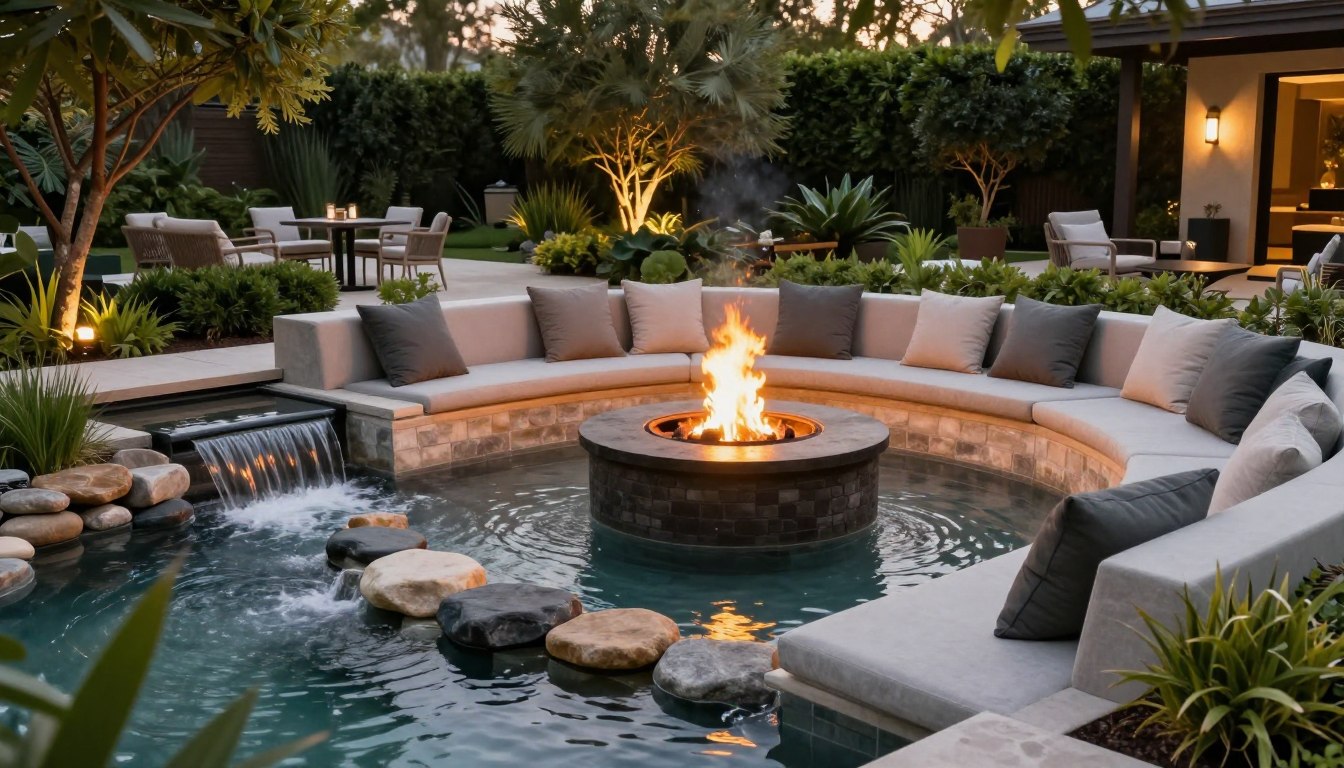
How Much Do Outdoor Fire & Water Features Cost in 2026? Design & Install Guide

Have you ever wondered how much transforming your backyard into a stunning retreat will actually cost? As homeowners increasingly seek to elevate their outdoor spaces, the demand for captivating fire and water elements is soaring in 2026. This guide is designed to provide you with everything you need to know about integrating these striking pool water feature into your home.
From design inspiration to material selection, we’ll cover it all. You’ll discover how elements like waterfalls and fire bowls can enhance the look and sensory experience of your outdoor area. Plus, we’ll break down the price ranges for popular options, from budget-friendly fountains starting around $17 to premium LED waterfalls exceeding $1,000.
By the end of this guide, you’ll have the knowledge to budget, design, and install pool that add value and enjoyment to your outdoor oasis. Let’s dive into the exciting world of outdoor enhancements!
Key Takeaways
- Explore the growing demand for outdoor enhancements in 2026.
- Learn about design inspiration and material options.
- Understand price ranges for various outdoor elements.
- Get practical advice for new builds and renovations.
- Discover essential considerations for maintenance and efficiency.
Understanding the Popularity of Pool Features in 2026
In 2026, the allure of shimmering water features has transformed backyards into serene retreats. These captivating elements have evolved from mere luxury add-ons to essential components of outdoor design. Homeowners are now seeking multi-sensory experiences that engage sight, sound, and touch.
The soothing sound of cascading water creates a spa-like atmosphere, promoting relaxation and mental well-being right at home. Modern water feature serve as stunning focal points, elevating the overall look of a swimming area and making it the centerpiece of outdoor entertaining.
Additionally, the integration of LED lighting has expanded the appeal of these elements. Homeowners can now enjoy dramatic nighttime displays with vibrant color effects. This trend has been fueled by social media and home improvement shows, making feature a status symbol in luxury outdoor living.
Features like bubblers and deck jets add playful interactivity for families. Fire and water bowls offer a sophisticated dual-effect that captivates guests. Even small water elements can transform a basic setup into a customized oasis, making them accessible to a wider range of budgets and backyard sizes.
Moreover, the psychological benefits of moving water cannot be overlooked. The presence of flowing water is known to reduce stress and improve mood, contributing to the growing popularity of these elements in residential settings.
| Water Feature Type | Key Characteristics | Benefits |
|---|---|---|
| Waterfalls | Cascading water | Creates a calming atmosphere |
| Bubblers | Gentle water jets | Interactive play for children |
| Deck Jets | Sleek arcs of water | Enhances visual appeal |
| Fire Bowls | Combines fire and water | Creates a dramatic effect |
Exploring Different Types of Pool Water Features

Enhancing your outdoor space with captivating elements can transform it into a true oasis. Various types of features can elevate the aesthetic and sensory experience of your backyard. Here’s a closer look at some popular options that homeowners are considering in 2026.
Waterfalls: Natural and Cascading Designs
Natural rock waterfalls are among the most sought-after enhancements. These features mimic the beauty of mountain streams, utilizing real or faux rock formations. They often integrate seamlessly into grotto-style setups, creating a dramatic and organic look.
Prices for basic waterfall models vary:
- 12-inch: $169 – $195
- 24-inch: $235 – $265
- 36-inch: $325 – $382
- 48-inch: $393 – $432
- 60-inch: $507
- 72-inch: $638
Waterslides for Family Fun and Appeal
Waterslides bring exhilarating fun to any backyard. They can be customized with materials like NPT pool tile and sourced from trusted brands such as S.R. Smith. Installation requires careful depth calculations to ensure safety for all ages.
Scuppers and Cascades: Elegant Wall-Mounted Features
Scuppers serve as elegant wall-mounted features that add a touch of sophistication. Available in various finishes and sizes, they enhance the overall design. Cascades, also known as sheer descent waterfalls, produce a clean, horizontal sheet of water, perfect for contemporary settings with stone or ledger stone walls.
Rain Curtains and Sheer Descent Waterfalls
Rain curtains create a stunning visual effect by dropping a wall of water from a pergola or raised beam. These features are often associated with high-end Glam-style pools. Prices for sheer descent units start around $441 for a 3-foot model.
Outdoor Showers as Complementary Water Features
Outdoor showers blend functionality with design. They can be freestanding or enclosed and constructed from materials like pipe, wood, stone, concrete, or tile. These showers offer a refreshing rinse before and after swimming.
Bubblers and Gushers for Shallow Areas
Bubblers, also known as gushers, are ideal for shallow areas like tanning ledges or beach entries. These features use adjustable jets to shoot water upward, creating a playful atmosphere. LED-compatible models, such as the Hayward ColorLogic Bubbler, are available for around $80.
Fountains: Artistic Water Displays
Fountains add artistic flair to any outdoor space. They range from floating units to in-ground installations and can even improve filtration and chemical balance. Basic models start as low as $17, making them accessible for various budgets.
Deck Jets: Sleek Water Arcs from Pool Decking
Deck jets, or laminar jets, create sleek arcs of water that shoot from pool decking or hidden landscape spots. Popular brands include Pentair, Jandy, and Hayward, with individual jet units priced around $115.
Spillover Spas and Integrated Water Features
Spillover spas are integrated features where a raised spa cascades into the main pool. This design allows for decorative tile customization while creating both visual appeal and soothing sounds.
Statuary and Sculptural Water Fountains
Statuary and sculptural fountains can serve as striking focal points. These stationary sculptures often feature motifs like dragons, lions, or abstract designs in steel or copper, enhancing the artistic vibe of your outdoor area.
Fire and Water Bowls: Stunning Dual-Effect Features
Fire and water bowls combine the mesmerizing effects of both elements. For instance, the Pentair MagicFlame is available in various finishes, including Bronze and Pewter, with textures like lava rock or fire glass. These features create a captivating contrast at the edge of your outdoor space.
As you consider which elements to include, remember that the right combination can enhance both the beauty and functionality of your backyard retreat. For more inspiration and ideas, check out this resource.
Cost Breakdown: How Much Do Water Features Typically Cost?

Understanding the costs associated with outdoor enhancements can help you make informed decisions. In 2026, various factors influence the pricing of captivating elements. This section breaks down the expenses into materials, installation, and maintenance.
Materials and Design Complexity
The price of outdoor elements varies widely based on materials and design. For instance, basic waterfalls start at approximately $169 for a 12-inch unit. However, prices can exceed $1,099 for larger LED-integrated models. Material choices, such as natural stone or copper, significantly impact the final cost.
Custom designs, like rock waterfalls with grottos, require extensive masonry and artistic labor. This complexity can drive prices higher compared to prefabricated sheer descent units, which offer a more budget-friendly option.
Installation and Labor Expenses
Installation costs can vary based on the existing setup. Adding new features to an existing swimming area often incurs additional expenses. This is due to the need for retrofitting plumbing, electrical work, and potential deck modifications.
Labor costs may also vary by region and the complexity of the installation. Always consider these factors when budgeting for your outdoor enhancements.
Additional Equipment and Maintenance Costs
Some high-flow features, like waterfalls, may require dedicated booster pumps. These pumps can add several hundred dollars to your project. Additionally, variable speed pool pumps may provide long-term energy savings.
Maintenance costs should not be overlooked. Features like fountains can lead to increased evaporation of about one inch of water per week. This can result in higher water bills and chemical usage over time.
For a realistic budget, consider the following ranges:
- Simple deck jet installation: $500 – $1,000
- Medium waterfall feature: $2,000 – $5,000
- Full grotto with multiple features: $10,000 – $30,000 or more
Moreover, fire and water bowls, such as the MagicFlame, come with premium costs due to dual plumbing and gas line requirements. Many homeowners find the visual effects justify the investment.
Integrating LED lighting can also increase upfront costs, with LED waterfall units priced $300 – $600 more than non-lit versions. Always obtain multiple quotes from professionals to ensure you’re getting the best value.
Design Tips for Effective Integration of Pool Features
Incorporating captivating elements into your outdoor design can elevate the overall experience of your backyard. Best practices suggest integrating water features during the initial design phase of a new swimming pool build. This ensures seamless connections with the pool structure, plumbing, and electrical systems.
When selecting water features, consider the overall aesthetic of your outdoor space. Choose elements that complement your backyard’s architectural style. For instance, a natural rock waterfall fits well in rustic designs, while sleek deck jets enhance modern looks.
Using water features as focal points can draw the eye effectively. Position a cascading waterfall at the deep end or center fire and water bowls on raised pillars flanking the pool entry. This creates an unforgettable visual impact.
Layering multiple water features can provide a multi-sensory experience. Combine the soothing sound of a sheer descent waterfall with the visual arc of deck jets and the playful splash of bubblers in a shallow tanning ledge. This combination enriches the ambiance.
Scale and proportion are crucial. Oversized features can overwhelm a small swimming area, while undersized elements may get lost in a large backyard. Striking the right balance is essential for a harmonious design.
Landscape design plays a significant role in pool features enhancement. Use tropical plants, stone accents, and strategic lighting to frame the elements, creating a cohesive outdoor environment. Complementary materials like ledger stone, natural rock, or decorative tile on raised bond beams and walls can achieve a polished look.
Even in retroactive installations, a skilled pool professional can creatively incorporate water into an existing setup. They can work with the current pump and filtration systems to bring your vision to life.
How to Add Water Features to an Existing Pool

Transforming your existing pool into a stunning retreat with captivating elements is entirely feasible. However, it requires careful planning and professional expertise. Adding features like waterfalls or bubblers can enhance the overall experience of your backyard.
Before you start, it’s essential to assess your current setup. A qualified pool professional can analyze your existing pool’s mechanics, including drainage, filtration, and pump capacity. This evaluation ensures that the addition of new elements won’t overwhelm your system.
Here are some key considerations when adding features to your swimming area:
- Confirm that adding water to an existing pool is possible, but requires a professional assessment of the current mechanics.
- A pool professional must determine if your existing pump can handle the added volume or if a dedicated booster pump is necessary, especially for high-flow elements like waterfalls.
- Retrofitting deck jets involves core drilling into the existing decking or walls to install jet housings and running new plumbing lines.
- Adding a spillover spa is more complex and requires structural modifications and integration with the current circulation system.
- Bubblers and gushers are among the easiest features to add, as they can be installed in shallow areas with minimal disruption.
- Waterslides need precise depth calculations to ensure safety; the deep end must meet the minimum depth requirements for the specific slide model.
- Fire and water bowls can be added to the pool edge or adjacent pillars, but gas lines and electrical connections must be handled by licensed professionals.
- While retroactive installation is more involved than adding features during initial construction, skilled contractors can achieve stunning results.
Incorporating these elements can transform your existing pool into a resort-like oasis. For more insights on integrating water features, check out this resource.
Choosing the Right Pool Pump and Filtration for Water Features

Selecting the right pump is crucial for ensuring your outdoor features operate effectively. When adding a feature that includes water, it’s vital to determine if your existing pump can handle the increased volume. For example, waterfalls require significant power to function properly.
In many cases, a dedicated booster pump is necessary for high-flow elements like waterfalls, rain curtains, and multiple deck jets. Consulting with a pool professional is essential to assess your current setup and determine if an additional pump is needed.
Variable speed pumps are particularly beneficial for outdoor features. They allow homeowners to adjust flow rates, creating effects that range from a gentle trickle to a powerful cascade. This flexibility maximizes energy efficiency and enhances the overall experience.
Interestingly, fountains and similar elements can improve your pool’s filtration. They increase water circulation and turnover, helping to distribute chemicals evenly and reduce stagnant areas. This can lead to a healthier swimming environment.
It’s also important to consider plumbing design. Properly sized suction and return lines ensure that features operate at their intended flow rates without straining the equipment. A qualified pool professional can calculate the total dynamic head and flow requirements to specify the correct pump size and type.
Advanced automation systems from brands like Pentair, Jandy, and Hayward offer convenient control over pump speeds and feature valves via smartphone apps. This adds a level of precision and ease to managing your outdoor elements.
Keep in mind that undersized pumps may lead to disappointing performance, while oversized pumps can waste energy and create excessive noise. When budgeting for installations, factor in the cost of pump upgrades or additional pumps, as this equipment is vital for long-term reliability.
| Feature Type | Recommended Pump Type | Key Considerations |
|---|---|---|
| Waterfalls | Booster Pump | High flow rate required |
| Fountains | Variable Speed Pump | Improves filtration |
| Deck Jets | Variable Speed Pump | Adjustable flow for effects |
| Rain Curtains | Booster Pump | Consistent water flow needed |
Enhancing Your Pool with LED Lighting

Imagine your outdoor space transformed into a captivating nighttime spectacle. With the right lighting, your stunning design can truly shine after dark. Don’t let your beautiful features fade into the darkness; instead, illuminate them with vibrant pool lighting.
LED lighting dramatically enhances the ambiance of your backyard. Illuminated waterfalls, deck jets, and bubblers create a completely different look after sunset. Here are some exciting options to consider:
- The CMP Brilliant Wonders series features LED-integrated waterfalls. These come in sizes from 12 to 48 inches, with built-in color-changing LEDs that illuminate the cascading water for a mesmerizing effect.
- Hayward ColorLogic Bubblers offer optional color kits, allowing homeowners to add vibrant lighting to shallow water features. The light glows through the bubbling water, creating a magical appearance in tanning ledges and beach entries.
- Pentair MagicFlame fire and water bowls create a stunning dual effect at night. The dancing flames reflect off the water surface, while optional LED lighting adds color to the bowl basin.
- Positioning LED lights strategically can highlight the texture and movement of water. For example, uplighting a rock waterfall accentuates the stone surfaces, while backlighting a sheer descent makes the water sheet glow.
- Modern LED lighting systems offer millions of color options and programmable light shows. These can be synchronized with water features for entertaining and special occasions.
- Integrating LED lighting during the initial installation is more cost-effective than retrofitting later. Many water feature units now come with factory-installed LEDs for seamless integration.
- LED lighting is energy-efficient and long-lasting. It consumes a fraction of the electricity of traditional incandescent lights while providing brighter, more vibrant illumination for your outdoor features.
By incorporating LED lighting, you not only enhance the beauty of your outdoor elements but also improve nighttime visibility and safety. For more information on how to effectively add lighting to your features, check out this resource.
Safety Considerations When Installing Water Features

When planning to install captivating elements in your outdoor space, safety should always be a top priority. This is especially true for households with children or frequent guests who may be tempted to climb on rock waterfalls or other structures.
Pools that have diving boards or waterslides must meet strict depth requirements. Typically, the deep end should be between 7.5 to 9 feet. A qualified pool professional must verify these dimensions before installing any feature that encourages entry into the water.
Applying anti-slip treatments or textured surfaces to rock waterfalls and grotto steps is essential. These areas can become slippery, especially where water features create wet walking surfaces. Taking these precautions helps prevent slips and falls.
All electrical components for water features must be installed by licensed professionals. This includes pumps, LED lighting, and fire bowl igniters. Compliance with National Electrical Code requirements for pool environments is critical for safety.
Regular cleaning and maintenance are vital to prevent algae buildup and debris accumulation in equipment. These conditions can create slippery surfaces and harbor bacteria, posing risks to users.
Fire and water bowls require additional safety measures. Proper gas line installation, adequate ventilation, and clear signage are necessary to warn guests that the bowls and surrounding surfaces may be hot.
Installing clearly visible depth markers and safety signage near water features is advisable. Establishing pool rules that prohibit climbing, diving in shallow areas, or tampering with equipment can enhance safety.
Professional installation by a reputable pool contractor is the best way to ensure all safety standards are met. This guarantees that the water features operate reliably without posing risks to swimmers.
| Safety Consideration | Description |
|---|---|
| Depth Requirements | Ensure pools with diving boards meet 7.5 to 9 feet depth at the deep end. |
| Anti-Slip Surfaces | Apply treatments to rock waterfalls and wet areas to prevent slips. |
| Electrical Safety | Install all electrical components by licensed professionals per safety codes. |
| Regular Maintenance | Clean features regularly to prevent algae and debris buildup. |
| Fire Bowl Safety | Ensure proper gas line installation and provide ventilation. |
Maintaining Your Pool for Longevity and Performance
To keep your outdoor elements in top shape, regular maintenance is essential. This ensures that your captivating features remain functional and visually appealing over time. Cleaning your water features regularly helps prevent algae and debris buildup that can affect performance.
Water features can lead to evaporation, typically around one inch per week. Homeowners should monitor water levels frequently and adjust chemical balances to prevent scaling and algae growth. Here are some effective maintenance practices to follow:
- Conduct weekly inspections of pump strainer baskets, jet nozzles, and waterfall weirs. Remove leaves, debris, and mineral deposits that can clog the system.
- Clean different types of features appropriately. For example, use a soft brush and mild cleaner on rock waterfalls to avoid damaging the stone surface. Flush deck jet lines to prevent blockages.
- Remember that fountains and waterfalls improve water circulation and filtration. This helps distribute chemicals evenly and reduces the workload on the main filtration system.
- In colder climates, winterize your features by draining all lines, removing and storing pumps indoors, and covering exposed equipment to prevent freeze damage.
- Schedule annual professional service for complex features. This includes inspecting pump seals, LED lighting connections, and gas lines for fire bowls to ensure safe and efficient operation.
- Use the correct water chemistry for pools with features. Aeration from waterfalls and fountains can raise pH levels, necessitating more frequent testing and adjustment.
- Invest in high-quality equipment from reputable brands. Following manufacturer maintenance guidelines will extend the lifespan of your features and protect your investment.
By adhering to these maintenance tips, you can ensure that your outdoor elements remain beautiful and functional for years to come. For more information on maintaining your outdoor features, check out this resource.
| Maintenance Task | Frequency | Purpose |
|---|---|---|
| Inspect pump strainer baskets | Weekly | Remove debris to ensure optimal flow |
| Clean jet nozzles | Weekly | Prevent blockages and maintain water flow |
| Flush deck jet lines | Monthly | Prevent clogs and ensure proper function |
| Winterize features | Seasonally | Protect equipment from freeze damage |
Popular Trends in Pool Design for 2026
The design trends for outdoor enhancements in 2026 reflect a blend of luxury and functionality. Fire and water bowls are the defining trend of the year. Products like the Pentair MagicFlame offer customizable finishes, creating a stunning juxtaposition of flames dancing atop a pool of water. This combination brings a luxurious resort aesthetic to any backyard.
Additionally, Glam style pools are gaining popularity. These features often include rain curtains that drop from pergolas or elevated beams. The result is a high-end, theatrical water wall effect that pairs beautifully with LED lighting and modern architecture.
Minimalist deck jets are also trending in contemporary designs. These sleek, laminar arcs are often hidden in the landscape or decking, creating surprising water effects that appear to come from nowhere. Homeowners appreciate the sophisticated look they provide.
Moreover, integrated smart technology is on the rise. This allows homeowners to control water features, pump speeds, LED lighting colors, and even fire bowl ignition from a single smartphone app or home automation system. Convenience and efficiency are key in modern outdoor design.
Naturalistic designs remain popular as well. Real rock waterfalls, boulder accents, and lush tropical landscapes create a lagoon-style backyard escape that blends seamlessly with the environment. This trend appeals to those seeking a more organic look.
Multi-functional water features are also gaining traction. For instance, spillover spas serve as both relaxing hot tubs and cascading water features, maximizing utility and visual appeal. Homeowners enjoy the versatility these elements bring to their swimming areas.
Energy efficiency is a growing concern. Eco-friendly water features, such as variable speed pumps and solar-powered LED lighting systems, are becoming more sought after. Environmentally conscious homeowners are keen to invest in sustainable options.
Finally, custom statuary and sculptural water features are becoming statement pieces in high-end pools. Abstract metal designs in copper or stainless steel add an artistic, gallery-like quality to the backyard, enhancing the overall aesthetic.
| Trend | Description | Key Features |
|---|---|---|
| Fire and Water Bowls | Combine flame and water for a stunning effect | Customizable finishes, dramatic aesthetics |
| Glam Style Pools | Features rain curtains for a theatrical look | Pairs with LED lighting, modern architecture |
| Minimalist Deck Jets | Sleek arcs create surprising water effects | Hidden in landscape or decking |
| Integrated Smart Technology | Control features via smartphone apps | Convenience and efficiency |
| Naturalistic Designs | Blend with the environment for a lagoon feel | Real rock waterfalls, lush landscapes |
| Multi-Functional Features | Spillover spas serve dual purposes | Relaxation and cascading water |
| Energy Efficiency | Focus on eco-friendly options | Variable speed pumps, solar lighting |
| Custom Statuary | Artistic pieces enhance aesthetics | Abstract designs in metal |
Environmental and Energy Efficiency Considerations
Choosing the right equipment for your outdoor enhancements can significantly impact energy consumption and environmental sustainability. Variable speed pool pumps stand out as the most energy-efficient option for operating various elements. These pumps allow homeowners to run features at lower speeds during off-peak hours, which helps reduce electricity costs.
Fountains and waterfalls not only add beauty but also play a practical role. They can naturally cool the temperature of your swimming area during the hottest summer days. This cooling effect comes from increased aeration and evaporation, which can reduce the need for energy-intensive mechanical chillers.
While it’s true that these captivating elements can lead to evaporation, the loss is typically about one inch of water per week. Using a pool cover when features are not in use can help mitigate this loss and decrease chemical consumption.
Modern LED lighting is another essential consideration. These lights consume up to 80% less energy than traditional incandescent bulbs and have a much longer lifespan. This makes them an environmentally responsible choice for illuminating your outdoor features at night.
When selecting equipment, look for Energy Star certified pool pumps and components. Additionally, designing the plumbing for your features with minimal bends and proper pipe sizing can reduce friction loss and improve hydraulic efficiency.
Integrating water elements with solar heating systems can enhance the overall efficiency of your setup. The increased circulation from fountains and waterfalls helps distribute solar-heated water evenly throughout your area.
Some municipalities offer rebates or incentives for installing energy-efficient equipment, including variable speed pumps and LED lighting. These programs can help offset the initial investment in eco-friendly components.
Finally, collaborating with pool professionals who prioritize sustainable design practices is vital. They can specify the right-sized equipment and suggest native landscaping that requires less irrigation, further promoting an eco-friendly backyard.
| Consideration | Description |
|---|---|
| Variable Speed Pumps | Energy-efficient choice for operating features at lower speeds. |
| Fountains & Waterfalls | Cool pool water naturally, reducing reliance on chillers. |
| Water Conservation | Use pool covers to mitigate evaporation and chemical loss. |
| LED Lighting | Consumes less energy and lasts longer than traditional bulbs. |
| Energy Star Equipment | Opt for certified pumps and components for efficiency. |
| Solar Heating Integration | Enhances circulation and distributes heat evenly. |
| Municipal Incentives | Rebates for energy-efficient equipment can offset costs. |
| Sustainable Design | Work with professionals for eco-friendly landscaping. |
Working with Professionals: Finding the Right Pool Feature Installer
When enhancing your backyard with captivating elements, finding the right installer is crucial. Homeowners should seek professionals who specialize in designing and installing outdoor enhancements. This expertise ensures that your project is executed with proper hydraulic design, structural integration, and aesthetic appeal.
Start by checking the credentials and certifications of potential contractors. Look for portfolios showcasing previous water feature projects. This helps you find examples of work similar to your desired style, whether it’s natural rock waterfalls, modern deck jets, or fire and water bowl installations.
Utilizing manufacturer dealer locators, like the Pentair Find A Dealer tool, can connect you with authorized professionals. These experts are trained in installing specific equipment brands and can provide warranty-backed workmanship.
It’s important to obtain detailed written quotes from multiple contractors. Ensure these quotes include line-item breakdowns for materials, labor, equipment, and any necessary upgrades to existing systems. This transparency helps you understand the overall price and scope of work.
Reading customer reviews and asking for references from past clients is invaluable. Pay attention to feedback regarding communication, timeliness, and post-installation support. Remember, the lowest price isn’t always the best value. Prioritize quality workmanship and reliable equipment for years of trouble-free operation.
Establish a clear contract that outlines the scope of work, timeline, payment schedule, and warranty terms before any work begins. This protects both you and the contractor, ensuring everyone is on the same page.
Lastly, maintain open communication with your chosen professional throughout the design and installation process. Asking questions and reviewing progress ensures the final result aligns with your vision for your backyard oasis.
| Key Consideration | Description |
|---|---|
| Experience | Seek professionals with specific experience in water feature design and installation. |
| Credentials | Check certifications and portfolios for similar projects. |
| Quotes | Obtain detailed written quotes from multiple contractors. |
| Reviews | Read customer feedback and ask for references. |
| Contract | Establish a clear contract outlining scope, timeline, and warranty. |
Frequently Overlooked Details When PlanningWater Features
Planning captivating outdoor elements requires attention to several often-overlooked details. Homeowners should consider these aspects to enhance their backyard experience fully.
First, don’t forget nighttime lighting for water features. Even the most stunning waterfall or deck jet installation will disappear into darkness without proper LED illumination. Highlighting these designs after sunset can elevate the ambiance significantly.
Additionally, consider the sound level of water features during planning. A powerful waterfall may create more noise than desired in a small backyard. Conversely, a gentle sheer descent might be too quiet to mask neighborhood sounds.
Access for maintenance is frequently forgotten. Equipment such as pumps, valves, and junction boxes should be positioned in easily reachable locations. Avoid burying or hiding them behind immovable landscape elements.
It’s also essential to address safety. Rock waterfalls and grottos can become slippery with algae growth. Specifying anti-slip treatments or textured surfaces during design is crucial, especially in households with children or elderly swimmers.
Moreover, the visual impact of water features from inside the home is often overlooked. Positioning features to be visible through windows or sliding glass doors extends the enjoyment of the backyard design year-round.
Wind patterns are another important consideration. Deck jets and fountains can be blown off course by prevailing breezes, wasting water and creating wet spots on decking or landscape areas.
Additionally, the weight of water features, particularly large rock waterfalls and raised spas, requires adequate structural support. Ensure the pool shell and decking are engineered to handle the additional load.
Homeowners should verify local building codes and permit requirements before installing water features. Some municipalities have regulations regarding pool modifications, electrical work, and gas lines for fire features.
Finally, a common oversight is installing a beautiful waterfall without upgrading the pool pump. This can result in a disappointing trickle instead of the powerful cascade envisioned, which could have been avoided with proper planning.
| Consideration | Description |
|---|---|
| Nighttime Lighting | Illuminate features to enhance visibility and ambiance. |
| Sound Levels | Evaluate the noise produced by water features in small spaces. |
| Maintenance Access | Position equipment for easy reach and upkeep. |
| Anti-Slip Treatments | Specify textured surfaces for safety, especially for children. |
| Visual Impact | Ensure features are visible from inside the home for year-round enjoyment. |
| Wind Patterns | Consider how breezes may affect water features and landscaping. |
| Structural Support | Ensure adequate support for heavy features like waterfalls. |
| Building Codes | Verify local regulations regarding installations and modifications. |
| Pump Upgrades | Plan for pump capacity to match the desired water flow. |
Conclusion
Ready to elevate your backyard with stunning outdoor enhancements? Adding captivating elements can transform an ordinary space into a beautiful oasis. The investment in these enhancements is worthwhile, offering a multi-sensory experience that delights all who visit.
Prices for these elements vary widely. Simple fountains can start as low as $17, while elaborate grotto installations may reach up to $30,000. This range ensures there’s something for every budget.
As you plan, consider your design goals. Whether you desire the natural charm of rock waterfalls or the sleek elegance of deck jets, choose features that enhance your overall aesthetic. Working with qualified professionals is crucial for proper installation and safety compliance.
Integrating LED lighting and energy-efficient pumps can maximize enjoyment while minimizing costs. Regular maintenance, including cleaning and monitoring water chemistry, will protect your investment and keep your features performing beautifully.
Consult with a local builder to explore possibilities for adding water features to your backyard. With thoughtful planning and expert guidance, you can create the resort-style environment of your dreams.
FAQ
What are the most popular types of outdoor water features?
How much do pool water features typically cost?
Can I add water features to an existing swimming pool?
What maintenance is required for pool water features?
How do I choose the right pump for my water feature?
Are there energy-efficient options for pool water features?
What safety considerations should I keep in mind?
How can I enhance my water features with lighting?
What trends are emerging in water feature design for 2026?
How do I find a professional installer for my water features?
Tags: Backyard renovations, Cost of outdoor fire features, Home improvement costs, Landscape design trends, Outdoor Fire Features, outdoor living spaces, Patio design ideas, Pool feature installation, Water feature design, Water feature pricing