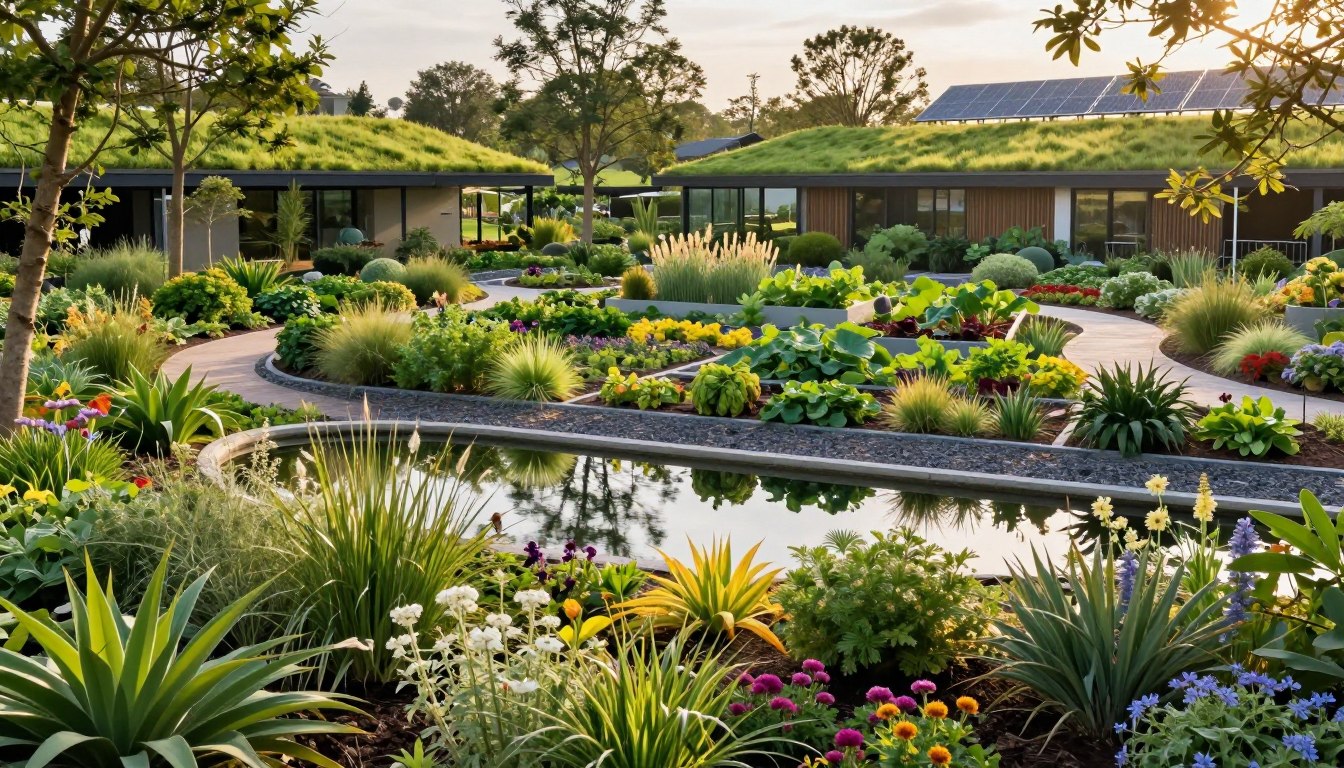
Could your backyard be doing more than just looking pretty? Many homeowners now realize that traditional yards often use too much water and toxic chemicals. Using sustainable landscape design helps you transform your yard into a regenerative space that benefits the planet.
According to the ASLA, these outdoor areas actively sequester carbon and protect the local environment. By picking native plants, you create a healthy habitat at your home and reduce daily maintenance. This modern focus on sustainability ensures your garden stays healthy for many years.
Understanding the essential principles of landscape design is the first step toward an eco-friendly yard. This guide provides the practical tools you need to make your garden thrive naturally. We will explore how to build a lasting legacy of stewardship through smart planning.
Key Takeaways
Shift from high-resource lawns to eco-friendly systems.
Improve air and water quality through natural regenerative practices.
Decrease chemical reliance and water consumption at home.
Support local wildlife by integrating native plant species.
Boost energy efficiency with smart outdoor planning strategies.
Establish a lasting legacy of environmental stewardship for the future.
Understanding Sustainable Landscape Design
Sustainable landscaping is a smart approach that uses integrated techniques to create functional outdoor areas. These spaces do more than just look good for the neighbors. They deliver measurable results while requiring much less maintenance from the property owner.
What Makes a Landscape Truly Sustainable
Adopting a sustainable landscape involves moving beyond traditional gardening to embrace natural systems. A sustainable landscape functions as a self-sustaining ecosystem rather than a collection of plants. Unlike traditional yards, it focuses on water conservation and protecting local resources.
Conventional styles often rely on heavy watering and energy-intensive tools to survive. In contrast, a sustainable design works with nature, needing minimal human intervention once the plants mature. This shift reduces the overall workload while ensuring the landscape thrives naturally over many years.
Environmental Benefits of Sustainable Landscaping
Choosing this approach provides many benefits for the local environment. These spaces act as natural filters for air and water, helping to keep our surroundings clean. They also play a vital role in carbon sequestration to combat climate change.
Beyond climate health, these yards offer essential habitat corridors for pollinators and native wildlife. Homeowners also enjoy economic gains like lower water bills and higher property values. By reducing runoff and erosion, you protect the soil and the planet at the same time.
Feature
Conventional Approach
Sustainable Approach
Water Usage
Requires frequent irrigation
Conserves water naturally
Chemical Need
Heavy fertilizers and pesticides
Little to no chemicals needed
Wildlife Impact
Provides no natural habitat
Supports pollinators and birds
Runoff Control
Contributes to polluted runoff
Minimizes runoff through filtration
Core Principles of Sustainable Landscape Design
Building a resilient outdoor space starts with embracing three essential concepts that work in harmony. These foundational principles ensure that every element of your yard supports a healthy environment. By following this framework, you create a beautiful space that requires fewer resources and less labor over time.
A successful landscape design integrates natural processes to solve common yard problems. This approach focuses on long-term stability rather than quick fixes. Understanding how these elements connect is the first step toward a thriving landscape.
Prioritizing Native Plants Over Non-Native Species
Choosing native plants is the most impactful decision you can make for your yard. These plants have evolved over thousands of years to thrive in your specific area. They adapt naturally to local climate patterns and soil conditions without human help.
In contrast, non-native plants often struggle to survive without extra fertilizers and pesticides. These exotic plants create a dependency cycle that increases your maintenance costs. Because they did not evolve with local pests, they lack natural defenses.
Native plant varieties offer deep root systems that reach water far below the surface. This unique root structure prevents erosion and improves the physical makeup of the ground. By selecting the right plant, you provide vital food and shelter for local wildlife.
Water Conservation as a Foundation
Smart water conservation is a primary goal for any modern design. In the United States, up to 70% of potable drinking water is used for outdoor irrigation. Unfortunately, about 50% of that water is wasted due to inefficient systems and evaporation.
You can learn how climate-adaptive landscaping can transform your backyard in by focusing on moisture retention. This landscape design strategy reduces the need for supplemental watering. It also protects our most precious natural resource from unnecessary depletion.
Using native plants further supports water conservation efforts. Their deep roots allow them to survive dry spells that would kill off non-native plants. This creates a more resilient and self-sufficient outdoor environment.
Building Healthy Soil Ecosystems
Healthy soil functions as a living engine for your entire yard. It contains billions of beneficial organisms that cycle nutrients and retain moisture. These microscopic ecosystems are the secret to robust growth and vibrant foliage.
To protect this resource, avoid using harsh chemical fertilizers that kill beneficial bacteria. Instead, use natural nutrient sources like compost and fallen leaves. Minimizing soil disturbance helps preserve the complex networks that feed your greenery.
Feature
Native Options
Non-Native Options
Maintenance Needs
Low to None
High/Frequent
Water Usage
Minimal/Natural
High/Supplemental
Wildlife Support
Excellent
Limited
Applying these three principles results in a landscape that heals itself. When the soil is healthy, your design becomes more resistant to diseases. This holistic approach ensures your yard remains a beautiful part of the local environment for years to come.
Essential Sustainable Landscape Elements and Practices
Practical implementation is the bridge between sustainable ideas and a thriving, eco-friendly area. To build a resilient yard, you must focus on the functional elements that support the local ecosystem. These features transform your outdoor design into a living asset for the environment. By choosing the right components, you create beautiful spaces that require less maintenance over time.
Implementing Erosion Control Solutions
Protecting your soil is vital because Earth has lost half of its fertile topsoil in the last 150 years. Effective erosion control keeps nutrients in your outdoor area and prevents water pollution. When soil washes away, it often carries toxic fertilizers into local streams. This sediment can clog fish gills and increase water treatment costs for everyone. Using structural features helps stabilize the earth while keeping your property beautiful.
Rain Gardens and Swales
Rain gardens are shallow basins that capture and filter stormwater runoff effectively. Swales act as natural channels to direct water flow along gentle slopes. These features allow moisture to slowly sink into the earth rather than running off into drains. They create functional planting spaces that thrive on natural rainfall.
Ground Covers and Terracing
Ground covers use extensive root systems to hold the soil in place. Terrace gardens prevent erosion on steep slopes by creating flat, manageable steps for planting. You can also use French drains to manage subsurface water movement. These methods stop saturation and prevent your soil from shifting during heavy storms.
Installing Permeable Hardscapes
Standard concrete surfaces often create polluted runoff that harms the surrounding landscape. Permeable hardscapes offer an eco-friendly alternative for your next landscaping project. Options like pea gravel, river rock, and porous asphalt allow water to soak directly into the ground. This process helps replenish groundwater levels and reduces the load on city sewers. Choosing these surfaces makes your property more functional and environmentally responsible.
Yard trimmings and organic debris made up over 7% of landfill waste in recent years. You can recycle these materials by using compost bins for landscaping. This system turns grass clippings and leaves into rich, organic fertilizer for your plants. It eliminates the need for chemical products and builds a healthy soil ecosystem. A well-managed compost system is a simple way to close the nutrient loop in your backyard.
Selecting Local and Sustainable Materials
Choosing local materials reduces the energy needed for long-distance transportation. Using regional stone or wood also supports your local economy and ensures durability. These items are naturally suited for your specific climate conditions. You should also look for ways to recycle or reuse waste materials during construction. This approach reduces the total footprint of your landscape project while maintaining a unique, regional aesthetic.
Water-Smart Landscape Design Strategies
Freshwater is a limited resource, making water-smart landscape design a necessity for modern homeowners. Only 2.5% of Earth’s water is freshwater, and much of that stays locked in glaciers. Using strategic landscape design helps protect these vital resources for the future.
Every garden can play a role in environmental conservation. By reducing the amount of rain water we waste, we lower the energy used for pumping and moving water. This simple landscaping shift helps the planet and your wallet.
Xeriscaping is a smart approach that reduces the need for extra irrigation. This style uses drought tolerant plants for xeriscaping to create a lush look without the heavy water bill. It focuses on replacing thirsty turfgrass with native species that thrive on natural rainfall.
A typical xeriscape landscape uses layers of mulch, sand, and permeable hardscapes to keep moisture in the soil. These materials prevent evaporation and stop weeds from growing. It is a comprehensive design choice that values beauty and efficiency equally.
By choosing plants that fit your local climate, you ensure your garden stays green during dry spells. This method proves that you do not have to sacrifice style to save precious water.
Rain barrels for water collection are excellent tools to help homeowners conserve water. These stations sit right under your downspouts to catch runoff from your roof. This collected rain is perfect for watering your flowers or vegetables during dry weeks.
The math behind harvesting is impressive. A small 100-square-foot section of your roof can collect 30 gallons of water from just half an inch of rain. If you get a full inch, you can harvest 60 gallons of free water.
Using these stations is a core part of water conservation. It keeps runoff from entering storm drains and puts it back into your soil. It is an easy way to manage your outdoor resources wisely.
Designing Rock Gardens for Water Conservation
A rock garden is a great way to add texture and depth to your landscape. This specific design uses carefully placed stones and hardy plants that survive with almost no extra water. Once you set it up, it requires very little maintenance over the years.
You can explore creative ways to use rocks in to replace high-maintenance areas of your yard. Rocks do not need mowing, pruning, or feeding. They provide a permanent structure that looks good in every season.
Focusing on water conservation through stone design keeps your yard looking professional. This type of garden is ideal for areas where grass struggles to grow. It is a sustainable and stylish solution for any modern home.
Building Ecosystems That Support Wildlife and Pollinators
Modern landscaping is shifting from purely decorative designs to functional habitat areas for local species. By mirroring natural regional landscapes, you can create a thriving ecosystem right in your backyard. This way, your landscape serves a purpose beyond aesthetics, offering vital resources for wildlife and essential pollinators.
Designing Layered Plant Communities
Designing a diverse space involves mirroring the natural world before human interference. A layered approach includes various plants that span from the soil level up to the tree canopy. This method creates multiple areas for survival and growth.
Ground cover for soil-dwelling organisms and plant health.
Mid-story plants for small mammals and songbirds.
Upper canopy for large nesting birds and shelter.
Each layer provides a unique habitat niche. These levels ensure that every animal has access to specific food sources throughout the year.
Adding Structure with Trees, Shrubs, and Grasses
Structural diversity is key to a healthy landscape. By including plants of different forms and sizes, you offer year-round protection. Trees and shrubs provide focal points while also acting as essential nesting sites. Grasses and smaller shrubs offer winter interest and cover.
These physical elements create a safe space for animals to hide. This structured landscaping approach ensures your garden remains functional. Providing diverse food and shelter helps maintain local biological balance during every season.
Incorporating Color Throughout the Seasons
To properly support pollinators, you must provide a continuous succession of blooms. Selecting a mix of flowering plants ensures that nectar is available from early spring until late fall. This strategy helps native bees and butterflies survive their active cycles.
Native species are the best choice because they evolved alongside local wildlife. You can learn how to design a softscape that attracts wildlife in by focusing on these relationships. Providing a steady food supply keeps these spaces buzzing with life all year long.
Creating Habitat with Dense Native Plantings
Dense landscaping is a powerful tool for building a resilient ecosystem. When you plant species closely together, you leave less room for invasive weeds to take root. This creates thick areas that offer maximum protection for small creatures.
Using native plant selections supports overwintering insects in their natural spaces. These dense landscape clusters also help replenish the soil’s native plant seed bank. By maximizing your available wildlife plants, you contribute directly to the recovery of local animal populations.
Maintaining Your Sustainable Landscape for Long-Term Success
Long-term maintenance is the critical factor determining whether sustainable landscape designs continue delivering environmental benefits or gradually revert to resource-intensive conventional landscapes. This consistent care preserves the positive environmental impact you worked so hard to create at your home. Without a plan, even the best landscape can lose its ecological value over time.
Reducing Fertilizers and Pesticides
Always test your soil to know exactly how much fertilizers your lawn might need. Applying too much treatment leads to polluted runoff that damages local water areas. This precision prevents excess chemicals from leaking into the groundwater near your property.
Switch from synthetic chemical products to organic alternatives derived from natural sources. This way, you support the soil as a living ecosystem rather than just a growing medium. Natural nutrient sources like fallen leaves or compost minimize disturbances and eliminate harmful residues.
Eco-Friendly Lawn Care Practices
Proper watering techniques encourage deep root growth in your lawn. You should also keep your mower at a high setting to strengthen each grass plant. Leaving grass clippings on the ground serves as a natural mulch and returns nitrogen to the earth.
This type of maintenance reduces the need for constant landscaping intervention and heavy equipment. A healthy sustainable landscape design stays naturally resilient against local pests. It creates a safer and more vibrant environment for your entire home.
Utilizing fallen leaves as “green mulch” is another smart tactic for your landscape. Instead of bagging them, allow them to decompose to suppress weeds and retain essential moisture. This cycle mimics nature and keeps the ground cool during hot summer months.
Working with Professional Sustainable Landscape Designers
Professional experts like Taylormade Landscapes® can review your specific site to identify hidden issues. They often recognize erosion or runoff problems that many homeowners might miss during routine care. Their specialized knowledge ensures the long-term success of your sustainable landscape design projects.
A specialist helps you implement best practices for budget-friendly designs in sustainable to save money over time. They help you select regionally appropriate plants and design efficient irrigation systems. Their guidance prevents common mistakes that could lead to plant loss.
Hiring a pro is the best way to manage your lawn and protect your outdoor investment. With an expert maintenance plan, your landscape will continue to flourish for many years to come. It ensures your property remains a functional and beautiful sanctuary.
Conclusion
Developing a sustainable landscape design allows every homeowner to contribute to climate change mitigation and biodiversity. This approach is a powerful way to protect our planet right from your own yard. It turns aesthetic choices into acts of conservation that impact the environment positively.
By prioritizing native plants and water-smart resources, you create a vital habitat for local wildlife. Essential elements like permeable hardscapes and erosion control turn theoretical ideas into functional gardens. These sustainable landscape planning strategies ensure your home remains a sanctuary for pollinators.
Implementing xeriscaping or rock landscapes helps your landscaping adapt to regional weather patterns. Using local materials and composting systems keeps your landscape healthy and vibrant. These simple design choices reduce the need for harsh chemicals and excessive resources.
Long-term sustainability depends on your maintenance practices. Choosing organic care ensures your landscapes continue to provide benefits for generations. Start small with a single native plant to begin your journey in your outdoor space today.
Thoughtful design choices transform outdoor gardens into living masterpieces. Protecting our landscape and its plants today creates a greener future for everyone. Your unique design will inspire others to care for their local plants and ecosystems.
Modern sustainable scenery combines smart technology with eco-friendly design to transform your outdoor space. You’ll reduce water usage by up to 50% with sensor-driven irrigation systems, while native plants provide natural climate resilience and support local wildlife. AI-powered automation handles maintenance efficiently, and chemical-free gardens create safe habitats for beneficial insects and birds. By integrating these solutions, you’ll explore how your scenery can thrive while protecting our environment’s future.
Smart Water Management Systems for Today’s Gardens
Smart water management systems have stepped up to revolutionize modern gardening, offering eco-conscious solutions that slash water waste while maintaining vibrant scenery. You’ll find that sensor-driven irrigation systems can reduce your water consumption by up to 50% through real-time monitoring of soil moisture and weather conditions. UV clarifiers help extend the life of water features by eliminating harmful algae and microorganisms that can affect water quality. Property owners implementing these technologies have reported water bill savings of 20-40% annually.
These intelligent systems integrate seamlessly with your smartphone, letting you adjust watering schedules from anywhere while automatically skipping cycles during rainfall. By incorporating greywater recycling systems, you’re not just saving water; you’re creating a sustainable cycle that repurposes household water for your garden needs. Swan’s soaker hoses deliver water directly to plant roots, minimizing both evaporation and runoff in your garden beds. The combination of smart controllers and moisture sensors guarantees your plants receive precisely what they need, when they need it, making water conservation effortless and effective in your yard.
Native Plant Selection for Climate-Resilient Landscapes
Three key factors make native plants the cornerstone of climate-resilient settings: their natural adaptability, reduced maintenance needs, and essential ecological advantages. When you’re selecting native plants, focus on keystone species identification and microclimate considerations to create a flourishing that’ll thrive for years to come. Implementing smart irrigation systems can optimize water delivery based on your native plants’ specific needs.
Native plants deliver built-in climate resilience through natural adaptability, lower maintenance requirements, and vital ecological benefits for sustainable landscapes.
To visualize your climate-resilient garden, consider these proven native combinations:
Red oaks paired with Pennsylvania sedge for shade-rich, low-maintenance areas
Meadowsweet clusters alongside serviceberry for wildlife supporting borders
Switch grass masses create movement and drought resistance
Layered plantings combining trees, shrubs, and groundcovers for maximum ecosystem benefits
Understanding the right plant, right place principle ensures long-term success in your native garden design. You’ll find that native plants establish deeper roots, require less water, and create substantial habitat connections that strengthen your local environment while reducing your maintenance time and resources. The transition to native landscaping requires multiple growing seasons to properly assess existing conditions and allow natural plant communities to establish themselves.
Automated Eco-Friendly Landscape Technologies
Technology has revolutionized sustainable gardening with automated solutions that slash resource consumption while maximizing ecological benefits. You’ll find AI-powered irrigation systems that cut water usage by up to 50% through real-time weather monitoring and precision soil sensors. Smart landscape auditing tools now use drone technology to map your property and detect issues before they become problems. Smart Grouping technology automatically arranges similar plant species for visual harmony and easier maintenance. Sophisticated outdoor systems include climate control features that extend enjoyment through misting and radiant heat elements.
Robotic maintenance automation has transformed traditional landscaping tasks. You can rely on autonomous mowers and specialized robots for weeding and trimming, all powered by clean energy sources. These systems integrate seamlessly with home automation platforms, using geofencing to optimize resource usage. The software’s plant compatibility analysis ensures optimal placement and grouping of vegetation for long-term garden success. They’ll adjust to your property’s specific needs while collecting valuable data that helps reduce chemical inputs and maintain ideal plant health throughout the seasons.
Creating Wildlife-Friendly Urban Gardens
When you’re designing a wildlife-friendly urban garden, start by selecting native plants that provide food and shelter for local species throughout the year. You’ll want to incorporate different plant heights and densities, from ground covers to tall shrubs and trees, creating distinct habitat layers that support diverse wildlife populations. To optimize the ecological value of your space, cluster plants in groups that mimic natural communities, ensuring there’s continuous blooming and shelter availability across seasons. Installing insect hotels and bird feeders will further enhance biodiversity in your garden space. Consider adding a chemical-free garden to create a safer environment that encourages beneficial insects and protects visiting birds from harmful toxins. Let nature guide the garden’s development by using minimal pruning techniques that allow plants to grow and spread naturally into their preferred forms.
Strategic Plant Selection
Creating a wildlife-friendly urban garden begins with strategic plant selection that optimizes ecological value while minimizing resource consumption. You’ll need to focus on native species that support your local species diversity targets while naturally contributing to integrated pest management through balanced ecosystems.
With approximately 2,300 native species available in Illinois alone, gardeners have an extensive palette to work with. Research shows that urban biodiversity benefits extend beyond wildlife to positively impact human health and well-being in residential settings. Many homeowners have successfully replaced traditional lawns with native grasses and perennials, proving that sustainable landscaping can win over even strict HOA requirements.
Select plants that offer multi-seasonal benefits to wildlife:
Keystone natives like Black Dalea and Zexmenia to host butterflies and feed birds
Low-water champions, such as red buckwheat, that attract numerous pollinators
Container-friendly options like Anise hyssop and native asters for small spaces
Structural graminoid,s including sedges and Prairie dropseed, for habitat layers
Layered Habitat Zones
Designed to mirror nature’s vertical complexity, layered habitat zones transform urban gardens into vibrant wildlife sanctuaries. You’ll create distinct layers – from towering canopy trees to ground-level mulch, that optimize vertical foraging opportunities for diverse wildlife species. Each layer serves an essential ecological function, providing year-round wildlife resources from spring blooms to winter shelter.
Modern Outdoor Living Spaces With Minimal Environmental Impact
When designing your modern outdoor living space, you’ll want to prioritize sustainable materials like permeable pavers, recycled composite decking, and locally-sourced stone that reduce environmental impact while maintaining aesthetic appeal. You can transform your yard into a multi-functional retreat by creating distinct zones for dining, lounging, and entertainment that optimize space efficiency and minimize resource consumption. By incorporating smart technologies and drought-resistant landscaping around these living areas, you’ll achieve a perfect balance between comfort and ecological responsibility.
Sustainable Material Selection
The thoughtful selection of sustainable materials forms the foundation of eco-friendly terrain design, where every choice impacts both the environment and future generations. When you’re planning your outdoor space, focus on renewable plantation forestry products and low embodied emissions flooring to minimize your carbon footprint.
Transform your scenery with these sustainable material choices:
Bamboo decking that matures in just 3-5 years, offering a rapid renewable alternative to traditional timber
Locally sourced stone and gravel that cut transportation emissions by 50%
Reclaimed wood elements that save 18 MWh of energy per ton compared to new production
Permeable pavers made from recycled aggregates that improve water infiltration while reducing mining impact
Multi-Purpose Entertainment Areas
Modern outdoor living demands smarter use of space while treading lightly on the environment. You’ll optimize your outdoor area’s potential by creating multipurpose activity zones that adapt seamlessly to different uses throughout the day and seasons. Start with modular outdoor furniture that you can easily reconfigure for dining, lounging, or entertaining.
Install retractable glass walls and continuous flooring to blur the lines between indoor and outdoor spaces, effectively doubling your usable living area. Add built-in benches with storage and foldable furnishings to minimize clutter while maintaining functionality. Smart technology, like solar-powered lighting and automated irrigation systems, helps reduce your environmental impact. Complete your space with vertical gardens and native plants that provide shade, support local ecosystems, and create natural cooling effects, all while requiring minimal maintenance and resources.
Low-Maintenance Design Strategies for Busy Homeowners
Today’s busy homeowners can transform their outdoor spaces into low-maintenance sanctuaries by implementing smart design strategies that save time, water, and energy. By reducing traditional lawn areas and incorporating low-maintenance ground covers like monkey grass, you’ll substantially cut down on mowing and watering needs. Create sustainable sceneries with limited turf areas by focusing on native plants and efficient hardscaping elements.
Transform your yard with these eco-friendly features:
Natural stone pathways and permeable gravel surfaces that require minimal upkeep
Strategic placement of native flowering shrubs for year-round color without constant care
Drip irrigation systems paired with rain barrels for water-smart management
Mulched beds with drought-resistant perennials to suppress weeds naturally
These solutions create beautiful, sustainable outdoor spaces that thrive with less intervention while supporting local ecosystems.
Future-Ready Xeriscaping Solutions
Forward-thinking homeowners are turning to xeriscaping as a revolutionary landscaping approach that adapts to climate change while preserving precious water resources. You’ll optimize water efficiency by implementing eco-friendly watering practices like smart irrigation systems and moisture sensors, which can reduce your water consumption by up to 30%.
Replace traditional lawns with drought-resistant alternatives such as clover or native ground covers, and incorporate low water irrigation techniques through targeted drip systems. You’ll create a resilient landscape by selecting native plants and drought-tolerant succulents that thrive in your local climate. Layer your design with permeable hardscaping and mulch to improve water retention and minimize runoff. This modern approach doesn’t just conserves resources but also attracts beneficial wildlife, creating a sustainable ecosystem in your yard.
Frequently Asked Questions
How Long Does It Take for a Sustainable Landscape to Become Fully Established?
You’ll see your sustainable terrain fully establish within 2-3 years, though some larger projects may take up to 5 years. During the initial year, you’ll need to focus on regular watering and weeding, but by year 2, you’ll notice natural seasonal plant changeover and increased wildlife activity. By year 3, you’ll enjoy low maintenance requirements as your terrain becomes self-sustaining, with stable soil health and reduced water needs.
What Are the Average Cost Differences Between Traditional and Sustainable Landscaping?
You’ll find sustainable landscaping costs about 20-30% more upfront than traditional approaches, with initial investments ranging $5,000-$26,000 versus $4,000-$20,000 for conventional designs. However, your cost-benefit analysis will show significant savings over time. You’ll spend up to 40% less on long-term maintenance requirements through reduced water usage, fewer chemical inputs, and minimal plant replacement needs. The water savings alone can offset higher upfront costs within 3-5 years.
Can Sustainable Landscaping Increase My Property’s Resale Value?
Yes, sustainable landscaping can greatly increase your property’s resale value by 15-20%. You’ll benefit from increased curb appeal through native plants and thoughtful design, making your home more attractive to today’s eco-conscious buyers. The energy efficiency benefits, like strategic tree placement for natural cooling, can lower utility costs a major selling point. Plus, you’re joining the 92% of properties that real estate professionals recommend for sustainable upgrades to enhance market value.
How Do Sustainable Landscapes Perform During Extreme Weather Events?
You’ll find that sustainable environments excel during extreme weather events thanks to their built-in climate resilience features. Your native plants will better withstand droughts and floods, while rain gardens and bioswales manage excess water effectively. During storms, you’ll see how permeable surfaces reduce flooding, and your drought-resistant plants will survive intense heat waves. Smart water management systems help your environment adapt quickly, making it more resilient than conventional yards.
Which Sustainable Landscaping Features Qualify for Local Environmental Tax Incentives?
You’ll qualify for local tax incentives by incorporating several eco-friendly features: zero-emission equipment purchases, efficient irrigation systems, and native plant selection that reduces water consumption. You can claim rebates for lawn removal, permeable paving installation, and rainwater harvesting systems. Don’t forget that strategic tree planting for cooling benefits and solar panel installation compatibility can also earn you tax benefits while supporting your property’s environmental impact reduction.
Sustainable terrain management in 2025 means you’re creating outdoor areas that function with nature, not against it. You’ll integrate intelligent irrigation systems that reduce water use by 50%, choose native plants that support hundreds of local species, and implement no-dig practices for healthier soil. By combining tech-savvy solutions with regenerative practices, you’ll reduce maintenance while amplifying biodiversity. There’s much more to uncover about this rapidly evolving approach to modern landscaping.
The Evolution of Eco-Friendly Landscaping Practices
Anyone observing modern scenery can see how dramatically eco-friendly practices have transformed outdoor spaces since the early 2020s. You’ll notice traditional lawns giving way to native groundcovers and wildflowers, while smart irrigation systems work silently to conserve water based on real-time weather data. The rise of robotic lawn mowers has revolutionized how homeowners maintain their outdoor spaces with minimal effort. The integration of no-dig methods has enhanced soil health while reducing the physical labor required for garden maintenance. Many homeowners have embraced the functionality of outdoor living spaces by incorporating weather-resistant furniture and heating elements for year-round enjoyment.
Today’s sustainable environments feature drought-resistant plants and integrated pest management approaches that eliminate harmful chemicals. You’re now seeing rain gardens and bioswales that manage stormwater while creating beautiful, functional spaces. Community engagement has surged as neighbors share knowledge about native plant selection and wildlife-friendly garden designs. The result? Outdoor spaces that aren’t just aesthetically pleasing but also support local ecosystems, reduce water consumption, and adapt to climate challenges while fostering biodiversity in your neighborhood.
Key Principles of Modern Sustainable Land Management
How do successful sustainable environments come together in 2025? You’ll find it’s through the integration of five core principles that prioritize both ecological health and community engagement. Start by selecting native plants that support local biodiversity while reducing resource demands. Next, focus on soil health through composting and organic fertilizers, eliminating harmful chemical inputs. You’ll want to guarantee resource efficiency by incorporating renewable materials and energy-smart systems like solar lighting and permeable surfaces. Implement integrated pest management strategies that protect beneficial insects and natural ecosystems. Removing invasive species is essential to maintain the delicate balance of local ecosystems. The strategic placement of deciduous trees south significantly reduces energy costs for nearby buildings throughout the year. Using alternative maintenance equipment can help reduce the 242 million tons of pollutants emitted annually from gas-powered landscaping tools. Ultimately, secure long-term success through environmental education and community involvement – creating spaces that aren’t just sustainable but truly beneficial for both people and nature. These principles work together to form resilient, thriving environs that serve future generations.
Water Conservation Strategies in Landscape Design
While traditional terrain designs often waste precious water resources, modern conservation strategies in 2025 have revolutionized how we approach irrigation and water management. Designers are now focusing on long-term viability through innovative water-saving solutions. Studies show that residential irrigation accounts for 60% of municipal water consumption. You’ll find smart irrigation controllers that cut water use by 50%, using real-time weather data and soil moisture sensors to optimize your water budget analysis. San Diego’s semi-arid climate makes water conservation especially critical for sustainable landscape design.
You can enhance efficiency by implementing thorough stormwater management strategies, including rain gardens and permeable paving that direct water back into the soil. Replace your water-demanding turf with drought-resistant plants, and you’ll reduce consumption by up to 70%. Don’t forget to group plants with similar water needs together through hydrozoning.
Native Plant Selection and Biodiversity Benefits
The strategic selection of native plants in 2025’s terrain has become a cornerstone of sustainable ecosystems. You’ll find that native plant characteristics perfectly align with regional habitat needs, supporting hundreds of specialized insect species and local wildlife. These plants offer beautiful landscapes while providing essential ecological services. Even small-scale urban gardens can transform into critical biodiversity hubs when you choose the right native species. Research shows that urban biodiversity benefits directly contribute to improved human health and well-being in communities. Converting traditional lawns to native plantings helps combat the loss of natural habitats due to urban sprawl.
You’re restoring critical food webs by replacing non-native ornamentals with keystone species like oaks and goldenrod.
You’re saving countless pollinator species by providing essential habitat corridors in urban environments.
You’re strengthening ecosystem resilience by supporting specialized plant-pollinator relationships.
You’re creating lasting impact, as each native plant you add can support up to 500 times more species than non-natives.
Together, we’re rebuilding nature’s intricate web, one native plant at a time.
Soil Health Management and Organic Amendments
Modern soil management practices have revolutionized terrain sustainability in 2025, with organic amendments driving remarkable improvements in soil health. You’ll find that strategic microbial inoculant application, combined with compost and biochar, can augment your soil’s carbon sequestration potential while enhancing its structure and fertility. No-till practices paired with residue retention have proven essential for minimizing soil disturbance and protecting valuable organic matter from oxidation. Regular soil health monitoring provides crucial data to assess the effectiveness of these regenerative practices and make necessary adjustments. Implementing cover crop systems has become a cornerstone strategy for improving soil structure and water retention across agricultural landscapes.
Climate Resilient Design Approaches
When designing climate-resilient sceneries, you’ll need to prioritize drought-ready plants like native and regionally adapted species that can thrive with minimal irrigation. You can strategically place trees and vegetation to create cooling microclimates that combat urban heat islands while reducing your site’s total water demands. By incorporating high-albedo surfaces and permeable materials alongside your drought-tolerant plant selections, you’ll establish a scenery that’s both resource-efficient and naturally resistant to extreme weather conditions.
Drought-Ready Plant Selection
Five key principles guide effective drought-ready plant selection in today’s climate-conscious environment. You’ll find that native species, deep-rooted varieties, pollinator-friendly plants, and water-efficient options create the foundation for sustainable habitats. When you’re planning your seasonal plant rotation, consider drought-tolerant champions like Texas Sage and Lantana that naturally resist pests and thrive with minimal intervention.
Your garden’s resilience multiplies when you group plants with similar water needs, creating micro-communities that support each other
You’re building a legacy of biodiversity by choosing pollinator-friendly varieties like Salvias and Coreopsis
Your maintenance costs plummet while ecosystem health soars with integrated pest management
You’re future-proofing your habitat by selecting deep-rooted species that access groundwater naturally
Heat-Island Mitigation Strategies
Building on drought-ready plant selection, your urban terrain design can actively combat the heat island effect through strategic climate-resilient approaches. Through microclimate manipulation, you’ll optimize cooling potential by combining green infrastructure, reflective surfaces, and water-based solutions. Modern urban cooling technologies now enable precise temperature control across cityscapes.
Strategy
Impact
Implementation
Green Roofs
2-9°F reduction
Install vegetation layers
Cool Surfaces
Energy savings
Use reflective materials
Water Features
Local cooling
Add fountains/ponds
Tree Canopies
Shade creation
Plant mature species
Smart Planning
Equity focus
Target vulnerable areas
Your design should integrate these elements systematically, prioritizing areas with the highest heat risk. Remember, successful heat mitigation requires equitable distribution of cooling features across all neighborhoods, not just affluent areas.
Economic Advantages of Sustainable Landscapes
As businesses and homeowners increasingly prioritize long-term financial sustainability, sustainable scenery has emerged as a powerful tool for reducing operational costs while building lasting value. You’ll find that implementing eco-conscious landscaping practices dramatically reduces maintenance expenses while creating resilient, future-proof outdoor spaces that appreciate in value over time.
You’re cutting maintenance costs by up to 50% through native plantings and reduced water usage
Your property value increases as sustainable environments enhance curb appeal and market desirability
You’ll protect against future resource volatility by minimizing dependence on water and chemicals
Your investment opens opportunities for urban agriculture benefits and local tax incentives
Smart environment choices today mean you’re not just saving money, you’re investing in a greener, more valuable property that’ll thrive in tomorrow’s resource-conscious world.
Professional Certification and Industry Standards
Professional certification programs have stepped up to meet the growing demand for sustainable terrain expertise. You’ll find two major certification program structures leading the way: SLM and SITES certifications. Each program offers distinct credentialing requirements that validate your expertise in sustainable scenery practices.
If you’re pursuing SLM certification, you’ll need to complete specialized training, pass an exam, and renew your credentials every two years. For SITES certification, your projects must meet rigorous 200-point criteria covering everything from water efficiency to ecosystem services. You’ll need to document your sustainable practices thoroughly and demonstrate measurable outcomes.
These certifications aren’t just pieces of paper; they’re transforming industry standards by promoting nature-based solutions, resource conservation, and ecological health in every aspect of area management.
Measuring Success in Sustainable Landscapes
You’ll need sturdy measurement systems to validate the success of your sustainable terrain projects through carefully selected key performance indicators and standardized metrics. By tracking biodiversity indices and ecosystem health markers, you can quantify improvements in habitat quality, species richness, and ecological functioning. Your resource efficiency monitoring should capture water usage, carbon footprint, and material consumption data to demonstrate tangible environmental benefits and drive continuous improvement.
Key Performance Indicators
Three critical dimensions define successful sustainable scenery management in 2025: measurable outcomes, data-driven decisions, and transparent reporting. You’ll need to track specific metrics to guarantee your landscape projects truly deliver on sustainability promises while meeting stakeholder expectations.
Your emissions reductions must be quantifiable through detailed GHG monitoring across all operations, aiming for net-zero targets with clear milestone achievements.
Water efficiency should demonstrate at least 15-20% reduction from baseline, with smart irrigation systems providing real-time usage data.
Track your waste minimization efforts through comprehensive audits, targeting a 50% reduction in just two years.
Measure community engagement success through stakeholder participation rates and satisfaction surveys, ensuring your sustainable practices resonate with local needs.
These KPIs will help you transform good intentions into measurable environmental impact.
Biodiversity Assessment Metrics
Building on our KPI framework, biodiversity assessment brings a critical ecological dimension to sustainable terrain management. You’ll need to track both habitat-level metrics like ecosystem connectivity and species-level indicators, such as population trends and extinction risks.
Community-based monitoring now integrates seamlessly with technology-enabled innovations, combining traditional field surveys with cutting-edge tools like eDNA sampling and automated acoustic monitoring. You can leverage standardized assessment protocols that scale from local to regional levels while maintaining data consistency and comparability.
Your monitoring strategy should focus on key indicators: natural ecosystem conversion rates, habitat fragmentation patterns, and species richness trends. By adopting these metrics, you’ll create a robust framework that supports evidence-based decision-making and aligns with international conservation goals while enabling adaptive management of your regional projects.
Resource Efficiency Tracking
Resource efficiency tracking steps up as a cornerstone of sustainable environment management in 2025, integrating water, energy, materials, and soil metrics into unified performance dashboards. You’ll find smart irrigation controls, GHG tracking tools, and soil health indicators working together to paint a complete picture of your terrain’s resource use. Community engagement metrics and stakeholder satisfaction tracking now complement these technical measurements.
Your water efficiency data connects directly to utility systems, with gallons-per-square-foot benchmarks guiding irrigation decisions
You’re measuring carbon impact through equipment fuel use and tree canopy benefits
Your waste streams are precisely tracked, from construction debris to composted clippings
You’ll see soil health metrics linking directly to reduced fertilizer needs and improved water retention
This integrated approach transforms how you’ll manage sustainable terrains in 2025, making resource efficiency both measurable and achievable.
Future Trends in Green Infrastructure
As cities grapple with intensifying climate challenges, green infrastructure emerges as a cornerstone of sustainable urban development in 2025. You’ll see living architecture integration transforming cityscapes through green roofs and living walls, while smart technologies optimize urban metabolic flows for maximum efficiency.
Digital innovations are revolutionizing how you’ll manage these green assets. AI-powered sensors monitor performance in real-time, while digital twins help simulate environmental impacts before implementation. You’re getting smarter about placement too – data analytics guarantee new installations deliver the highest climate and economic benefits.
The future of urban scenery isn’t just greener, it’s more resilient. You’ll find multifunctional spaces that serve both community and emergency needs, while climate-adapted plant species confirm your green infrastructure thrives despite weather extremes.
Frequently Asked Questions
How Do Sustainable Landscapes Impact Local Property Tax Assessments?
Your sustainable landscape can greatly affect your property value assessments in two ways. While you’ll likely see increased property taxes due to improved market value, you can offset this through diverse tax incentive programs. You’ll find rebates and credits for eco-friendly features like water-efficient irrigation systems and drought-tolerant plants. Remember, routine maintenance won’t trigger reassessment, but major sustainable upgrades will impact your property’s taxable value.
Can Sustainable Landscape Designs Accommodate Specific Cultural or Religious Requirements?
Yes, you can absolutely integrate cultural preservation and religious symbolism into sustainable environments. You’ll find that modern design approaches readily accommodate specific faith-based needs through thoughtful features like meditation gardens, ritual spaces, and sacred plant selections. You can incorporate traditional materials, culturally significant layouts, and religious elements while maintaining eco-friendly principles. Working with community leaders and religious representatives guarantees your sustainable design authentically reflects and respects cultural requirements.
What Insurance Considerations Exist for Sustainable Landscape Features Like Rain Gardens?
You’ll need specialized coverage for your sustainable terrain features, particularly rain gardens. Your regular property insurance might not cover these installations without specific endorsements. To maintain coverage, you’ll need to follow strict ground maintenance considerations, including regular debris removal and proper mulching. You must also meet local stormwater management requirements and maintain proper setbacks from buildings. Professional design and installation documentation will strengthen your coverage eligibility and protect against liability claims.
How Do Sustainable Landscapes Affect Neighborhood Pest Control Dynamics?
You’ll notice significant improvements in pest control when your neighborhood adopts sustainable terrains. By embracing integrated pest management and fostering ecological biodiversity, you’re creating natural defense systems against unwanted pests. Native plants attract beneficial predators, while diverse plantings prevent mass infestations. You’ll also spend less on chemical treatments as nature’s own pest control kicks in, and you’ll enjoy healthier outdoor spaces with fewer nuisance encounters.
Do Sustainable Landscapes Require Special Permits or Zoning Variances?
You’ll often need special permits and zoning variances for sustainable landscapes, especially when implementing features like bioswale installation or extensive native plant selection. Check your local ordinances early, as requirements vary by jurisdiction. You’re likely to need documentation from licensed professionals and may face stricter scrutiny for any deviations from standard codes. Don’t skip this step – proper permits guarantee your sustainable landscape project stays compliant and avoids costly penalties.