Tag: Smart irrigation systems

Why Professional Irrigation Services Save Money

Have you ever wondered how a well-designed irrigation system can actually save you money in the long run? Investing in professional irrigation services not only ensures your yard thrives but also protects your property value. A properly installed sprinkler system distributes water evenly, preventing waste and promoting healthy plants. This approach minimizes the risk of costly plant replacements and reduces water bills.

Moreover, expert irrigation specialists understand the specific needs of your landscape. They tailor solutions that consider drainage and soil composition, allowing your lawn to flourish without unnecessary water use. In this article, we will explore the benefits of professional irrigation and how it can transform your outdoor space.

Key Takeaways

  • Professional irrigation services help maintain a healthy landscape in Houston’s challenging climate.
  • A well-designed irrigation system ensures precise water distribution throughout the year.
  • Investing in a professional sprinkler system protects your home and enhances your yard’s beauty.
  • Expert specialists understand the unique needs of your landscape to prevent water waste.
  • Choosing the right professionals guarantees efficient and effective irrigation management.

Understanding the Benefits of Irrigation Services

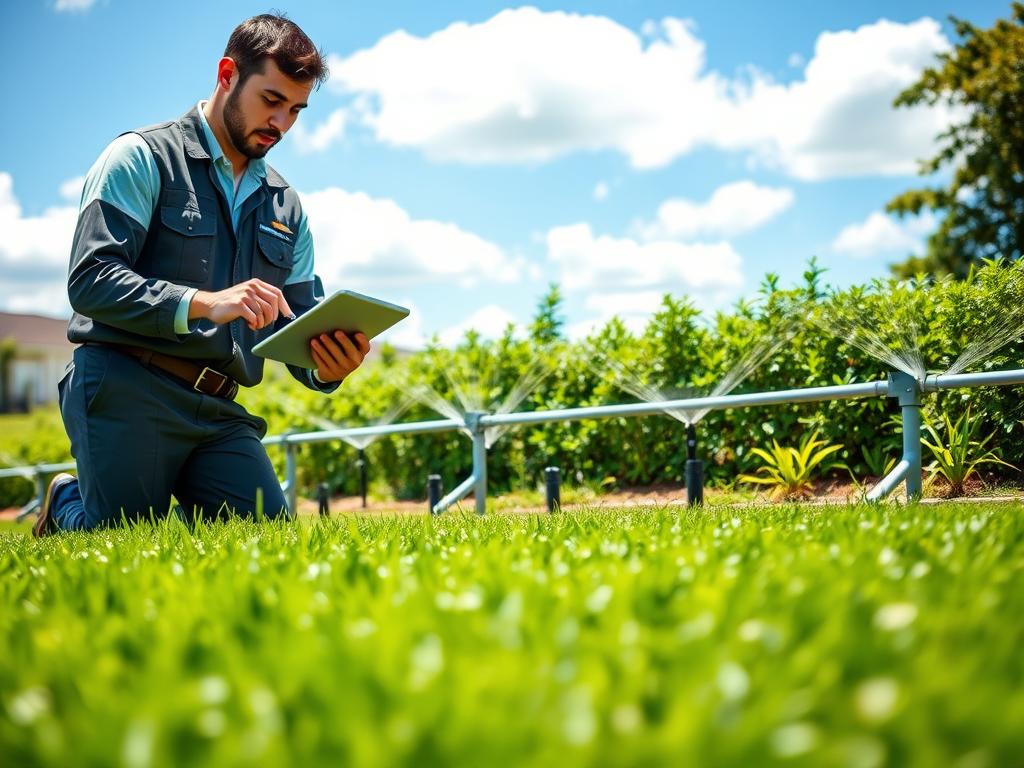
A vibrant landscape showcasing a professional irrigation service in action. In the foreground, a skilled technician wearing professional attire inspects a modern irrigation system, holding a clipboard and analyzing the setup with focus. The middle ground reveals rows of neatly planted crops, flourishing under the gentle spray of a well-designed irrigation system, with water droplets glistening in the soft morning sunlight. The background features a blue sky dotted with fluffy white clouds, hinting at a picturesque farm setting. Bright, natural lighting enhances the details of the irrigation equipment and the lush greenery, creating an atmosphere of productivity and care for the environment. The overall mood is optimistic and efficient, reflecting the positive impact of professional irrigation services.

Understanding how a professional approach to water management can lead to significant savings is crucial for homeowners. Efficient irrigation services significantly lower your monthly water bills. This is achieved by preventing over-saturation and ensuring that every drop of water is used effectively.

A properly maintained sprinkler system keeps your lawn vibrant and healthy, even during the driest months. By utilizing advanced irrigation systems, you can reduce the total cost of landscape maintenance while improving the overall health of your plants.

Professional irrigation specialists focus on the factors that influence water consumption. They ensure that your property receives only the water it truly needs. Investing in a high-quality sprinkler system is a smart financial decision that pays for itself over time through reduced utility bills and healthier plants.

Customized Irrigation System Design and Installation

A detailed illustration of a customized irrigation system design in a lush garden setting. In the foreground, show an intricately arranged layout of sprinklers and drip irrigation lines on rich, dark soil, with small plants and flowers blooming around them. In the middle ground, include a technician in professional attire, carefully examining blueprints and making adjustments to the irrigation system, with tools and equipment nearby. The background features a variety of healthy crops and greenery under bright, natural sunlight, casting gentle shadows. The mood is professional and focused, with a sense of innovation and sustainability. Capture the scene from a slightly elevated angle for a comprehensive view, ensuring clarity in the technical details of the irrigation system itself.

Creating a customized irrigation plan is essential for maximizing your landscape’s potential. A successful irrigation project starts with a thorough site evaluation. This evaluation considers plant types, sun exposure, and the specific drainage needs of your property.

Our irrigation specialists conduct a detailed soil analysis. This ensures that your new sprinkler system delivers water at the correct rate. A customized design is crucial for addressing the unique topography of your yard. This approach prevents runoff and ensures deep root hydration for your plants.

By collaborating with experienced professionals, you can tailor your irrigation services and installation to your landscape’s specific requirements. We highly recommend a professional design approach to avoid common mistakes that lead to inefficient water usage.

  • The design phase is critical, determining how effectively your irrigation system will function for years.
  • Our experts take the time to understand your needs, ensuring an efficient and manageable system.
  • A well-planned installation considers all environmental factors, providing a sustainable solution.
  • Choosing a professional company means investing in a reliable and long-lasting irrigation system.
  • We pride ourselves on delivering a great job with every installation, ensuring optimal performance.

Efficient Water Management Techniques

A lush, green agricultural landscape showcasing efficient water management techniques. In the foreground, a network of drip irrigation systems with gleaming tubes snaking through rows of vibrant crops, such as tomatoes and lettuce. In the middle, a professional, observant agronomist in smart casual attire inspects the irrigation setup, jotting notes on a digital tablet. To the right, a modern rainwater harvesting system collects water in a stylish reservoir. The background reveals gentle rolling hills and a clear blue sky, with warm sunlight casting soft shadows and highlighting the vibrant colors of nature. The overall atmosphere is one of innovation and sustainability, emphasizing the importance of smart water resource utilization in agriculture.

Effective water management techniques can transform the way you care for your landscape. One of the key strategies employed by irrigation services specialists is zone optimization. This technique ensures that different areas of your yard receive the precise amount of water they need.

By dividing your property into specific zones, your irrigation system can cater to varying sun exposure and plant water requirements. This approach significantly reduces overall water waste, promoting a healthier lawn.

Moreover, precise water distribution is essential for maintaining a vibrant landscape. It prevents over-watering in some areas while ensuring others do not dry out. Our pros utilize advanced techniques to manage water flow, keeping your landscape lush without incurring excessive utility costs.

We highly recommend regular audits of your irrigation system. This ensures that your zone settings remain accurate as your landscape matures over the years. A well-optimized sprinkler system is a hallmark of a professional company that cares about both the beauty of your property and the conservation of water.

By focusing on efficient water management, homeowners can reduce their environmental impact while enjoying a beautiful, well-maintained landscape all year long. For more insights on effective strategies, check out this water management strategies article.

Expert Maintenance and Timely Repairs

A skilled technician performing expert maintenance on an irrigation system in a lush garden. In the foreground, the technician, dressed in a professional uniform, is carefully inspecting a section of green piping, tools laid out neatly beside them. The middle ground showcases a variety of flowering plants and vibrant greenery, emphasizing the importance of a healthy ecosystem. In the background, soft sunlight filters through the trees, creating dappled shadows on the ground, evoking a serene and productive atmosphere. The angle captures the technician's focused expression as they work diligently, showcasing their expertise. The overall mood is one of professionalism, dedication, and the satisfaction of timely repairs, highlighting the effectiveness of proper maintenance in horticulture.

Maintaining a healthy landscape requires ongoing attention and expert care. Regular evaluations and timely repairs can save homeowners from costly damages. With the right professionals, you can ensure that your system functions effectively throughout the year.

Companies like Ryan Irrigation offer essential maintenance services. Their experts identify potential issues before they escalate into expensive repairs. This proactive approach helps keep your landscape thriving and your water usage efficient.

Ongoing System Evaluations and Adjustments

Ongoing evaluations are vital for adapting your system to the changing needs of your plants. Regular inspections allow specialists to make necessary adjustments. This ensures that your sprinkler system operates at peak efficiency.

Emergency Services and Backflow Prevention

In case of sudden leaks or system failures, emergency services are crucial. Companies provide immediate assistance to prevent water loss. Additionally, backflow prevention assembly testing protects your home’s water supply and ensures compliance with safety standards.

  • Regular maintenance helps identify issues early, preventing costly repairs.
  • Emergency services ensure your landscape receives water when needed.
  • Backflow prevention testing keeps your water supply safe and compliant.
  • Ongoing evaluations align your system with your plants’ changing needs.
  • Investing in professional maintenance extends the life of your system.
Service Description Benefits
Regular Maintenance Routine checks and adjustments to your system. Prevents costly repairs and ensures efficiency.
Emergency Services Immediate response to leaks or failures. Minimizes water loss and protects your landscape.
Backflow Prevention Testing to ensure safety and compliance. Protects your water supply from contamination.

By investing in professional maintenance, you avoid the frustration of a broken system and the potential cost of significant landscape damage. For more information on maintenance options, visit this link.

Local Expertise and Climate-Smart Solutions in Irrigation Services

A skilled irrigation specialist carefully examines a climate-smart irrigation system in a vibrant, lush garden setting, showcasing local expertise. In the foreground, a professional in modest casual clothing holds a clipboard and points towards a row of intelligently designed drip irrigation lines. The middle ground features thriving plants and flowers, demonstrating the successful application of sustainable watering techniques. In the background, a clear blue sky and distant hills evoke a peaceful rural landscape. Soft, natural lighting highlights the specialist's focused expression while casting gentle shadows on the ground to create depth. The entire scene conveys a sense of professionalism, expertise, and dedication to environmentally friendly irrigation practices.

Incorporating local expertise into your landscaping strategy can significantly enhance your yard’s resilience. With 40 years of experience, our professionals understand the unique climate factors affecting landscaping in prestigious neighborhoods like the Memorial Villages.

These experts provide climate-smart solutions tailored to the challenges of our region. They focus on drainage and water management, which are critical in ensuring your property remains protected during heavy rainfall.

Understanding regional weather patterns allows our specialists to design irrigation systems that can withstand both intense heat and heavy rainfall. This knowledge empowers homeowners to make informed decisions about their landscape.

We highly recommend working with local irrigation companies that have a proven track record in your area. By leveraging our extensive experience, we ensure that your irrigation  services needs are met effectively.

  • Our experts integrate flood mitigation strategies into your design.
  • We prioritize the long-term health of your landscape.
  • People trust our specialists for their technical expertise and care for the environment.
  • Choosing a company with deep local roots guarantees the best advice and service.
Service Description Benefits
Local Expertise Understanding of regional climate factors. Enhanced resilience for your landscape.
Climate-Smart Solutions Tailored irrigation services designs. Efficient water management and drainage.
Proven Track Record Experience in local neighborhoods. Reliable and effective irrigation services.

Conclusion

Investing in your yard today can yield significant benefits for years to come. By choosing a professional team to design and maintain your sprinkler system, you enhance the beauty of your landscape while protecting your investment.

Proper management is about more than just watering; it creates a sustainable system that works efficiently through changing seasons. Prioritizing expert maintenance and timely repairs keeps your system performing at its best.

A well-managed irrigation setup reflects the care you have for your home, providing a lush outdoor space for your family. Reach out to local specialists today to start transforming your landscape into a resilient and beautiful environment.

Tags: , , , , , ,

2026 Trends: Modern Fire and Water Features for High-End Nevada Landscapes

Fire and water features are defining the next wave of luxury outdoor design in Nevada — combining sculptural flame, engineered flow, and smart controls to create memorable, sustainable outdoor living. For high-end estates, these installations are no longer decorative extras; they are core elements that shape how people use patios, pool decks, and gardens year-round.

Today’s premium outdoor fire and water features demand intelligent systems: automated pumps and burners, remote ignition, and app-based scheduling that reduce hands-on maintenance while preserving dramatic visual impact. In Nevada’s arid climate, smart controls also protect resources and keep elements performing reliably through heat and dust.

This article delivers expert content to help estate owners plan, specify, and install cohesive elemental designs. Ready to explore possibilities? Schedule a design consult via our website or call to book a site review.

Key Takeaways

  • Fire and water features are central 2026 trends for luxury outdoor living in Nevada.
  • Smart systems (automated pumps, app control, remote ignition) cut maintenance and boost reliability.
  • Water-smart recirculation and efficient burners protect resources while preserving drama.
  • Proper design and professional installation increase long-term property value.
  • Visit our website to view curated product examples and request a tailored consultation.

Trend: Integrating Fire and Water Features into Modern Outdoor Living (2026)

The backyard has evolved into a curated outdoor living room where fire and water features anchor multifunctional zones. In 2026, luxury Nevada estates are prioritizing integrated elemental centerpieces that extend interior comfort into patios, terraces, and poolside areas—creating layered spaces for dining, entertaining, and quiet retreat.

A contemporary outdoor living space showcasing modern trends in landscaping and smart technology integration. In the foreground, a stylish, minimalist patio featuring sleek, ergonomic furniture in neutral tones, alongside smart outdoor lighting that changes color. The middle features a beautifully manicured garden with native Nevada plants and automated irrigation systems, seamlessly blending nature with technology. In the background, a modern home designed with large glass windows and solar panels, surrounded by vibrant greenery. The scene is set during golden hour, with warm, soft lighting creating a welcoming atmosphere. Captured from a slightly elevated angle, highlighting the spacious layout and aesthetic harmony of the space, emphasizing relaxation and innovative living.

View of a layered outdoor space: a patio foreground, landscaped terraces, and integrated smart systems—ideal contexts for fire and water features.

Understanding the Shift in Outdoor Experiences

Homeowners now design zones that behave like interior rooms: cooking and dining patios, conversation areas centered on a fire table, and tranquil corners buffered by water bowls. These elements make the outdoor space usable year-round, especially when paired with smart controls that adapt to Nevada’s temperature swings and dusty conditions.

Benefits of High-Tech Integration in Landscapes

Automation delivers immediate benefits: scheduled lighting scenes, app-controlled burners and pumps, and climate-aware systems that lower operation during heat or high-wind events. The result is less manual upkeep and more consistent performance across every square foot of your property.

Result for homeownersTraditional LandscapeModern Smart Landscape
Primary Function Decorative planting Multifunctional outdoor living
Control Method Manual Remote, scheduled, sensor-driven
Seasonal Use Limited Extended – climate-adaptive
Maintenance Level Labor-intensive Low – system-managed
Design Philosophy Separate from home Seamless indoor-outdoor connection

For design ideas and product view samples, visit our product pages or schedule a consultation to see how fire and water features can redefine your outdoor living in Nevada.

The Allure of Outdoor Fire and Water Features

Fire and water features are the 2026 must-have for high-end Nevada landscapes — sculptural, sensory centerpieces that pair the warmth and visual drama of flame with the calming motion and sound of water. These fire and water installations create instant atmosphere and define how outdoor spaces are used and remembered.

Captivating Aesthetics and Ambiance

The interaction of flame and flow produces a multi-sensory focal point: the flicker of a controlled fire enhances evening gatherings while circulating water adds movement and soft acoustic masking. Contemporary finishes — matte concrete, powder-coated steel, black basalt, and copper accents — are trending for their low-maintenance weathering and refined view in daylight and at night.

A serene outdoor space featuring a harmonious blend of fire and water elements. In the foreground, a beautifully designed fire pit crackles with flames, surrounded by elegant, comfortable seating. The middle ground showcases a shimmering water feature, with a gentle waterfall cascading over smooth stones, reflecting the warm glow of the fire. Lush greenery and thoughtfully placed plants create an inviting atmosphere. In the background, soft outdoor lighting illuminates the scene, enhancing the tranquil evening ambiance. The overall mood is warm and inviting, perfect for relaxation and social gatherings. The angle is slightly elevated, capturing the layout of the space and the interplay between fire and water, showcasing the allure of these integrated features in the landscape design.

Modern systems pair stainless-steel or brass burners with electronic ignition and app-based controls to deliver consistent flame performance, and closed-loop pumps with filtration to keep water clear. Typical pump noise for well-specified recirculating systems is low (manufacturers often quote pump noise levels — check product specs for dB ratings), making them suitable even for quiet seating areas.

AspectTraditional Elemental DisplaysModern Fire and Water Features
Visual Impact Static, single-element Dynamic, layered flame + flow
Sensory Engagement Limited Full multi-sensory experience
Control Method Manual Automated, app & sensor-driven
Integration with Landscape Often added on Designed-in centerpiece
Upkeep Requirements High, frequent checks Low when paired with smart systems

Want to visualize options? See sample layouts on our website or download the free design guide to compare burner types, pump specs, and finish options for your site.

Showcase: Outdoor Fire and Water Features

Choosing a focal element means matching scale, shape, and finish to the available area and overall architectural style. A well-proportioned fire and water centerpiece organizes seating, circulation, and sightlines to create memorable social zones across patios, terraces, and pool decks.

These installations act as dynamic anchors—visually striking yet engineered for quiet, reliable operation. The right selection complements your landscape while delivering the ambiance and function you expect.

Versatile Designs for Every Space

Modern collections include a wide range of fire bowls and multi-element features: round, square, rectangular, and conical forms in materials that stand up to Nevada sun and dust. Trending finishes for 2026 are matte concrete, black basalt, powder-coated steel, and aged or polished copper accents for a refined view both day and night.

A stunning outdoor scene showcasing a harmonious blend of fire and water features, set in a modern Nevada estate. In the foreground, a sleek fire pit with vibrant flames dances atop polished stone, surrounded by comfortable seating. The middle ground features a beautifully designed water feature, with crystal-clear streams cascading over smooth rocks into a tranquil pond, reflecting the flickering firelight. Lush greenery and vibrant flowers frame the area, adding bursts of color. The background captures a twilight sky with warm hues of orange and purple, casting gentle light over the landscape. The atmosphere is serene yet inviting, perfect for relaxation or entertaining. A wide-angle lens captures the scene, enhancing the depth and beauty of the outdoor space.

Gallery view: fire bowls and linear water elements integrated into a layered outdoor space—see our website gallery for more examples.

Each fire and water installation should be custom-fit. Proportional balance is essential: a too-large bowl overwhelms a small patio, while a tiny bowl disappears on an expansive deck.

Space TypeRecommended ShapeRecommended Size (typical)Integration Tip
Small patio / courtyard Round or square bowl 24–36″ diameter Keep walking paths clear; use as central focal point
Medium garden / terrace Rectangular or linear feature 48–72″ length Align with seating and architectural lines
Expansive pool deck Large conical or multi-element design custom, multi-piece layout Create visual zones; pair with water features and lighting

Micro-cases: a 10’x12′ courtyard works well with a 30″ fire bowl on a plinth; a 14’x20′ terrace benefits from a 60″ linear bowl that doubles as a divider; pool decks often use multiple smaller bowls to frame views. Browse product pages for model dimensions and request a site-specific recommendation to find the best fire and water bowl for your project.

Water-Smart Technology and SNWA Compliance

In Nevada’s arid environment, water-smart water features are essential—not optional. Modern fire and water features must pair dramatic aesthetics with closed-loop systems and efficient pumps so estates can enjoy flowing elements without excessive fresh-water use or regulatory headaches.

A modern, sustainable landscape featuring water-smart technology compliant with SNWA standards. In the foreground, showcase smart irrigation systems, including moisture sensors and efficient drip irrigation lines. In the middle ground, display lush native plants and xeriscaping that highlight drought-resistant flora. The background features a clear Nevada sky with distant mountains, symbolizing the region's natural beauty. Use warm, natural lighting to create an inviting atmosphere, with soft shadows to enhance the detail of the foliage. Include a professional landscape technician dressed in modest, smart casual attire engaged with the technology, demonstrating its functionality. Capture the scene from a slightly elevated angle for a comprehensive view, emphasizing the harmony of technology and nature in modern estate landscaping.

How Water-Smart Systems Save Resources

Best-practice water features use recirculating pumps, in-line filtration, and sensor-driven controls to minimize evaporation and loss. Closed-loop designs keep water moving and treated on-site, drastically lowering total water consumption while maintaining the visual clarity and motion that define premium water features.

When specifying a system, look for pump flow and head ratings that match your basin size, integrated filtration, and automation capability (scheduling, wind/temperature shutoffs) so the water feature runs efficiently with minimal intervention.

Ensuring Compliance with SNWA Regulations

The Southern Nevada Water Authority provides local rules and incentives for water-smart landscaping—always confirm current SNWA guidance when planning a new installation. Using SNWA-compliant products and certified contractors simplifies permitting and supports community conservation goals.

Quick designer checklist: choose recirculating systems, specify pool-rated filtration, include automatic level controls, and document equipment specs for permit review. For complete permitting guidance and a downloadable compliance checklist, visit our website’s Permitting & Compliance page.

AspectTraditional Water FeatureWater-Smart System
Water Usage High – frequent top-offs Low – recirculated, measured
SNWA Compliance May not meet standards Designed for compliance
Operational Efficiency Manual monitoring Automated, sensor-assisted
Maintenance Needs Frequent cleaning Reduced with proper filtration

Incorporating Natural Gas Integration in Your Design

For many high-end Nevada estates, natural gas is the preferred fuel for outdoor fire features because it delivers clean, consistent heat on demand and integrates smoothly with smart control systems. Natural gas lets you create an elegant, always-ready outdoor fire pit or fire bowl without the storage and mess of wood or frequent propane swaps.

Efficiency and Safety Benefits

Natural gas burns cleanly and supports precise flame modulation—important when pairing fire with adjacent water features. When combined with electronic ignition and remote control, natural gas systems offer instant outdoor fire ambiance at the push of a button while minimizing smoke and soot.

Fuel TypeEfficiency RatingConvenience FactorSafety FeaturesInstallation Complexity
Natural Gas High Permanent line, instant use Automatic shut-off valves, electronic ignition interlocks Professional installation & permits required
Propane Medium Portable tanks, refill logistics Manual valves, tank safety protocols Moderate; may be DIY with local codes
Wood Low Traditional feel, ongoing fueling Open flame risks, ember control needed Simple build but higher maintenance

2026 designers pair natural gas with smart ignition modules, sensor-based shutoffs, and remote app control to ensure safe operation even when a feature is left unattended. Ensure any selected system complies with NFPA (National Fire Protection Association) guidelines and local Nevada gas codes.

Quick Installation Checklist

  • Confirm local permitting and utility requirements before specifying a permanent gas line.
  • Hire a licensed gas contractor for line installation and pressure testing.
  • Specify automatic shut-off valves and CSA/UL-listed components.
  • Plan clearances from combustible materials and pool edges per manufacturer and code.
  • Integrate smart ignition and control for scheduling, remote shutoff, and wind-sensing safety.

Want help assessing your site? Request a gas-line site review through our website to get a tailored recommendation and installer referrals for safe, compliant outdoor fire feature installation.

Diverse Product Options and Curated Collections

A thoughtfully appointed estate blends functional art with smart engineering. Our curated collection of products pairs refined aesthetics with durable materials and the smart controls owners expect in 2026, so your fire and water installation looks beautiful and performs reliably under Nevada conditions.

Every product is specified for durability in sun, heat, and dust; finishes and material choices are selected to minimize fading and maintenance while maximizing long-term value.

From Fire Bowls to Fire Pits

Explore a range of products from compact fire bowls to expansive fire pits and integrated fire and water features. Each option is configurable by size, finish, fuel type, and control level so the final installation matches your landscape and lifestyle.

Consider converting a classic fire pit to a natural gas burner for cleaner operation and seamless integration with electronic ignition and remote control. Or choose a sculptural fire bowl with a matching water bowl to create a paired elemental vignette.

Product TypePrimary Fuel OptionsCustomization LevelSmart Controls AvailableIdeal Setting
Fire Bowl Natural Gas, Propane High – size, finish, shape Yes Patio, Courtyard, Pool Deck
Fire Pit Natural Gas, Wood Conversion Medium – border, grate Yes Garden, Gathering Area
Fire and Water Feature Natural Gas, Propane High – bowl design, flow pattern Yes Focal Point, Luxury Space

How to choose: 1) Measure the intended space and sightlines; 2) Select materials and finishes that match your architecture and climate needs; 3) Schedule a site assessment for fuel and control integration. Our product selection process makes these steps simple—visit our product pages to compare model dimensions and request a personalized recommendation.

Designing the Perfect Outdoor Space

Cohesive design makes every element both beautiful and functional—especially when you include fire and water features. Thoughtful placement, material selection, and service access turn elemental installations into lasting assets rather than maintenance headaches.

Balancing Form and Function

Exceptional design delivers consistent performance without sacrificing visual impact. Specify burners and pumps sized to your feature, choose durable finishes, and plan controls so flame intensity and water flow are predictable and easy to manage.

Practical targets: ensure flame zones provide usable warmth for seating areas and that water flow is quiet (check pump dB ratings) and visually clear with appropriate filtration.

Design ApproachPrimary FocusTypical OutcomeMaintenance Implication
Aesthetic-First Visual drama Striking but may require frequent tuning Higher upkeep
Function-First Reliability & efficiency Dependable performance Lower daily fuss; may be plainer
Balanced Integrated beauty + utility Seamless outdoor living Low with smart systems

Integrating Multiple Elements Seamlessly

Position each feature to define zones—dining, conversation, and quiet retreat—while preserving sightlines and circulation. Typical rules of thumb: keep at least 36″ clear pathways, maintain manufacturer clearance around burners and bowls, and provide an access panel for pumps and gas shutoffs.

Material pairings that read as high-end and age well in Nevada include matte concrete or basalt with copper accents and powder-coated steel. For evening use, plan layered lighting (task, accent, and path) so the fire feature remains a focal point without glare.

Finally, design for serviceability: route gas lines and electrical conduits to accessible vaults, size filtration and pump bays for easy maintenance, and include notes in the owner’s manual about recommended inspection intervals and lighting/feature controls.

Expert Tips for Selecting the Right Features

Choosing the right fire and water feature is easier with practical rules and a clear process. Start by measuring the intended use area—patio, pool deck, or garden—and defining how you plan to use the space: lively entertaining, quiet retreat, or a mix of both. Then match scale and style to those needs.

As a rule of thumb, aim for a centerpiece that occupies roughly 15–20% of the immediate zone (adjust based on sightlines and circulation). For poolside installations, prioritize splash-safe finishes and manufacturer clearances to keep both the pool and feature functioning safely together.

Selection FactorKey ConsiderationPractical Tip
Size & Scale Patio or terrace square footage and seating layout Target ~15–20% of the zone; test with tape or mock-up
Material & Finish Resistance to sun, heat, and chlorinated pool spray Specify marine-grade stainless (316), powder-coat, or sealed copper
Fuel Source Convenience vs. installation complexity Natural gas for permanent use; propane where gas lines aren’t available
Control System Desired automation level Match-lit for simplicity; electronic ignition for push-button and app control

Practical checklist: confirm clearances, plan service access for pumps and valves, and choose finishes rated for outdoor pool use if relevant. If you’d like help sizing a feature for your site, book a sizing consult through our website to get dimensioned recommendations and installation guidance.

Installation and Maintenance Best Practices

Correct installation and routine care are critical to maximize performance, safety, and longevity for any fire and water feature. Whether you choose a DIY route or professional installation, follow proven protocols to protect your investment and keep systems operating smoothly.

Below is a high-level comparison to help decide the right path for your project.

AspectDIY ApproachProfessional Installation
Safety Assurance Higher risk of code or connection errors Certified, code-compliant installation
System Performance May be less efficient if improperly sized Optimized pump/burner sizing and tuning
Time Investment Significant and variable Streamlined schedule with project management
Long-Term Value Lower upfront cost, potential for future fixes Higher reliability, warranty and service options

Professional Guidance for a Flawless Setup

We recommend professional installation for features that use natural gas lines, complex electrical controls, or built-in water recirculation. Licensed contractors ensure gas lines are pressure-tested, electrical is code-compliant, and pump systems are matched to basin geometry. For supply and logistics, check our website for current shipping options and lead times before ordering.

Ongoing Care and Troubleshooting

A short maintenance schedule preserves appearance and function:

  • Monthly: inspect burners and clean debris from basins and screens; check water level and automatic fill operation.
  • Quarterly: inspect filtration media, verify pump operation, and test ignition and shutoff systems.
  • Annually: schedule professional service for pressure testing gas lines, pump servicing, and a full system tune-up.

Recommended spare parts: replacement pump, inline filter cartridges, burner orifices, and ignition modules. For step-by-step troubleshooting resources and model-specific maintenance guides, visit our website or contact support to arrange installation assistance and expedited shipping for critical parts.

Enhancing Ambiance with Fire Bowls, Fire Pits, and More

The right mix of flame and water can turn an ordinary yard into a layered sensory retreat. Combining classic elements with modern controls creates memorable moments—warmth, light, and gentle water soundscapes that invite guests to linger.

Blending traditional charm and clean tech gives you the best of both worlds: the tactile comfort of a fire pit and the precision, safety, and convenience of automated systems.

Mixing Traditional Charm with Modern Tech

Classic fire pits still excel as social anchors, but 2026 installations pair them with remote ignition, automatic shutoffs, and app-driven adjustments so the experience is effortless. Fire bowls elevated on pedestals add drama and visibility—especially when finished in copper accents that patina beautifully over time.

Layering elements—a central fire pit surrounded by three smaller fire bowls, or a linear fire bowl opposite a water bowl—creates depth and multiple focal points that support different activities across the same outdoor space.

Safety note: Always follow manufacturer clearances and local codes for installation near pools and combustible materials. Maintain recommended distances and provide service access to gas shutoffs and pump controls.

Element TypeTraditional CharacteristicModern Tech IntegrationVisual Impact
Fire Bowl Contained open flame Remote ignition & intensity control Elevated on pedestal for drama
Fire Pit Gathering focal point Automated gas system with safety shut-off Central anchor for seating
Fire and Water Feature Separate flame and water elements Unified smart control of both Layered, captivating centerpiece

Example layout: a 12′ x 16′ conversation area centered on a 36–48″ fire pit, with three 24–30″ fire bowls spaced 6–8′ around it to frame seating—keep at least 36″ clear pathways and follow burner clearances for safety. For pool-adjacent features, choose splash-resistant finishes and confirm code clearances before installation.

Creating Multifunctional Outdoor Retreats

Thoughtful space planning turns a simple yard into a versatile retreat that works for large gatherings, intimate evenings, and everyday relaxation. Creating distinct zones—social, tranquil, and transition—lets fire and water features serve specific purposes while preserving circulation and sightlines.

Space Planning and Design Ideas

Begin with a central gathering point: a fire table or fire pit that provides warmth and a usable surface for drinks and plates. Surround this with comfortable seating and clear pathways so the area reads as an outdoor room.

Add water bowls or small fountains to seating niches to supply gentle sound masking and a cooling visual element. Choose adjustable flow pumps so you can dial sound and intensity up for lively events or down for quiet evenings.

Zone TypePrimary FunctionRecommended ElementDesign Tip
Social Gathering Conversation, dining Fire table or pit Center in seating arrangement; allow 36″–48″ between seating and feature
Tranquil Corner Relaxation, reading Water bowl or small fountain Place near comfortable seating; use lower pump flow for subtle sound
Transition Area Movement, flow Path lighting, planters Keep clear of obstructions; use lighting to define routes

Design for Nevada extremes: incorporate shade structures or retractable sails for hot months, and specify adjustable burners or heat lamps for chillier evenings. Select outdoor-grade furniture and fabrics rated for UV and occasional pool splash if near water. With layered elements and flexible controls, your outdoor living can shift effortlessly between lively entertaining and peaceful respite.

Product Roundup: Curated Selections for the Modern Nevada Estate

This curated roundup highlights durable, smart-ready products suited to Nevada’s climate and the high standards of luxury outdoor design. Each selection balances finish quality, materials engineered for sun and dust, and compatibility with modern control systems so your fire and water feature looks great and integrates with home automation.

Where brand names are cited, verify model-level specs (materials, warranties, and smart-control compatibility) before purchase to ensure they meet your project needs.

Top Picks and Key Features

Highlighted products include streamlined fire bowls for intimate patios, linear fire and water features for terraces, and large fire pits for gathering spaces. Across types, prioritize stainless or marine-grade metals, sealed finishes, and vendors that publish burner and pump specifications.

BrandProduct TypeKey FeatureIdeal Use
The Outdoor Plus Fire Bowl Stainless-steel construction (verify grade) Patio centerpiece
Archpot Fire and Water Feature Smart-control ready (confirm integration) Luxury focal point
Fiore Stone Fire Pit Natural-gas–ready burners Gathering area anchor

How to compare models: check material type and coating, confirm burner/pump specs (orifice sizes, flow rates, dB ratings), review warranty terms for finish and components, and validate smart-control compatibility with the home system. Visit product pages for data sheets and contact our team for a model-by-model selection consultation to ensure the right fit for your site and budget.

Customer Success Stories and Real-Life Installations

Seeing completed projects is the clearest way to understand the impact of thoughtfully integrated fire and water features. Our Nevada portfolio highlights installations that transformed ordinary yards into multifunctional, high-end outdoor living spaces.

Inspiring Before-and-After Transformations

Across a variety of scales, these projects show how a well-placed fire pit or coordinated fire bowls and water elements can convert underused areas into inviting rooms outdoors. Compact installs turn small patios into cozy retreats; larger compositions create room-scale entertainment areas centered on a fire and water feature.

AspectBefore ScenarioAfter TransformationKey Element Added
Space Utilization Underused lawn Active, multifunctional zone Central fire pit with seating
Visual Appeal No focal point Captivating centerpiece Stacked stone fire bowls
Property Value Standard backyard High-end retreat Integrated fire + water feature

Browse the gallery on our website to view before-and-after photos, model specifications, and layout notes. To discuss a similar transformation for your property, request a design consultation and we’ll provide a site-specific plan and estimated outcomes.

Conclusion

2026 Trends: Modern fire and water features combine smart controls with timeless design to elevate high-end Nevada landscapes. Integrating automated burners, recirculating water systems, and thoughtful materials keeps your estate beautiful, functional, and compliant with local resource standards.

Browse our website to view curated collections—copper bowls, powder-coated steel pits, and smart-ready fire and water installations designed for Nevada’s climate. Each option is specified for durability, low upkeep, and seamless tech integration.

Ready to get started? Book a design consult online or contact our team to request a site visit and a tailored plan that balances the warmth of fire with the tranquility of water.

If this page does not display properly, a page blocked extension or other browser extension may be causing the issue. Try disabling extensions or refreshing your browser; for step-by-step help see our Troubleshooting & Support page or contact support.

Thank you for exploring our guide to premium elemental design—fire and water features that transform outdoor living into a lasting asset.

Tags: , , , ,

Integrating Smart Tech into Your Landscape Maintenance Services for the Modern Nevada Estate

Is your current yard upkeep truly as efficient, sustainable, and hassle-free as modern technology allows? For owners of high-value Nevada estates, integrating smart tech into your landscape maintenance services represents the next evolution in property care.

Reliable, high-quality traditional care is the essential foundation. Many clients express relief at finally having a company they trust, with one noting they no longer have to search for a new provider every year like they did for three years prior.

The Nevada context presents unique hurdles. Arid climates, strict water conservation mandates, and extreme temperature swings make keeping a lush, healthy outdoor space a year-round challenge.

This guide will walk you through the why, what, and how of smart technology integration. It demonstrates how tech builds upon excellent existing work to boost efficiency, consistency, and sustainability.

The goal isn’t to replace the human touch and deep expertise of your professional team. It’s to augment it. This creates a more resilient, responsive plan that can future-proof your property, increase its curb appeal and value, and align with environmentally conscious practices vital in our state.

Key Takeaways

  • Smart technology integration is the next step in advanced property care for modern estates.
  • It builds upon a foundation of reliable, experienced traditional service.
  • Specifically addresses Nevada’s arid climate and water conservation needs.
  • Offers major benefits like reduced water use, labor savings, and data-driven insights.
  • Augments human expertise for a more proactive and resilient upkeep plan.
  • Enhances property value, curb appeal, and environmental sustainability.
  • A seamless integration process is possible with proper planning and the right partner.

Why Smart Technology is Revolutionizing Landscape Maintenance Services

A futuristic landscape showcasing innovative smart technology in garden maintenance, featuring an automated robotic lawnmower in the foreground, diligently trimming a lush green lawn. In the middle ground, advanced irrigation systems with sensors adaptively watering flower beds filled with colorful blooms. In the background, a modern Nevada estate with solar panels and smart lighting illuminates the scene at sunset, casting a warm glow. The atmosphere is serene yet technologically advanced, reflecting a seamless integration of nature and smart tech. The image should have a soft focus on the robotic mower, with a sharp foreground, captured from a slightly elevated angle to showcase the entire landscape. Soft, natural lighting enhances the colors and details, conveying a sense of efficiency and innovation in landscape maintenance.

Gone are the days of guesswork and manual adjustments. Today’s smart tools deliver precision care automatically.

This shift is transforming property upkeep. It moves from reactive schedules to proactive, data-driven management.

Enhancing Efficiency and Reducing Labor Costs

Smart systems handle repetitive chores. Scheduled mowing and irrigation run without constant crew oversight.

This directly cuts manual labor hours. Long-term costs for upkeep drop significantly.

Local teams then focus on skilled work. Detailed pruning, design tweaks, and hardscape attention get more time.

Overall quality improves. The property receives a higher level of detailed attention.

Improving Consistency and Year-Round Results

Nevada’s seasons are tough. Extreme heat and dry spells challenge any lawn.

Smart tech provides constant monitoring. Sensors adjust water and care in real time.

Plants get exactly what they need. This happens regardless of weather swings.

Human error or oversight is eliminated. Irrigation prevents under or over-watering automatically.

Mowing occurs at the ideal frequency. Your grounds stay healthy and look great every month.

Leveraging Testimonials on Traditional Service Excellence

Outstanding traditional work forms the perfect base for tech. Client trust is already high.

One customer noted, “It’s a relief that we don’t have to change landscapers again like we did every year for the past 3 years.” This shows the valued reliability.

Another praised proactive action: “Sometimes I’ll have bush trimming on my To Do list, but before I can get to it, they’ve already done it!”

Smart technology layers data-driven precision onto this strong foundation. For estates where owners saw a “distinct difference” in quality, tech adds scientific consistency.

It accelerates positive change. A yard that “has really begun to transform” can see faster, sustained results.

This approach scales excellent personal attention. Companies maintain the attentive experience clients love while managing more properties effectively.

Key Smart Technologies for Nevada Estate Landscape Care

A modern landscape featuring a smart irrigation system integrated into a lush, green garden within a Nevada estate. In the foreground, showcase a high-tech irrigation control panel with touchscreen interface, glowing softly under the afternoon sun. In the middle ground, display a series of automated sprinkler heads that are strategically positioned among colorful flower beds and healthy shrubs, capturing the essence of efficient water usage. In the background, include a picturesque view of the Nevada landscape, featuring distant mountains and a clear blue sky. The scene is illuminated by warm, natural lighting, creating a serene and advanced atmosphere. Ensure that the image conveys a sense of innovation and sustainability in modern landscape maintenance, with sleek design elements highlighting the technology.

Advancements in outdoor tech offer precise, automated answers to the unique challenges of high-value property care in our state. These tools move beyond basic automation to provide intelligent, data-driven management of your grounds.

They form a cohesive system. This technology handles routine tasks with unmatched consistency. It allows your human care team to focus on higher-value projects.

Smart Irrigation Systems for Water Conservation

In Nevada’s arid climate, intelligent water use is non-negotiable. Modern smart irrigation controllers are the solution.

They connect to local weather stations and on-site soil moisture sensors. Using evapotranspiration data, they calculate exact water needs daily.

The system automatically adjusts schedules, skipping cycles before rain. It reduces runtime during high wind or extreme heat.

You control everything from a smartphone app. Monitor usage, receive instant leak alerts, and make adjustments remotely.

This seamless integration is vital for compliance with local water mandates. It keeps turf healthy while dramatically cutting waste. As Kevin M. noted, a professional installation is key: “Thank you very much for the irrigation and sod installation. We are very pleased with your service.”

Robotic Mowers and Automated Trimming Tools

For large lawn areas, robotic mowers provide constant, quiet grooming. They operate on programmed schedules, keeping grass at an ideal height.

This eliminates the need for disruptive weekly crew visits dedicated solely to mowing. Your lawn maintains a perpetually manicured look.

Automated trimmers for edges and hedges complement this. They tackle detailed trimming with precision, reducing physical labor and time.

This automation handles the consistent baseline of lawn care. It frees your team for complex design upgrades and specialized cleanups. Clients value this proactive attention, where tasks are completed before they’re even noted.

Soil Sensors and Climate Monitoring Devices

True customization comes from real-time data. Wireless soil sensors buried in root zones provide this.

They report moisture levels, nutrient content, and temperature. Your landscape maintenance services plan can then respond to each plant zone’s specific needs.

Hyper-local climate monitors add another layer. They track conditions on your property, not just regional forecasts.

This data feeds directly to your irrigation system. It ensures precise micro-climate adjustments, protecting plants from scorching heat.

Together, these devices create a resilient, responsive care strategy. They address Nevada’s challenges scientifically.

Integrating these tools requires expert planning. As Gabriel highlighted, working with knowledgeable professionals ensures great design ideas and a finished product as described. The right technology, paired with skilled landscaping, future-proofs your estate’s beauty and value.

How to Seamlessly Integrate Smart Tech into Your Maintenance Plan

A modern outdoor landscape maintenance planning scene, showcasing a sleek, high-tech digital interface overlaying a beautiful Nevada estate garden. In the foreground, a diverse team of three professionals—two men and one woman—dressed in smart casual attire, are actively discussing and analyzing real-time data on tablets and smartphones, displaying cutting-edge smart technology applications for landscape care. The middle ground features vibrant greenery, neatly arranged flower beds, and innovative automated irrigation systems, seamlessly integrated into the design. In the background, the stunning Nevada mountains provide a serene backdrop, bathed in warm afternoon sunlight. The atmosphere is one of collaboration and innovation, reflecting a forward-thinking approach to landscape maintenance. Use a focus lens that captures the details, while softening the background for a dynamic depth of field.

Transitioning to a smart outdoor system is a process that maximizes benefits while minimizing disruption. A thoughtful plan ensures your investment delivers lasting value.

This integration builds upon your existing care routine. It should enhance, not complicate, the management of your property.

The following steps provide a clear roadmap. They help you adopt technology smoothly and effectively.

Assessing Your Property’s Specific Needs and Climate Challenges

Start with a detailed site audit. A professional will map your yard’s unique conditions.

They identify microclimates, soil types, and sun exposure. Existing plant material is cataloged.

This audit pinpoints where smart tech can have the most impact. It targets areas for efficiency gains and plant health.

Clearly define your goals from the beginning. Are you focused on water savings, labor reduction, or flawless consistency?

Your goals guide technology selection. They ensure new tools align with your priorities for property care.

Selecting Reliable Technology Partners and Professional Installation

Partner with a knowledgeable and experienced company. They must understand both horticulture and technology.

As Gabriel noted, working with professionals like Taylormade Landscapes who are “very knowledgeable” and have “great design ideas” is key. This expertise ensures the finished product matches your vision.

Select technology brands known for reliability. Prioritize products with strong local service support.

Compatibility with existing systems is crucial. It prevents headaches and ensures long-term performance.

Professional installation is non-negotiable for complex systems. Improper setup can lead to inefficiencies or damage.

Kevin M.’s satisfaction highlights this: “Thank you very much for the irrigation and sod installation. We are very pleased with your service.” A correct setup from the start is vital.

Training Staff and Adapting Service Schedules for Optimal Use

Train both property management staff and the crew. Everyone should know how to operate and monitor the new systems.

Basic troubleshooting knowledge empowers your team. It ensures they can leverage the technology effectively every day.

Adapt your service schedules to match the new capabilities. A robotic mower handling daily grass cutting changes crew visits.

Teams can then focus on garden bed care, detailed pruning, and seasonal cleanups. System maintenance checks become a regular part of the routine.

Consider a phased implementation approach. Start with one technology, like smart irrigation.

This manages upfront investment and allows for adjustment. After success, you can add more systems like robotic mowers.

Integration is an ongoing partnership. Regular communication with your service company is essential.

Review data from the systems together. Fine-tune settings to meet your property’s evolving needs over the years.

Morrie R.’s endorsement, “I will definitely recommend Pro Scape NW to anyone,” speaks to the value of a trusted, long-term relationship.

Phased Integration Approach for Smart Landscape Technology
Phase Key Actions Primary Benefit Typical Timeline
Assessment & Planning Conduct site audit, define goals, select technology partner. Clear roadmap tailored to property needs. 2-4 weeks
Installation & Setup Professional installation of first system, configure settings. System operational with optimal efficiency. 1-2 weeks
Training & Adaptation Train staff and crew, adapt service schedules, monitor performance. Smooth transition and effective use. 2-3 weeks
Optimization & Expansion Review data, fine-tune settings, consider adding additional systems. Continuous improvement and scaled benefits. Ongoing

This structured approach turns a tech upgrade into a seamless evolution. It protects your investment and elevates the standard of care for your estate.

Conclusion: Embracing the Future of Landscape Maintenance in Nevada

Forward-thinking property owners are now unlocking a new standard of outdoor living through smart, integrated systems. This synergy between technology and professional care delivers unmatched efficiency, consistency, and sustainability for Nevada estates.

The core value of a trusted, responsive company remains paramount. Technology acts as a powerful tool to execute their expertise with greater precision and less resource waste.

Envision a future where you receive automated reports on soil health and water usage. Your lawn is perpetually perfectly mowed, and your landscape thrives with less manual intervention thanks to data-driven care.

Consider this integration a long-term investment. It safeguards your property’s aesthetic and monetary value, enhances curb appeal, and aligns with responsible environmental stewardship in our sensitive region.

Your journey toward a smarter outdoor space starts with a conversation. Engage a forward-thinking service provider capable of blending time-tested horticultural knowledge with cutting-edge innovation for results that speak for themselves.

Tags: , ,

The 2027 Turf Ban: Why Now is the Time to Upgrade your Lawn with Las Vegas Irrigation Services

What if the grass near your office suddenly became a legal risk? As the 2027 deadline nears, many owners seek lawn irrigation services to change their sites. This shift is not just a trend but a legal requirement for Southern Nevada.

Under Assembly Bill 1572, watering most grass on public and commercial sites will be banned. This law starts in January 2027 and targets nonfunctional turf. The move helps save vital water in our dry desert climate.

Upgrading now helps you avoid fines and keeps your land looking great. Using professional irrigation solutions today makes the change easy and fast. Do not wait until the last minute to fix your property.

Key Takeaways

  • Assembly Bill 1572 bans watering nonfunctional grass starting January 2027.
  • The ban applies specifically to public and commercial properties in Las Vegas.
  • Early upgrades help property owners avoid heavy fines and water waste.
  • Converting to water-efficient systems protects the local desert environment.
  • New irrigation technology reduces monthly utility costs significantly.
  • Planning now ensures you find the best contractors before the rush.

Understanding the 2027 Las Vegas Turf Ban and What It Means for Homeowners

The 2027 Las Vegas turf ban, mandated by the state Legislature in 2021, is set to transform the landscape of Southern Nevada. This legislation bans watering all decorative “nonfunctional” grass along streets, on medians, at homeowners associations, apartment complexes, businesses, and other properties starting in 2027.

The Southern Nevada Water Authority’s Regulations Explained

The Southern Nevada Water Authority (SNWA) is responsible for implementing and enforcing the turf ban. The SNWA has outlined specific regulations to help homeowners and businesses comply with the new law. These regulations include guidelines on what constitutes “nonfunctional” turf and the procedures for removing or replacing it.

According to the SNWA, nonfunctional turf refers to grass areas that are not used for recreational purposes or other functional uses. This includes grass medians, decorative grass areas, and other non-functional landscaping.

Which Properties and Turf Areas Are Affected by the Ban

The 2027 turf ban will affect a wide range of properties, including residential homes, commercial businesses, and public spaces. Homeowners associations, apartment complexes, and businesses with nonfunctional turf will need to comply with the new regulations.

Property Type Affected Turf Areas Compliance Requirements
Residential Homes Decorative grass areas, non-functional landscaping Remove or replace nonfunctional turf with approved alternatives
Commercial Businesses Grass medians, decorative grass areas Remove or replace nonfunctional turf with approved alternatives
Public Spaces Grass medians, decorative grass areas Remove or replace nonfunctional turf with approved alternatives

Implementation Timeline and Enforcement Procedures

The SNWA has established a clear timeline for implementing the turf ban. Homeowners and businesses will be required to comply with the new regulations by 2027. The SNWA will conduct regular inspections to ensure compliance, and penalties will be imposed on those who fail to comply.

To help homeowners and businesses prepare, the SNWA will provide educational resources and support throughout the implementation process.

Why Waiting Until 2027 Could Cost You Significantly More

With the 2027 deadline for turf replacement looming, Las Vegas residents must weigh the costs of waiting versus acting now. The decision to upgrade irrigation systems before the ban comes into effect can have significant financial implications.

As the deadline draws near, several factors are likely to drive up the costs for homeowners who delay their irrigation system upgrades. Understanding these factors is crucial for making an informed decision.

Anticipated Surge in Demand for Professional Irrigation Solutions

The approaching deadline is expected to create a surge in demand for professional irrigation services. This increased demand could lead to higher prices for both materials and labor as contractors face the challenge of meeting the needs of a large number of clients within a short timeframe.

Expert sprinkler installation services will be in high demand, and homeowners who wait until the last minute may find themselves facing higher costs due to the scarcity of available professionals.

Contractor Availability and Scheduling Challenges Near the Deadline

As the 2027 deadline approaches, contractor availability is likely to become a significant issue. Homeowners who delay may find it challenging to schedule installations or repairs, leading to further delays and increased costs.

To avoid these challenges, it’s advisable to secure the services of a professional irrigation contractor well in advance to ensure timely completion of the project.

Current Water Smart Rebate Programs May Be Reduced or Eliminated

Currently, the Southern Nevada Water Authority offers various rebate programs to encourage water conservation. However, these programs are subject to change, and it’s possible that they may be reduced or eliminated as the 2027 deadline approaches.

Homeowners who upgrade their irrigation systems early can take advantage of the current rebate programs, potentially saving thousands of dollars on their projects. For instance, upgrading to a smart irrigation controller or installing drought-tolerant landscaping can qualify for significant rebates under the current Water Smart Landscapes Rebate Program.

A close-up view of a technician repairing an irrigation system in a sunny Las Vegas garden. The foreground features a skilled professional in a neat, short-sleeved shirt and work pants, carefully working on a section of buried pipe, surrounded by tools and equipment. In the middle ground, vibrant green grass contrasts with the dry, arid landscape, emphasizing the importance of efficient irrigation. The background shows a glimpse of Las Vegas with a clear blue sky, distant mountains and a few palm trees swaying gently. Bright natural lighting casts soft shadows, highlighting the technician's focused expression. The atmosphere is one of urgency and dedication, capturing the theme of timely maintenance for future sustainability.

By taking proactive steps now, homeowners can not only avoid the potential increased costs associated with last-minute upgrades but also contribute to the overall water conservation efforts in Las Vegas.

Assessing Your Current Landscape Watering Systems and Water Usage

The first step towards compliance is assessing your current landscape watering systems and water usage. This assessment will help you understand your current situation and identify areas for improvement.

Identifying Non-Compliant Turf Areas on Your Property

Start by inspecting your property to identify any turf areas that may not comply with the new regulations. Look for areas with grass or other water-intensive landscaping that may need to be replaced or modified.

Check for any areas with turf that are not being used for recreational purposes, as these may be prime candidates for conversion to more water-efficient landscaping.

Evaluating the Condition of Your Existing Irrigation Infrastructure

Assess the condition and age of your irrigation system components, including controllers, valves, and sprinkler heads. Older systems may be less efficient and more prone to leaks or other issues.

Check for any signs of wear or damage on the irrigation system components and consider replacing them if necessary.

Calculating Your Current Water Consumption and Monthly Costs

Review your past water bills to determine your current water consumption and monthly costs. This information will help you understand the potential savings of upgrading to a more water-efficient irrigation system.

Water Consumption (Gallons) Monthly Cost Annual Cost
100,000 $50 $600
80,000 $40 $480
60,000 $30 $360

Since 2002, southern Nevada’s use of Colorado River water has decreased by about 26%, even as the area’s population has rapidly grown. This demonstrates the effectiveness of water conservation efforts and the potential for further reductions in water usage through the adoption of water-efficient irrigation systems.

Water-Efficient Irrigation Alternatives to Replace Traditional Grass Lawns

As Las Vegas homeowners prepare for the 2027 turf ban, exploring water-efficient irrigation alternatives to traditional grass lawns becomes increasingly important. The Southern Nevada Water Authority’s regulations are driving a shift towards more sustainable landscaping options. Homeowners are now seeking innovative solutions that not only comply with the ban but also reduce their water consumption and maintenance costs.

The “cash for grass” program has become a model for cities across the West, incentivizing homeowners to replace their traditional lawns with water-efficient alternatives. This program, along with the impending turf ban, is prompting Las Vegas residents to rethink their landscape watering systems and irrigation maintenance services.

A vibrant, sunlit scene showcasing innovative water-efficient irrigation alternatives in a beautifully landscaped yard. In the foreground, a smart drip irrigation system with visible hoses strategically placed among colorful drought-resistant plants and decorative gravel. In the middle ground, a stylish rainwater harvesting barrel surrounded by lush xeriscape landscaping featuring native flora, demonstrating sustainable gardening practices. The background includes a visually striking, low-water-use artificial lawn, seamlessly blending into the environment. Golden hour lighting casts a warm glow, enhancing the lush greens and vibrant colors. The overall atmosphere radiates sustainability, innovation, and tranquility, emphasizing the importance of water conservation in landscaping. The composition is captured from a slightly elevated angle to provide a comprehensive view of the irrigation setup and surrounding greenery.

Xeriscaping with Desert-Adapted Plants and Hardscaping

Xeriscaping is a popular choice for Las Vegas homeowners looking to reduce their water usage. This landscaping method involves using desert-adapted plants, efficient irrigation systems, and hardscaping to create beautiful, low-maintenance outdoor spaces. By incorporating drought-tolerant plants and minimizing water-intensive grass areas, homeowners can significantly reduce their water consumption.

Xeriscaping also offers the opportunity to enhance the aesthetic appeal of a property. Desert-adapted plants come in a variety of shapes, sizes, and colors, allowing homeowners to create unique and visually appealing landscapes. Additionally, incorporating hardscaping elements such as rock, gravel, and decorative stone can add texture and interest to the landscape.

Artificial Turf Options with Cooling and Drainage Technology

Artificial turf is another water-efficient alternative to traditional grass lawns. Modern artificial turf options come equipped with advanced cooling and drainage technology, making them more comfortable and functional than ever before. These systems are designed to mimic the look and feel of natural grass while eliminating the need for watering, mowing, and other maintenance tasks.

Artificial turf is particularly well-suited for high-traffic areas and can be used in a variety of applications, from residential lawns to commercial landscapes. By choosing artificial turf, homeowners can enjoy a lush, green lawn year-round without the associated water costs and maintenance responsibilities.

Drought-Tolerant Ground Covers, Ornamental Grasses, and Native Species

Drought-tolerant ground covers, ornamental grasses, and native species offer a range of options for homeowners looking to create water-efficient landscapes. These plants are adapted to the local climate and soil conditions, requiring less water and maintenance than traditional grass lawns.

By incorporating a mix of drought-tolerant plants into their landscapes, homeowners can create diverse and resilient ecosystems that thrive in the Las Vegas climate. These plants can be used in a variety of ways, from ground covers and borders to accent plants and focal points.

Modern Automated Watering Systems Designed for the Las Vegas Climate

With the 2027 turf ban approaching, Las Vegas residents are seeking advanced automated irrigation systems tailored to the local climate. The city’s arid conditions demand innovative solutions that conserve water while maintaining landscape health and aesthetics.

Las Vegas has been proactive in addressing water conservation, factoring climate change into its water plans and implementing measures to reduce water consumption. One effective strategy is the adoption of modern automated watering systems.

Smart Irrigation Controllers with Weather-Based Scheduling

Smart irrigation controllers are revolutionizing the way homeowners manage their irrigation systems. These controllers adjust watering schedules based on real-time weather data, soil moisture levels, and plant water requirements. By using weather-based scheduling, homeowners can significantly reduce water waste and ensure their landscapes receive the right amount of moisture.

Drip Irrigation Systems for Precision Plant Watering

Drip irrigation systems deliver water directly to the roots of plants, minimizing evaporation and runoff. This precision watering method is particularly effective in the Las Vegas climate, where water conservation is crucial. Drip irrigation  can be used for both ornamental landscapes and edible gardens.

High-Efficiency Rotating Nozzles and Low-Volume Sprinkler Heads

High-efficiency rotating nozzles and low-volume sprinkler heads are designed to provide uniform water distribution while using significantly less water than traditional sprinkler systems. These components are essential for creating a water-efficient irrigation system in Las Vegas.

Soil Moisture Sensors and Rain Shut-Off Devices

Soil moisture sensors monitor the moisture levels in the soil, allowing the irrigation system to adjust its watering schedule accordingly. Rain shut-off devices prevent the irrigation system from operating during rainfall, further reducing water waste. These technologies can be integrated into existing irrigation systems to enhance their efficiency.

The following table compares the key features of different irrigation technologies:

Irrigation Technology Water Efficiency Cost Ease of Installation
Smart Irrigation Controllers High Moderate to High Moderate
Drip Irrigation Systems Very High Moderate Moderate to High
High-Efficiency Rotating Nozzles High Low to Moderate Easy
Soil Moisture Sensors High Moderate Moderate

By incorporating these modern automated watering systems, Las Vegas homeowners can create landscapes that are not only beautiful but also water-efficient and resilient to the local climate conditions.

How to Choose the Right Lawn Irrigation Services Provider in Las Vegas

With the impending turf ban, selecting the right professional irrigation solutions provider is crucial for Las Vegas residents. The area’s water authorities have targeted reductions in outdoor watering because that’s where most of the water is used. As a result, homeowners must now prioritize finding a reputable provider of lawn irrigation services to comply with the upcoming regulations.

When searching for a reliable lawn irrigation services provider, several key factors should be considered to ensure a successful partnership.

Verify Nevada Contractor Licensing and Irrigation Certifications

First and foremost, it is essential to verify that the lawn irrigation services provider is properly licensed and certified to operate in Nevada. This includes checking for a valid contractor’s license and irrigation-specific certifications. These credentials demonstrate that the provider has the necessary expertise and knowledge to design and install compliant irrigation systems.

Experience with Water-Efficient Irrigation Design and Installation

Experience is a critical factor when choosing a lawn irrigation services provider. Look for companies with a proven track record in designing and installing water-efficient irrigation systems that meet the Southern Nevada Water Authority’s regulations. A provider with extensive experience will be better equipped to assess your property’s specific needs and recommend the most effective solutions.

A professional lawn irrigation services provider at work in a sunny Las Vegas neighborhood. In the foreground, a skilled technician wearing a branded uniform and a sun hat inspects a modern irrigation system, focusing on efficient water delivery. The middle ground showcases a lush, green lawn with well-maintained flower beds, highlighting the results of professional irrigation services. In the background, a row of desert-adapted shrubs and palm trees under a clear blue sky complements the scene. The lighting is bright and vibrant, emphasizing the importance of effective irrigation in arid climates. The composition is shot from a slightly elevated angle to capture the expansive lawn while also showcasing the technician's expertise, creating an atmosphere of professionalism and care.

Comprehensive Warranty Coverage and Irrigation Maintenance Services

A reliable lawn irrigation services provider should offer comprehensive warranty coverage for their work and provide ongoing irrigation maintenance services. This ensures that your irrigation system remains in good working condition and that any issues are addressed promptly.

Local Reputation, References, and Online Customer Reviews

Finally, consider the provider’s local reputation by asking for references and checking online customer reviews. A reputable lawn irrigation services provider will have a strong track record of satisfied customers and be willing to provide references upon request. This information will help you make an informed decision when selecting a provider for your professional irrigation solutions needs.

Step-by-Step Process for Upgrading Your Irrigation System Before 2027

Homeowners in Las Vegas must prepare for the 2027 turf ban by upgrading their irrigation systems efficiently. The process involves several key steps that ensure a smooth transition to a more water-efficient landscape.

Step 1: Schedule a Comprehensive Property and Irrigation Assessment

The first step in upgrading your irrigation system is to have a professional assess your property and current irrigation setup. This assessment will identify areas of inefficiency and opportunities for improvement.

Step 2: Work with Designers to Create a Custom Water-Efficient Plan

Following the assessment, work with irrigation designers to create a custom plan that incorporates water-efficient technologies and strategies tailored to your property’s specific needs.

Step 3: Remove Non-Functional Turf and Prepare Your Landscape

Removing non-functional turf and preparing your landscape for the new irrigation system is crucial. This step may involve re-landscaping with drought-tolerant plants or hardscaping.

Step 4: Complete Expert Sprinkler Installation and System Integration

With your landscape prepared, the next step is the installation of a new sprinkler system. Ensure that the installation is done by experts who can integrate the system with smart irrigation controllers and other water-saving technologies.

Step 5: Conduct System Testing, Adjustments, and Controller Programming

After installation, conduct thorough testing of the irrigation system to ensure it operates efficiently. Adjustments may be necessary to optimize performance. Additionally, programming the irrigation controller to adjust watering schedules based on weather conditions is essential for maximizing water efficiency.

By following these steps, homeowners can ensure a successful upgrade to their irrigation system, complying with the upcoming regulations while also reducing their water consumption and costs.

Budgeting for Your Professional Irrigation System Upgrade

Budgeting for a professional irrigation system upgrade is essential for Las Vegas homeowners to comply with the upcoming 2027 turf ban. As the deadline approaches, understanding the financial aspects of upgrading your irrigation system becomes increasingly important.

The cost of upgrading your irrigation system can vary widely depending on several factors, including the type of system you choose and the complexity of the installation.

Average Cost Ranges for Different Irrigation System Types

Different irrigation system types come with varying price tags. Here’s a breakdown of what you can expect to pay for different systems:

Irrigation System Type Average Cost Range Key Features
Smart Irrigation Controllers $1,000 – $3,000 Weather-based scheduling, moisture sensors
Drip Irrigation Systems $2,000 – $5,000 Precision watering, reduced evaporation
High-Efficiency Rotating Nozzles $500 – $1,500 Uniform water distribution, reduced runoff

Key Factors That Influence Total Installation Pricing

Several factors can influence the total cost of your irrigation system upgrade, including the size of your property, the complexity of the design, and the type of materials used.

A professional lawn irrigation company will assess your property and provide a detailed quote that takes these factors into account.

Projected Long-Term Water Bill Savings and ROI Timeline

While the initial cost of upgrading your irrigation system may seem significant, the long-term water bill savings can be substantial.

By installing a water-efficient irrigation system, you can expect to see a return on your investment within a few years.

Additionally, rebates and funding are available to help properties prepare for the 2027 turf ban, which can help offset the upfront costs.

It’s essential to work with a reputable irrigation maintenance services provider to ensure that your new system is properly installed and maintained.

Available Rebates and Financial Incentives in Southern Nevada

Upgrading to a water-efficient irrigation system can be more affordable with the available rebates and incentives in Southern Nevada. Homeowners can significantly reduce the upfront costs of professional irrigation solutions by leveraging these programs.

The Southern Nevada Water Authority (SNWA) has been at the forefront of water conservation efforts since it exceeded its Colorado River water allocation in 2002. To encourage efficient water use, SNWA and other local utilities offer various rebate programs.

SNWA Water Smart Landscapes Rebate Program Details and Eligibility

The SNWA Water Smart Landscapes Rebate Program is designed to incentivize homeowners to adopt water-efficient landscape watering systems. Eligible projects include the conversion of turf to water-efficient landscapes, installation of smart irrigation controllers, and other water-saving measures.

To qualify, homeowners must work with a SNWA-approved contractor and meet specific program requirements. The rebate amount varies based on the project’s scope and water-saving potential.

Project Type Rebate Amount Eligibility Criteria
Turf Conversion Up to $2 per square foot Must convert at least 5,000 square feet of turf
Smart Irrigation Controllers Up to $200 per device Must install a weather-based or soil moisture-based controller
Drip Irrigation Systems Up to $1 per linear foot Must replace existing sprinkler system with drip irrigation

Additional Local Utility and Municipal Incentive Programs

In addition to the SNWA Water Smart Landscapes Rebate Program, various local utilities and municipalities offer their own incentive programs. These may include rebates for water-efficient appliances, rainwater harvesting systems, and other water-saving technologies.

Homeowners are encouraged to contact their local utility providers to explore available programs and eligibility criteria.

Application Process and Documentation Required to Maximize Your Rebate

To maximize rebates, homeowners must carefully follow the application process and provide required documentation. This typically includes proof of project completion, before-and-after photos, and receipts from approved contractors.

It’s essential to review the program guidelines and work with a knowledgeable contractor to ensure all requirements are met.

Ongoing Irrigation System Repair and Maintenance Requirements

As the 2027 turf ban approaches, homeowners in Las Vegas are not only considering upgrades to their irrigation systems but also learning how to maintain them effectively. With the Southern Nevada Water Authority’s regulations becoming stricter, it’s crucial for homeowners to understand the importance of maintaining their automated watering systems.

Water waste investigators patrolling the streets in blue-and-white cars marked with the words “Don’t waste water: It’s the law” are a reminder of the importance of compliance. Maintaining an efficient irrigation system is key to avoiding fines and ensuring your landscape remains healthy and compliant.

Seasonal System Adjustments for Extreme Las Vegas Weather Conditions

Las Vegas experiences extreme weather conditions, from scorching summers to mild winters. Adjusting your irrigation system according to these seasonal changes is vital. During the summer, your system may need to run more frequently, while in the winter, it may need to be adjusted to prevent overwatering.

For instance, during the hot summer months, your irrigation system should be set to water more frequently but for shorter durations to prevent evaporation and runoff. In contrast, during the cooler months, watering can be less frequent.

A technician in professional attire conducts maintenance on a modern irrigation system in a sunlit Las Vegas landscape. In the foreground, the technician inspects a network of pipes and sprinkler heads, showcasing detailed tools and equipment, with a focused expression. The middle ground features lush, green turf that contrasts against arid, rocky terrain, illustrating the importance of irrigation. In the background, the iconic Las Vegas skyline glimmers under a clear blue sky, symbolizing innovation amidst desert challenges. The lighting is bright and natural, creating a vibrant atmosphere that emphasizes the ongoing care required for an efficient irrigation system. Capture the scene from a slightly elevated angle, showcasing the technician's engagement with the system and surrounding greenery.

Common Equipment Issues and Preventive Maintenance Schedules

Common issues with irrigation systems include clogged nozzles, leaking pipes, and faulty controllers. Regular inspections can help identify these problems early. Homeowners should check their systems at least twice a year, before the peak watering season and after the winter.

Preventive maintenance schedules should include checking for leaks, cleaning or replacing clogged nozzles, and ensuring that the controller is functioning correctly. This proactive approach can significantly reduce water waste and lower utility bills.

When to Contact a Lawn Irrigation Company for Professional Repairs

While some maintenance tasks can be performed by homeowners, certain issues require professional attention. If you notice persistent leaks, uneven watering patterns, or if your system is not turning on, it’s time to contact a lawn irrigation company.

Professional irrigation technicians can diagnose and repair complex problems, ensuring your system operates efficiently and effectively. They can also provide guidance on how to optimize your system’s performance and comply with local water regulations.

Conclusion

Las Vegas has made significant strides in water conservation, and the upcoming 2027 turf ban is a key step toward a more sustainable future. For homeowners, upgrading your irrigation system isn’t just a requirement—it’s an opportunity to save water and reduce your utility bills.

Start by evaluating your current landscape watering setup and exploring water-efficient irrigation alternatives. Modern systems, including smart irrigation controllers and drip irrigation, deliver precise watering, minimize waste, and provide measurable water savings.

Partnering with a trusted local lawn irrigation services provider ensures a smooth upgrade. Professionals can assess your property, recommend the best solutions, handle installation, and help you take advantage of available rebates and incentives to make the transition more affordable.

By acting now, you can beat the rush for professional irrigation services ahead of the 2027 turf ban, ensure compliance with new regulations, and contribute to Las Vegas’s water-conscious future. Upgrade your irrigation system today and make your landscape both efficient and sustainable.

Tags: , , ,

Smart vs. Traditional: Why Your Desert Irrigation System is Failing in Extreme Heat

The “Dead Garden” paradox is simple and painful: you crank up the schedule during a heat wave, your bill spikes, and the yard still browns out. This guide starts with that odd truth to ask a direct question—why does more watering make things worse? Traditional timers are blind. They run on a clock, not on plant need or air demand. In a desert irrigation system, that mismatch wastes water and leaves roots thirsty when the atmosphere pulls moisture fast.

We’ll explain how a yard behaves in extreme heat, what breaks down in an old irrigation approach, and how smarter tech and better delivery fix timing, depth, and loss. Drip tends to work best in these conditions because it soaks roots slowly where soil can absorb it.

Key Takeaways

  • More frequent runs often cause more loss, not healthier plants.
  • Timing and delivery matter more than total water applied.
  • Drip delivery helps soil absorb moisture where roots need it.
  • Smart upgrades for desert irrigation system can cut waste and improve coverage without heavy digging.
  • Assess payback: saved water, fewer plant replacements, and less service time.

The “Dead Garden” Paradox: Why More Water Still Leaves Desert Plants Stressed

A vibrant desert landscape showcasing various resilient desert plants, including cacti, succulents, and native shrubs, struggling against the intense heat of a midday sun. In the foreground, detailed close-ups of cracked soil and parched plants, emphasizing their stress despite irrigation efforts. The middle ground features a partially installed irrigation system with tubes and connectors, hinting at the technological attempts to combat drought. In the background, a vast expanse of arid land under a bright, cloudless sky, creating a sense of isolation and resilience. Soft sunlight casts long shadows, enhancing the stark contrasts between the green of the plants and the muted browns and yellows of the earth. The atmosphere feels tense yet hopeful, capturing the paradox of abundant water leading to stress in these hardy species.

When temperatures climb, pouring on extra water can be the exact move that stresses plants. In a desert irrigation system, surface moisture vanishes fast in extreme heat, so a long, fast run can flood the top inch while roots stay dry below.

Here’s the homeowner math: evaporation removes surface drops, and hard, dry soil can repel or channel water away. That runoff ends up in low spots or the street instead of the root zone.

Poor delivery also trains shallow roots. Shallow roots plus big temperature swings weaken resilience, so plants go crispy even after a heavy cycle.

Soil decline and yard symptoms

Poor water management speeds local soil decline. Globally, land degradation affects about 75% of the planet and keeps accelerating. Repair costs far outweigh prevention.

Problem What it looks like Why it happens
Runoff & channeling Water puddles or flows off, roots stay dry Hard, compacted soil repels fast application
Shallow rooting Plants wilt within a day of watering Frequent short cycles fail to wet deep roots
False signals Green weeds or soggy basins mask dry beds Poor distribution hides critical dry zones

Self-check checklist: dry spots that don’t respond, uneven growth, patches that turn muddy while nearby plants wilt. These signs point to delivery and timing problems—not just a need for more runtime.

Core message: in extreme heat, the fix is method over minutes. Correct how you apply water before you increase it.

The Fatal Flaws of Traditional Irrigation Systems in Extreme Desert Conditions

A traditional desert irrigation system struggling under extreme heat conditions, showcasing cracked, parched soil with wilting plants in the foreground. In the middle, depict an aging, rusted irrigation pipeline with water barely trickling through, highlighting inefficiencies. The background should illustrate a vast, arid landscape with a blinding sun casting harsh, bright light, emphasizing the severe desert environment. Capture long shadows stretching across the ground to create a dramatic effect. Incorporate a clear blue sky above, slightly hazy with heat. Aim for a high-angle shot, using a wide lens to capture the scale of the struggle. The mood should reflect desperation and urgency, resonating with the challenges faced by traditional irrigation systems in extreme heat.

Fast, shallow watering hides a simple truth: more runtime often means less root moisture.

Wrong delivery method

Traditional spray heads apply water quickly to the surface. In hot weather this causes evaporation and runoff. Roots stay dry, and plants show heat stress even though the meter reports heavy usage.

Slow, deep drip delivery soaks the root zone. That approach builds deeper roots and better heat resilience in each plant.

Clogging and pressure problems

Clogged emitters create “phantom watering”—the controller runs, but flow is minimal. Homeowners then increase time, wasting water and hiding true failure points.

Inconsistent PSI skews output across long lines and grades. Use a 150-mesh filter and a pressure regulator set to 20–30 PSI for drip. Pressure-compensating emitters keep flow even across runs; emitter rates commonly range from 0.5 to 20 GPH.

Health and code risks

Backflow prevention is not optional. A testable PVB keeps irrigation water—potentially carrying fertilizer or chemicals—out of the home’s drinking supply. Many jurisdictions require a pressure vacuum breaker and regular testing.

Fix the physical basics (backflow, filtration, pressure), then add smarter controls. Precision upgrades thrive only when delivery hardware is reliable.

Failure Point Primary Cause Common Symptom Practical Fix
Fast surface runs High flow, short cycles Runoff, dry roots Switch to slow drip; lengthen soak times
Clogged emitters Poor filtration, debris Patches that look underwatered Install 150-mesh filter; flush lines regularly
Pressure variation No regulator or long runs Flooding in some zones, dry in others Use regulators at 20–30 PSI; add pressure-compensating emitters
Backflow risk No PVB or test Potential contamination of drinking water Install/test a PVB per local code

Smart Systems and the Precision Advantage for a desert irrigation system

A modern smart irrigation system in a desert landscape, showcasing advanced technology at work. In the foreground, a sleek network of sensors and pipes is visible, intelligently monitoring soil moisture levels. The middle ground features a lush patch of green vegetation, thriving despite the arid surroundings, demonstrating effective water usage. In the background, the harsh desert environment is depicted with sandy dunes and sparse vegetation under a bright blue sky. The lighting is bright, emphasizing the contrast between the greenery and the desert. The atmosphere is one of innovation and efficiency, highlighting the precision advantage of smart irrigation systems in extreme heat. Capture the scene from a slightly elevated angle to provide a comprehensive view of the irrigation setup, focusing on the integration of technology and nature.

Smart controllers turn weather data into schedules that actually match plant demand. They cut wasted runs by adjusting timers for temperature, humidity, and seasonal shifts. The result is healthier plants and lower water use without guessing.

What “smart” really means

A smart controller senses weather and shortens or lengthens cycles automatically. That means less overwatering in cool periods and extra minutes when heat spikes.

Head-to-head comparison

Metric Traditional Smart Impact
Scheduling accuracy Fixed clock Weather-driven Reduces waste, improves plant health
Response to heat Manual changes Auto-adjusts Better recovery and root resilience
Water control Coarse Fine-tuned Lower bills and less runoff
Maintenance Hardware fixes Hardware + software Fewer emergency repairs

Core components and upgrade path

Precision needs reliable valves, a 150-mesh filter, 20–30 PSI regulators, and pressure-compensating emitters. Match emitters to soil: clay favors 0.5–2 GPH with longer soaks; sandy soil works with 4–20 GPH and shorter, more frequent cycles.

Retrofit the controller first, then audit zones and replace emitters as needed. When digging is required, trench PVC ~12″ deep and poly ~6″. Keep 1/2″ poly under 200 ft and microtubing ≤15 ft. Call 811 at least three days before any trench work.

Conclusion

Fixing why a yard fails in extreme heat starts with looking at how water reaches roots.

The core takeaway: problems are usually delivery, pressure/filtration reliability, and schedule precision—not total quantity. Smart upgrades pay off when you see repeated plant loss, dry patches, high bills, or frequent repairs.

Start in phases: swap to a weather-aware controller, secure backflow and pressure, then refine emitters and zoning. Keep a “do no harm” checklist: confirm backflow protection, stabilize pressure, maintain filters, and avoid simply adding minutes.

For a desert irrigation system appropriate evaluation and a smart-upgrade plan tailored to your yard and plants, contact Taylormade Landscapes.

Tags: , , , ,