Landscape Lighting Installation: The Complete Guide to Illuminating Your Outdoor Space
Transforming your outdoor living space with landscape lighting creates a dramatic difference in both the appearance and functionality of your property. A well-designed lighting system enhances architectural features, improves safety along pathways, deters potential intruders, and extends your outdoor living hours well into the evening. This comprehensive guide walks you through everything you need to know about landscape lighting installation, from planning and selecting fixtures to wiring techniques and maintenance tips.

Benefits of Landscape Lighting
Installing landscape lighting offers multiple advantages that extend beyond simple illumination. Understanding these benefits helps you make informed decisions when planning your lighting design.
Aesthetic Enhancement
Well-placed landscape lighting dramatically enhances your property’s visual appeal. Strategic lighting can highlight architectural features, showcase prized plantings, and create depth and dimension in your landscape that disappears after dark. The right lighting transforms ordinary spaces into extraordinary nighttime environments.

Safety and Security
Properly installed landscape lighting improves navigation along walkways, steps, and other potential hazards after dark. Beyond safety, a well-lit property serves as an effective deterrent against intruders who typically prefer to operate in darkness. Motion-activated security lights can provide additional protection for vulnerable areas.

Extended Outdoor Living
Landscape lighting extends the usability of your outdoor spaces well beyond sunset. Patios, decks, and garden areas become functional nighttime entertainment spaces with the right lighting design. This effectively increases your home’s livable square footage during evening hours.
Increased Property Value
A professionally designed landscape lighting system can significantly boost your property’s curb appeal and market value. Potential buyers are often willing to pay a premium for homes with thoughtfully designed outdoor lighting that enhances both beauty and functionality.
Types of Landscape Lighting Fixtures
Selecting the right fixtures for your landscape lighting installation is crucial for achieving your desired effect. Each fixture type serves a specific purpose in your overall lighting design.
Path Lights

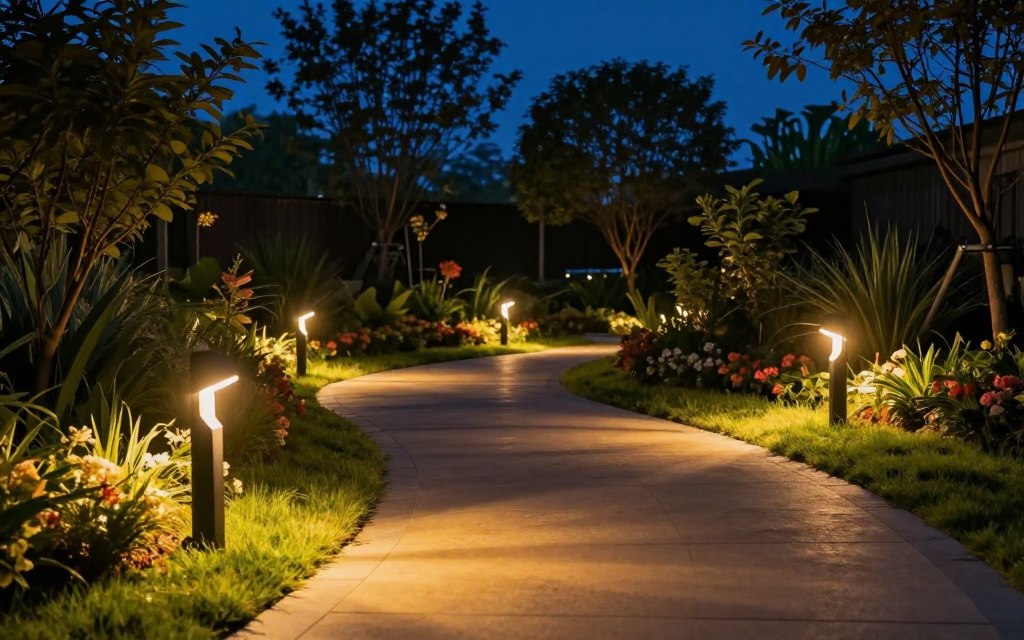
Path lights are among the most common landscape lighting fixtures, designed to illuminate walkways, garden paths, and driveways. Typically mounted on stakes and standing 14-24 inches tall, these fixtures cast light downward to ensure safe navigation while creating a welcoming atmosphere.
Spotlights & Floodlights

Spotlights project a narrow, focused beam to highlight specific features like trees, statues, or architectural elements. Floodlights cast a wider beam to illuminate larger areas such as walls or garden beds. Both can be adjusted to achieve different lighting effects.
Well Lights

Well lights (also called in-ground lights) are installed flush with the ground surface, making them nearly invisible during daylight hours. These fixtures project light upward and are ideal for illuminating walls, columns, and tall landscape features without the fixture being visible.
Step & Deck Lights
These specialized fixtures are designed to be mounted on vertical surfaces of steps, stairs, or deck risers. They provide crucial illumination for safety while maintaining a subtle, unobtrusive appearance that complements your hardscape design.
Hardscape Lights
Hardscape lights are specifically designed to mount directly to outdoor structures like retaining walls, pillars, and under capstones. These low-profile fixtures create a wash of light across surfaces without being visually prominent themselves.
Specialty Fixtures
This category includes underwater lights for ponds and fountains, string lights for festive areas, and bollard lights for more substantial pathway illumination. Each serves specific decorative or functional purposes in your landscape lighting design.
Landscape Lighting Techniques and Design Principles
Understanding basic lighting techniques helps you create a more dynamic and professional-looking landscape lighting installation. These methods can be combined to create a cohesive lighting design that highlights your property’s best features.
Uplighting
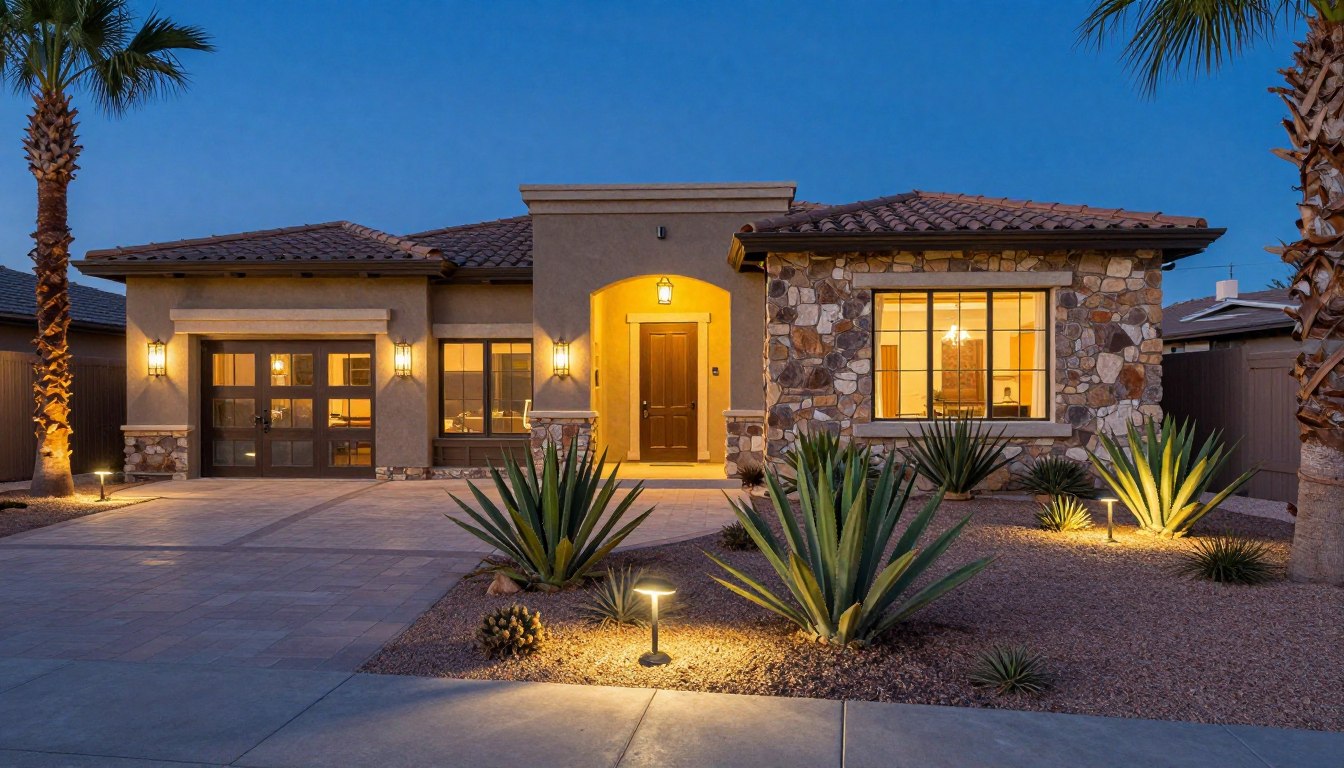
Uplighting involves positioning fixtures at ground level to cast light upward onto features like trees, walls, or architectural elements. This technique creates dramatic shadows and highlights textures, making it ideal for showcasing the vertical elements in your landscape.

Downlighting
Also called moonlighting when installed in trees, downlighting positions fixtures above the area to be illuminated, casting light downward. This creates a natural-looking effect that mimics moonlight filtering through branches, producing gentle, dappled shadows on the ground below.

Silhouetting
This technique places lights between a feature and a wall or flat surface, creating a dramatic silhouette effect. The light washes the background while the foreground object appears as a dark outline, emphasizing its distinctive shape and form.
Cross Lighting
Cross lighting uses multiple fixtures positioned at different angles to illuminate a feature from several directions. This reduces harsh shadows and ensures the subject is well-lit from all viewing angles, making it ideal for focal points in your landscape.
Design Principle: Layering Light
Professional landscape lighting designs typically incorporate multiple lighting techniques in layers. Combine ambient lighting (overall illumination), task lighting (functional illumination of specific areas), and accent lighting (highlighting features) to create depth and visual interest throughout your outdoor space.
Planning Your Landscape Lighting Installation
Proper planning is essential for a successful landscape lighting installation. Taking time to develop a comprehensive plan helps avoid costly mistakes and ensures your lighting system meets your needs.
FREE PRICING ESTIMATOR
Get a clear, custom estimate for your landscaping project in just a few minutes. Answer a few simple questions and receive a tailored cost breakdown based on your property, materials, and design goals.
Creating a Lighting Plan
Start by walking your property at night with a flashlight to identify areas that would benefit from lighting. Take photos and make notes about specific features you want to highlight. Sketch a rough layout of your property and mark potential fixture locations, considering both aesthetic and functional needs.
Essential Planning Steps:
- Identify key features to highlight (trees, architecture, garden areas)
- Mark pathways and areas requiring safety lighting
- Note existing outdoor electrical outlets
- Determine transformer locations based on outlet access
- Calculate total wattage requirements for your system
- Plan wire routes that minimize visibility and trenching
- Consider future expansion possibilities
Understanding Power Requirements
Most residential landscape lighting uses low-voltage systems (typically 12 volts) that require a transformer to convert standard 120-volt household current. Calculate your power needs by adding the wattage of all fixtures, then multiply by 1.25 to account for voltage drop over distance. This total determines the transformer size you’ll need.
“The most common mistake in DIY landscape lighting installation is underestimating power requirements. Always size your transformer with room for future expansion.” ~Professional Landscape Lighting Designer
Landscape Lighting Installation Process
With proper planning complete, you’re ready to begin the installation process. Follow these steps for a successful landscape lighting installation that will enhance your property for years to come.
Step-by-Step Installation Guide
- Gather supplies and tools – Collect all fixtures, transformer, wire, connectors, and tools before starting.
- Mark underground utilities – Contact your local utility marking service to identify and mark underground lines before digging.
- Position and assemble fixtures – Place fixtures according to your plan and assemble following manufacturer instructions.
- Mount the transformer – Install the transformer near an outdoor GFCI outlet, typically 12-18 inches above ground level.
- Lay out main cable – Run low-voltage cable from the transformer to each fixture location, following your planned route.
- Connect fixtures to cable – Use waterproof connectors to attach each fixture’s lead wire to the main cable.
- Bury the cable – Create a shallow trench (3-6 inches deep) and bury the cable to protect it from damage.
- Connect to transformer – Attach the main cable to the transformer following manufacturer instructions.
- Test the system – Turn on the transformer and verify all fixtures are working properly.
- Adjust fixture positioning – Fine-tune the angle and direction of each fixture after dark for optimal effect.

Wiring Techniques for Reliable Connections
Proper wiring is crucial for a reliable landscape lighting installation. Use waterproof wire connectors specifically designed for outdoor use to ensure connections remain secure despite exposure to moisture and temperature fluctuations. For most residential installations, 12-gauge or 14-gauge direct burial cable is sufficient.
Main Wiring Methods:
- Daisy Chain – Connect fixtures in sequence along a single cable run
- T-Connection – Branch secondary cables from the main cable to reach distant fixtures
- Hub System – Run multiple cables directly from the transformer to different zones
Wiring Tips:
- Leave extra slack at connections for future adjustments
- Use waterproof wire nuts or gel-filled connectors
- Avoid sharp bends in cable that could damage insulation
- Keep connections accessible for future maintenance
Energy-Efficient Landscape Lighting Options
Modern landscape lighting installations can be both beautiful and energy-efficient. Selecting the right components helps minimize energy consumption while maximizing lighting effectiveness.
LED Lighting

LED fixtures have revolutionized landscape lighting installation. They consume up to 80% less energy than traditional halogen lights while lasting 15-20 times longer. Modern LEDs offer warm color temperatures that create inviting ambiance without the harsh blue tint of early LED technology.
Solar-Powered Options
Solar landscape lighting eliminates the need for wiring and transformers, making installation extremely simple. While generally less bright than wired systems, modern solar fixtures can provide adequate illumination for paths and accent lighting in areas with good sun exposure.
Smart Controls
Smart lighting controls allow you to program operating schedules, adjust brightness levels, and even change color with compatible fixtures. Many systems offer smartphone control and integration with home automation platforms for convenient management of your landscape lighting.
Energy-Saving Tips for Landscape Lighting Installation
- Use timers or photocells to ensure lights operate only when needed
- Consider motion sensors for security lighting in less-frequented areas
- Implement zoning to illuminate different areas at different times
- Select fixtures with appropriate light output to avoid over-lighting
- Use warm white LEDs (2700K-3000K) for energy efficiency with pleasant ambiance
Maintenance and Troubleshooting
Regular maintenance ensures your landscape lighting installation continues to perform optimally year after year. Understanding common issues and their solutions helps you quickly resolve problems when they arise.
Routine Maintenance Tasks
Establish a regular maintenance schedule to keep your landscape lighting system in top condition. Quarterly inspections are typically sufficient for most installations, with more frequent checks during fall when leaf debris can accumulate around fixtures.
- Clean fixture lenses to remove dirt and debris
- Trim vegetation that may block light or damage fixtures
- Check and tighten wire connections
- Verify transformer settings and timer operation
- Replace bulbs proactively in non-LED systems
- Adjust fixture positioning as plants grow and landscapes evolve
Common Troubleshooting Issues
Even well-installed landscape lighting systems can experience occasional problems. Knowing how to diagnose and fix common issues saves time and frustration.
Fixture Not Lighting
Check for loose connections at the fixture and transformer. Verify the bulb is functioning and properly seated. Test voltage at the fixture to ensure power is reaching it.
Dim or Flickering Lights
Often caused by voltage drop over long cable runs or overloaded transformers. Verify transformer capacity is sufficient for connected fixtures. Consider adding a larger gauge wire or additional transformer for extensive systems.
Water in Fixtures
Check seals and gaskets for damage. Ensure fixtures are properly oriented to drain water. Replace damaged components or entire fixtures if seals cannot be restored.
Professional Installation vs. DIY Considerations
Deciding whether to tackle landscape lighting installation yourself or hire a professional depends on several factors including your skill level, project complexity, and available time.
DIY Installation Advantages
- Cost savings on labor (typically 40-60% of project cost)
- Flexibility to work at your own pace
- Personal satisfaction of completing the project
- Intimate knowledge of your system for future maintenance
- Ability to make adjustments and additions over time
Professional Installation Advantages
- Expert design knowledge and experience
- Access to professional-grade fixtures and equipment
- Proper handling of complex electrical requirements
- Time savings (typically 1-3 days vs. 1-2 weekends DIY)
- Warranty coverage on both products and installation
When to Consider Professional Installation
While many homeowners successfully install landscape lighting themselves, certain situations warrant professional assistance. Consider hiring a pro if your project involves any of these elements:
- Complex lighting designs requiring specialized techniques
- Installation in difficult terrain or established landscaping
- Integration with existing irrigation or electrical systems
- High-voltage lighting components requiring licensed electrical work
- Large properties requiring multiple transformers or extensive wiring
Get a Professional Consultation
Not sure if DIY is right for your project? Our lighting experts can assess your needs and provide personalized recommendations. Schedule a free, no-obligation consultation today.
Safety Precautions and Code Compliance
Safety should be your top priority during landscape lighting installation. Following proper procedures and adhering to relevant codes helps ensure a safe installation process and reliable system operation.
Critical Safety Guidelines
- Always turn off power before working on electrical connections
- Use GFCI-protected outlets for all landscape lighting transformers
- Call utility locating services before digging to mark underground lines
- Use only UL-listed outdoor-rated equipment and materials
- Follow manufacturer instructions for all components
- Keep connections above potential flood levels when possible
Electrical Code Considerations
While low-voltage landscape lighting typically has fewer code requirements than line-voltage systems, you should still be aware of relevant regulations. Most areas follow the National Electrical Code (NEC), which includes specific provisions for landscape lighting installation.
| Code Requirement | Description | Compliance Tips |
| Transformer Location | Must be at least 12″ above ground level and protected from weather | Mount transformer on exterior wall under eave or use weatherproof enclosure |
| Cable Burial Depth | Low-voltage cable typically requires 6″ burial depth (varies by jurisdiction) | Check local codes; use direct burial cable rated for underground use |
| GFCI Protection | Required for all outdoor outlets powering landscape lighting | Install GFCI outlet or breaker if not already present |
| Fixture Clearances | Minimum distances from pools, spas, and water features | Use specifically rated fixtures for wet locations near water |
Cost Factors and Budgeting for Landscape Lighting
Understanding the cost components of landscape lighting installation helps you create a realistic budget for your project. Costs vary widely based on system size, component quality, and installation complexity.
Typical Cost Components

| Component | Budget Range | Mid-Range | Premium |
| Path Lights (each) | $15-30 | $30-75 | $75-200+ |
| Spotlights (each) | $20-40 | $40-100 | $100-250+ |
| Well Lights (each) | $25-50 | $50-120 | $120-300+ |
| Transformer | $75-150 | $150-300 | $300-600+ |
| Cable (100 ft) | $30-60 | $60-100 | $100-200+ |
| Professional Installation | $200-500 | $500-1,500 | $1,500-5,000+ |
Budgeting Tips
Create a realistic budget for your landscape lighting installation by considering these practical tips from lighting professionals:
- Start with high-priority areas if budget is limited (entry, pathways, key features)
- Invest in quality fixtures for frequently viewed areas; budget options may work for secondary locations
- Purchase a transformer with 20% more capacity than currently needed to allow for future expansion
- Consider the long-term energy savings of LED fixtures despite higher initial cost
- Plan installation in phases if necessary, starting with essential safety lighting
“It’s better to do a smaller landscape lighting installation with quality components than to compromise on materials to cover a larger area. You can always expand the system later.”
Seasonal Considerations and Weatherproofing
Your landscape lighting installation must withstand changing seasons and weather conditions. Proper planning and component selection ensure year-round performance regardless of climate challenges.
Weatherproofing Essentials
Quality landscape lighting is designed for outdoor use, but taking additional weatherproofing steps extends system life and reliability. Pay special attention to connections, which are often the most vulnerable points in any lighting system.
- Use direct burial cable with UV-resistant coating
- Select fixtures with appropriate IP (Ingress Protection) ratings
- Apply silicone dielectric grease to connection points
- Position transformers in protected locations
- Use waterproof wire connectors designed for outdoor use
Seasonal Maintenance Schedule
Adapt your maintenance routine to address seasonal challenges that affect landscape lighting performance. Regular attention prevents most common problems before they develop into system failures.

- Spring: Clean fixtures, check for winter damage, adjust timers for longer daylight
- Summer: Trim vegetation around fixtures, check for irrigation interference
- Fall: Clear leaves and debris, prepare system for winter, adjust timers
- Winter: Check for snow/ice accumulation, protect exposed connections
Climate-Specific Considerations
Different climates present unique challenges for landscape lighting installation. Adapt your approach based on your local conditions to ensure optimal performance year-round.
Cold Climate Tips
In areas with freezing temperatures, frost heave can push fixtures out of position and damage wiring. Install fixtures on compacted gravel bases and use flexible wire loops at connections to accommodate ground movement. Consider using brass or copper fixtures that withstand freeze-thaw cycles better than plastic alternatives.
Hot Climate Tips
Extreme heat can degrade wire insulation and plastic components. Route cables in shaded areas when possible and use fixtures with heat-dissipating designs. Select transformers with thermal protection and install them in ventilated locations away from direct sun exposure to prevent overheating.
Coastal Climate Tips
Salt air rapidly corrodes standard metal fixtures. Invest in marine-grade stainless steel or solid brass fixtures specifically designed for coastal environments. Apply corrosion inhibitors to connection points and consider upgrading to sealed, potted LED fixtures that completely isolate electrical components from moisture.
Bringing Your Landscape Lighting Vision to Life
A thoughtfully designed and properly installed landscape lighting system transforms your outdoor space, enhancing both beauty and functionality. Whether you choose to tackle installation yourself or hire a professional, understanding the fundamentals of landscape lighting helps you make informed decisions that result in a system you’ll enjoy for years to come.
Remember that landscape lighting installation is both an art and a science. The technical aspects ensure reliable operation, while the creative elements determine how effectively your lighting enhances your property’s unique features. Take time to experiment with different lighting techniques and fixture placements to discover the perfect combination for your home.
Ready to Transform Your Outdoor Space?
Our landscape lighting experts can help you design and install the perfect lighting system for your property. From initial consultation to final adjustments, we’ll guide you through every step of the process.