

Could moving water make a patio feel cooler while a flame adds warmth after sunset? Fire and water features pair the sound and motion of water with the glow of fire, creating a lively focal point for Las Vegas homes.
For a Mojave home, the right design depends on your yard layout, water supply, gas access, and desert conditions. Summer heat, hard water, and storm runoff all affect where the feature belongs and how you care for it. A pump is a device that circulates water from a basin through a feature and back again.
Taylormade Landscapes® is a licensed local design-build contractor. We plan outdoor projects around the home, site, and services they need. This advice is for homeowners weighing a feature in the Mojave, where sun exposure and drainage can shape a design as much as its appearance.
The best fit brings the flame and water into your outdoor space without creating a difficult route for water, fuel, or service access. Start with the type of setup your yard can support.
Key Takeaways
- Choose a feature to fit your yard, water supply, and gas access.
- A pool is not required for a recirculating patio feature.
- Plan drainage and utility routes before building a wall or patio.
- Las Vegas heat, wind, and hard water affect upkeep.
- Ask a design-build contractor to assess the site and service needs.
Which Fire and Water Feature Type Fits Your Yard?
A poolside yard can support a water bowl that spills into the pool, while a patio without plumbing may suit a self-contained feature. A fire fountain can stand alone as a sculptural focal point in a garden or courtyard.
Fire and water bowls often sit on a pool edge or raised wall. Water flows over a lip into the pool or a lower basin. A fire water bowl can anchor a wall while keeping the flame and spill close to the pool’s edge. For a poolside layout, see these poolside fire feature ideas.
Fire-fountain forms can bring both elements into a garden or courtyard where a pool is not the visual center. A fire pit with water fountain can create one combined focal point, but its footprint and water path should suit the space around it.
Fire and water bowls for pool edges and raised walls
A bowl can receive water from a dedicated line, then spill back into the pool or lower basin. The wall, pool edge, and return path affect placement. Make sure the bowl’s scale suits the wall, rather than choosing by appearance alone.
Fire fountains and self-contained patio features
A self-contained unit uses its own basin and pump, making it a possible choice for a patio without a pool. What is the best outdoor water fountain? The best choice is one sized and configured for its site, not a universal model.
When comparing labels such as outdoor plus maya, 360 fire water, grand effects corinthian, and artisan series, treat each as a term to research, not proof of fit or performance. Search phrases such as fire and water fountains outdoors can also include different layouts. The yard’s sun, drainage, and utilities help narrow the choice.
| Type | Best site | Water arrangement | Utility planning |
|---|---|---|---|
| Fire and water bowl | Pool edge or raised wall | Spill to pool or lower basin | Plan supply and return route |
| Fire fountain | Garden or courtyard | Flow through a sculptural feature | Plan water, fuel, and access |
| Self-contained patio feature | Patio without a pool | Own basin and pump recirculate water | Plan basin space and electrical service |
Each format can create a different effect, but Las Vegas exposure and runoff can change where it works best.
How Fire and Water Features Fit a Las Vegas Yard
A Las Vegas yard exposed to afternoon sun can lose water quickly and heat surrounding surfaces. Summer temperatures can reach 115°F, so shade, access for refilling, and a comfortable distance from seating all matter when you place a fire water feature.
Intense sun may affect how long people want to sit near a feature during the day. If the patio has little shade, consider how the flame and water will look from a cooler seating area. Wind can also carry splash beyond the basin, so account for nearby surfaces and plants.
Hard water can leave mineral deposits where water spills across a lip. The shape and visibility of that surface affect how often scale catches your eye. A design with clear access to the spillway makes inspection easier than one tucked behind a wall or dense planting.
Monsoon runoff needs a planned route away from the feature and nearby structures. A basin set in a low point can receive stormwater and debris, so check the surrounding grade before deciding its exact position. Outdoor fire and water features should not block existing drainage paths.
Small fire and water features can suit a compact patio when the basin, flame, and seating are scaled to the available space. Leave room to move around the feature and reach it for service. The best fire and water features are those that fit the site, rather than the largest or most elaborate option.
These desert conditions shape placement, but they do not mean a pool is necessary for moving water.
Can You Install One Without a Pool?
Yes. On a patio without a pool, a basin-and-pump system can recirculate water from its own basin through the feature and back again.
The basin holds water, and a submerged pump sends it through the feature. Water then returns to the basin, forming a closed route. This setup can bring moving water to a patio, courtyard, or garden that has no pool connection.
Not every model is self-contained. Some designs need a separate supply and return route, so confirm the intended setup before construction. A pool-connected fire water bowl works differently: a dedicated line can feed the bowl, and spillover can return to the pool.
A pool connection can make the pool part of the water system, while a separate basin keeps the feature independent. Either way, the design must account for the water path and service access. Keep the basin accessible enough for inspection and cleaning.
Supply and return routing is easier to coordinate while a deck or wall is being built than after construction. If you are planning a new patio, discuss the feature before hardscape work begins. This overview of outdoor water features explains how a recirculating fountain moves water from a basin and back.
Once the water route is clear, coordinate the fuel and ignition choices that produce the flame.
Which Gas and Ignition Setup Suits Your Patio?
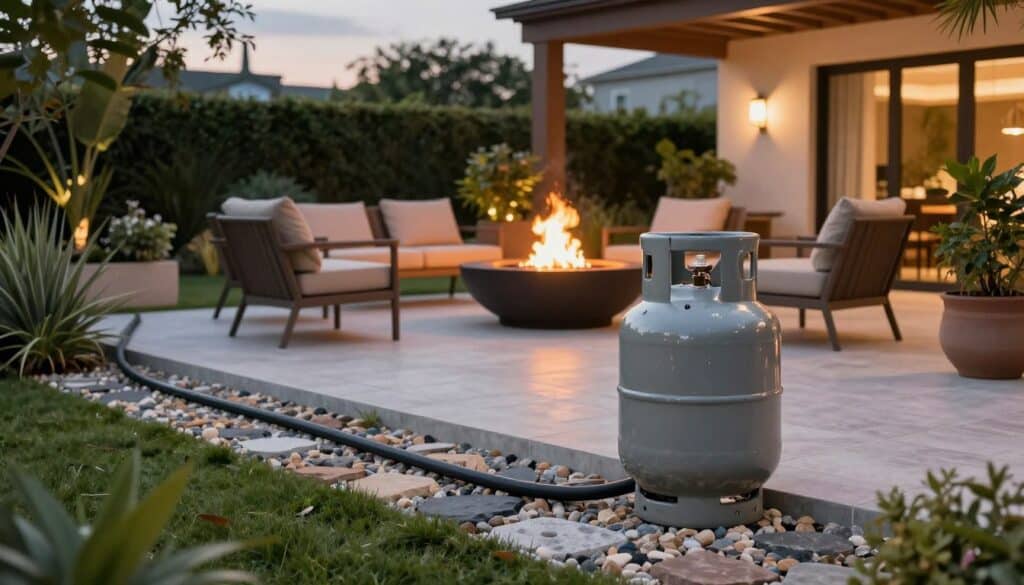
Fuel planning starts with your yard layout: natural gas needs a line to the feature, while propane needs a tank located nearby. The route, access, and intended location shape which gas fire setup suits your project.
Natural gas connects the burner to a gas line and can provide a continuous fuel supply. The line must reach the feature, so its route should be coordinated with walls, paving, and other services.
Propane comes from a tank located near the feature. That tank needs a suitable place within reach of the burner and accessible for service. Plan its position as part of the yard layout, not as an afterthought once the patio is finished.
Natural gas or propane
Either fuel can serve a purpose-designed gas feature when the system is selected and installed for the project. The choice affects the services and space needed at the site. Confirm the intended fuel with the designer and installer before the feature is built.
Match-lit or electronic ignition
Match-lit ignition uses a key valve and has no electronic ignition components. You open the valve and light the burner according to the system’s instructions. This option does not need electrical power for ignition.
Electronic ignition needs electrical power at the feature. It may include flame sensing that shuts off gas if the flame goes out. The added electrical service needs to be coordinated with the feature and nearby water.
Wood fire and water features should not be treated as interchangeable with a purpose-designed gas burner assembly. A wood-burning setup uses a different fuel and design approach. Confirm the intended fuel and burner with the designer and installer rather than adapting one system to another.
After fuel and ignition are chosen, the pump and water flow determine whether the spill looks controlled or weak.
How Should You Plan Water Flow and the Pump?
A full, controlled spill and a weak trickle can come from the same feature when the pump does not match the water route. Pump selection depends on required flow and vertical lift, called head height.
Head height is the vertical lift the pump must overcome to move water from its source to the outlet. A pump that is too small can produce weak visible flow. An oversized pump can waste energy and overflow a basin.
Choose the pump to suit the spillway and lift, not its appearance or a guess based on the feature’s size. The required flow must create the intended sheet or stream while keeping water within its basin. A 360 fire water layout, for example, still needs a pump matched to its actual route.
| Setup | Water source | Circulation | Planning point |
|---|---|---|---|
| Pool-connected bowl | Pool or dedicated supply | Spill returns to pool | Match flow to bowl and return |
| Self-contained patio feature | Feature basin | Pump returns water to basin | Allow room for basin and service |
| Built-in basin | Installed basin | Pump sends water through feature | Match lift and spillway flow |
The table shows why one pump choice cannot suit every water feature. The route, outlet, and height all affect circulation, and the basin must contain the returning water.
A pump serving a water feature requires suitable electrical protection near water. The electrical layout should account for wet outdoor conditions and the pump’s location. Once flow and electrical service are planned, the base and drainage must support reliable operation.
Which Materials and Site Details Matter in the Mojave?
A hard, caliche-rich yard needs attention before a feature is placed. Caliche can complicate excavation, so check the intended basin location and drainage route before settling on a finished design.
GFRC means glass-fiber-reinforced concrete. GFRC concrete can form a substantial-looking bowl or vessel, while copper brings a different surface that can develop a patina outdoors. Neither material suits every Las Vegas site; exposure, design, and upkeep all matter.
A concrete fire water design needs a base that supports its weight and a route that keeps stormwater moving away. A copper surface may change appearance as it weathers. Compare the intended look with how much surface change you are comfortable seeing over time.
Choose a finish for heat, water, and upkeep
Hammered copper, powder-coated finishes, extended lip edges, and seamless lip details are choices to assess against the design and verified specifications. Those labels alone do not promise a certain lifespan or upkeep level. Hard water can leave mineral scale on a spillway lip, whatever its finish.
Terms such as grand effects may appear in product descriptions or design discussions. Treat them as labels to assess for the actual project, not as proof that a finish suits your property. Check the intended use and finish details before making a selection.
Plan the base and drainage before construction
The base, soil, and grade need to work together. A basin that sits in the path of storm runoff can collect water and debris from the yard. Direct runoff away from the feature and adjacent structures, and coordinate excavation with the finished patio or wall.
| Mojave condition | Design check | Reason to check |
|---|---|---|
| Caliche soil | Excavation depth and access | Hard layers can complicate digging |
| Monsoon runoff | Grade and drainage route | Keep stormwater away from the feature |
| Hard water | Spillway access and finish | Mineral scale can collect on the lip |
| Summer heat | Sun exposure and placement | Heat affects comfort and water loss |
These site choices set up the feature for the weather it will face. Next, check the safety details before anyone connects gas, power, or water.
What Safety Checks Should Come Before Installation?
When wiring and a gas line meet near a water-filled basin, complete the safety checks before the flame is used. A combined unit’s internal separation does not remove the need for compliant installation.
Have the gas system, burner, ignition, and water components reviewed as one project. Use this checklist to confirm that the right people and instructions guide the work:
- Have a qualified professional install and check the gas supply.
- Confirm the burner and ignition components are isolated from the water chamber.
- Use ground-fault circuit interrupter protection for pump and ignition wiring near water.
- Keep wiring and connections suitable for wet outdoor conditions.
- Confirm placement and clearances against current local code and manufacturer instructions.
Clearances vary with the feature and its installation. Do not rely on a general measurement or a visual guess. A qualified professional must review the specific setup against current local code and manufacturer instructions.
The location of electrical connections also matters when a feature sits near splash or runoff. Follow the requirements for outdoor equipment and keep service access in mind. These checks apply even when water and flame occupy separate chambers inside one unit.
Once the installation is checked, the day-to-day questions shift to topping off the basin and keeping circulation clear.
How Much Water and Maintenance Will It Need?
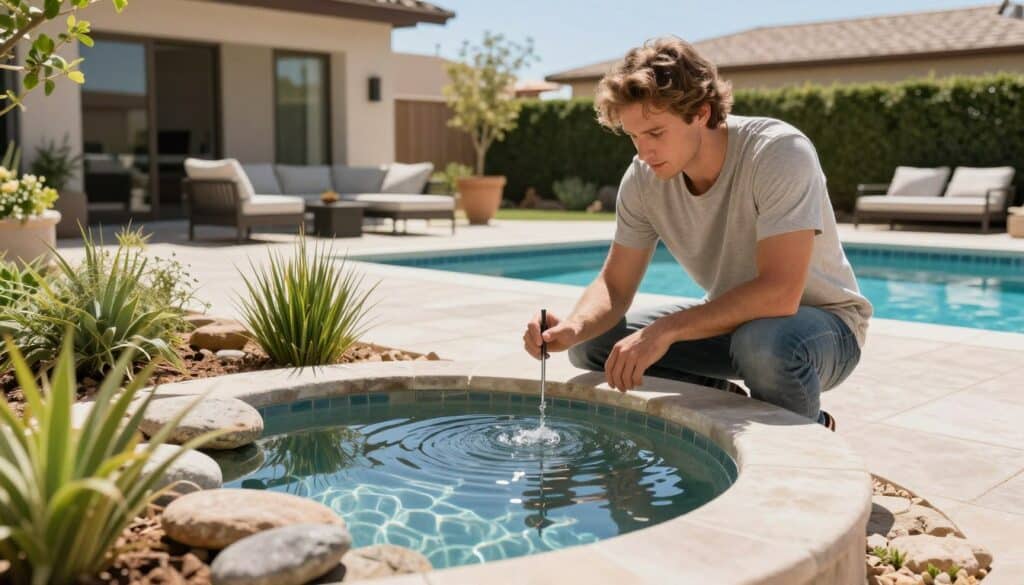
A hot, windy Las Vegas afternoon can lower the water level in an outdoor basin through evaporation. Check the basin during hot weather and top it off when needed to keep the pump supplied with water.
Evaporation changes with heat, wind, basin size, and splash. A spill that sends water beyond the basin can also increase the amount you need to replace. The water feature’s instructions can help you understand its normal operation and water level.
Hard water can leave mineral scale on spillway surfaces. Clean deposits gently so they do not build up unnoticed around the point where water flows. The basin and pump also need periodic inspection and cleaning to support circulation.
Should you leave an outdoor fountain running all the time? Follow the specific pump and feature instructions. Turn the system off when maintenance, a water shortage, or a fault requires it.
- Check the basin water level.
- Inspect the pump and circulation.
- Clean mineral deposits with a soft brush and suitable mild cleaner.
Keep the pump supplied with water and follow the maker’s directions for cleaning or service. A feature that is easy to reach is simpler to inspect than one placed behind a fixed barrier. The upkeep commitment is also one part of the custom installation price.
What Affects the Price of a Custom Installation?
An accessible patio with existing services may need less site work than a yard requiring excavation and new utility runs. The price of a custom installation reflects the feature, the site, and the work needed to connect them.
Feature dimensions, selected materials, fuel, and ignition all shape the project scope. The basin and pump requirements also matter, along with access for construction and service. A larger or more complex feature can call for different site preparation than a compact unit.
Feature size, finish, and fuel choice
The material and finish affect the components included in the design. The chosen fuel and ignition also affect the services the installer must coordinate. Labels a homeowner may encounter include outdoor plus, outdoor plus maya, grand effects corinthian, artisan series, and prism hardscapes.
Those terms may identify products, lines, or design choices, but a label alone does not define the full installed scope. A product page may list a component, while an installed project also includes the basin, pump, site preparation, and service connections.
Site access, excavation, and utility runs
Access affects how equipment and materials reach the work area. Excavation in caliche and any drainage work can add steps to the site preparation. The distance and complexity of gas, water, and electrical runs also affect the work involved.
A product page is not the same as a quote for a completed feature. The project-specific price depends on the selected design and the work required at your property. A project-specific quote is needed for the actual price.
With the scope understood, the next step is a site assessment that connects the design to the services and construction plan.
What Happens During Design and Installation?
The first site visit checks access, utilities, and drainage before a designer settles on a model. That assessment helps shape the feature and the work needed to install it in your yard.
A design-build project moves from the yard’s existing conditions to a working feature. The main steps keep site planning, service work, and operation connected:
- Assess the yard, access, caliche, drainage, and utilities.
- Choose the feature, fuel, ignition, basin, and pump arrangement.
- Coordinate excavation and gas, water, and electrical services before finishing the patio or wall.
- Test circulation and ignition, then explain routine operation.
How do you make a simple water feature? Select a basin, pump, and recirculating route suited to the site. If the design includes a flame, have qualified professionals handle the gas and electrical work.
Coordination before hardscape work can keep a new service route from requiring changes to a finished wall or patio. The designer should account for where the feature sits, how it can be accessed, and how water moves through it. That planning links the chosen feature to the real conditions of the yard.
See Taylormade Landscapes® Las Vegas landscape design-build services for more about its project work. Bring photos, a rough location, and any known details about nearby utilities to a design consultation.
Book a design consultation with Taylormade Landscapes® to discuss how the feature can fit your property. From there, the final placement should reflect both the household’s use of the yard and the water’s route during a storm.
Where Can a Feature Make the Biggest Visual Impact?
Picture the feature from the seat where your household spends an evening, then trace where its water can go during a storm. A good focal point fits the way you use the patio and does not obstruct drainage, planting, or daily movement.
A pool edge can put a fire water bowl in view from the water and nearby seating. A raised wall can make the feature visible across a yard, while a patio location keeps it close to the household’s main gathering spot.
A courtyard can give a fountain or combined feature a defined setting. Think about its sound and splash as well as its appearance. A path that looks clear on a plan may feel tight once chairs, planting, and people occupy the space.
Use these checks when comparing fire and water feature ideas:
- View from the main seating area.
- Access for service.
- Drainage route during monsoon rain.
- Separation from planting and walkways.
SNWA watering rules apply to landscape irrigation, so check your property’s current schedule. AB 356 restricts Colorado River water use on nonfunctional turf at nonresidential properties, not residential yards. A feature can be one element of a water-conscious landscape, but it does not replace checking local requirements.
Assess the view, service access, and stormwater route at your property, then request a consultation to discuss placement.
Conclusion
A successful Las Vegas installation starts with matching the feature to your yard and its utilities. Plan the water route, fuel, drainage, and maintenance needs before construction begins.
Choose a design that fits the way you use your outdoor space, whether it sits beside a pool or on a patio without one. Early coordination can help the basin, pump, and service routes work with the finished landscape.
Explore Taylormade Landscapes® design-build services and book a design consultation to discuss your property.


