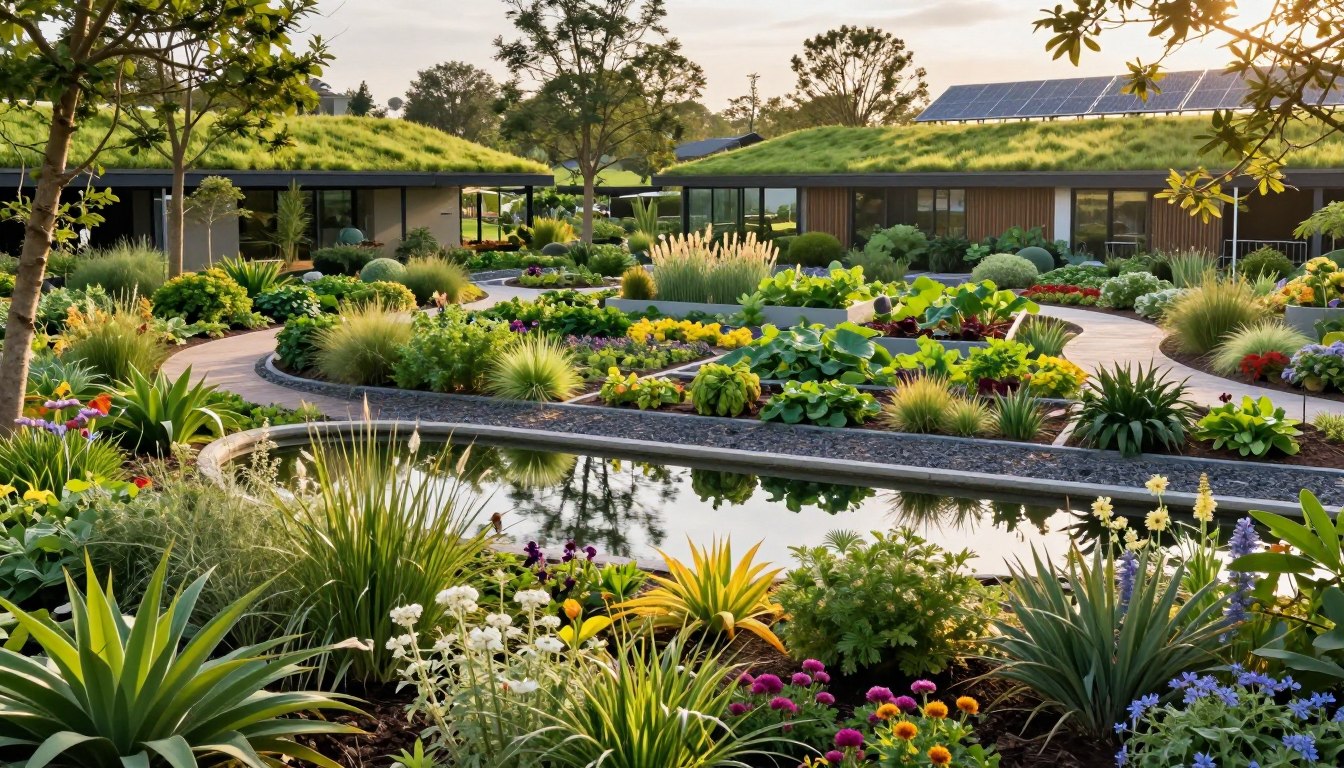
Could a green yard work well through Las Vegas heat, caliche, monsoon runoff, and local watering rules? A well-planned synthetic turf project can create an attractive, usable landscape for your home while accounting for those conditions and your household’s daily needs.
Taylormade Landscapes® is a licensed Las Vegas design-build landscaping contractor. A thoughtful plan can shape an outdoor space around how you live, rather than treating every yard as the same project. The first step is recognizing the conditions beneath and around the surface.
Key Takeaways
- Start with the yard’s soil, grade, drainage, and intended use.
- Compare turf products against the activities and traffic they will face.
- View colors outdoors beside the stone, plants, and hardscape.
- Ask how the base, seams, edges, and drainage will be handled.
- Measure the areas and prepare a clear project brief before discussing the amount of material.
Desert conditions can affect excavation, water movement, and how a surface feels in daily use. Account for the property itself before choosing a surface or planning a landscape project.
What Makes Las Vegas Yard Design Different?
A Las Vegas yard must handle desert heat and brief, intense rainfall. Las Vegas sits in the Mojave Desert, where summer temperatures can reach 115°F and monsoon storms can send water across a property quickly.
Caliche soil is a hard, calcium-carbonate-rich layer common in desert soils that can make excavation and water movement difficult. SNWA watering rules govern landscape watering in Southern Nevada. AB 356 restricts Colorado River water use for nonfunctional turf at specified commercial, institutional, multifamily, and government properties, but single-family residential properties are exempt from that ban.
| Mojave condition | What you may encounter | Design response | What to check |
|---|---|---|---|
| 115°F summer heat | Prolonged sun exposure | Choose materials and layout for intense exposure | Confirm product UV details |
| Caliche | Hard digging and slow water movement | Assess excavation and drainage | Inspect the actual site |
| Monsoon runoff | Fast-moving stormwater | Plan positive drainage and discharge | Identify low points |
| Watering rules and AB 356 | Rules vary by property type and watering use | Check current SNWA and local requirements | Confirm whether the property is covered |
Confirm current requirements with SNWA and the relevant local authority. Those site conditions shape the project brief before you compare turf products and appearances.
How to Choose Synthetic Turf for a Las Vegas Yard
The right artificial grass product depends first on how your household will use the yard. Shortlisting products for an Artificial turf Las Vegas project starts with the activities, expected traffic, and look you want.
- Define the use for each area.
- Assess expected foot traffic.
- Compare pile height and texture.
- Inspect color in the yard’s actual light.
- Request a sample before confirming the selection.
Product labels and feature claims are not interchangeable; compare them with the intended application. Turf may be cut to length, and a sample lets you judge texture and appearance at home. For more detail on choosing synthetic turf for a low-maintenance lawn, consider how the product’s features fit your priorities. Use-specific products differ across outdoor areas.
Which Turf Products Suit Each Outdoor Use?
A decorative patio with light foot traffic has different needs from a family lawn used daily. Artificial grass is offered for landscaping, patios, sports applications, and putting greens, so match the product to its setting.
Large rolls and cut-to-length products are generally sold by turf retailers. An installed design-build project can be scoped through a contractor. Artificial grass wholesale Las Vegas options and a Synthetic grass warehouse serve product sourcing, a different need from hiring a contractor to design and build the landscape.
Turf for everyday lawn areas
For lawn and patio areas, compare the pile profile, expected traffic, and dimensions of the space. A large roll or specific cut length may suit the measured layout, but seams and shape affect how material fits. General listings may mark products for low, medium, or high traffic.
Turf for pets, play and putting
Pet runs, play spaces, and putting areas call for separate priorities. A short pile can suit some pet areas, while a putting surface needs a product designed for a consistent roll and response. No single product should be assumed to fit all three uses.
| Use | Typical pile profile | Traffic label to look for | Selection priority |
|---|---|---|---|
| Decorative patio | Short | Low to medium | Fit and drainage |
| Everyday lawn | Medium | Medium | Natural appearance and household traffic |
| Pet run | Short to medium | High | Drainage and cleanability |
| Putting area | Short | Product-specific | Consistent roll and response |
These pile profiles are general selection guidance, not Taylormade Landscapes® product specifications. Beyond use and form, color affects the finished landscape.
How Do Artificial Turf Colors Affect the Landscape?
A green shade may look warm beside pale desert stone and cooler in a shaded sample area. Artificial turf colors change in appearance with the fibers, surrounding walls, plants, and direct sun.
View a sample outdoors at different times of day, beside the hardscape and plants it will meet. One color seen indoors may not represent how it appears under Las Vegas sun. A nearby wall can also change the light reflected onto the grass, so judge the sample in the actual space.
Once the visual fit is clear, pet owners should weigh practical needs alongside appearance.
What Should Pet Owners Check Before Choosing Turf?
In a dog run, a realistic-looking grass surface matters, but drainage and cleanup determine day-to-day usability. The most realistic artificial grass for dogs is not automatically the best product if drainage, cleanability, or traffic needs do not suit your pet.
- Confirm the backing’s drainage design.
- Check the manufacturer’s care instructions.
- Choose a traffic rating suited to your dog’s activity.
- Plan for prompt waste removal and rinsing.
- Ask how seams and edges will be secured.
A dog that runs a regular path can place more wear on that area than a pet that uses the yard occasionally. Care directions also help you understand what cleaning methods fit the product. Do not assume that any turf is non-toxic, odor-proof, allergen-free, or right for every pet.
Pool, play, and patio areas may call for a different design approach.
Can Turf Fit Around Pools, Patios, and Play Areas?
A small turf zone beside a hard patio can define a green area without covering the entire yard. Turf can sit among pool decks, pavers, shade structures, and planted areas when each transition is planned.
Consider heat exposure, circulation routes, edges, and drainage for every area. A route between the patio and pool may see more traffic than a tucked-away lawn. The surface may not suit every high-heat or high-use location, and it should not be assumed safe for every pool, play, or barefoot use.
Once you identify where turf could fit, project cost factors help frame the next decision.
What Drives Artificial Turf Cost in Las Vegas?
Two yards of equal area can have different costs because their preparation and finish details differ. Artificial turf Las Vegas cost and Artificial grass cost cannot be determined from area alone.
Square footage, shape, excavation, caliche, disposal, access, and existing grade can change the preparation scope. A narrow side yard with limited equipment access may require more handling than an open, level area of the same size.
Site preparation and access
The amount of excavation depends on the existing surface and conditions below it. Caliche may change how easily crews can dig, while disposal and access can add work. Existing slopes and low spots may also affect how much preparation the area needs.
Product, edges and drainage
Product specifications, roll width or cut length, seams, edging, drainage work, and infill all affect scope. Prices also depend on the project’s layout and specifications, not just its measured length or total ft. A measured plan and site assessment give you a clearer basis for discussing the work.
| Cost factor | What changes the scope | Potential cost effect | Information to gather |
|---|---|---|---|
| Area | Square footage and shape | More material or cuts | Measured plan |
| Base work | Caliche and excavation depth | More preparation | Site assessment |
| Access | Distance and equipment access | More handling | Access notes |
| Finish details | Edges, seams, and drainage | Added installation work | Plan and specifications |
Those variables lead to the ground preparation that supports a durable installation.
How Do You Prepare Caliche Soil for Turf Installation?
Turf installation Las Vegas projects begin by evaluating existing soil and drainage, not by rolling turf over the ground. To answer “How do you prepare the ground for artificial turf?”, first remove unsuitable material, assess caliche, set the grade, and plan where water will go.
The work changes with caliche, existing surfaces, traffic, and the drainage plan. Excavation must leave a stable area for the base, rather than burying weak or unsuitable material where it may settle later.
Assess the grade and drainage
Check the slope and identify low spots before building the base. Set a grade that directs water toward the planned drainage route. Caliche can make excavation and water movement difficult, so assess actual site conditions instead of assuming every area behaves alike.
Build and compact the base
Install and compact a suitable aggregate base, correct low spots, plan seams, and secure the edges. Base depth and method depend on site conditions and installer specifications. Fit the turf only after checking that the prepared support is firm and even.
| Stage | Work | Check before moving on | Las Vegas concern |
|---|---|---|---|
| Clear and excavate | Remove existing surface material | Confirm stable excavation | Caliche may require different effort |
| Grade | Set fall toward planned drainage | Check low spots | Prevent stormwater pooling |
| Base | Place and compact aggregate | Confirm firm, even support | Avoid unstable fill |
| Fit and secure | Align, cut, and secure turf | Inspect seams and perimeter | Account for traffic and transitions |
With the aggregate base prepared, the next concern is how water moves through the installed surface during monsoon storms. See these common turf installation mistakes to avoid when discussing site work.
Does Turf Drain Through During Monsoon Rain?
Drainage depends on both the turf backing and what lies underneath it. Rain can pass through permeable backing, but the aggregate base, grade, seams, and site outlet determine whether the installed areas drain without pooling.
Intense monsoon runoff can still overwhelm an area with poor grading or an obstructed outlet. Water must have a planned route away from low spots, not just an opening through the turf.
Mold can develop on trapped organic debris where moisture remains. Drainage and debris removal matter because turf fibers themselves do not prevent mold growth.
Stormwater is one care concern; Las Vegas hard water can leave a different kind of residue.
How Does Hard Water Affect Turf Care?
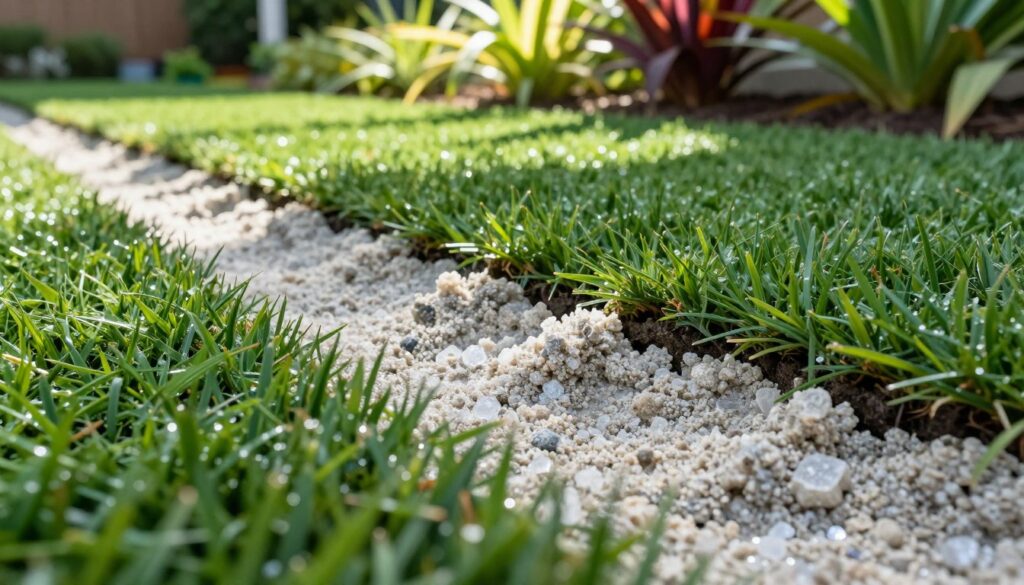
Pale residue can appear where irrigation overspray repeatedly dries on turf or nearby hardscape. Minerals in hard water may leave visible deposits on fibers, especially in places that get wet and dry over and over.
Follow the turf maker’s cleaning directions and test any cleaner on a small, inconspicuous area first. The effect depends on the product and the pattern of water exposure. Hard water does not damage every turf product, so avoid assuming that a residue means the fibers have failed.
After residue, dust, loose debris, and foot traffic are the everyday care concerns.
What Maintenance Keeps Turf Presentable in Desert Dust?
Desert dust can dull a green surface even when the turf is otherwise intact. Shade, windblown debris, and foot traffic affect how often you need to care for it.
- Remove leaves and loose debris.
- Rinse dust as needed.
- Brush matted fibers against the traffic direction when product instructions allow.
- Inspect seams, edges, and infill if the product uses it.
Follow the product’s care guidance, since cleaning and brushing directions can differ. A shaded corner may collect leaves, while a busy path may mat down more quickly. Customer service or product information can help clarify care instructions for a specific turf type.
Consistent care supports the surface, while use and exposure also affect its useful life.
How Long Can Residential Turf Last?
Residential landscape turf commonly lasts about 10-15 years. Product construction, UV exposure, traffic, maintenance, and installation quality all affect how long it remains in good condition.
That range is a general expectation, not a Taylormade Landscapes® product promise or warranty. A surface with heavy use or prolonged sun exposure may wear differently from one in a protected area.
A sports-field lifespan is not a direct comparison for a residential landscape installation. The uses, conditions, and product needs can differ.
That general lifespan needs to be weighed against turf’s limits and tradeoffs.
What Are the Downsides of Artificial Turf?
The main tradeoffs are heat exposure, cleaning, dependence on a well-drained base, and the loss of living grass. Turf is not automatically cooler, maintenance-free, or appropriate for every area.
Direct sun can make a surface hot, so consider exposure and how you use each space. Leaves and debris still need removal, and a poorly designed base can contribute to drainage problems.
Artificial grass also lacks the living lawn ecosystem, and worn material eventually needs replacement. These tradeoffs matter differently in a shaded patio, a pet run, or a busy family lawn.
A contractor can assess whether those limits fit your property and intended use.
How Can You Evaluate a Las Vegas Turf Contractor?
Ask, “How will you assess the caliche and manage stormwater on my property?” The answer should address the actual site, not rely on a general promise about turf.
Taylormade Landscapes® is a licensed Las Vegas design-build landscaping contractor. You can review its Las Vegas landscape design-build services while preparing questions about project scope and site planning.
Questions about site assessment and installation
Ask how the contractor evaluates caliche, grading, and monsoon runoff. Discuss aggregate base preparation, seams, edges, and the product’s care instructions. Clear answers should connect each detail to the property and planned use.
Questions about licensing and project scope
Verify the contractor’s active Nevada license. Review the written scope, exclusions, schedule, and product specifications, and clarify who handles permits or applicable rules. A clear document helps you understand what the service includes before work begins.
- Verify the license.
- Request a site assessment.
- Review the written scope.
- Confirm drainage and base details.
- Clarify product and care documentation.
Use those answers to prepare a clear project brief and decide on a practical next step.
What Should You Plan Before Ordering Turf?
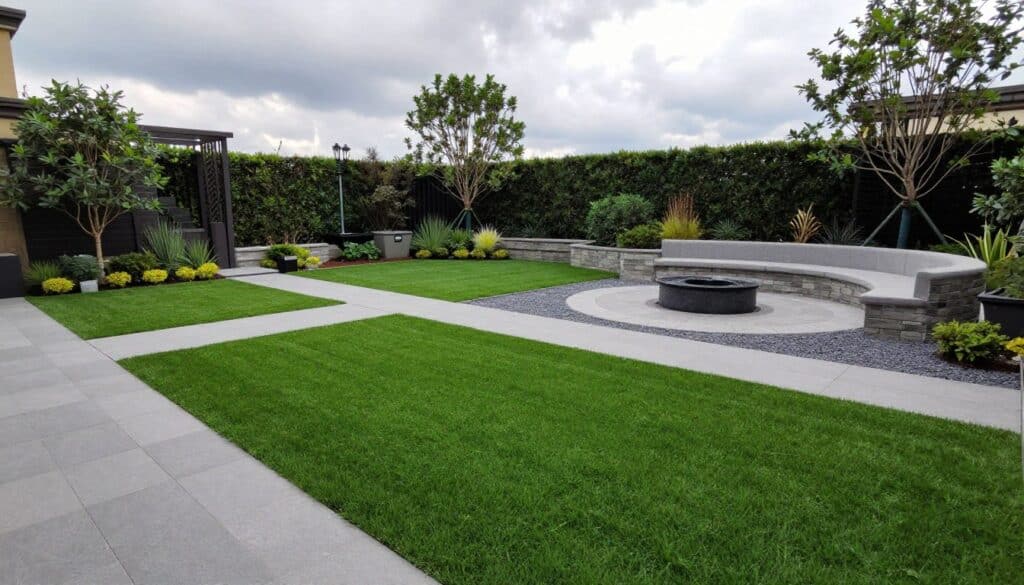
Turn “I want a greener yard” into a measured brief by mapping the areas you want to change. A clear use plan helps you discuss the project amount and cut length with a design-build contractor.
- Map the intended areas and dimensions.
- Note access, slopes, and existing surfaces.
- Identify pets, play, and traffic needs.
- Collect reference images and product questions.
An accurate measured area and clear use brief help determine the amount and cut length to discuss. Final quantities depend on layout, seams, and installation details. You can bring those measurements and questions to Taylormade Landscapes®’ landscaping services for a project discussion.
Use your measurements and notes to take a concrete next step toward a well-planned outdoor space.
Conclusion
A good Las Vegas landscape choice begins with the property’s conditions and the way you use the space. Start with caliche, drainage, and intended use, not product color alone.
Measure the areas you are considering, then prepare questions about aggregate base preparation and stormwater handling. Take those details to a design-build contractor when you discuss the project.