Autumn brings crisp air and golden leaves. It’s the perfect time to transform your outdoor space into a peaceful retreat. Adding water features, like a gentle fountain or bubbling element, creates instant warmth.

These additions fit any landscape design. They offer soothing sounds and visual interest. Your personal oasis becomes a place for relaxation and gatherings.
We will guide you through choosing the right elements. Learn about simple installation and seasonal care. Discover how to enhance your area with flowing beauty.
Imagine sipping coffee beside a tranquil fountain. Fall colors reflect in the moving surface. Let’s create that perfect cozy atmosphere together.
Why Small Water Features Transform Your Backyard into a Peaceful Retreat
The gentle transition of seasons invites us to reimagine our personal outdoor havens. These additions create instant tranquility through movement and sound. They transform ordinary areas into special places for reflection.
The Soothing Power of Flowing Water
Moving liquid produces calming auditory experiences that reduce stress. Research shows these natural sounds promote mental well-being and relaxation. The gentle murmur creates a meditative atmosphere in any setting.
These pleasant noises effectively mask urban disturbances like traffic. They create a quieter environment for true peace. Many find the consistent rhythm helps with focus and calmness.
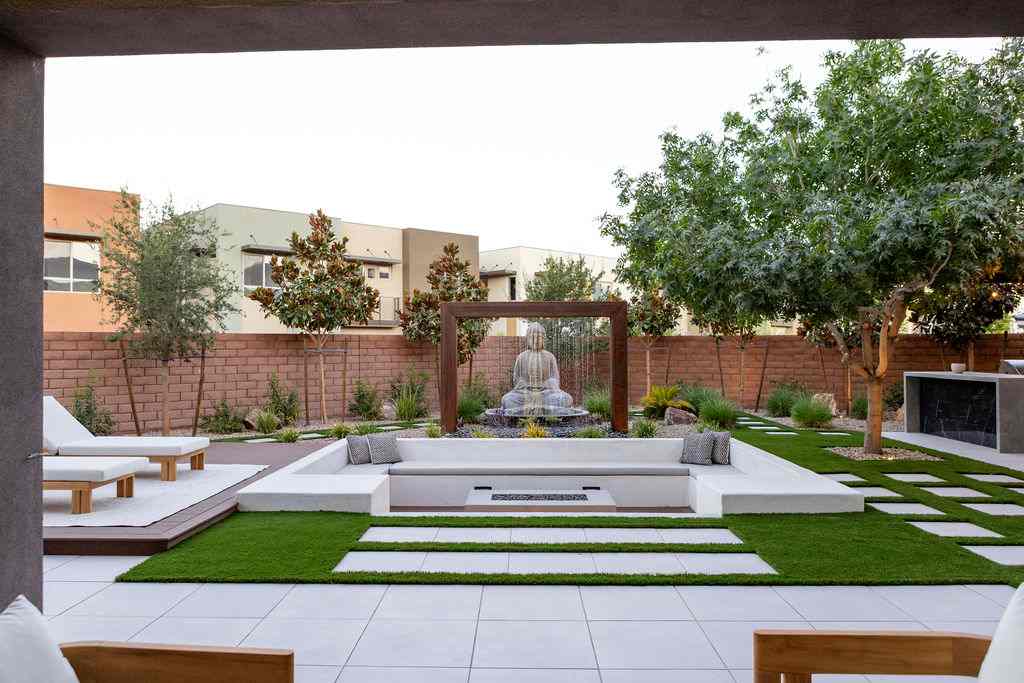
Wildlife often visits these moving elements, enhancing your ecosystem. Birds and beneficial insects are drawn to the refreshment. This creates a dynamic, living environment right outside your door.
The sound of moving liquid has been shown to lower cortisol levels and promote alpha brain waves associated with relaxation.
Creating a Beautiful Focal Point in Limited Space
Even compact areas benefit from well-designed centerpieces. These elements draw attention without overwhelming the area. They create visual interest where space might otherwise feel limited.
Strategic placement helps define specific zones within your landscape. A seating nook gains purpose when anchored by movement. Garden paths become journeys when punctuated with these highlights.
The natural beauty complements existing plants and hardscapes beautifully. Stone, metal, or ceramic designs integrate seamlessly. Each selection reflects personal style while enhancing the overall aesthetic.
These conversation starters invite admiration from guests. They demonstrate thoughtful design within your available area. Even urban settings can achieve peaceful retreat status with proper planning.
Consider your relaxation goals when selecting the perfect element. Whether meditation, entertaining, or simple enjoyment guides your choice. The right addition meets both practical and emotional needs.
Our Top 8 Small Water Features for Backyard Spaces
We’ve curated exceptional options to elevate your outdoor experience. Following the Top Trends in Garden Water Features for Modern Landscapes, these selections combine beauty with practicality. Each offers unique benefits for different spaces and preferences.
Our list includes solutions for various budgets and skill levels. You’ll find options from simple installations to more complex setups. Every choice brings movement and tranquility to your environment.
Solar-Powered Water Fountains: Eco-Friendly Elegance
These systems operate without electrical wiring. They harness sunlight to power gentle circulation. Solar panels can be discreetly positioned for optimal exposure.
Maintenance involves occasional panel cleaning and pump checks. Installation typically requires no professional help. They’re perfect for environmentally conscious homeowners.
Miniature Ponds: Natural Beauty in Compact Form
These self-contained ecosystems mimic natural bodies on a smaller scale. They support aquatic plants and sometimes fish. Pre-formed liners make setup straightforward.
Regular care includes monitoring water quality and cleaning. They create fascinating micro-habitats for local wildlife. Even tiny versions make impressive visual statements.
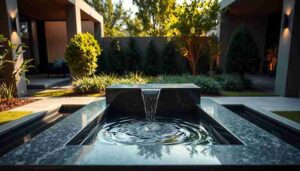
A tranquil bubbling fountain centerpiece, crafted with care by Taylormade Landscapes, takes center stage in this cozy backyard oasis. The gently cascading water flows over a stone base, creating a soothing ambiance. Soft lighting illuminates the scene, casting a warm glow and enhancing the natural textures. Lush greenery frames the fountain, blending seamlessly with the earthy tones. This elegant water features invite visitors to pause, unwind, and immerse themselves in the serene atmosphere, perfectly complementing the intimate backyard setting.
1. Bubbling Fountains: Centerpiece Charm
Campania International offers excellent bubbling designs. These standalone pieces provide gentle upward movement. The look resembles a large birdbath with a central stream.
They create fantastic focal points without overwhelming space. Maintenance involves pump cleaning and occasional refilling. Their simplicity makes them popular choices.
2. Wall Water Features: Vertical Space Solutions
These units attach to fences or exterior walls. They add auditory and visual interest upward rather than outward. Perfect for patios with limited ground area.
Installation requires secure mounting and water source access. They produce soothing sounds while saving valuable floor space. Many feature recirculating systems for efficiency.
3. Raining Fountains: Beaded Water Curtain Effects
These create modern appearances with falling droplets. The look resembles a liquid beaded curtain. They make quite dramatic focal points in contemporary settings.
Water cascades from upper distribution bars to lower basins. Maintenance involves keeping distribution holes clear. They add movement and sound in sleek packages.
4. Pouring Fountains: Multi-Level Water Displays
These feature bowls at different heights. Liquid flows from top vessels to lower containers. The look involves continuous movement between levels.
Customization options include various materials and sizes. They create dynamic visual interest through layered flow. Recirculation systems make them water-efficient.
5. Cascading Tiered Fountains: Classic Elegance
These traditional designs involve trickling downward flow. They often feature stacked bowls of decreasing size. Water moves from small upper reservoirs to larger lower basins.
The multi-layer movement produces soothing auditory experiences. Materials range from classic stone to modern metals. They bring timeless appeal to any landscape design.
6. Container Water Gardens: Portable Water Features
These use pots, barrels, or other vessels as bases. They’re perfect for renters or frequently changing layouts. Movement comes from small submerged pumps.
You can move them seasonally or for special occasions. Maintenance involves container cleaning and pump care. They offer flexibility without permanent installation.
How to Choose the Perfect Small Water Feature for Your Space
Choosing a tranquil addition involves more than just picking a pretty design. We need to consider how it integrates with our existing environment. The right selection enhances both visual appeal and daily enjoyment.
Thoughtful planning ensures our investment brings lasting satisfaction. Each space has unique requirements that guide our decision. Let’s explore the key factors that influence this important choice.
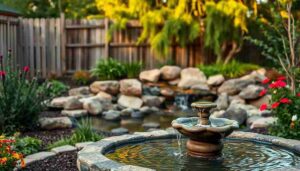
A tranquil backyard oasis with a Taylormade Landscape water feature as the centerpiece. A bubbling, stone-rimmed fountain in the foreground, surrounded by lush greenery and vibrant flowers. In the middle ground, a serene pond with a gentle waterfall cascading over natural rocks. Soft, warm lighting illuminates the scene, creating a cozy, inviting atmosphere. The background features a weathered wooden fence, partially obscured by towering trees, adding depth and a sense of seclusion. The overall composition highlights the beauty and calming presence of the carefully chosen water feature, perfect for a small backyard retreat.
Assessing Your Yard’s Size and Layout
Begin by measuring your available space carefully. Take note of dimensions and any existing structures. This helps determine what size element will work best.
Consider how the addition will fit without crowding the area. Leave enough room for movement and maintenance access. The scale should complement rather than dominate your surroundings.
Evaluate ground stability and slope conditions. Level surfaces prevent installation challenges and water runoff. Uneven terrain may require additional preparation work.
Sketch a simple layout plan to visualize placement options. This reveals how paths, plants, and structures interact. It’s an invaluable step before making final decisions.
Considering Sunlight Exposure Patterns
Observe how sunlight moves across your space throughout the day. Note areas receiving full sun versus partial shade. This affects both water quality and plant health.
Too much direct sunlight can promote algae growth in standing liquid. Insufficient light may limit aquatic plant options. Finding the right balance is crucial for ecosystem health.
Avoid placing elements directly under trees where debris falls. Leaves and twigs can clog pumps and filtration systems. This simple precaution reduces maintenance requirements significantly.
Matching Features to Your Landscape Style
Your selection should harmonize with existing aesthetic elements. Modern spaces might suit sleek, geometric designs. Rustic settings often benefit from natural stone or wood accents.
Tropical themes welcome lush plantings and free-form shapes. Each style has compatible options that enhance the overall design. Cohesion creates a more polished and intentional look.
Consider proximity to seating areas or viewing windows. Placement affects how much we enjoy both sounds and visual appeal. Strategic positioning maximizes our investment’s enjoyment value.
Budget considerations help narrow options to practical choices. Many beautiful designs offer excellent value at various price points. The perfect match balances aesthetics with financial reality.
The most successful installations reflect personal taste while respecting practical constraints of space and maintenance.
Ask yourself important questions before finalizing decisions. How much maintenance are you willing to perform regularly? Do you want to include fish or specific aquatic plants?
These considerations guide you toward options that fit your lifestyle. The right choice becomes a cherished part of your daily experience. It should reflect your personal taste while enhancing outdoor living.
Ideal Placement Strategies for Maximum Impact
Strategic positioning transforms moving elements from simple decorations into transformative focal points. We maximize both visual appeal and functional benefits through thoughtful placement. The right location enhances enjoyment while simplifying maintenance.
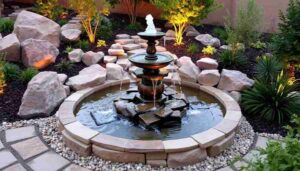
A serene water feature with a Taylormade Landscape design, situated in a cozy backyard. The focal point is a beautiful fountain surrounded by lush greenery and natural stone accents, creating a tranquil atmosphere. The mid-ground features strategically placed potted plants and river rocks, guiding the eye towards the water’s edge. In the background, a wooden fence frames the scene, adding warmth and a sense of enclosure. The lighting is soft and diffused, casting gentle shadows and highlighting the water’s gentle movement. The overall composition emphasizes the harmony between the water feature and its natural surroundings, inviting relaxation and contemplation.
Finding the Right Balance of Sun and Shade
Sunlight exposure significantly affects water quality and ecosystem health. Most recirculating systems thrive with 4-6 hours of daily sunlight. This balance prevents excessive algae growth while supporting plant life.
Observe your space throughout the day before deciding. Note areas receiving morning versus afternoon sun. Morning light tends to be gentler and more beneficial.
Avoid positioning directly under trees where debris falls. Leaves and twigs can clog pumps and filtration systems. This simple precaution reduces maintenance requirements significantly.
Creating Natural Focal Points Along Walkways
Pathways gain purpose when punctuated with moving elements. They guide movement and create inviting journeys through your space. The sound of flowing liquid welcomes exploration.
Position these elements where paths curve or intersect. This creates natural pauses that encourage appreciation. Guests will enjoy discovering these highlights along their way.
Consider elevation changes for enhanced visibility. Slight slopes or raised beds improve both visual impact and sound projection. The multi-sensory experience becomes more engaging.
Integrating Water Features with Existing Greenery
Blending moving elements with plants creates harmonious natural scenes. Surround bases with complementary foliage that thrives in moist conditions. This integration achieves a seamless, organic look.
Use taller plants as backdrops for smaller fountains. They provide wind protection while framing the moving element. The combination creates depth and visual interest.
Match plant selections to your overall landscape style. Tropical settings might include lush ferns and broad-leaf plants. Formal designs could feature trimmed boxwoods or ornamental grasses.
Consider sightlines from indoor spaces when positioning. Views from windows extend enjoyment throughout your home. This thoughtful placement maximizes your investment’s value.
Proper placement considers maintenance access, safety considerations, and visual harmony with existing landscape elements.
Urban spaces benefit from corner placements that define zones. They can act as subtle dividers between functional areas. Even compact areas gain dimension through strategic positioning.
Always ensure safe access for cleaning and seasonal care. Leave adequate space around the element for comfortable maintenance. This practical consideration ensures long-term enjoyment.
Essential Considerations Before Installation
Thoughtful preparation transforms installation from a chore into an exciting project with guaranteed results. We examine practical elements that influence both immediate success and long-term enjoyment. Proper planning ensures your addition becomes a cherished part of your home environment.
Budget-Friendly Options for Every Price Point
Cost-effective solutions exist for every financial situation. DIY projects using repurposed containers offer incredible value. Pre-made kits provide convenience while maintaining affordability.
Local garden centers often have seasonal sales on quality pieces. Online marketplaces offer competitive pricing on various designs. Each option delivers visual appeal without compromising beauty.
Consider material longevity when evaluating costs. Durable elements may cost more initially but last longer. This approach saves money over time through reduced replacement needs.
Space Requirements: Minimum Dimensions Explained
Proper sizing ensures functionality and aesthetic harmony. Each type has specific measurement needs for optimal performance. These guidelines help create balanced installations.
Ponds require particular attention to depth and width. Adequate dimensions support healthy ecosystems and proper circulation. They prevent issues with water quality and temperature regulation.
| Feature Type | Minimum Depth | Minimum Width | Additional Notes |
| Pond | 2 feet (61 cm) | 3 feet (91 cm) | Depth supports fish and plant health |
| Container Garden | 1 foot (30 cm) | 18 inches (46 cm) | Sufficient for small pumps and plants |
| Wall Fountain | N/A | 2 feet (61 cm) | Vertical space requirements vary |
| Tiered Fountain | 18 inches (46 cm) | 2.5 feet (76 cm) | Base stability is crucial |
These measurements represent the absolute minimum requirements. You can always expand dimensions based on available area. Larger installations often provide more stability and visual impact.
Proximity to Electrical Sources and Water Access
Power availability significantly influences feature selection and placement. Most recirculating systems require electrical connections for pumps. GFCI outlets provide essential safety protection.
Extension solutions exist for distant power sources. Outdoor-rated extension cords offer temporary solutions. Permanent wiring provides the most reliable and safe option.
Water access simplifies filling and maintenance routines. Hose length determines practical placement options. Drainage considerations prevent water accumulation issues.
Consider these practical elements during your planning phase. They determine which options will work in your specific space. Proper planning prevents frustrating installation challenges.
Always verify local regulations and HOA rules before beginning any installation project.
Time commitment varies based on project complexity. Simple container gardens might take one afternoon. More elaborate installations could require multiple days.
Future expansion possibilities deserve consideration during initial planning. Leaving space for additional elements allows for gradual development. This approach creates a cohesive final result.
Step-by-Step Guide to Building a Miniature Pond
Creating your own tranquil oasis begins with careful planning and execution. We’ll walk through the essential steps to construct a beautiful aquatic centerpiece. This process transforms ordinary spaces into extraordinary natural retreats.
Selecting the Perfect Location
Choose a spot with balanced sunlight exposure. Four to six hours of daily light keeps algae growth manageable. This balance maintains clear liquid conditions.
Avoid areas where runoff might collect debris. Ensure the ground remains stable and level. Test potential spots by outlining with a garden hose first.
Always contact utility companies before digging. They mark underground lines for safety. This precaution prevents dangerous accidents.
Proper Digging Techniques and Dimensions
Mark your chosen area with spray paint or flour. Dig to approximately two feet depth for proper volume. Create shelving around edges for future plantings.
Smooth all surfaces to prevent liner damage. Use a level to check basin evenness. Remove any sharp objects from the excavation.
Common challenges include rocky soil or tree roots. Work around obstacles or choose another location. Patience ensures better final results.
Waterproof Lining and Container Options
Heavy-duty plastic liners offer flexible shaping options. Pre-formed containers provide easier installation. Both create reliable waterproof barriers.
Add a sand layer beneath liners for extra protection. This cushion prevents punctures from below. Secure edges with strategically placed stones.
Consider sinking large tubs as alternative vessels. Ensure proper interior coating before installation. This method simplifies the construction process.
Proper preparation prevents poor performance – especially when creating aquatic environments.
Fill your creation slowly using a garden hose. Treat liquid if necessary for clarity. Check for leaks before adding decorative elements.
Use natural stones to conceal liner edges. They create seamless transitions into surrounding landscapes. This technique enhances visual appeal dramatically.
Essential tools include shovels, levels, and sharp scissors. A pump ensures healthy circulation if desired. These items make construction efficient and effective.
Plant Selection for Your Water Feature Ecosystem
The living tapestry around your aquatic element begins with thoughtful plant selection. These botanical choices transform functional installations into thriving natural environments. Proper vegetation creates biological balance and visual harmony.
Best Plants for Small Ponds: Lilies and Beyond
Water lilies provide shade and spectacular blooms throughout warm months. Their floating leaves reduce algae growth by limiting sunlight penetration. These classic plants create natural canopy effects.
Pickerelweed offers vertical interest with its spear-shaped leaves and purple spikes. Zebra rush adds textural contrast with its distinctive striped patterns. Both species thrive in moist conditions.
These plants oxygenate the liquid environment through natural processes. They provide habitat for beneficial insects and potential fish residents. This creates a healthier, more balanced system.
Greenery That Thrives in Water Feature Environments
Marginal plants grow along edges, softening hard lines between elements and landscapes. Submerged varieties help maintain clarity by consuming excess nutrients. Each type serves specific ecological functions.
We recommend using planting baskets for lilies to control their spread. Anchor other vegetation gently in shelved areas designed for growth. Proper spacing prevents overcrowding as plants mature.
Hardy native species adapt well to local conditions with minimal care. They typically require less maintenance than exotic alternatives. This makes them ideal choices for beginning enthusiasts.
Creating a Balanced Aquatic Ecosystem
Seasonal changes affect plant behavior and appearance. Many species enter dormancy during colder months before regenerating in spring. Understanding these cycles ensures year-round appeal.
Combine plants with different bloom times and coloration patterns. This strategy creates continuous visual interest throughout growing seasons. The result is an ever-changing display of natural beauty.
| Plant Type | Primary Function | Ideal Depth | Maintenance Level |
| Water Lilies | Shade provision/Algae reduction | 12-24 inches | Moderate |
| Marginal Plants | Edge softening/Filtration | 0-6 inches | Low |
| Oxygenators | Water quality improvement | Fully submerged | Very Low |
| Floating Plants | Rapid coverage/Natural filtration | Surface level | Low |
Fertilize aquatic plants carefully using specialized products. These formulations release nutrients slowly without harming water quality. They’re particularly important when keeping fish in the environment.
Always research species suitability for your specific climate conditions. Local nurseries often stock appropriate varieties for your region. Online retailers specializing in aquatic flora offer additional options.
Proper plant selection creates natural filtration, reduces maintenance, and enhances the overall health of your aquatic environment.
The right botanical companions transform your installation into a complete ecosystem. They work together to create stunning visual effects while maintaining biological balance. This approach yields both aesthetic pleasure and ecological benefits.
Adding Life: Incorporating Fish into Your Water Feature
Introducing aquatic life transforms your installation into a complete ecosystem. These living additions bring dynamic movement and natural balance. They create fascinating interactions that enhance daily enjoyment.
Fish add vibrant color and personality to your environment. Their presence turns a decorative element into a living habitat. We explore how to successfully integrate these beautiful creatures.
Goldfish: The Perfect Choice for Small Ponds
Goldfish offer ideal characteristics for compact aquatic environments. Their hardy nature makes them forgiving for beginners. These colorful swimmers adapt well to various conditions.
Local pet stores typically stock healthy goldfish options. They provide expert advice specific to your region. This support ensures successful introduction to your space.
These fish display wonderful color variations and patterns. From classic orange to calico and fantail varieties. Each adds unique visual interest to your aquatic element.
Maintaining Healthy Water Conditions for Fish
Proper water quality ensures fish thrive in their new home. pH balance should remain between 7.0 and 8.4. Temperature stability prevents stress on their systems.
Filtration systems keep the environment clean and oxygenated. They remove waste and maintain clear conditions. This equipment is essential for long-term health.
Monitor your aquatic environment every day. Check for clarity and any unusual changes. Consistent observation prevents potential problems.
Feeding routines depend on water temperature and fish size. Offer food once a day during warmer months. Reduce frequency when temperatures drop.
Portion control prevents overfeeding and water contamination. Fish should consume all food within two minutes. Adjust amounts based on their consumption patterns.
Proper population density maintains healthy conditions. Allow approximately ten gallons per goldfish. This space prevents stress and overcrowding issues.
Add plants and rocks for security and natural behavior. These elements provide hiding spots and exploration opportunities. They create a more engaging environment for your fish.
Seasonal changes require adjusted care routines. Reduce feeding as temperatures decrease in fall. Protect ponds from complete freezing in winter.
Acclimate new fish slowly to prevent shock. Float their bag in the pond for temperature equalization. This gradual introduction reduces stress and disease risk.
Watch for signs of illness like lethargy or spots. Isolate affected fish promptly if issues arise. Quarantine procedures protect your entire population.
Local pet stores offer healthy stock and expert guidance. They understand regional conditions and common challenges. This support helps ensure successful fish keeping.
Properly maintained fish become vibrant, active additions that enhance both the visual appeal and ecological balance of your water feature.
These living additions consume mosquito larvae naturally. They provide biological pest control while adding movement. Your aquatic element becomes more dynamic and engaging.
The right fish transform your installation into a complete ecosystem. They create fascinating interactions with plants and environment. This living dimension brings endless enjoyment.
Maintenance Tips for Year-Round Enjoyment
Proper care ensures your tranquil element remains beautiful through every season. We establish routines that preserve visual charm and functionality. These practices protect your investment while maintaining its peaceful atmosphere.
Regular attention prevents major issues from developing over time. Simple tasks performed consistently yield excellent results. Our approach balances effectiveness with reasonable time commitments.
Regular Cleaning and Water Quality Management
Weekly skimming removes debris before it decomposes. Use a fine net to capture leaves and organic matter. This simple habit maintains clarity and reduces filter strain.
Monthly inspections check pump intakes and filtration systems. Clean any accumulated debris from these components. Proper circulation depends on unobstructed water flow.
Test liquid conditions every two weeks during active seasons. Monitor pH, ammonia, and nitrate levels carefully. Balanced parameters ensure healthy environments for plants and fish.
Seasonal deep cleaning involves partial drainage and scrubbing. Remove algae from surfaces using appropriate tools. Refill with treated liquid to maintain chemical balance.
Beneficial bacteria products break down organic waste naturally. They reduce maintenance needs while improving water quality. These treatments are safe for all aquatic life.
Seasonal Preparation for Fall and Winter
Autumn demands increased attention to falling leaves. Install protective netting over ponds to catch debris. This prevents organic matter from accumulating below the surface.
Trim back plants as they enter dormancy. Remove dead foliage to prevent decomposition in liquid. This practice maintains cleaner conditions through colder months.
Prepare pumps for temperature drops according to manufacturer guidelines. Some systems require removal and indoor storage. Others may remain operational with proper winterization.
Winterizing steps vary by climate severity. In freezing regions, consider partial draining of certain elements. Heater or aerator devices prevent complete ice formation.
Ice damage can crack containers and harm components. Prevention protects your installation’s structural integrity. Proper preparation ensures spring reactivation proceeds smoothly.
Preventing Algae and Maintaining Clarity
Barley straw offers natural algae control through gradual decomposition. Place small bundles in strategic locations within your element. This method reduces chemical treatments while remaining effective.
UV clarifiers destroy algae cells as liquid passes through chambers. They provide clear conditions without affecting other aquatic life. These systems work well in various installation types.
Algae-eating plants compete for nutrients that support unwanted growth. They create biological balance within your ecosystem. This approach enhances natural beauty while solving problems.
Proper circulation prevents stagnant areas where algae thrives. Adjust pump output to ensure complete liquid movement. Oxygenated environments discourage excessive algal development.
Shade management limits sunlight penetration that fuels algae growth. Strategic plant placement or decorative covers help achieve this balance. The right amount of light maintains healthy conditions.
Consistent maintenance preserves the aesthetic appeal and extends the functional lifespan of water gardens.
Pump maintenance deserves particular attention throughout the year. Clean intake screens regularly to ensure proper flow rates. Check for wear on moving parts during seasonal inspections.
Maintenance logs help track tasks and identify patterns. Record cleaning dates, test results, and observations. This documentation makes problem-solving more efficient when issues arise.
Address common problems like murky liquid promptly. Usually, this indicates filtration issues or organic overload. Quick responses prevent more serious complications.
Pump failures require immediate attention to protect aquatic life. Keep spare parts available for common models. Understanding basic troubleshooting saves time and money.
Your consistent upkeep preserves the beautiful appearance that first attracted you. It extends the enjoyment period for these wonderful additions to gardens. Proper care ensures years of peaceful enjoyment.
| Maintenance Task | Frequency | Key Purpose | Time Required |
| Surface Skimming | Weekly | Debris removal | 5-10 minutes |
| Water Testing | Bi-weekly | Quality control | 15 minutes |
| Filter Cleaning | Monthly | Flow maintenance | 20-30 minutes |
| Seasonal Deep Clean | Quarterly | System refresh | 1-2 hours |
| Pump Inspection | Seasonally | Performance check | 30 minutes |
Design Ideas to Enhance Your Water Feature’s Appeal
Thoughtful design transforms functional installations into stunning visual centerpieces. We explore creative approaches that elevate both aesthetics and enjoyment. These techniques create cohesive, inviting environments around your moving element.
Proper design considerations maximize the visual impact of your installation. They create harmony between the element and its surroundings. The result becomes a true focal point in your landscape.
Incorporating Natural Stone and Rocks
Local stone varieties offer authentic texture and natural beauty. They create seamless transitions between your element and the surrounding landscape. This approach achieves an organic, established appearance.
Stacked stone creates miniature waterfalls with captivating movement. Flat slate pieces make excellent spillways for tiered designs. Each selection adds unique character and visual interest.
Rough-hewn boulders frame installations with rugged elegance. They provide natural-looking edges that blend beautifully with plantings. This technique works particularly well for pond-style elements.
Granite and slate offer exceptional durability in various climates. Their natural colors complement most landscape palettes beautifully. These materials withstand seasonal changes without deteriorating.
Consider stone placement for both function and aesthetics. Larger pieces can create seating areas near the moving liquid. Smaller rocks fill gaps and complete the natural look.
Lighting Techniques for Evening Ambiance
Submerged LED options create magical underwater glow effects. They illuminate moving liquid from within for dramatic presentations. These fixtures transform night-time viewing experiences.
Spotlight placements highlight specific design elements beautifully. They draw attention to flowing patterns or interesting textures. This focused approach creates depth and dimension.
Solar path lights provide subtle illumination along surrounding areas. They enhance safety while maintaining romantic atmosphere. Their automatic operation adds convenience.
Color-changing systems offer dynamic visual possibilities. They can shift hues throughout the evening for varied effects. Warm white options maintain cozy, inviting feelings.
Low-voltage systems ensure complete electrical safety outdoors. Professional installation prevents potential hazards. These precautions protect both people and equipment.
Proper lighting extends enjoyment into evening hours while highlighting the water feature’s most attractive qualities.
Creating Surrounding Seating Areas
Strategic seating placement maximizes enjoyment of both visual and auditory elements. Position chairs where visitors can appreciate the full experience. This thoughtful arrangement encourages relaxation.
Stone benches blend seamlessly with natural design themes. They provide permanent seating that withstands weather conditions. Their solid construction offers reliable comfort.
Movable chairs allow flexibility for different occasions. They can be rearranged for intimate conversations or larger gatherings. This adaptability suits various entertainment needs.
The gentle murmur creates perfect background sounds for conversation. It masks street noise while promoting calm communication. This acoustic benefit enhances social interactions.
Consider adding side tables for beverages or books. These practical additions make the space more functional for extended stays. They complete the comfortable environment.
This valuable addition transforms your space into a true destination. It becomes somewhere people naturally gather and linger. The area gains purpose beyond mere decoration.
Different styles suit various design preferences. Rustic themes might incorporate rough-hewn log benches. Modern designs could feature sleek metal furniture with clean lines.
Always ensure safe, stable footing around seating areas. Proper surfaces prevent accidents while maintaining visual appeal. This consideration combines safety with aesthetics.
Sound Considerations: Creating Soothing Auditory Experiences
Sound design transforms ordinary installations into multisensory experiences. We carefully consider acoustic properties during planning stages. The right auditory environment enhances relaxation and masks unwanted neighborhood noises.
How Different Features Produce Varied Water Sounds
Each moving element creates distinct auditory signatures through its design. Bubbling systems generate gentle gurgles as air rises through liquid. Cascading types produce continuous trickles as liquid moves downward.
Pouring designs create soft splashes when liquid hits the receiving basin. The volume and pitch depend on three key factors. Drop height, flow rate, and construction materials all influence the final sound.
Higher drops create louder, more energetic auditory effects. Slower flow rates produce softer, more meditative sounds. The construction materials at the impact point affect tonal quality.
| Feature Type | Sound Characteristic | Volume Level | Best For |
| Bubbling Fountain | Gentle gurgles | Low | Meditation spaces |
| Cascading Tier | Continuous trickle | Medium | General relaxation |
| Pouring Design | Soft splashes | Medium-High | Noise masking |
| Wall Fountain | Sheet flow murmur | Low-Medium | Small spaces |
Copper bowls create resonant tones that enhance auditory appeal. Stone surfaces produce soft echoes that blend with natural surroundings. Smooth ceramic materials offer clear, distinct liquid sounds.
We recommend testing sound levels during the design phase. This ensures the auditory effect matches your relaxation goals. Adjustable flow regulators help customize the final sound experience.
Using Water Features to Drown Out Street Noise
Strategic placement maximizes noise-masking capabilities. Position moving elements near property lines facing busy streets. This creates an auditory barrier against traffic sounds.
Placement near windows helps mask urban disturbances indoors. The consistent sound pattern effectively covers irregular noise bursts. This technique creates peaceful environments inside and out.
Many homeowners report significant noise reduction success. One family reduced traffic noise by 70% using a cascading design. Another created a quiet reading nook despite nearby construction.
The sound of moving water has been shown to lower cortisol levels and promote alpha brain waves associated with relaxation.
Combine liquid sounds with wind chimes for layered auditory experiences. Natural birdsong often complements these designed sounds. This multi-layered approach enhances noise masking effectiveness.
Regular maintenance ensures consistent sound quality over time. Clean pumps prevent changes in flow rate and sound characteristics. Check the reservoir bottom for debris that might affect sound.
Proper sound design makes spaces more enjoyable for homeowners and guests. Visitors often comment on the peaceful atmosphere created by moving liquid. The right auditory environment becomes a talking point during gatherings.
Consider your primary goal when designing the sound experience. Relaxation might call for softer, consistent sounds. Energy might benefit from more dynamic auditory patterns.
The construction materials you choose significantly impact the final result. Durable materials maintain their acoustic properties for years. Quality components ensure consistent performance through seasons.
We find that most people prefer medium-volume moving liquid. This level provides effective noise masking without overwhelming conversation. It creates background ambiance rather than dominant sound.
Customization Options for Unique Water Features
Personal expression transforms standard installations into signature pieces that reflect individual taste. We explore creative approaches that elevate these elements beyond mass-produced designs. Customization allows every detail to tell your unique story.
Thoughtful personal touches create conversation starters and artistic statements. They demonstrate careful consideration of both form and function. Your space becomes truly one-of-a-kind through these intentional choices.
Personalizing with Unique Bowl Designs
Bowl shapes establish the fundamental character of your moving element. Geometric patterns create modern, structured appearances with clean lines. Organic forms mimic natural shapes found in landscapes.
Animal-themed designs add whimsy and personality to outdoor spaces. Imagine liquid emerging from a frog’s mouth onto metal lily pads. Alternatively, geyser-style eruptions can cascade over carefully arranged rocks.
Abstract configurations make bold artistic statements through unconventional forms. These choices reflect personal aesthetics rather than traditional designs. They become true extensions of individual creativity.
Material selection significantly impacts both appearance and longevity. Copper develops a beautiful patina over time, adding character. This natural aging process creates evolving visual interest.
Adding Artistic Elements and Accents
Sculptural additions transform functional pieces into gallery-worthy installations. Metalwork, carved stone, or ceramic figures add dimensional interest. These artistic touches create focal points that draw admiration.
Mosaic tiles introduce color and intricate patterns to surfaces. They can depict scenes from nature or abstract designs. Colored glass elements catch light beautifully throughout the day.
Integrated lighting enhances both daytime and nighttime appeal. Subtle illumination highlights textural details after dark. This approach extends enjoyment into evening hours.
Consider these artistic enhancement options:
- Sculptures that interact with the liquid flow
- Mosaic patterns reflecting personal interests
- Colored glass elements that catch sunlight
- Custom metalwork featuring unique designs
- Natural stone arrangements with artistic placement
Walkway integration creates seamless transitions between functional areas. Embedded designs make the element part of the journey through your space. Spillover effects can connect different zones visually.
Artisan collaboration ensures professional execution of complex ideas. Local craftspeople bring technical expertise to unique concepts. DIY kits offer more accessible options for hands-on creators.
Durability considerations protect your artistic investment over time. Weather-resistant materials maintain their beauty through seasons. Secure installations prevent damage from environmental factors.
The most successful custom pieces balance artistic vision with practical considerations of materials and installation.
Nature provides endless inspiration for unique themes. Japanese garden styles emphasize simplicity and natural harmony. Other cultural traditions offer distinct aesthetic approaches.
Your customized creation becomes a special spot for relaxation and reflection. It tells personal stories through its design elements. Hobbies and interests can inspire thematic choices.
Budget considerations help guide customization decisions. Simple DIY accents offer affordable personalization options. Commissioned artwork represents a more significant investment.
We recommend sketching ideas before finalizing plans. Visual representations help communicate concepts clearly. Showroom visits provide additional inspiration for unique creations.
This walkway-adjacent spot becomes a destination rather than just decoration. It invites pause and appreciation of both design and function. The right customization makes your space uniquely yours.
Budget-Friendly DIY Small Water Features
Creating beautiful moving elements doesn’t require large investments. We explore practical approaches that transform ordinary items into extraordinary focal points. These projects bring movement and tranquility to any outdoor space.
Repurposed Container Water Gardens
Old pots, barrels, or tubs become perfect foundations for aquatic displays. These items often cost nothing if you already have them around. Their unique shapes add character to your landscape design.
We recommend starting with containers that hold liquid well. Ceramic pots, metal troughs, or plastic bins work beautifully. Ensure they’re clean and free from harmful residues.
Consider these creative container ideas:
- Galvanized steel buckets for rustic charm
- Colorful ceramic pots for vibrant accents
- Wooden half-barrels for natural appearance
- Glass bowls for modern transparency effects
Add aquatic plants that thrive in confined environments. Many garden centers offer discounted plants during fall. This approach saves money while creating lush appearances.
Simple Recirculating Fountain Projects
Basic pump systems create delightful movement with minimal effort. These installations often cost under fifty dollars to complete. They bring the soothing sound of flowing liquid to your space.
Begin by selecting a suitable container and small submersible pump. Drill precise holes for tubing and electrical connections. Test everything for leaks before final placement.
Safety remains our top priority throughout construction. Use outdoor-rated electrical components exclusively. Ensure all connections remain completely watertight.
Stacked stone arrangements create miniature waterfall effects. Pre-formed cascades offer another option for dynamic movement. Both approaches add visual interest through layered flow.
The satisfaction of creating something beautiful with your own hands adds special value to any outdoor space.
Online tutorials provide excellent step-by-step guidance. Community forums share innovative ideas and solutions. Many books offer detailed instructions for various projects.
Start with straightforward designs to build confidence. Gradually tackle more complex installations as skills improve. Each success encourages further creative exploration.
Regular maintenance keeps DIY creations looking their best. Clean pumps monthly and check tubing connections. Seasonal care ensures years of reliable operation.
These personalized touches make your space uniquely yours. They demonstrate creativity while providing peaceful ambiance. The value they add far exceeds their modest cost.
Professional Installation vs. DIY Approaches
Successful backyard transformations balance professional expertise with personal hands-on involvement. We help homeowners determine the best approach for their specific situation and budget. The right choice depends on project complexity, available time, and skill level.
Some installations benefit from professional experience and specialized equipment. Other projects offer rewarding DIY opportunities for handy individuals. We guide you through both options to ensure optimal results.
When to Hire Professional Help
Complex installations often require professional assistance for best outcomes. Large ponds with extensive excavation need heavy equipment and engineering knowledge. Electrical work involving pumps and lighting demands licensed expertise for safety compliance.
Custom designs with unique materials benefit from artisan craftsmanship. These specialized projects involve precise measurements and technical skills. Professionals ensure proper function and long-term durability.
Uneven terrain presents challenges for proper leveling and stability. Heavy materials like natural stone require equipment for safe placement. Advanced plumbing systems need expert installation to prevent leaks.
We recommend obtaining multiple quotes from qualified landscapers. Fountain specialists like Outdoor Fountain Pros offer trade discounts for professionals. Always check references and warranty coverage before hiring.
Professional installers bring years of experience that prevent common mistakes and ensure proper function from day one.
DIY Projects for the Handy Homeowner
Many homeowners enjoy creating their own backyard retreats. Container gardens using repurposed pots offer excellent starting points. Small recirculating fountains with pump kits provide manageable challenges.
Simple pond kits include pre-formed liners and clear instructions. These projects typically require basic tools and weekend time commitments. The satisfaction of personal creation adds special value.
Consider these DIY-friendly options for your outdoor space:
- Container water gardens using decorative pots
- Small bubbling fountains with submersible pumps
- Pre-formed pond installations with included filtration
- Wall-mounted features with recirculating systems
Even when handling installation yourself, professional consultation provides valuable ideas. Experts can identify potential issues before they become problems. This hybrid approach combines cost savings with professional guidance.
Always assess your skills honestly before beginning any project. Start with simpler installations to build confidence. Gradually tackle more complex elements as experience grows.
Resources like trade associations and customer reviews help find reputable professionals. Online tutorials offer step-by-step guidance for various DIY projects. Community forums share innovative solutions and troubleshooting advice.
The most successful installations often blend both approaches. Hire professionals for excavation and electrical work. Handle planting and decorative elements yourself. This combination ensures safety while allowing personal creative expression.
The Transformative Benefits of Small Water Features for Backyard
We often overlook how simple additions can revolutionize our outdoor living experience. These elements bring multiple advantages beyond their visual appeal. They create lasting value for both property and personal well-being.
Enhancing Property Value and Curb Appeal
Well-designed installations significantly boost home valuation through improved aesthetics. Real estate studies show landscape improvements offer excellent return on investment. Moving elements create memorable first impressions for potential buyers.
A tasteful wall fountain adds elegance and sophistication to entryways. Dramatic waterfall installations become conversation starters during property showings. Even modest additions distinguish properties in competitive markets.
Homes with water features sell 15-20% faster than comparable properties without them, according to National Association of Realtors data.
These improvements demonstrate careful property maintenance and attention to detail. They suggest quality throughout the entire home. This perception increases buyer confidence and willingness to pay premium prices.
Creating Relaxation Spaces for Daily Enjoyment
Our outdoor areas become personal sanctuaries with these tranquil additions. They provide natural stress reduction through gentle auditory experiences. Daily meditation or quiet contemplation becomes more accessible.
These elements encourage regular outdoor time throughout changing seasons. They transform simple yards into destinations for relaxation and rejuvenation. Family gatherings gain atmospheric enhancement through natural movement.
Maintenance routines offer rewarding hobbies that connect us with nature. Observing seasonal changes in our aquatic environments provides continuous interest. These activities promote mindfulness and present-moment awareness.
Attracting Wildlife and Supporting Local Ecosystems
Moving liquid elements become vital resources for urban wildlife populations. Birds visit frequently for drinking and bathing opportunities. Butterflies and pollinators gather around moist edges for essential minerals.
A well-balanced pond supports amphibian life like frogs and toads. These creatures provide natural pest control through insect consumption. They create fascinating observational opportunities for nature enthusiasts.
| Wildlife Type | Benefits Provided | Attraction Methods |
| Birds | Insect control, pollination | Shallow edges, perching spots |
| Butterflies | Pollination, beauty | Mineral deposits, nearby flowers |
| Frogs | Mosquito control | Sheltered areas, plant coverage |
| Beneficial Insects | Natural pest management | Stable water sources |
We contribute to local biodiversity through these miniature ecosystems. Sustainable practices like rainwater collection minimize environmental impact. Solar-powered systems reduce electrical consumption while maintaining operation.
Thoughtful design maximizes these benefits through strategic plant selection. Native vegetation supports local species more effectively than exotic imports. Proper maintenance ensures healthy environments for all visitors.
These installations represent investments in both property value and personal fulfillment. They create spaces that nourish both people and local wildlife populations. The joy of observing natural interactions becomes daily entertainment.
Conclusion: Creating Your Perfect Fall Backyard Oasis
We’ve explored the journey to transform your outdoor living spaces into a peaceful retreat. A gentle fountain or bubbling element brings instant warmth and tranquility. Fall’s cooler weather makes installation easier and prepares your oasis for spring.
Start with one addition that fits your area and goals. Many resources exist, from DIY guides to professional help. Regular care ensures lasting beauty through seasonal changes.
Your personal touch makes the space uniquely inviting. Imagine cozy evenings beside moving liquid, surrounded by autumn colors. This vision is achievable with thoughtful planning.
Begin today by researching options or measuring your space. For expert assistance, contact local water features installers near me to create your perfect retreat. Your oasis awaits, ready to enrich daily living with serene beauty.
FAQ
What are the benefits of adding a water feature to our backyard?
We find that these elements create a peaceful atmosphere with soothing sounds, serve as beautiful focal points, and can even attract local wildlife to your garden.
How much space do we need for a miniature pond?
You can create a lovely pond in as little as a few square feet. We recommend starting with containers or small preformed liners for compact areas.
Can we add fish to our small pond?
Yes! Goldfish are excellent choices for compact aquatic environments. Just ensure proper water quality and avoid overcrowding for their health.
What maintenance is required for these features?
Regular cleaning, seasonal preparation, and water quality management keep your feature looking beautiful. Most require minimal upkeep for year-round enjoyment.
Do water features require electrical access?
Many do, but solar-powered options provide excellent alternatives. We suggest considering your power source options during the planning phase.
How can we incorporate lighting with our water feature?
Subtle LED lights placed around or within the feature create magical evening ambiance. Solar-powered lights offer easy installation without wiring.
What plants work best around water features?
Water lilies, marginal plants, and moisture-loving greenery thrive in these environments. We recommend choosing species that complement your local climate.
Can we build a water feature ourselves?
Absolutely! Many DIY projects use repurposed containers or simple recirculating systems. We provide guidance for both beginner and advanced projects.