
In the scorching heat of Las Vegas, how has computerized design transformed landscaping? How has computerized design improved landscaping? This technology has made a significant impact, allowing for faster and more accurate designs. Landscapers can now create detailed, realistic visuals that enhance client understanding and satisfaction.
In the scorching heat of Las Vegas, how has computerized design transformed landscaping? This technology has made a significant impact, allowing for faster and more accurate designs. Landscapers can now create detailed, realistic visuals that enhance client understanding and satisfaction.
Over the past two decades, the landscaping industry has undergone a major shift. Manual drafting has given way to sophisticated digital workflows that blend artistry with engineering precision. This guide will delve into the question of how computerized design has improved landscaping, focusing on advancements in 3D technology, AI integration, and accuracy gains.
Every phase of a landscaping project benefits from this transformation. From initial consultations to site analysis, and through to design iterations and long-term maintenance, technology plays a crucial role. Taylormade Landscapes uses these tools to tackle the unique challenges posed by Southern Nevada’s arid climate and water conservation needs.
Readers will explore various topics, including 3D visualization software, smart irrigation systems, and sustainable xeriscaping methods. A comparison table will illustrate the differences between traditional and computerized methods, while a FAQ section will address common queries from Las Vegas homeowners about modern landscape technology.
This guide is built on real-world experience and current industry data, showcasing how computerized design has revolutionized landscaping, achieving results that were once impossible with traditional methods.
Key Takeaways
- Computerized design integrates artistry with engineering for better outcomes.
- 3D technology enhances visualization, aiding client understanding.
- AI-driven tools streamline the design process, making it faster and more efficient.
- Smart irrigation systems help address water conservation in arid climates.
- Comparative analysis shows significant benefits over traditional methods.
What Is Computerized Landscape Design and Why Is It Important?

Why is digital design technology crucial for modern landscaping? This innovative approach uses specialized software and tools to plan, visualize, and execute outdoor transformations. It offers precision and flexibility that traditional hand-drawn methods simply cannot match.
Computerized landscape design merges artistic creativity with technical data. Designers integrate topographical surveys, soil composition analysis, sun exposure mapping, and climate data into a unified digital model. This integration ensures that every aspect of the landscape is carefully considered.
Defining Computerized Landscape Design
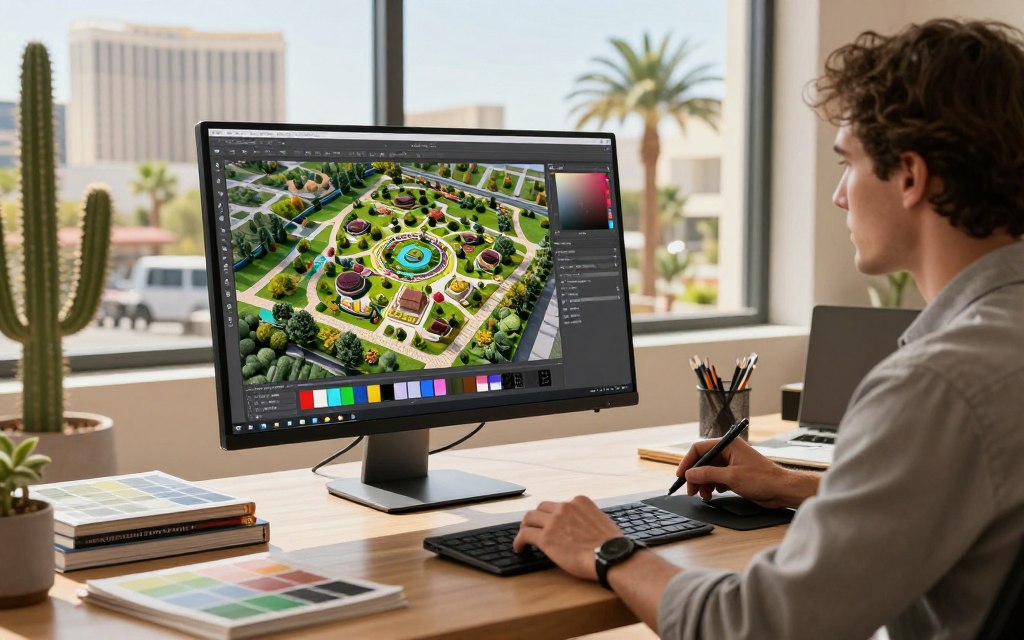
At its core, computerized landscape design employs advanced software programs. These include DynaSCAPE, PRO Landscape, Vectorworks Landmark, and SketchUp Pro. Each of these platforms specializes in various aspects of landscaping, such as hardscaping, planting plans, and irrigation layouts.
The evolution of the industry is notable. It has progressed from hand-drawn sketches and blueprints to early CAD programs in the 1990s. Today, modern platforms provide photorealistic rendering and real-time collaboration features.
Key Technologies Behind Modern Landscaping Software
One significant advancement is the integration of Geographic Information System (GIS) data. This technology allows designers to incorporate precise topographical information and property boundaries into their models. As a result, guesswork is eliminated, reducing on-site errors.
Additionally, high-resolution drone photography and LiDAR scanning capture accurate aerial imagery and 3D scans. These images can be imported directly into design applications, providing unprecedented site accuracy.
How Computerized Design Transforms the Client Experience
For clients, the transformation is remarkable. Gone are the days of abstract 2D plans. Instead, immersive 3D renderings showcase exactly what the finished landscape will look like from various angles and stages of plant maturity.
For Las Vegas clients working with Taylormade Landscapes, this means seeing how desert-adapted plants and hardscaping interact with their specific property. They can visualize how shade structures will function under unique light conditions before committing to a design.
The importance of computerized design extends beyond aesthetics. It also enables precise material calculations, accurate cost estimations, and detailed construction documents. This thorough approach keeps landscaping projects on budget and on schedule.
How has Computerized Design Improved Landscaping? Las Vegas’ Unique Climate

Las Vegas presents unique challenges for landscaping due to its extreme climate. With summer temperatures often exceeding 110°F and annual rainfall under 5 inches, the local environment requires innovative solutions. Taylormade Landscapes understands these challenges and utilizes advanced technology to create sustainable landscapes that thrive in arid conditions.
Computerized design tools play a crucial role in adapting landscaping projects to the specific needs of the Las Vegas climate. These tools incorporate local climate data, including:
- Historical temperature patterns
- UV exposure indices
- Evapotranspiration rates
This data helps model how different plant species and materials will perform in a specific microclimate. Additionally, 3D sun/shade mapping capabilities allow designers to simulate solar patterns throughout the year. This simulation identifies optimal locations for shade structures and trees, maximizing cooling benefits and reducing energy costs.
Another vital aspect of landscaping in Las Vegas is water conservation. The Southern Nevada Water Authority (SNWA) offers rebates that make water-efficient landscaping financially accessible. Computerized design software can calculate projected water savings, helping clients maximize rebate eligibility under the Water Smart Landscapes program.
Digital tools also enable precise planning for irrigation systems. Features include:
- Drip irrigation zones
- Smart controller placement
- Hydrozoning, which groups plants with similar water needs
These elements are essential for ensuring compliance with SNWA guidelines and promoting long-term landscape health in arid conditions.
Site analysis capabilities further enhance the design process. By importing soil test results and mapping drainage patterns, designers can identify potential issues before planting. This proactive approach prevents costly failures of trees and shrubs.
Moreover, technology supports the selection of desert-adapted plant palettes. Extensive digital plant libraries provide insights into:
- Mature size projections
- Water requirements
- Frost sensitivity
- Bloom cycles specific to USDA zones 9a and 9b
Computerized design also enables accurate planning for hardscaping features. Elements like permeable pavers and shade pergolas are crucial for creating usable outdoor spaces without increasing water consumption.
In conclusion, local expertise combined with advanced design software ensures that every landscape plan in Las Vegas accounts for HOA requirements, city codes, and the realities of maintaining a beautiful yard in the Mojave Desert. For more insights into landscape design in Las Vegas, visit this resource.
What Are the Key Benefits of Using 3D Visualization and AI in Landscape Design?

In today’s fast-paced world, the integration of 3D visualization and AI in landscape design has transformed the way clients engage with their outdoor spaces. These technologies offer an immersive experience that enhances understanding and decision-making. Clients can now visualize their future landscapes in ways that were previously unimaginable.
Virtual Reality and Immersive Client Walkthroughs
Virtual reality (VR) has taken client engagement to a new level. With VR headsets, homeowners can “walk through” their future landscapes, experiencing the scale and spatial relationships of proposed features before any construction begins. This immersive experience allows clients to explore every angle and detail, ensuring their vision aligns with the designer’s plans.
AI’s Role in Accelerating Design and Innovation
AI plays a pivotal role in speeding up the design process. By analyzing large datasets, AI can identify optimal solutions for complex landscaping challenges. It can process soil reports, climate data, and plant performance records, uncovering insights that human designers might overlook. This capability allows designers to focus on refining their ideas rather than getting bogged down in repetitive analysis.
The benefits of using 3D visualization and AI are numerous:
- 3D visualization allows clients to see photorealistic renderings of their outdoor spaces, eliminating the need to interpret abstract 2D plans.
- Enhanced client communication bridges the gap between designers and clients, aligning expectations and reducing costly mid-project changes.
- Faster design iterations enable designers to explore multiple concepts in real-time during client meetings, streamlining the decision-making process.
- Seasonal and growth simulations illustrate how landscapes will change over time, critical for understanding plant maturity and seasonal variations.
- AI-driven design options provide clients with a variety of customized solutions based on specific needs, such as water efficiency and low-maintenance requirements.
- VR walkthroughs enhance the client experience, allowing them to visualize their future landscapes in a way that traditional methods cannot.
- Visualization tools improve decision-making confidence, helping clients make faster, more informed choices about materials and layouts.
The combination of 3D visualization and AI represents a significant leap in landscape design. It fundamentally changes the client-designer relationship from one of trust in the expert to a collaborative partnership. Clients are empowered to make informed decisions, ensuring their outdoor spaces reflect their unique ideas and needs.
How Does Computerized Design Enhance Precision and Sustainability in Landscaping?

Modern landscaping thrives on precision and sustainability, especially in challenging climates like Las Vegas. By utilizing advanced technology, landscapers can create designs that not only look great but also use resources wisely. This section explores how these tools enhance the effectiveness of landscaping projects.
Detailed Site Analysis with 3D Modeling and GIS Data
Precision begins with detailed site analysis. High-quality aerial photos and laser scanning create accurate maps that identify the best locations for plants. 3D modeling combined with Geographic Information System (GIS) data allows designers to account for every slope and elevation change. This ensures that drainage systems work effectively, guiding water to planted areas rather than letting it run off into streets.
Furthermore, digital tools help identify microclimates within a property. For instance, hot spots near south-facing walls and cool pockets under trees can be precisely mapped. This information allows for optimal plant placement, maximizing natural advantages and minimizing stress on plants.
Smart Irrigation Systems for Water Conservation
Smart irrigation systems represent a cornerstone of sustainable landscaping. These systems integrate with digital plans, using real-time weather data and soil moisture sensors. This technology ensures that plants receive the right amount of water at the right time, reducing consumption by 30-50% compared to traditional methods.
Such systems are vital for conserving water in Las Vegas. The Southern Nevada Water Authority (SNWA) encourages water-efficient landscaping, and smart irrigation aligns perfectly with these goals. Automated watering schedules maintain plant health while promoting sustainability.
Sustainable Design Methods Including Xeriscaping
Xeriscaping is a comprehensive sustainable design method that conserves water through various techniques. It involves using drought-resistant plants and efficient irrigation zoning. This approach not only beautifies landscapes but also reduces water usage significantly.
Additionally, design software can calculate water budgets for entire properties. This helps clients understand their new landscape’s water needs compared to their current usage. Such insights are crucial for making informed decisions about turf removal and plant selection.
Moreover, computerized design supports other sustainable methods, such as permeable paving, which reduces stormwater runoff. Rain gardens can be sized based on roof area and rainfall data, helping to prevent water pollution. Native plants not only require less water but also support local wildlife.
Precision extends to material calculations as well. Software can determine the exact quantities of soil, mulch, and plants needed, minimizing waste and environmental impact. By modeling future climate patterns, landscapes can be designed to remain resilient as conditions change.
In conclusion, precision and sustainability are intertwined in modern landscape design. The digital tools available today make it possible to achieve both goals without sacrificing beauty or functionality. This ensures that landscapes not only thrive today but also remain viable for years to come.
How Does Technology Streamline Project Management for Landscaping Projects?

Technology is revolutionizing the way landscaping projects are managed from start to finish. Effective project management is essential for ensuring that every project is completed on time and within budget. With advanced tools, project managers can organize their tasks, utilize resources efficiently, and monitor progress throughout the entire process.
Digital collaboration platforms allow designers, clients, and contractors to access the same up-to-date plans from any device. This eliminates confusion caused by multiple paper versions and ensures that everyone is always working from a single source of truth.
Digital Collaboration Between Designers, Clients, and Contractors
When everyone involved in a project can view the same digital plans, communication improves significantly. This transparency fosters collaboration and ensures that all stakeholders are aligned with the project goals. It also reduces the chances of misunderstandings that can lead to costly delays.
Real-Time Progress Tracking and Efficient Resource Management
Mobile access to complete digital plans via tablets on job sites allows installation crews to verify measurements, check plant placements, and confirm material specifications in real-time. This capability dramatically reduces errors that could otherwise require expensive rework.
Additionally, project management software integrated with original design files enables automatic scheduling, task assignment, and timeline optimization. When changes occur in the design, the project schedule updates automatically to reflect new material lead times and labor requirements.
Reducing Errors and Staying On Budget with Software Tools
Real-time progress tracking is another significant advantage. Clients can receive updates with photos comparing completed work against the digital model. This provides them with confidence that the project is proceeding according to plan and allows for early detection of any deviations.
Resource management improves when software calculates exact material quantities from the design model. Items like lumber, pavers, soil, plants, and irrigation components are ordered precisely, reducing waste and minimizing storage needs. This also prevents delays caused by material shortages.
Moreover, digital tools enable accurate cost estimation early in the design process. As changes are made, the budget impact is calculated automatically, helping clients make informed decisions about where to invest and where to save.
In conclusion, technology-driven project management transforms the client experience from uncertainty and frequent check-ins to transparency, confidence, and predictable outcomes. With Taylormade Landscapes utilizing these advanced systems, clients can trust that their landscaping projects will be completed efficiently and effectively.
| Feature | Traditional Methods | Technology-Driven Methods |
|---|---|---|
| Collaboration | Paper plans, multiple versions | Digital access, single source of truth |
| Progress Tracking | Manual updates | Real-time updates with photos |
| Resource Management | Estimates based on guesswork | Exact quantities calculated automatically |
| Budget Control | Post-project analysis | Automatic budget impact calculations |
How Does Computerized Landscape Design Compare to Traditional Methods?
When it comes to creating beautiful outdoor spaces, the methods used can greatly impact the outcome. Traditional hand-drawn designs produced stunning artistic renderings, but they came with limitations. These paper-based plans were static and required significant time for any revisions or modifications.
In contrast, modern tools have revolutionized the landscape design process. Today’s software offers sophisticated 3D modeling and rendering capabilities that enhance both precision and visualization. Clients can now interact with their designs in ways that were previously unimaginable.
Let’s break down the key differences between traditional and computerized methods:
| Feature | Traditional Design | Computerized Design |
|---|---|---|
| Visualization | Hand-drawn sketches, static blueprints | Interactive 3D models, VR walkthroughs |
| Accuracy | Manual measurements, prone to errors | Precise digital measurements and GIS integration |
| Revisions | Time-consuming and less flexible | Instant updates and rapid iterations |
| Sustainability | Limited environmental analysis | In-depth site data, AI-assisted eco-friendly planning |
| Project Management | Manual coordination and tracking | Automated scheduling, real-time monitoring |
Visualization is one of the most significant advantages of computerized design. Traditional methods relied on flat, 2D representations that required imagination to interpret. In contrast, computerized design provides interactive 3D models that clients can view from any angle. They can even experience their future landscapes through virtual reality walkthroughs.
Accuracy is another critical factor. Manual measurements often lead to human error, while digital tools integrate GPS data, LiDAR scanning, and GIS mapping. This results in sub-inch precision across entire properties, ensuring that every detail is accounted for.
Revisions are much easier with modern technology. Traditional changes involved erasing and redrawing, which could take days. Computerized design allows for instant updates. Changing a plant species or patio material automatically updates every affected view, saving time and encouraging experimentation.
Environmental considerations are also enhanced. Traditional designers relied on experience and intuition, while modern software can model sun exposure, water flow, and plant performance. This leads to landscapes optimized for local conditions, particularly in challenging climates like Las Vegas.
Project management benefits significantly from these advancements. Traditional methods often involved phone calls and paper change orders, which created opportunities for miscommunication. Digital platforms offer automated scheduling, real-time progress monitoring, and a centralized communication hub, streamlining the entire process.
Ultimately, computerized design does not replace the artistry of landscaping. Instead, it amplifies designer creativity by removing technical constraints. For clients in Las Vegas, the precision required for water-efficient landscaping and proper drainage is vital. The detailed analysis that digital tools provide is essential for creating sustainable and beautiful outdoor spaces.
In conclusion, while traditional methods produced many beautiful landscapes, the consistency and predictability achievable with computerized design represent a fundamental improvement in how landscaping projects are conceived and delivered. This approach empowers skilled designers and contractors to serve their clients better, ensuring that every project meets high standards of quality and satisfaction.
Conclusion: Why Choose Computerized Design for Your Las Vegas Landscape?
Conclusion: Why Choose Computerized Design for Your Las Vegas Landscape?
Computerized design offers significant advantages for landscaping projects. It provides superior visualization, precision, and sustainability. Clients enjoy a better experience from the initial concept to the final installation. Taylormade Landscapes blends cutting-edge technology with local expertise to create beautiful outdoor spaces.
The benefits of this approach last throughout the life of your landscape. From accurate installation to digital archives for easy maintenance, the value is clear. As technologies like augmented reality and advanced AI emerge, Taylormade Landscapes remains committed to improving client outcomes.
Experience the difference that modern design technology can make. Schedule a consultation today at taylormadelandscapes.com to see your vision come to life.
FAQ
Q: How much does computerized landscape design cost compared to traditional methods?
A: While design software requires upfront investment, the precision it provides typically reduces overall project costs by minimizing material waste, preventing errors, and accelerating timelines.
Q: What are the main benefits of using 3D visualization?
A: 3D visualization allows clients to see photorealistic renderings, enhancing understanding and decision-making about their outdoor spaces.
Q: How does Taylormade Landscapes ensure sustainability?
A: We utilize smart irrigation systems and drought-resistant plants to create sustainable landscapes that thrive in the Las Vegas climate.
Q: Can I make changes to my design after the consultation?
A: Yes, our computerized design process allows for easy modifications to ensure your landscape meets your preferences and needs.