Mesquite, Palo Verde, Desert Willow, African Sumac, and Tipu Tree lead the heat-tolerant choices for Las Vegas yards. Several larger species also perform well when space and irrigation allow. These options handle intense sun, alkaline soil, low rainfall, and brief freezes while offering filtered or dense shade, flowers, and useful canopy cover.
Finding the best shade trees for Las Vegas requires carefully considering local environmental conditions. With 294 sunny days each year, this climate tests every planting. Summer temperatures often rise above 108°F, so drought tolerance alone does not ensure a good fit. The right tree must match soil, wall exposure, root space, mature canopy width, and watering capacity.
With 294 sunny days each year, this climate tests every planting. Summer temperatures often rise above 108°F, so drought tolerance alone does not ensure a good fit. The right tree must match soil, wall exposure, root space, mature canopy width, and watering capacity.
This guide compares 10 USDA Zone 9 species by water needs, size, roots, flowers, and upkeep. Late fall through early spring offers the preferred planting window, giving new roots time to settle before extreme heat reaches the landscape.
Key Takeaways
- Mesquite and Palo Verde suit dry yards with limited irrigation.
- Desert Willow adds flowers and light, filtered shade.
- Large species need careful spacing near walls and paving.
- Canopy size matters as much as drought resistance.
- Plant during the cooler months to support root growth.
- USDA Zone 9 options vary in water use and maintenance.
best shade trees for Las Vegas: Answer-First Guide to Heat-Tolerant Canopies
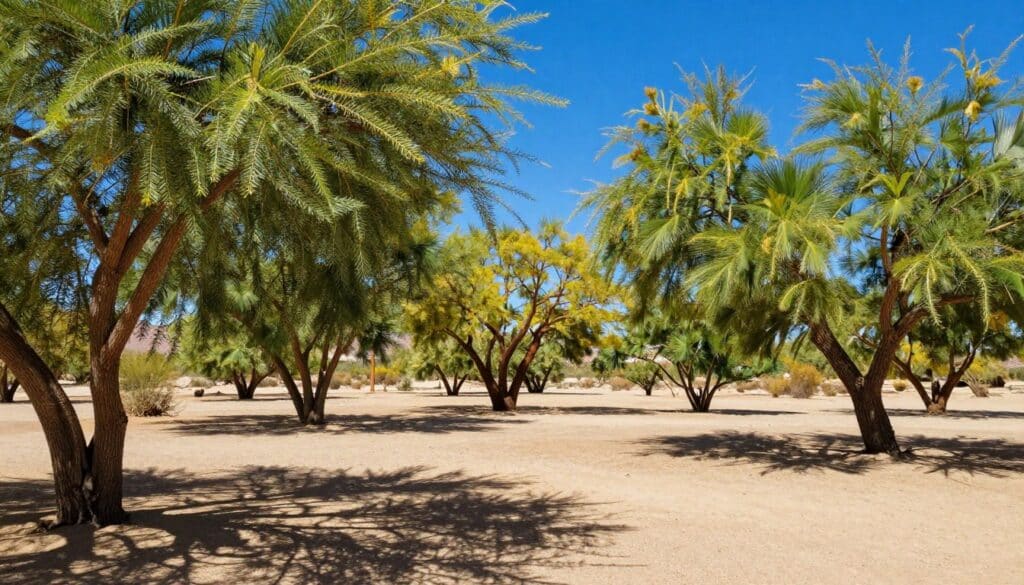
The best trees in Las Vegas depend on canopy size, water access, and root space. African Sumac leads large yards needing quick, year-round cover. It grows 20 to 30 feet tall and forms a dense canopy, but roots need clearance from paving and utilities.
Mesquite and Palo Verde suit low-water sites. Mesquite reaches 20 to 30 feet and casts light, filtered shade. Palo Verde grows 15 to 30 feet and keeps using its green trunk to make energy after drought causes leaf loss.
Tipu Tree reaches 25 to 40 feet and fills open properties quickly. Its mature size may overwhelm a small yard within eight years. Desert Willow brings seasonal flowers and an airy form, while Chaste Tree adds blue-to-lavender blooms with moderate irrigation.
Southern Live Oak, Southern Magnolia, and Heritage Live Oak offer lasting cover, yet they need more space, water, and structural planning. Check the Southern Nevada Water Authority Water Smart plant list before making a choice.
| Species | Mature size | Main advantage |
|---|---|---|
| African Sumac | 20–30 feet | Fast, evergreen canopy |
| Mesquite | 20–30 feet | Very low water use |
| Palo Verde | 15–30 feet | Drought-ready green trunk |
| Tipu Tree | 25–40 feet | Rapid overhead coverage |
Quick Reference Table for Shade Trees for Las Vegas
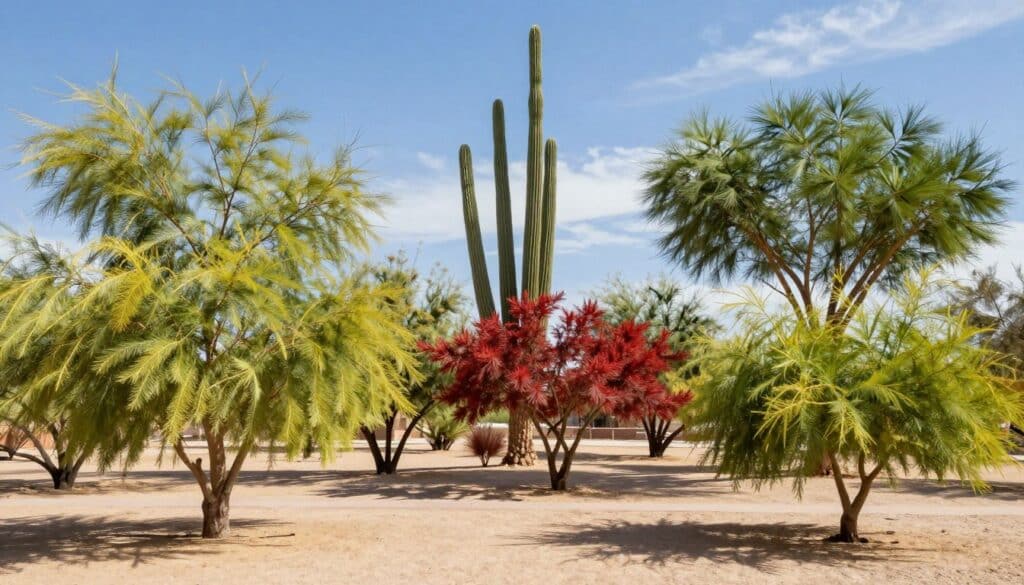
Tree choice depends on mature size, water access, soil, and root space. This guide helps compare options before planning a landscape in Las Vegas yards. Filtered shade suits patios, while dense canopy needs wider setbacks.
Review growth rate, foliage, leaves, and fall behavior together. The best trees for hot yards also need proper placement.
| Species and height | Growth | Water and habit | Canopy | Placement note |
|---|---|---|---|---|
| Chilean Mesquite, 20–30 ft | Moderate | Very low; deciduous | Filtered | Allow root spread |
| Desert Willow, 15–30 ft | Moderate | Low; deciduous | Light | Flowers spring–fall |
| Tipu Tree, 25–40 ft | Fast | Moderate; deciduous | Dense | Needs open space |
| Texas Ebony, 15–30 ft | Moderate | Low; evergreen | Dense | Use hot, protected sites |
| Southern Live Oak, 40–80 ft | Slow | Higher; evergreen | Broad | Plan long-term width |
| Palo Verde, 15–30 ft | Moderate | Very low; deciduous | Filtered | Blue Palo Verde has thorns |
| Chinese Elm, 30–50 ft | Fast | Moderate; deciduous | Broad | Tolerates urban soil |
| Chaste Tree, 15–25 ft | Moderate | Moderate; deciduous | Light | Blue-lavender flower spikes |
| Southern Magnolia, 20–60 ft | Slow | Higher; evergreen | Dense | Manage irrigation closely |
| Heritage Live Oak, 40–70 ft | Slow | Higher; evergreen | Broad | Requires major mature space |
How Las Vegas Heat, Soil, and Water Shape Tree Selection
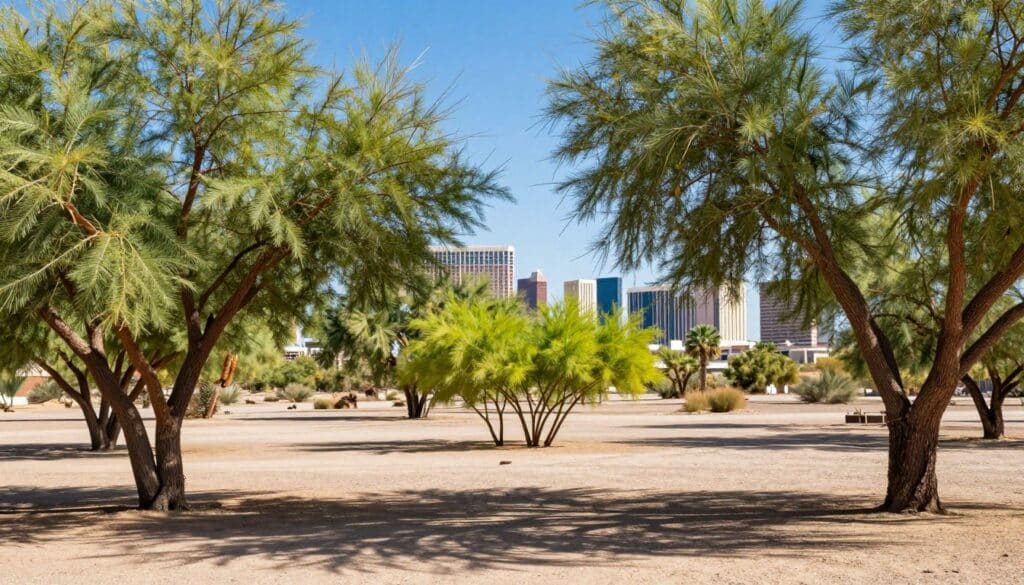
Site conditions should guide each planting decision. A desert climate brings high summer temperatures, strong sun, alkaline soil, and limited water. Yard size also controls mature growth, canopy density, and root clearance.
West-facing walls need broad canopies that block long afternoon heat. North- and east-facing spaces can use lighter foliage, such as Palo Verde, without creating too much shade. Measure mature width against patios, sidewalks, utilities, pool equipment, and other structures.
Matching Canopy Density to Sun Exposure and Yard Size
A small area suits an airy species, while a large landscape can support dense cover. African Sumac and California Pepper Tree need at least 10 feet of clearance from concrete, pipes, pool equipment, and irrigation lines.
Evaluating Water Needs, Roots, and Mature Growth
Compacted soil and caliche can limit drainage and root spread. Prepare planting basins with care, then water new plants deeply about once each week. Salt leaching may need four or five times normal run-times several times yearly. The Southern Nevada Water Authority Water Smart plant list helps compare water demand.
| Site concern | Recommended response | Planning target |
|---|---|---|
| West wall heat | Use broad canopy | Block afternoon sun |
| Compact soil | Improve drainage | Support root growth |
| Utility conflicts | Increase clearance | Keep 10 feet away |
Desert-Adapted Trees for Low-Water Landscapes
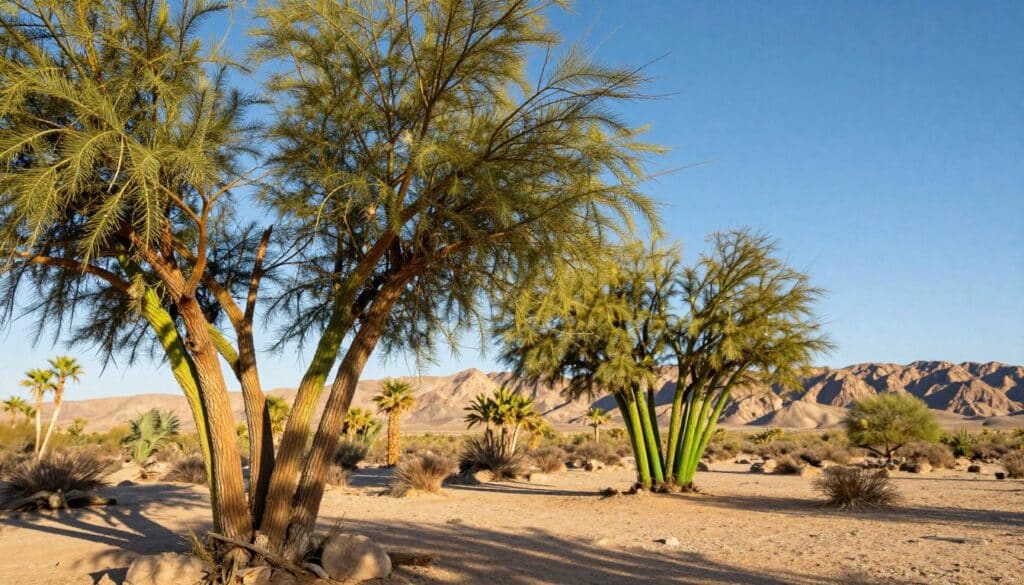
Choosing a heat-ready species begins with the canopy style, mature size, and irrigation plan. These four options suit dry Las Vegas landscapes and handle intense sun, alkaline soil, and long summer drought. Learn more about desert tree choices before planting.
Chilean Mesquite: Filtered Shade and Exceptional Drought Tolerance
Chilean Mesquite grows about 20 to 30 feet tall. Its open foliage casts light, filtered shade and suits Mojave conditions. Screwbean Mesquite may reach 20 feet high and 25 feet wide with added water. Thorny forms need distance from walks and play areas.
Desert Willow: Seasonal Flowers and an Airy Canopy
Native to Southern Nevada, Desert Willow reaches 15 to 30 feet tall and 12 to 20 feet wide. Its soft form supports flowers from spring through fall. Seasonal leaf drop keeps its canopy light.
Palo Verde: Green Bark, Yellow Flowers, and Minimal Water Use
Palo Verde grows 15 to 30 feet and uses very little water. Its green trunk makes energy even when leaves fall. Desert Museum Palo Verde is thornless, unlike many blue palo verde forms.
Chaste Tree: Lavender Blooms and Moderate Desert Performance
Chaste Tree reaches 15 to 25 feet. Blue-to-lavender flower spikes measure 3 to 10 inches. Moderate watering supports growth, while overwatering creates dense foliage. Deep, wide soaking also keeps African Sumac attractive.
| Species | Size | Key trait |
|---|---|---|
| Chilean Mesquite | 20–30 ft | Filtered canopy |
| Desert Willow | 15–30 ft | Long flower season |
| Palo Verde | 15–30 ft | Very low water use |
| Chaste Tree | 15–25 ft | Lavender blooms |
Fast-Growing Shade Trees for Larger Las Vegas Yards
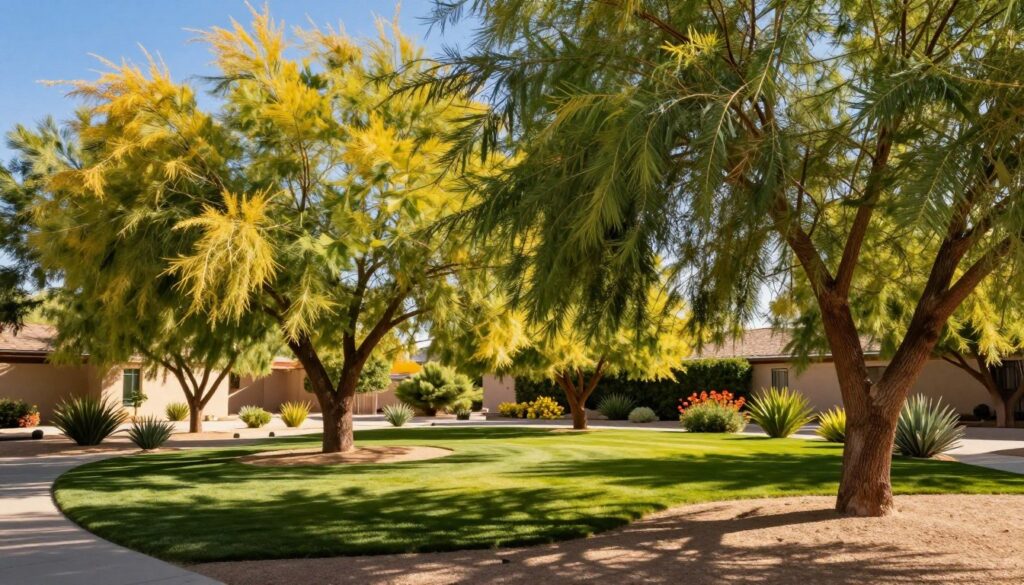
Rapid growth can transform an open yard within a few seasons. It also demands careful planning. Measure mature height, canopy spread, root space, utility lines, patios, and nearby walls before planting.
Tipu Tree: Rapid Dense Canopy for Backyard Shade
Tipu Tree reaches about 25 to 40 feet and forms a dense canopy quickly. It can provide useful cover within three to five years. However, one specimen may dominate a small property within eight years. Its yellow flowers and seasonal leaves add visual interest, but open yards suit its strong growth pattern.
Texas Ebony: Evergreen Structure for Hot, Protected Sites
Texas Ebony works well in hot, protected locations. Its evergreen foliage gives a yard structure through winter. Provide steady irrigation during establishment, yet protect it from harsh cold and exposed conditions.
Chinese Elm: Broad Shade and Urban Adaptability
Chinese Elm tolerates varied soil and urban settings. Its broad crown suits established neighborhoods with ample space. Fast growth increases pruning needs, so reserve clearance from buildings and lines. Review this shade tree guide before final landscaping plans.
Large Canopy Trees for Long-Term Shade and Curb Appeal
Large species can define a property for decades. In Las Vegas, they offer lasting comfort, strong curb appeal, and visual beauty. Their mature size also demands careful irrigation, spacing, and structural planning.
Southern Live Oak: Broad Evergreen Shade With Higher Water Needs
Southern Live Oak forms broad, evergreen cover with a stately structure. It suits irrigated properties more than minimalist desert yards. Give this tree generous root space and steady water during hot periods.
Southern Magnolia: Fragrant Flowers and Irrigation Requirements
Southern Magnolia may reach 20 to 60 feet. Its fragrant flowers, dense foliage, and glossy leaves add beauty from spring through fall. In Las Vegas, afternoon exposure and poor irrigation can cause heat stress, so monitor soil moisture closely.
Heritage Live Oak: Mature Canopy, Space Needs, and Structural Planning
Heritage Live Oak needs room to develop a wide canopy. Holly Oak offers another evergreen option, reaching roughly 40 to 70 feet with low-to-medium water use. Before landscaping, check root clearance, utilities, and future growth.
- Reserve large planting zones near buildings.
- Include long-term water costs in the landscape budget.
- Remove no more than 25% of foliage in one year.
Excessive pruning can trigger weak water sprouts and reduce structural strength.
Las Vegas Tree Survival Guide: Planting, Soil, Water, and Pollen Rules
Long-term success starts with local rules, drainage, and steady root care. In Las Vegas, alkaline soil, caliche, high summer temperatures, and monsoon winds can stress young trees before they create useful shade.
What Not to Plant Under Clark County Pollen Ordinances
Check Clark County pollen ordinances before buying plants. Rules restrict some high-pollen choices, including male mulberry and certain olive varieties. Ask the Southern Nevada Cooperative Extension Master Gardener Hotline at 702-257-5555 when local guidance is unclear.
Breaking Through Caliche and Improving Drainage
Break or remove caliche across the planting basin. This lets water drain away from roots instead of forming an oxygen-poor pocket. Improve compacted soil, then keep the basin level and wide.
Monsoon Anchoring, Deep Drip Watering, and the Ideal Planting Window
Plant from late fall through early spring, before extreme heat arrives. Use deep drip irrigation about once each week. During monsoon winds, stake the trunk temporarily and inspect its structure.
- Leach salts with four or five times normal run time several times yearly.
- Keep African Sumac and California Pepper Tree 10 feet from concrete and equipment.
- Choose Desert Museum Palo Verde when a thornless option, yellow flowers, and drought tolerance matter.
Conclusion
Choosing a tree in Las Vegas starts with the site, not a catalog. Review mature height, canopy width, soil drainage, sun exposure, root behavior, irrigation capacity, and long-term goals. This process helps each species fit the climate and your yards.
The best trees span Mesquite, Palo Verde, Desert Willow, Chaste Tree, Texas Ebony, Tipu Tree, African Sumac, Chinese Elm, Southern Live Oak, Southern Magnolia, and Heritage Live Oak. Low-water options handle drought, while larger forms need more water and room. Their leaves, foliage, and flowers add beauty and useful shade.
Planting in late fall or early spring gives roots time to settle before summer heat. Deep irrigation, proper pruning, soil preparation, and steady care support healthy growth year after year. This approach improves comfort and property appeal across Las Vegas yards.