Transform Your Turf Lawn: Best No-Grow Lawn Ideas for Low Maintenance
Did you know the average American homeowner spends about 4 hours a week on lawn care? That’s 208 hours a year! If you’re tired of mowing, watering, and fertilizing, you’re not alone. I’m here to help you switch to a low-maintenance landscape.
Switching to synthetic turf can change your life. It saves time and cuts down on water use. Plus, it eliminates the need for fertilizers and pesticides. With a low-maintenance lawn, you can have a lush, green lawn all year without the hassle.
As a homeowner, you can turn your outdoor space into a beautiful area for relaxation or fun. In this article, we’ll look at the best no-grow lawn ideas. These will help you achieve your low-maintenance landscaping dreams.
Why Synthetic Turf is the Ultimate Low-Maintenance Lawn Solution
Synthetic turf is a hassle-free choice for lawns. It looks lush without the need for upkeep. This makes it perfect for homeowners who want to cut down on lawn care.
The Hidden Costs and Hassles of Traditional Grass Lawns
Traditional grass lawns have hidden costs. They need regular mowing, watering, and fertilizing. These tasks take up a lot of time and money for equipment, water, and lawn care.
Environmental Benefits of Switching to No-Grow Alternatives
Switching to synthetic turf helps the environment. It cuts down on water use, fertilizers, and mowing. This reduces air pollution too.
Year-Round Curb Appeal Without the Work
Synthetic turf keeps your lawn looking green all year. It doesn’t need constant care. This means your home’s curb appeal stays high with little effort. It’s a low-maintenance lawn solution for busy people.
Choosing the Right Synthetic Turf for Your Yard
There are many synthetic turf options out there. Finding the perfect one for your yard takes some thought. Knowing what to look for helps you choose the right one for your needs.
Types of Synthetic Turf Available in the US Market
The US has a wide range of synthetic turf products. Each is made for different uses. Knowing these differences is key to picking the right turf for your yard.
Residential vs. Sports-Grade Options
Residential turf is for looks and durability. Sports-grade turf is for performance and safety. If you want a beautiful lawn at home, choose residential turf.
Pile Height and Density Considerations
Pile height and density matter for the look and feel of your turf. Higher pile height looks more natural. Density affects how well it lasts and performs.

Key Features to Look For in Quality Synthetic Grass
Look for UV resistance, good drainage, and a natural look in synthetic turf. Quality turf should handle weather and foot traffic well.
Key features to consider:
- UV stabilization to prevent color fading
- An efficient drainage system to prevent waterlogging
- Realistic texture and color for a natural look
Budget Considerations and Long-Term Value
Though synthetic turf costs more upfront, it’s worth it in the long run. It needs little care and lasts up to 15 years or more. This makes it a smart choice for your yard.
When planning your budget, remember to include installation, upkeep, and any repairs. This way, you’ll have a beautiful, easy-to-care-for lawn for many years.
Step-by-Step Guide: How to Install Synthetic Turf
Start by planning your synthetic turf project carefully. It’s a DIY project that needs detail and effort.
Step 1: Planning Your Installation
Good planning is key for a great synthetic turf job. You’ll need to measure well and get all your tools and materials ready.
Taking Accurate Measurements
Measure your yard well to know how much turf you need. Think about your yard’s shape and any obstacles. Accuracy is key to avoiding waste and ensuring a smooth job.
Gathering Required Tools and Materials
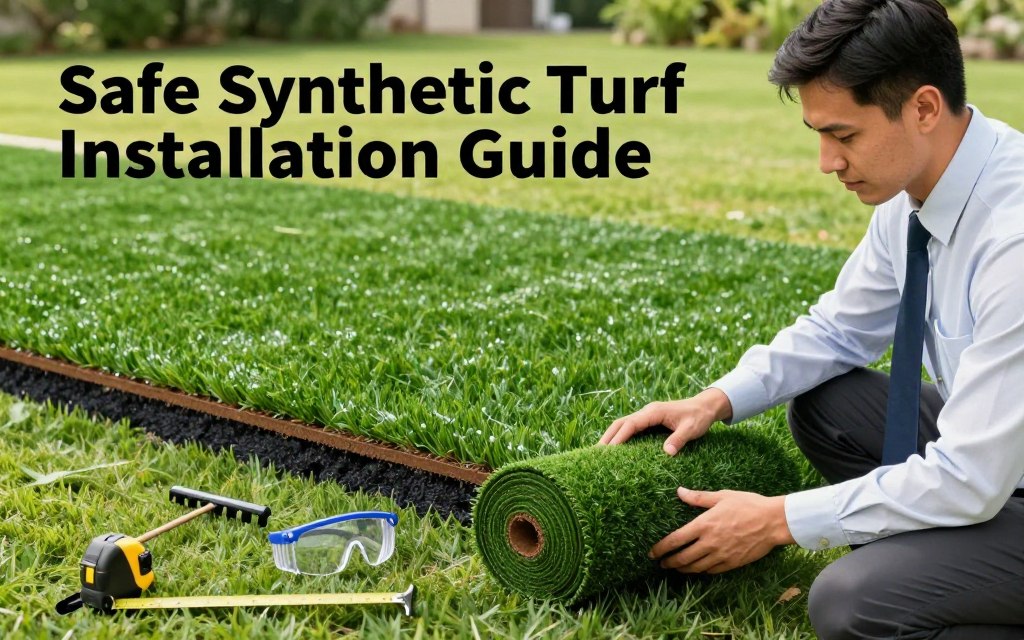
Get all your tools and materials ready before starting. You’ll need turf, underlayment, a knife, a tape measure, a shovel, and a compactor. Having everything ready makes the job easier.

Step 2: Preparing the Ground
Preparing the ground is a big step. It means removing old grass, making a base layer, and ensuring good drainage.
Removing Existing Grass and Vegetation
Clear your yard of old grass, weeds, and debris. This makes a clean start for your turf.
Creating a Proper Base Layer
Put down a layer of compacted gravel or sand. It helps with drainage and makes a solid base for your turf.
Ensuring Proper Drainage
Make sure your base layer slopes right for drainage. This stops water from pooling under your turf.
Step 3: Laying and Securing Your Synthetic Turf
With the ground ready, start laying your turf. Roll it out and cut it to fit with a knife. Use staples or nails to secure it, making sure it’s tight and even.
Step 4: Finishing Touches for a Natural Look
To look natural, brush the turf fibers up. You might also need to trim the edges.
Safety Tips and Common Installation Mistakes to Avoid
Be safe when installing turf. Wear gloves and safety glasses. Avoid mistakes like bad ground prep, poor drainage, and wrong turf placement.
By following these steps and avoiding common mistakes, you can get a beautiful, easy-to-care-for synthetic turf lawn. It will make your outdoor space better.
Maintaining Your Synthetic Turf for Maximum Longevity
To enjoy your synthetic turf for years, proper maintenance is key. A few simple steps can keep it looking great and functional. It becomes a beautiful part of your landscape.
Regular DIY Maintenance Schedule
Start with a regular DIY maintenance routine. This includes:
- Weekly brushing to keep fibers upright and prevent matting.
- Removing debris and leaves regularly to avoid buildup.
- Occasional rinsing with water to clean off dust and dirt.
By sticking to this routine, you can make your synthetic turf last longer.

When to Call a Synthetic Turf Cleaning Service
While DIY maintenance is important, sometimes you need a pro. Call a synthetic turf cleaning service for stubborn stains, pet odors, or too much debris.
Addressing Common Issues and Repairs
Issues like tears, seam separation, and infill displacement can happen. Fixing them quickly stops more damage. For small fixes, DIY kits work. But for big problems, a pro is best.
Seasonal Maintenance Considerations
Seasonal changes can impact your turf. In winter, remove snow quickly to avoid damage. In spring, check for winter damage and fix it.
Conclusion: Enjoy Your New Low-Maintenance Landscape
Switching to synthetic turf can change your home game. It makes your lawn beautiful and easy to care for. Now, you know how to turn your lawn into a stunning, low-maintenance space.
Choosing synthetic turf saves water and cuts down on lawn care costs. You’ll have a green lawn all year without the need for mowing, watering, or fertilizing. It’s time to enjoy the perks of a synthetic turf lawn.
With synthetic turf, you can make a lively outdoor area for fun, relaxation, or play. Don’t wait any longer. Look into synthetic turf installation today. Get ready to love your new, easy-to-care-for landscape for years.