Have you ever wondered why some gardens flourish while others wither under the intense desert sun? Creating a vibrant landscape in the Las Vegas area involves more than just picking pretty colors. It requires a deep understanding of how local conditions affect long-term growth. The Mojave Desert presents unique challenges like extreme heat and alkaline soil. Choosing the right plant installation services is the essential foundation for any successful landscaping project. This strategy ensures your outdoor space remains beautiful without wasting precious water or energy.
Proper selection transforms your yard into a sustainable sanctuary that boosts property value. Instead of fighting nature, you can work with it to create a thriving environment. This guide explores how to match species to microclimates for lasting beauty.
Expert knowledge helps you navigate the harsh environment with ease. You can build a stunning desert oasis that requires minimal intervention once established. This approach focuses on functionality and long-term health for your outdoor space.
Key Takeaways
- Select native species to ensure survival in extreme desert heat.
- Understand soil alkalinity to improve nutrient absorption for your garden.
- Identify microclimates on your property to place every species correctly.
- Prioritize water conservation to create a sustainable and eco-friendly yard.
- Combine aesthetics with functionality to increase your total property value.
- Lower your maintenance costs by choosing species adapted to the Mojave.
Understanding Las Vegas’s Desert Climate Challenges
Successful landscaping in the Las Vegas area starts with a deep dive into the local desert climate. Professionals evaluate these patterns before suggesting specific species. This planning ensures your yard survives the harsh Mojave environment.
Scorching summer days often exceed 110°F, while winter nights can drop below freezing. These swings create massive stress for plants not adapted to the region. High UV radiation also damages sensitive tissues during the 300 sunny days each year.
Low humidity levels below 20% accelerate moisture loss from leaves and soil. The local landscape also has alkaline soil with high pH levels. Choosing the right species at the right time prevents costly mistakes.
| Climate Factor | Condition | Impact on Plants | Best Solution |
|---|---|---|---|
| Extreme Heat | Exceeds 110°F | Tissue scorching | Heat-tolerant species |
| Low Humidity | Less than 20% | Rapid dehydration | Organic mulching |
| Soil pH | 7.5 to 8.5 | Nutrient blocks | Soil amendments |
| Annual Rainfall | 4 inches | Severe drought | Drip irrigation |
Why Proper Plant Selection Is Critical for Desert Landscaping

Selecting species that naturally belong in this climate is the first step toward a thriving garden. Professional landscape design services use native species to create layouts that are low-maintenance and climate-friendly. Proper plant selection considers environmental adaptation and aesthetic goals to achieve successful outcomes.
Choosing inappropriate species leads to constant struggles with high watering demands and pest problems. This often results in plant death, wasting both your money and effort. Poor selection also causes high water bills and frequent replacement costs.
Well-adapted species require 50-75% less irrigation than non-native alternatives, aiding water conservation. This ensures your property maintains visual appeal with minimal intervention. Investing in smart landscaping reduces your environmental footprint while creating a resilient outdoor space.
| Factor | Native Species | Non-Native Species |
|---|---|---|
| Water Needs | Extremely low | High frequency |
| Pest Resistance | Naturally high | Often susceptible |
| Wildlife Value | Supports local birds | Minimal impact |
Correct choices support the local ecosystem by providing habitats for beneficial insects and birds. A thoughtful design approach ensures the yard matures into the intended vision over time.
Best Plant Types That Thrive in Las Vegas

Successful gardening in southern Nevada starts with picking species from three specific categories tailored for the desert. These groups provide distinct benefits for your outdoor space while keeping maintenance low. You will find that these plants require less pruning and fertilizer than traditional options.
Using the right vegetation ensures your yard survives the harsh summer sun without constant care. These selections offer natural resistance to local pests and diseases. By choosing these species, you reduce the need for chemicals and heavy watering.
A well-planned garden uses species that naturally handle extreme heat and dry air. This approach saves you time and money on monthly utility bills. You can enjoy a green environment without the stress of constant upkeep.
Selecting the right species also protects your investment. High temperatures often kill non-native vegetation that does not thrive in the Mojave. By focusing on these three types, you ensure your garden remains healthy and vibrant for many years.
Desert-Adapted Native Plants
Native plants like the creosote bush and desert marigold have evolved over thousands of years to thrive here. They provide food for local wildlife and create an authentic desert landscape. Once established, these species need very little extra water to survive and naturally resist local desert pests.
Heat-Tolerant Ornamental Varieties
Heat-tolerant ornamental varieties offer beautiful blooms and foliage throughout the year. Options like the Texas ranger, red yucca, and desert willow bridge the gap between traditional design and water efficiency. They keep your garden looking lush and attractive even during the peak of summer.
Succulents and Cacti for Low-Maintenance Beauty
Succulents and cacti, including agaves, aloes, and ice plants, add a unique architectural plant form. These species store water in their tissues, making them incredibly drought-resistant. They are perfect for rock gardens where you want year-round visual interest and texture.
| Plant Category | Primary Benefit | Care Level |
|---|---|---|
| Native Species | Wildlife Habitat | Very Low |
| Ornamentals | Aesthetic Color | Low |
| Succulents | Drought Tolerance | Minimal |
Essential Factors for Choosing the Right Plants

Achieving a vibrant garden in a harsh environment depends on several critical site-specific environmental factors. Professional designers work closely with homeowners to evaluate many variables before adding a new plant to a yard. They look at overhead obstructions, soil depth, and root restrictions to ensure long-term health. Understanding climate conditions, canopy space, and wind exposure helps prevent future growth issues and costly replacements.
Soil testing remains a vital step in the professional planning process. Using kits or laboratory analysis helps measure the acidity or alkalinity levels of your earth. This is essential because specific species thrive only in narrow pH ranges. When the pH is too high or too low, it limits the ability of roots to absorb vital nutrients. This often leads to poor growth and chronic health problems for your desert greenery.
| Site Factor | Impact on Selection | Common Solution |
|---|---|---|
| Sunlight Exposure | Determines leaf burn risk | Shade-tolerant species placement |
| Soil pH Level | Affects nutrient uptake | Sulfur or organic amendments |
| Drainage Rate | Prevents root rot | Adding gravel or sand mix |
| Microclimates | Increases heat intensity | Selecting high heat-rated varieties |
Evaluating Sunlight Exposure and Heat Tolerance
Assess sunlight levels across your entire property before selecting any species. Las Vegas yards often have intense full-sun spots but also shaded areas near tall walls or existing trees. You must consider reflected heat from hardscaping and windows. These microclimates stress greenery even if the species generally tolerates high temperatures.
Understanding Soil Composition and pH Requirements
Local soils are typically alkaline, which directly impacts nutrient availability for many varieties. Some species require specific soil amendments to access minerals like iron and manganese. Evaluating the texture and existing nutrient levels within your landscape ensures successful establishment. Proper preparation prevents stunted growth and common mineral deficiencies.
Assessing Water Needs and Drainage Capabilities
Group your greenery by matching individual water needs to specific irrigation zones. This approach improves efficiency and prevents over-watering. Evaluate drainage to prevent root rot during intense monsoon rains. A smart landscape design maximizes aesthetic appeal while keeping maintenance requirements low and sustainable for years to come.
The Advantages of Selecting Native Plant Species

Since local species have evolved in this region for thousands of years, they are perfectly suited for the unique Nevada climate. These plants handle the intense heat and dry air of Las Vegas with ease. Because they fit the local soil, they thrive without needing heavy chemical fertilizers or constant attention.
Integrating these species into your landscape leads to massive water savings. Established native varieties often use 50-75% less irrigation than non-native options. This makes native landscaping an environmentally friendly choice that lowers your monthly utility bills and saves precious resources.
| Benefit | Native Species | Non-Native Species |
|---|---|---|
| Water Usage | Minimal (Drought Tolerant) | High (Regular Watering) |
| Pest Resistance | Natural Defenses | Often Requires Pesticides |
| Soil Needs | Thrives in Desert Soil | Requires Amendments |
These species also support local birds and pollinators like desert bees and butterflies. Their natural resilience helps them survive extreme droughts or sudden cold snaps without failing. They require much less care than varieties from wetter climates that often struggle to survive in the Mojave Desert.
Creating a Cohesive Desert Landscape Design

Professional landscape design turns a simple backyard into a stunning, low-maintenance environment that fits the Nevada heat. Expert designers bring creative solutions to landscaping by using native plants and stylish features. These layouts prioritize functionality while enhancing the overall beauty of your property.
A smart layout combines aesthetics with practical use to transform your outdoor space into a sanctuary. This process improves your quality of life by extending your usable area. Thoughtful planning also considers the views from inside your home. You can position plants to frame beautiful vistas or screen out neighbors for more privacy.
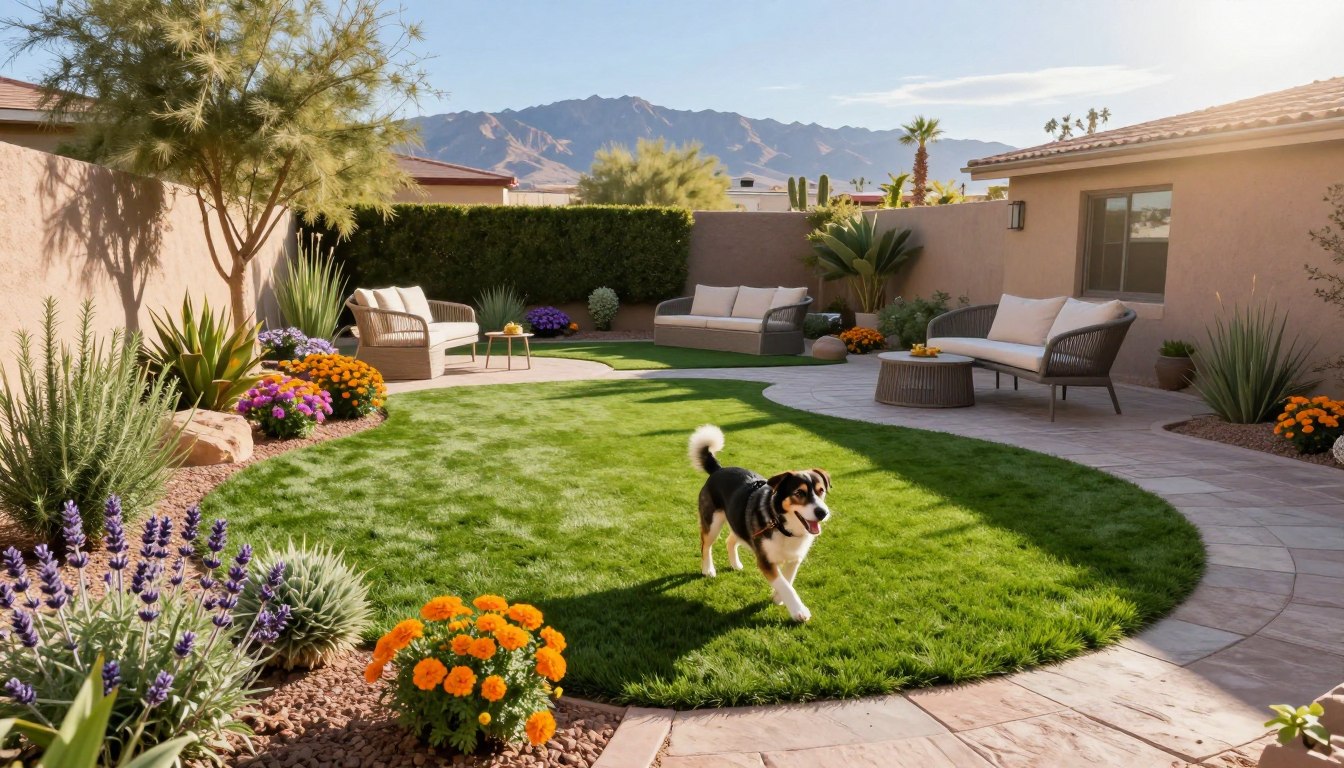
Integrating hardscape elements like stone pathways, patios, and decorative rocks helps balance the living components. This cohesive approach ensures that every element works together. A well-planned yard reflects your personal style while respecting the harsh environmental conditions of the desert.
| Design Element | Technique | Visual Result |
|---|---|---|
| Color Palette | Mix silver foliage with bright blooms | Dynamic visual depth |
| Texture | Pair soft grasses with spiky cacti | Visual complexity |
| Height | Layer low plants with tall accents | Dimension and scale |
Combining Colors, Textures, and Heights
Mix silver-gray foliage with vibrant flowering species to add depth to your design. Pair fine-textured grasses with bold succulents for engaging contrast. You should layer different heights across your space to prevent a flat, monotonous appearance in your garden.
Planning for Seasonal Interest
Select plants with staggered bloom times to provide year-round appeal. Use species with unique winter structures or seed heads to maintain beauty during colder months. This strategy ensures your outdoor living area remains inviting regardless of the season.
Professional Plant Installation Services in Las Vegas

Transforming your outdoor space requires specialized landscaping services that understand the unique soil and heat of Nevada. A professional company offers comprehensive solutions that blend design knowledge with technical skill. Using an experienced team ensures your project succeeds even in the harshest desert heat.
A local team understands the specific challenges of the Nevada climate and soil conditions. They offer free consultations to discuss your specific goals and budget. This professional business approach ensures your outdoor area stays healthy and vibrant for many years.
Expert Plant Selection and Placement
Skilled local landscape designers assess your site to find specific species that thrive in the intense sun. They look at soil composition and light levels to pick the best greenery for your home. This expert service ensures every plant has the perfect home for a long life.
Proper placement also considers how big these plants will grow over time. Professional designers balance colors and textures to create a cohesive and attractive look. Their plant installation services help your entire landscape flourish and increase your property value.
Proper Installation Techniques for Desert Conditions
Correct installation involves deep hole sizing and proper soil preparation for dry environments. A qualified work crew follows strict rules to help new plants grow strong roots quickly. Their dedicated work ensures each specimen gets a healthy start in the local ground.
Practical experience matters when handling delicate root balls and native species. High-quality work protects your investment from the drying effects of the desert sun. Following these specialized steps ensures your service meets the highest professional standards in the industry.
Irrigation and Water Management for Desert Plants

Proper watering strategies are the backbone of a successful and sustainable desert landscape. Licensed experts install eco-friendly systems that save water and keep plants healthy year-round. These setups work for both residential homes and commercial properties across the valley.
Professional installation ensures your greenery receives dependable moisture at the right time. A solid maintenance plan is vital for new plants during their establishment phase. Regular watering allows roots to grow deep, while mulching helps the soil stay cool. Deep watering techniques encourage strong growth rather than shallow, weak root systems.
Efficient water delivery directly impacts plant health and long-term costs. Professional designers group plants into zones based on their specific needs. This prevents overwatering drought-tolerant species while supporting thirstier varieties.
Drip Irrigation and Smart Watering Solutions
Drip irrigation is the best choice for this dry area. These systems deliver water directly to the roots to stop evaporation. Modern smart controllers use weather sensors to adjust schedules automatically.
Regular emitter cleaning and seasonal adjustments keep the irrigation running well. Constant leak detection prevents waste and protects your soil. Professional management ensures your equipment lasts for many years.
Common Mistakes When Choosing Plants for Las Vegas
Homeowners and property managers often face frustration when landscaping fails due to preventable errors. These mistakes often lead to wasted money and dead greenery. One major issue involves picking plants based on aesthetic appeal without researching specific heat tolerance.
Ignoring the mature size of a species often results in a crowded landscape later. This can block a window or a walking space on your property. Furthermore, your garden design must account for soil health before you begin.
Planting in heavy caliche without proper preparation inhibits root growth and limits access to vital nutrients. Mixing high-water and low-water species also creates significant irrigation stress for the entire garden.
No matter how well you water, timing is key for new installations. Avoid planting during the harsh summer heat when transplant shock is at its highest point.
| Common Mistake | Negative Impact | Recommended Solution |
|---|---|---|
| Ignoring Mature Size | Overcrowded garden beds | Research full-grown dimensions |
| Bad Soil Preparation | Inhibited root development | Amend the native caliche soil |
| Summer Planting | Extreme transplant shock | Install during cooler months |
| Poor Hydrozoning | Inconsistent watering levels | Group species by water needs |
Ongoing Maintenance Requirements and Professional Care

Choosing the right plants is just the first step toward a beautiful outdoor space. Ongoing maintenance is essential to keep your landscape looking its best in the desert heat. Even hardy desert plants require routine care to maintain their health and long-term vitality.
Basic maintenance involves periodic pruning to remove dead growth and maintain proper shape. You must also monitor your garden for emerging pests or seasonal debris. A dedicated team uses their experience to catch these issues before they become expensive problems.
Professional landscaping services provide the consistent care your property needs to thrive. This expert service ensures your landscaping stays vibrant and healthy for many years. Staff members stay updated on the best horticultural practices to protect your yard.
Irrigation systems also need seasonal adjustments to account for changing temperatures. An expert team offers the best maintenance for local homes and facilities. Using quality services protects your investment over the years through professional care.
Conclusion
Transforming your home or office into a vibrant desert oasis requires careful plant selection and regular maintenance. Our landscaping company understands the unique environmental factors affecting your specific outdoor space needs. Whether you manage a small office or a large business installation, our designers deliver exceptional work for every client.
We provide professional landscape design services that significantly improve your outdoor living area for many years. Our team handles every job with total precision, including proper soil preparation and custom lighting solutions. Your commercial office building or private home deserves a functional space that thrives no matter how high summer temperatures rise.
Choosing a dedicated company makes a significant difference in customer service and overall project satisfaction. Our lighting experts ensure your office environment stays safe, secure, and bright during the evening hours. For local businesses of all sizes, we provide lasting results that enhance functional outdoor living environments for everyone.
Call us today to discuss your specific project needs and aesthetic landscaping goals. Our company is ready to start your next office renovation or specialized lighting job. We handle every complex landscaping job with care to ensure your business property looks great for many years to come.
Our years of experience help every customer receive a perfect result finished on time and within budget. Please call our experts for specialized lighting services and other professional services for local businesses throughout the surrounding area.