What can survive a 115°F summer, single-digit humidity, and soil that may turn hard just below the surface? For homeowners, the answer begins with species suited to about four inches of yearly rain, USDA Zones 9a–9b, and alkaline caliche that may occur within the first foot.
This guide previews 25 water-wise choices for shade, structure, flowers, focal points, groundcover, and easy maintenance. It also explains how hydrozoning, soil preparation, and drip irrigation support a resilient yard. Traditional turf can drive up irrigation bills, while thoughtful xeriscape design helps conserve water.
Seasonal watering rules and SNWA Water Smart Landscapes rebates can shape a project’s budget and timing. Explore these guides on budget-friendly desert choices and native landscaping for new homeowners for added planning ideas.
Key Takeaways
- Choose species built for Mojave heat and alkaline soil.
- Group selections by sun, shade, and irrigation needs.
- Use drip lines to place water near the root zone.
- Prepare caliche carefully before planting.
- Check rebate rules and seasonal watering limits first.
Why drought tolerant plants las vegas Yards Need
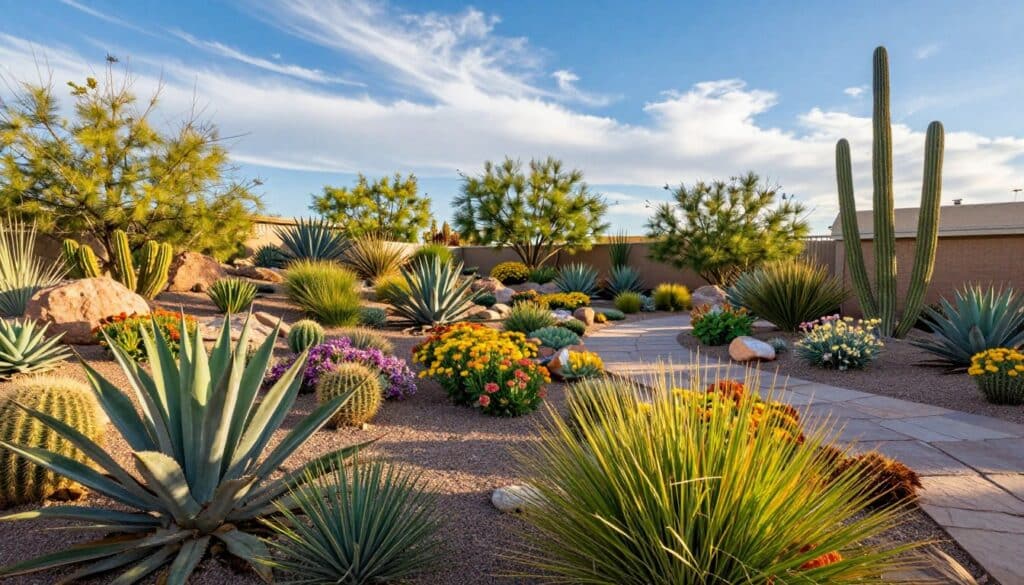
Las Vegas yards need desert-adapted species because rain is scarce, summer heat often tops 110°F, and caliche can restrict roots. The city sits in USDA Zones 9a–9b, within the Mojave Desert. SNWA rules also shape irrigation plans, including one watering day each week in winter.
Las Vegas Climate, Caliche Soil, and Water Restrictions
Annual rainfall averages just over four inches. Caliche layers often sit 6–18 inches below the surface, acting like concrete and limiting drainage. Nevada Assembly Bill 356 also requires nonfunctional grass removal in many shared and commercial areas. SNWA reports that removing ornamental grass may save up to 14 gallons per person each day.
How Desert-Adapted Species Reduce Water and Maintenance
Silver foliage, deep roots, waxy leaves, and water-storing tissues help a plant handle dry conditions. Compared with turf, a water-wise landscape can cut outdoor use by 50% or more. It also reduces mowing, pruning, replacements, and upkeep for homeowners.
| Factor | Local impact | Planning response |
|---|---|---|
| Rainfall | Just over 4 inches yearly | Choose low-water species |
| Caliche | Common at 6–18 inches | Improve drainage before planting |
| Restrictions | One winter watering day | Use efficient irrigation |
Best Drought-Tolerant Trees for Las Vegas Shade and Structure
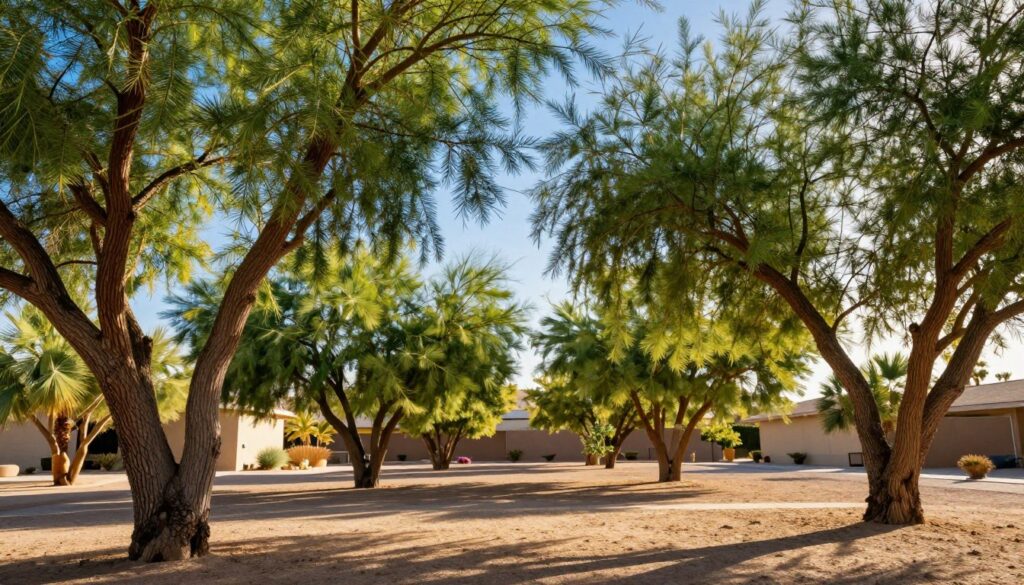
For lasting structure, choose trees that match the Mojave Desert’s heat, soil, and limited irrigation. These six species add shade, height, and seasonal interest without creating a high-maintenance landscape.
Desert Willow, Palo Verde, and Desert Museum Palo Verde
| Tree | Size and shade | Water and planting notes |
|---|---|---|
| Desert Willow | Up to 25 feet; filtered shade and pink, lavender, or white flowers | Give 10–15 gallons every 2–3 weeks in summer after establishment. Prepare drainage in caliche soil. |
| Palo Verde | Medium canopy; light, filtered shade | Green bark continues photosynthesis after leaves drop. Yellow spring flowers suit full sun. |
| Desert Museum Palo Verde | Rounded, thornless form with open shade | Near-seedless and easy to shape. Leave room for mature roots. |
Mesquite, Shoestring Acacia, and Fruitless Olive
Thornless Chilean Mesquite can reach 30–40 feet and grow 3–4 feet yearly when young. Keep it 10–15 feet from hardscape and irrigation lines. Shoestring Acacia offers evergreen foliage, wind protection, and pale yellow late-winter flowers.
Fruitless Olive handles reflected heat and needs water about every 4–6 weeks in summer. Space each tree for airflow, mature roots, and the shade pattern your yard requires.
Low-Water Shrubs for Color, Privacy, and Year-Round Texture
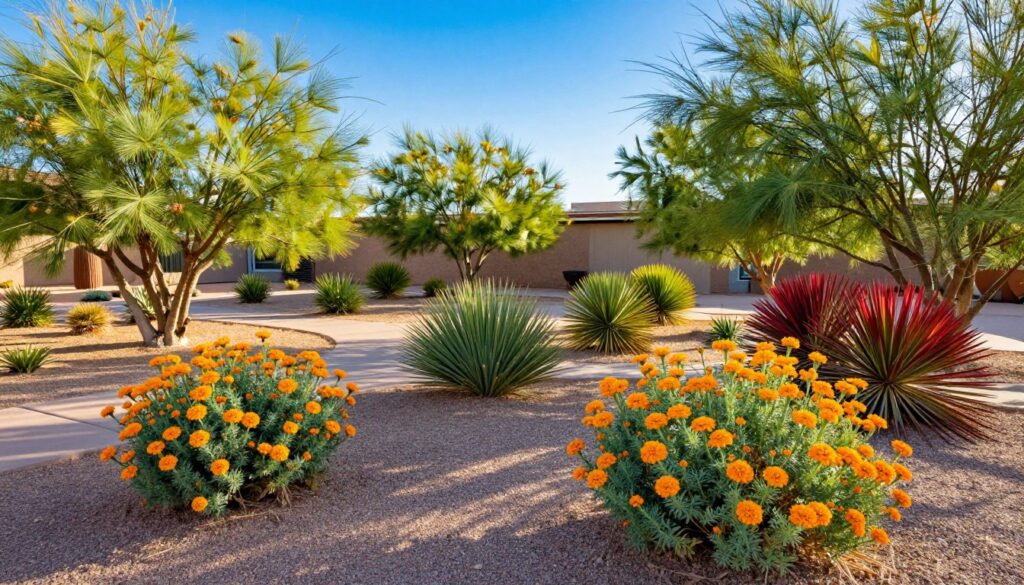
Texas Ranger, Brittlebush, Cassia, Baja Fairy Duster, Yellow Bells, Lantana, and Creosote Bush add color, screening, and texture to Las Vegas landscaping. Together, these shrubs form a useful middle layer between shade trees and groundcovers.
Texas Ranger, Brittlebush, Cassia, and Baja Fairy Duster
Texas Ranger grows 5–8 feet tall and offers silver foliage with purple-pink flowers after monsoon humidity. It creates privacy without constant irrigation. Brittlebush suits full sun, lean alkaline soil, and long dry periods. Its yellow flowers appear from late winter through spring.
Cassia reaches 4–8 feet and extends yellow color into fall and early winter. Baja Fairy Duster grows 3–5 feet, handles reflected heat near hardscapes, and draws hummingbirds with red, powder-puff blooms.
Yellow Bells, Lantana, and Creosote Bush
Yellow Bells can reach 6–10 feet, while shrub Lantana stays near 3–5 feet. Both brighten a landscape through summer. Cut them to 12–18 inches in late winter for denser regrowth. Mature Creosote Bush may survive on rainfall alone, making it a strong choice for low-maintenance desert landscaping.
- Use taller shrubs for privacy and wind screening.
- Place flowering types near paths and patios.
- Group selections by sun and irrigation needs.
Architectural Succulents and Cacti for Desert Focal Points
Bold forms give a Las Vegas yard structure without heavy upkeep. These drought-tolerant plants suit modern, native, and rock-based design when placed in fast-draining beds.
Agave Parryi, Desert Spoon, and Red Yucca
Agave Parryi forms a blue-gray rosette about 2 feet wide and withstands temperatures to 0°F. Mix 30% gravel into the soil, keep the crown uncovered, and prevent standing moisture around the root zone. Desert Spoon grows slowly with little maintenance. Red Yucca adds narrow foliage and coral-red flower spikes that attract hummingbirds.
Prickly Pear, Barrel Cactus, Cholla, and Aloe Vera
Prickly Pear can spread 5–6 feet and bears yellow, orange, or magenta flowers plus edible fruit. Barrel Cactus may lean south with age and produce yellow or orange blooms. Place both, along with Cholla, away from paths because spines and glochids can harm children, pets, and guests. Aloe Vera prefers east-facing beds, courtyards, or containers; intense western sun can scorch its leaves in July and August.
- Use gravel mulch rather than bark.
- Water deeply, then allow the bed to dry.
- Protect young succulents from harsh winter cold.
| Species | Best exposure | Key planning note |
|---|---|---|
| Agave Parryi | Full sun | Fast drainage and clear crown |
| Red Yucca | Sun to light shade | Vertical form and hummingbird blooms |
| Aloe Vera | Morning sun | Shield leaves from western heat |
Flowering Perennials and Groundcovers for Las Vegas Yards
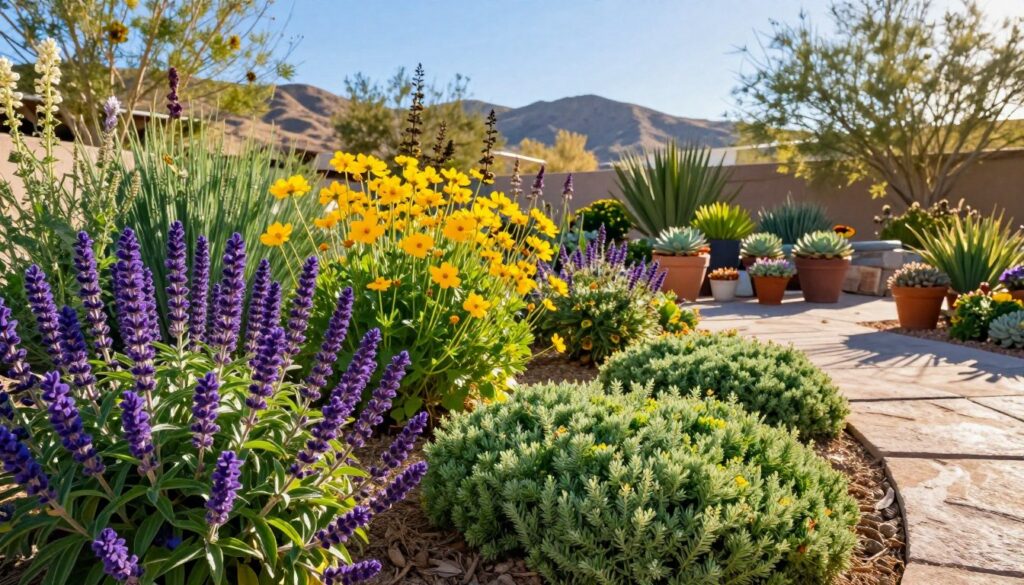
Flowering perennials and groundcovers add seasonal color while covering bare soil, slowing weeds, and reducing irrigation demand. These drought-tolerant plants also support bees, butterflies, and hummingbirds across a water-wise landscape.
Choose locations by sun, drainage, and mature spread. Leave enough room for roots and airflow, then use gravel mulch to limit evaporation.
Desert Marigold, Damianita Daisy, Globemallow, and Penstemon
Desert Marigold is a self-seeding Mojave native with yellow flowers from spring through fall. Damianita Daisy forms a 12–18-inch mound with aromatic foliage and yellow blooms. Globemallow adds silvery leaves and orange-to-apricot flowers in spring and after summer rain.
Firecracker Penstemon, or Penstemon eatonii, produces red, pink, or purple tubular flowers. Its blooms attract hummingbirds and native bees. These choices suit full sun, lean soil, and modest care.
Trailing Lantana, Ice Plant, and Creeping Rosemary
Space Trailing Lantana 3–4 feet apart; each plant can spread 4–6 feet across slopes or decomposed granite. Ice Plant needs sharp drainage and shelter from intense western exposure. Evergreen, fragrant Creeping Rosemary suits alkaline soil and raised or sloped beds.
| Choice | Best use | Spacing or site note |
|---|---|---|
| Desert Marigold | Seasonal color | Allow natural reseeding |
| Firecracker Penstemon | Pollinator border | Place in full sun |
| Trailing Lantana | Slope coverage | Space 3–4 feet apart |
| Ice Plant | Rock garden | Provide excellent drainage |
Water-Wise Desert Landscape Design Ideas
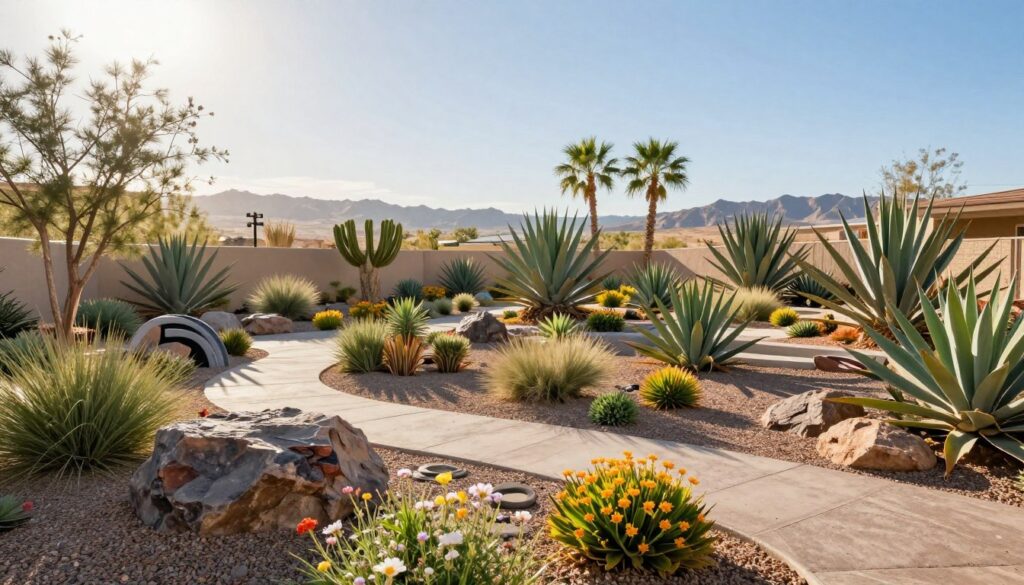
The best Las Vegas landscape design starts with zones, not random placement. Match each area to sun, shade, soil, mature size, and irrigation needs. This approach saves water and creates a cleaner, easier-to-manage yard.
Hydrozoning Plants by Sun, Water, and Space
- Place Lantana and Penstemon together on one drip valve.
- Give Creosote, Cholla, and Barrel Cactus a separate low-use valve.
- Keep trees near areas that benefit from afternoon shade.
- Check emitters each season to prevent runoff and excess moisture.
Combining Rock Gardens, Gravel, Mulch, and Hardscapes
A rock garden can combine boulders, gravel, succulents, and spaced accents. Add 2–3 inches of rock or decomposed granite mulch to slow evaporation, moderate heat, and limit weeds. Keep mulch away from stems and crowns.
| Feature | Typical cost | Best use |
|---|---|---|
| Drip irrigation | $1.50–$4.50/sq. ft. | Efficient watering |
| Rock garden | $400–$1,000 | Focal area |
| Patio | $2,000–$6,000 | Outdoor living |
| Artificial turf | $5–$19/sq. ft. | Low-care recreation space |
Hardscapes reduce daily irrigation demand. Before converting turf, review SNWA Water Smart Landscapes rebate rules and request current eligibility details.
How to Prepare Las Vegas Soil and Plant for Long-Term Success
Good drainage, careful caliche removal, and smart timing help a new landscape thrive. In Las Vegas, October through November offers the best planting window. February through March is the next-best choice before summer heat arrives.
Breaking Through Caliche and Improving Drainage
- Probe the site to find hardpan, which often begins 6–18 inches below the surface.
- Dig a hole two to three times wider than the root ball.
- Break cement-hard caliche beneath the hole so roots can move through the site.
- Use light amendment only. Heavy organic material can hold excess water around desert roots.
Drainage matters more than rich soil for many species. Standing water can damage roots faster than dry conditions. Keep rock mulch away from the stem, and connect new beds to drip irrigation.
Choosing the Best Planting Season and Spacing
Allow room for mature canopy width, lateral roots, airflow, and nearby hardscape. New plants need regular water through the first one or two summers. After root establishment, adjust the schedule to local conditions.
| Planning factor | Recommended measure | Reason |
|---|---|---|
| Caliche depth | Check 6–18 inches down | Find hardpan early |
| Hole width | 2–3 times the root ball | Support root growth |
| Best timing | October–November | Allow cool-season establishment |
| Backup timing | February–March | Plant before peak heat |
Drip Irrigation, Seasonal Watering, and Ongoing Plant Care
Established desert plants need deep, infrequent irrigation, not shallow daily watering. Longer cycles encourage roots to move into cooler, steadier soil. This pattern also limits surface moisture and helps protect the root zone.
Deep Cycles for Stronger Growth
During summer, established trees, shrubs, and perennials often need water every two to four weeks. Adjust the schedule for soil, exposure, and species. New installations need regular water for the first two to three weeks, then a sharp reduction. Avoid July planting when possible; August heat can cause early failure.
From October through February, reduce irrigation by 50% to 75%. Many cacti and succulents need little or no winter water. Drip lines can cut use by about 30% to 60% compared with sprinklers.
Pruning and Care Checks
- Inspect emitters and controllers each season.
- Keep mulch away from stems and check drainage.
- Remove weeds before they compete for moisture.
- Cut back Lantana and Yellow Bells in late winter.
- Do not reshape trees or remove healthy leaves without reason.
Wilting can signal overwatering when roots begin to rot. In Las Vegas landscaping, correct timing and steady care support a healthier landscape year-round.
Conclusion
A successful desert yard starts with fit, not fashion. Palo Verde, Desert Willow, Texas Ranger, Red Yucca, Agave, succulents, and other drought-ready choices add shade, flowers, texture, and structure to Las Vegas yards.
A smart design uses hydrozones, prepared caliche, drip lines, rock, and mulch. October through November suits new installation, with early spring as the next option. Established plants still need care, yet their water use can remain far below grass.
- Do they need water? Yes. Deep, spaced cycles support roots; reduce irrigation in winter.
- Can SNWA rebates help? Possibly. Check current rules before converting eligible turf.
- What should homeowners avoid? Large grass areas, poor drainage, and species unsuited to the site.
Choose each selection for sun, mature size, drainage, flowers, and upkeep. These choices create resilient landscapes with lower demand and lasting appeal.