Quick answer: Las Vegas yards become safer for dogs when they pair drought tolerant plants safe for dogs with shade, fresh water, and cool, paw-friendly surfaces. A balanced layout also supports play, rest, sniffing, and easy cleanup during Southern Nevada’s heat.
What if a beautiful desert yard could protect paws without giving up color or comfort? About 66% of American households own a pet, so smart outdoor design matters across the United States.
This practical list covers plant, turf, and hardscape choices for a dog-friendly garden. It considers chewing, digging, running, hydration, heat, and rest—not appearance alone.
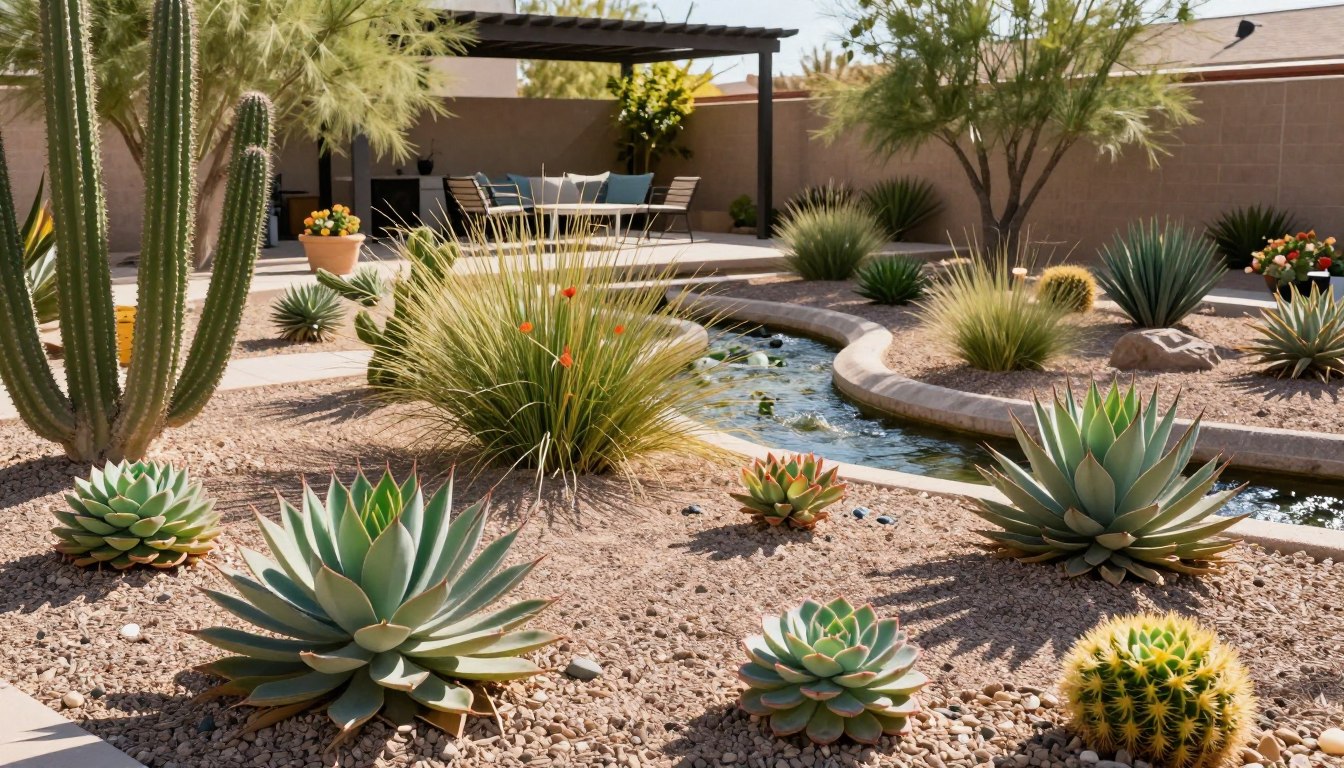
Artificial turf, rounded stone, and a firm draining base can create cleaner zones. Shade from a tree, patio cover, or umbrella helps keep resting areas cooler. A fence-line path can also reduce wear on the main play space.
Common names can cause confusion. Check each plant by its botanical name in the ASPCA searchable database. Brian Collins, DVM, an extension veterinarian at Cornell University’s Richard P. Riney Canine Health Center, offers trusted veterinary context. Review these choices, then explore this guide to Las Vegas pet landscaping.
Key Takeaways
- Combine shade, water, turf, and rounded stone.
- Check every plant against the ASPCA database.
- Use mid-tone golds and tans in sunny areas.
- Rinse turf and stone to control heat and odor.
- Build zones that support play, rest, and movement.
What Makes a Las Vegas Yard Safe and Comfortable for Dogs?
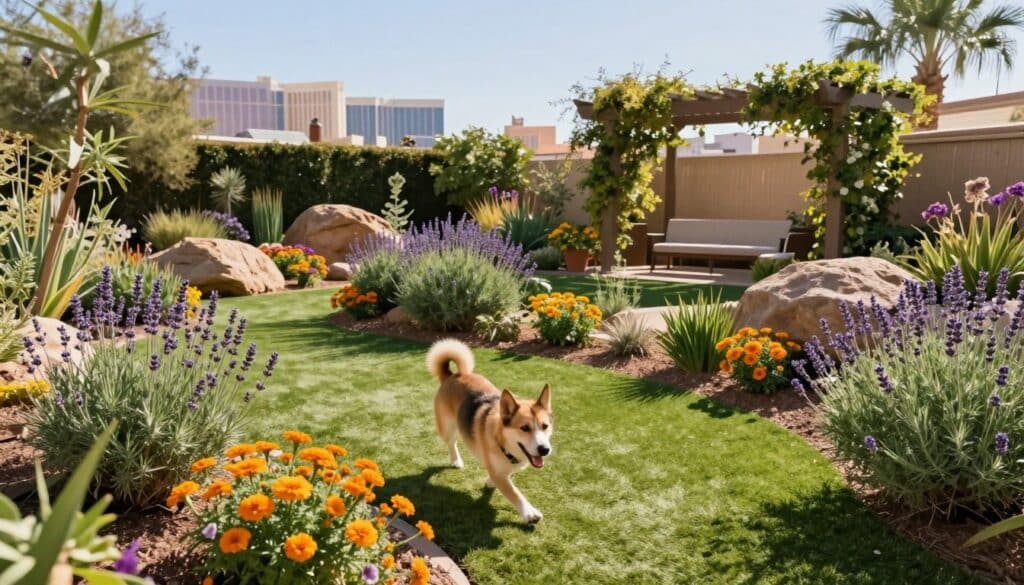
A Las Vegas yard works best when each zone has a clear job. Heat, low rainfall, paw traffic, and sudden weather shifts all shape the layout.
Quick Answer: Combine Pet-Safe Plants, Shade, Water and Cool Ground Surfaces
Use non-toxic plants, a sturdy fence, clear paths, clean water, and cool resting areas. Keep each plant away from busy routes, and add dry shelter where dogs can retreat from sun or wind.
How Las Vegas Heat, Drought and Paw Traffic Shape Yard Design
Good soil drainage and efficient irrigation reduce mud and wasted water. Young trees may need several years to create useful shade, so pair oaks, lindens, dogwoods, pines, arborvitae, or hemlocks with a pergola or umbrella.
Brian Collins, DVM, notes that dogs rely heavily on scent. Add sniffing spots, aromatic plants, varied routes, and open space. Sightlines let pets watch birds without roaming. Weather-rated fencing and a dry shelter add another layer of control.
Plan separate areas: running, resting, digging, and exploring. This garden design lowers wear while giving dogs choice and daily enrichment.
| Zone | Useful feature | Main benefit |
|---|---|---|
| Rest | Shade and dry shelter | Relief from heat and wind |
| Activity | Clear paths and cool ground | Comfortable movement |
| Enrichment | Sniffing spots and bird views | Mental stimulation |
Drought Tolerant Plants Safe for Dogs to Grow in Las Vegas
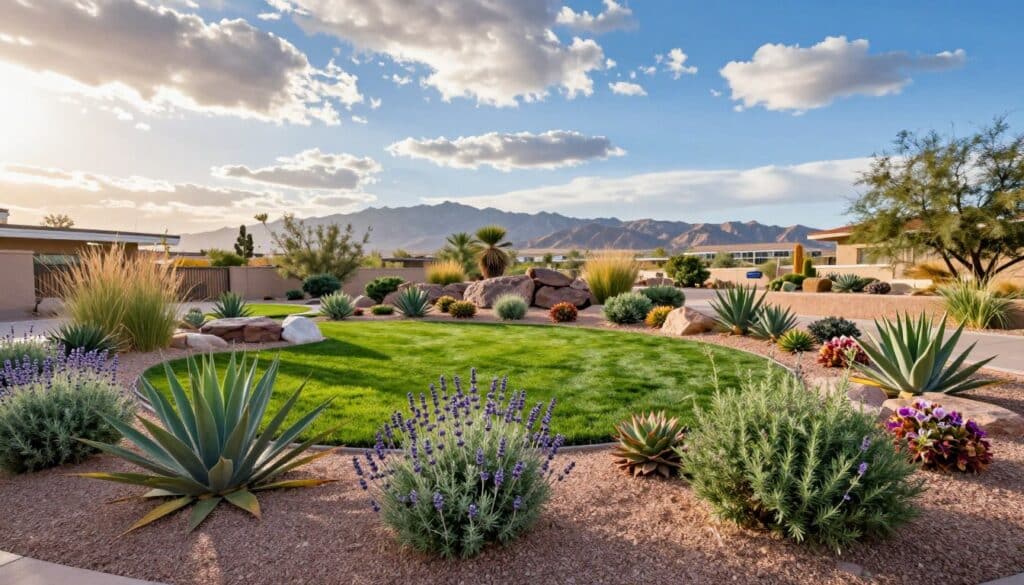
Choose garden species by sunlight, drainage, mature size, and pet safety. Confirm each plant with the ASPCA database, since common names can mislead. Young plants also need supervision around digging and chewing.
Sun-Loving Flowers and Perennials for Color
- Marigolds need about six hours of sun. Snapdragons, zinnias, blanketflowers, coneflowers, black-eyed Susans, daylilies, phlox, and pansies add seasonal color.
- Sunflowers range from dwarf forms to 10 feet tall. Their height can create light shade, but remove fallen seeds.
Low-Water Herbs, Foliage and Shrubs for Dog-Friendly Gardens
Lavender (Lavandula angustifolia) is non-toxic to cats and dogs and suits USDA Zones 5–9. Rosemary (Salvia rosmarinus) suits Zones 7–11, needs sharp drainage, and stays evergreen. Coral bells offer colorful foliage in Zones 4–9; divide them every three or four years. Creeping thyme and hens-and-chicks work well in containers or edges.
Pet-Safe Trees and Shade Plants for Outdoor Comfort
Consider camellia, serviceberry, redbud, lilac, crape myrtle, saucer magnolia, or Rose of Sharon. Camellia suits Zones 7–10. Keep low branches, fruit pits, and seeds managed.
Popular Plants to Avoid in a Dog-Friendly Garden
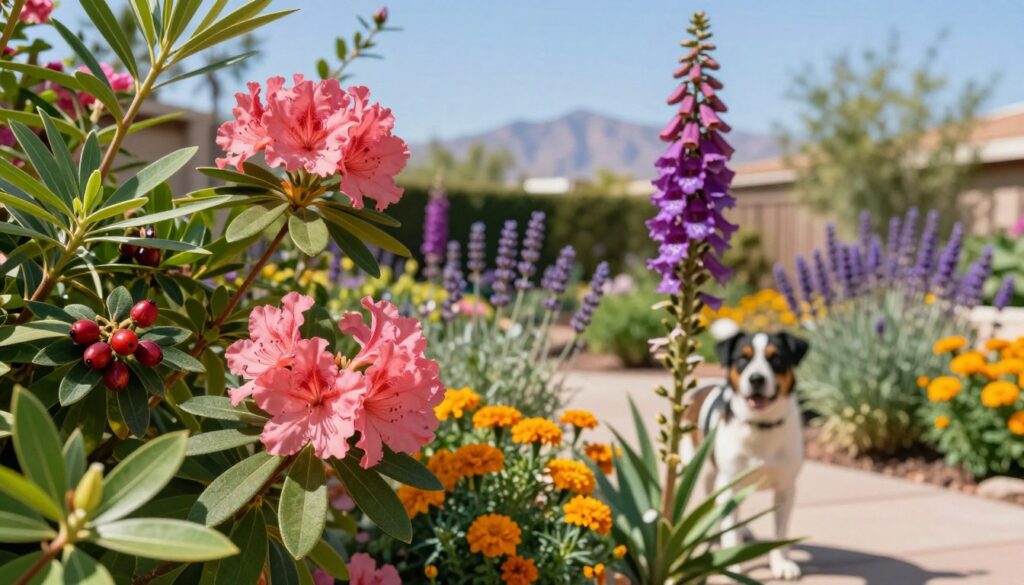
Some attractive garden choices can cause severe illness after a curious pet chews leaves, bulbs, or seeds. Remove or isolate risky species before outdoor time without supervision.
Toxic Shrubs, Flowers and Bulbs That Can Harm Dogs
Sago palm (Cycas revoluta) may cause liver failure, even after a small bite. Yew, oleander, rhododendron, and azaleas also carry serious risk. Lily-of-the-valley may trigger vomiting, weakness, slow heart rate, seizures, or collapse.
Foxglove, bluebells, tulip bulbs, and daffodil bulbs can cause serious illness. Onions are poisonous, while potato foliage and green tomatoes contain harmful compounds. Ripe tomato flesh is generally acceptable in moderation. Risk depends on species, dose, plant parts, and the animal’s size.
| Category | Examples | Possible signs | Best response |
|---|---|---|---|
| Shrubs | Oleander, azaleas | Weakness, heart changes | Isolate; call a veterinarian |
| Bulbs | Tulips, daffodils | Vomiting, tremors | Save a sample; seek care |
| Food crops | Onions, potato leaves | Digestive upset, weakness | Do not wait for signs |
Photograph an unknown plant and contact a veterinarian, advises Brian Collins, DVM. Call the Pet Poison Helpline at 855-764-7661. Check the current ASPCA database, since common names may describe different species.
Pet-Friendly Turf and Cool Surfaces for Las Vegas Yards
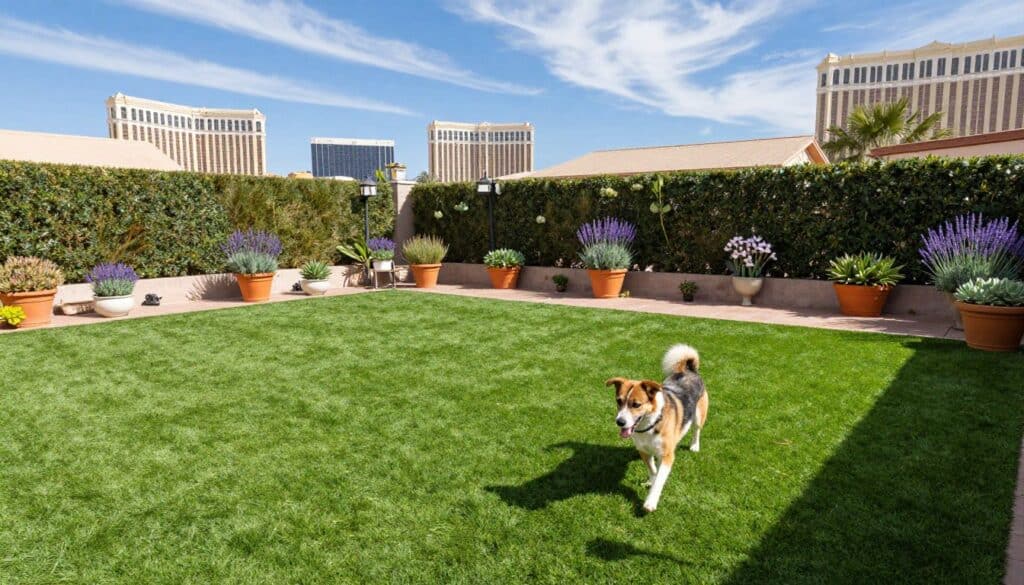
Ground texture matters as much as plant choice in a Las Vegas yard. A surface that feels fine at dawn may burn paws by late afternoon. Check each route during summer sun, then add shade and fresh water near busy areas.
Living turf offers cooling and soft footing, but it needs regular irrigation and mowing. Low-water ground covers, sedges, thyme, hardy iceplant, phlox, and clover create softer paths with less water use. Cedar chip mulch cushions steps and limits mud. Protect young plantings and soil near trees from repeated traffic.
Grass-free designs work well with decomposed granite or flagstone. These materials drain quickly, resist wear, and create flat spots for resting. Stephen Hall recommends pairing them with an umbrella, pergola, or dog hammock. Explore these pet-friendly landscape plants to complete the garden.
Avoid sharp gravel and dark pavement. Screen stone carefully, inspect surfaces after fall storms, and refresh mulch as needed. The table below compares practical choices for active and quiet zones.
| Surface | Water and cooling | Care and drainage | Best use |
|---|---|---|---|
| Living turf or ground covers | Medium to high water; cool footing | Needs mowing or trimming; drains well | Running and bathroom areas |
| Cedar mulch or sand | Low water; soft underfoot | Refresh often; sand drains quickly | Paths and digging zones |
| Decomposed granite or flagstone | Low water; shade improves comfort | Strong mud control; sweep and rake | Walkways and resting areas |
| Sharp gravel or dark pavement | Low water; heats quickly | Poor paw comfort; inspect often | Avoid in main routes |
Design Features That Support Exercise, Shade and Enrichment
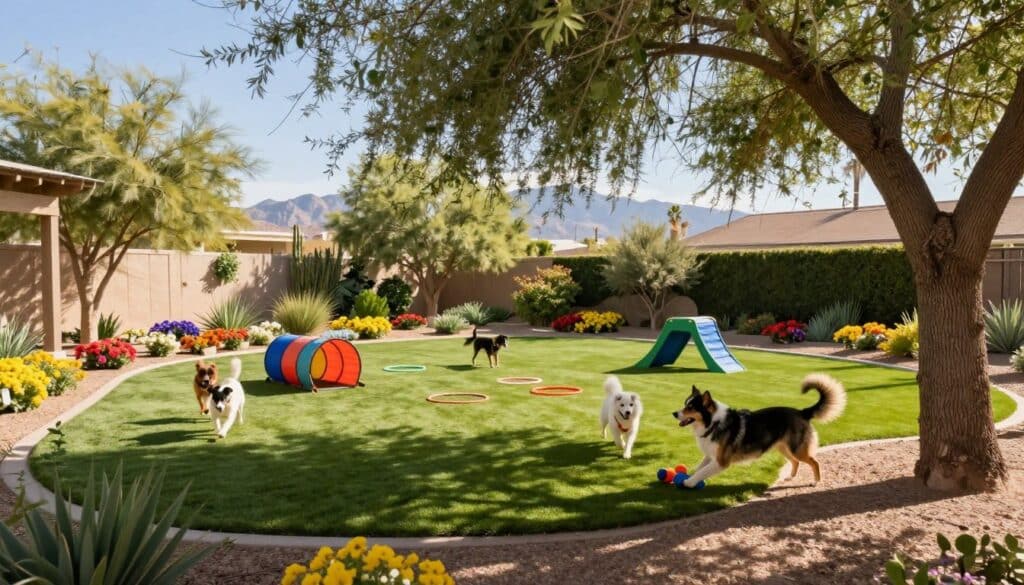
A thoughtful layout turns outdoor time into a cooler, richer routine. Blend water, shelter, movement, scent, and clear boundaries. These features also support a practical dog-friendly garden.
Fresh Water, Cooling Areas and Dry Shelter
Place a stable bowl or motion-activated fountain in shade, then clean it each day. A shallow pool offers extra relief during hot weather and stores easily in winter. A roof or patio overhang gives more reliable cover than trees during rain or wind.
| Feature | Best placement | Value |
|---|---|---|
| Fountain | Shaded route | Fresh water |
| Pool | Cool, level surface | Paw and body relief |
| Roofed nook | Near the house | Dry shelter |
Fencing, Digging Spots and Safe Paths
- Use a secure fencing system and smooth paths around the yard.
- Set aside sand mixed with soil as a digging zone.
- Add low mounds, viewing spots, and bird feeders for movement and interest.
Sniffing gives dogs mental exercise, says Brian Collins, DVM. Muhlenbergia, Festuca, rosemary, and movable pots can shape scent routes. Keep thorny stems and sticky seeds away from cats and dogs. See this low-maintenance landscape design guide for more layout ideas.
Conclusion
Las Vegas homeowners can create a healthier yard through balance, not one feature alone. Choose plants safe for dogs, then add cool turf, rounded stone, shade, fresh water, and secure fencing. Lavender, rosemary, pansies, coral bells, and other perennials bring seasonal color to homes with cats and dogs.
Inspect every bulb, seed, mulch product, and soil amendment. Sun exposure, summer heat, and fall debris can increase risk when pets chew or dig. Confirm each species through the ASPCA database. After suspected ingestion, contact a professional.
A useful layout includes blooming color, shaded rest, clear paths, a digging area, dry shelter, and scent routes. Watch how each dog uses the yard, then adjust surfaces, water, and planting locations over the years. This simple way keeps comfort, supervision, and enrichment at the center.