
Could artificial turf installation cost Las Vegas yards more than you expect, and still pay off for a busy household? Artificial turf installed in Las Vegas typically costs about $8 to $15 per square foot. For a 700-square-foot backyard, that comes to roughly $5,600 to $10,500. That range is for the installed job, not the turf alone.
This guide is for busy households that want a yard that needs little upkeep and fewer water bills. It covers the price drivers, turf grades, add-ons, heat and water trade-offs, rebate rules, installer questions and upkeep. Set a budget on the installed total, not on the turf price per square foot, because the total is what you will pay.
Key Takeaways
- Installed artificial turf in Las Vegas typically costs $8 to $15 per square foot.
- A 700-square-foot yard usually lands between $5,600 and $10,500 installed.
- Turf material alone runs about $1.50 to $8 per square foot, depending on grade.
- Caliche soil, the turf grade and site access move the total the most.
- Turf can save water, but it adds surface heat and possible runoff.
- Compare itemized bids on the same square footage, not the turf price alone.
Artificial Turf Installation Cost Las Vegas Homeowners Should Expect
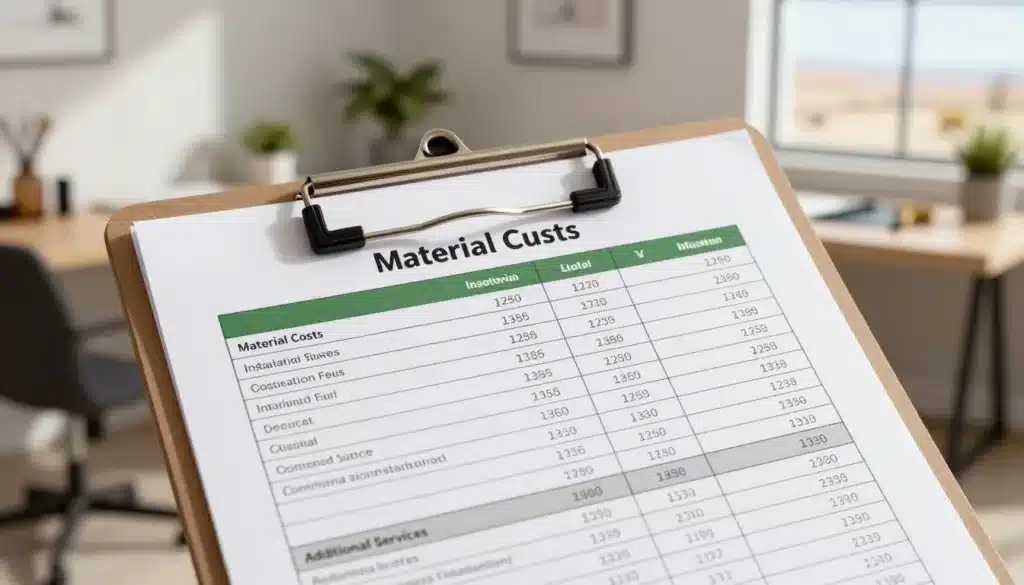
The average installed price is about $8 to $15 per square foot, and that figure is the one to compare bids against. Turf material alone runs about $1.50 to $8 per square foot, depending on the grade you pick. Labor, base prep, drainage and infill make up the rest of the total.
Base prep is the step that prepares the ground for the turf. In Las Vegas it often means dealing with caliche, a hard, cemented layer of calcium carbonate in desert soil. Caliche sits a few inches to a couple of feet below the surface across much of the valley and must be dug out before turf goes down.
| Component | Typical price | Unit | What it covers |
|---|---|---|---|
| Turf material (grade-dependent) | $1.50 to $8 | per square foot | The turf product itself |
| Labor | $1 to $3 | per square foot | Cutting, seaming, securing edges, spreading infill |
| Base prep | $2 to $4 | per square foot | Clearing, excavating to 3 to 4 inches, grading and a compacted crushed-rock base |
| Drainage planning | $0.50 to $1.50 | per square foot | Grading and channels for storm runoff |
| Standard infill | $0.50 to $1 | per square foot | Silica sand that holds the blades upright |
The table lines add up to a wider range than the installed total. Adding the high end of every line gives about $17.50 per square foot, so the installed range of $8 to $15 is the one to budget from. The lines show what each part costs, not what every yard will pay.
A common mistake is comparing bids that show only the material price per square foot. Those bids leave out the base layer, labor and infill, which can add several dollars per square foot. Ask every installer to show the base prep line separately, since that is the line most often missing from a low bid.
What Drives the Price Up or Down
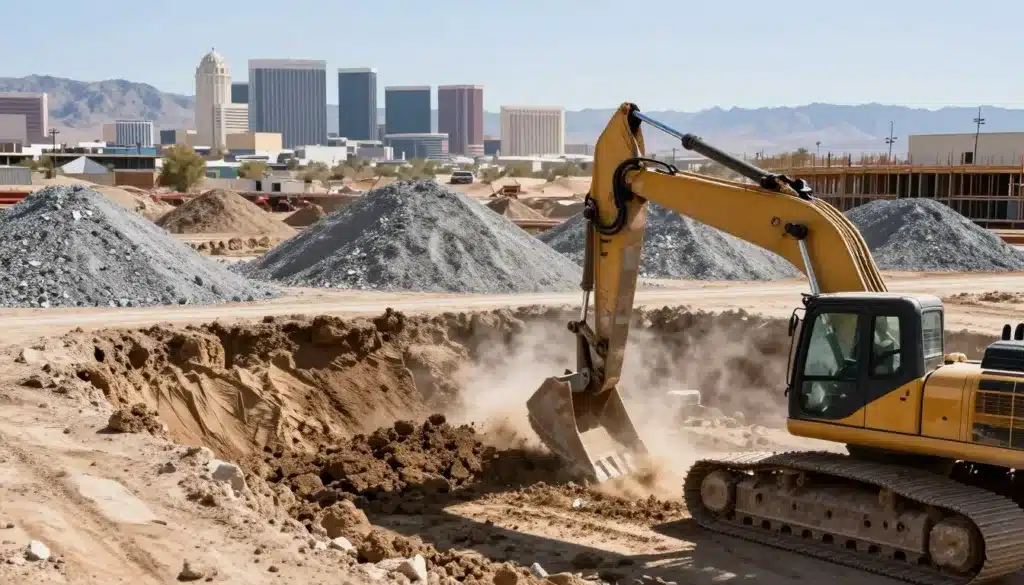
Caliche, not the turf, is the most common reason a quote rises after the site visit. A flat, clear, open yard with easy access costs the least to prepare. A yard with caliche, old sprinklers, tight gates and a slope costs more, even when it looks simple.
Base Preparation on Caliche Soil
Caliche often lies about 6 to 18 inches below the surface in parts of the Las Vegas valley. Base prep runs about $2 to $4 per square foot. That covers clearing, excavating to 3 to 4 inches, grading and compacting a crushed-rock base layer.
Heavy caliche can add about $1 to $2 per square foot for jackhammer work. Many owners assume the soil is soft because the surface looks loose. A quick check with a shovel often shows the hard layer underneath.
Yard Access and Old Grass Removal
Removing old grass and sod adds to the labor line. A yard with old sprinklers needs them capped or removed, which usually costs about $500 to $1,500. Those costs appear only when the installer sees the site.
Tight access by a narrow gate or side yard slows the crew. Materials and excavated soil may have to move by hand, which takes more time. Ask whether the quote assumes a full-size truck can reach the back of the yard.
Drainage for Monsoon Storms
Drainage planning adds about $0.50 to $1.50 per square foot. Las Vegas monsoon storms typically arrive between July and September, and they can drop a lot of rain in a short time. Water that cannot leave the yard can sit under the turf and soften the base layer.
Drainage matters most during that summer storm season. A yard that is graded poorly can hold water in low spots and form dips over time. Ask the installer to test the soil on the site visit, so that a caliche surprise does not appear on installation day.
Turf Grades Compared by Price and Use
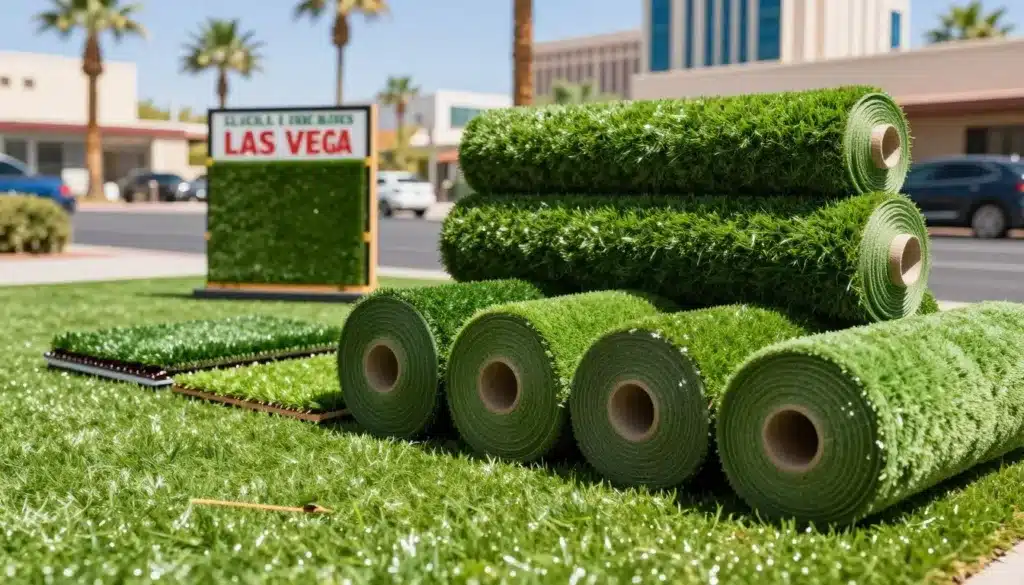
Most family yards with moderate foot traffic fit the mid-range grade, and the budget grade suits only light, low-traffic use. Mid-range turf material runs about $3 to $5 per square foot. Budget turf runs about $1.50 to $2.50, and premium turf runs about $5 to $8.
| Grade | Material only, per square foot | Best fit | What moves its price |
|---|---|---|---|
| Budget | $1.50 to $2.50 | Small or low-traffic areas | Lower face weight, simpler backing |
| Mid-range | $3 to $5 | Most family yards with moderate use | Face weight around 60 to 70 ounces |
| Premium | $5 to $8 | Heavy use, play areas, cooling features | 70 to 80+ ounces, cooling or dual-color blades |
| Pet-specific | $3.50 to $6 | Dog areas needing odor control | Antimicrobial backing, denser pile |
| Putting green | $4 to $7 | Golf practice areas | Pile and backing built for putting |
A face weight of about 60 ounces is a common floor for yards with moderate foot traffic. Pet zones and play areas often use 70 to 80 ounces, because the pile has to take more wear. The buyer who picks the lowest grade for a busy family yard often replaces the turf sooner.
Backing affects drainage as much as the blade grade does. Dual-layer polyurethane backing drains about 30 to 60 inches per hour, while single-layer polypropylene backing drains less. Ask for the face weight in ounces per square yard on the spec sheet, since the grade name alone does not tell you the density.
Infill, Edging and Other Add-Ons
Infill is the one add-on that every installation needs, and it sits on top of the turf, not under it. Standard silica infill adds about $0.50 to $1 per square foot installed. It is a sand layer that holds the blades upright and cushions the surface.
The compacted crushed-rock base goes under the turf, and the silica sand goes on top. Some owners think the sand should go under the turf, but that layer is the base. Cooling and pet deodorizing infill cost more, so pick them only when the yard needs them.
| Add-on | Typical price | Unit | What it does |
|---|---|---|---|
| Standard silica infill | $0.50 to $1 | per square foot | Holds blades upright and cushions the surface |
| Cooling infill | $1.50 to $3 | per square foot | Lowers surface temperature on hot days |
| Pet deodorizing infill | $1 to $2 | per square foot | Reduces odor in pet areas |
| Drainage tiles | $3 to $5 | per square foot | Moves water away from heavy-use zones |
| Edge restraints | $1 to $3 | per linear foot | Keeps seams and edges from lifting |
| Decorative stone border | $5 to $15 | per linear foot | Finishes the edge with stone |
A common mistake is leaving edging out of the first quote. Without edge restraints, seams can lift in soft soil, and the fix costs more later. Stone borders are optional and can be limited to the edges you see most.
Put edging and infill on the first quote as their own line, so the total you compare is complete.
Heat and Water Trade-Offs in Desert Yards
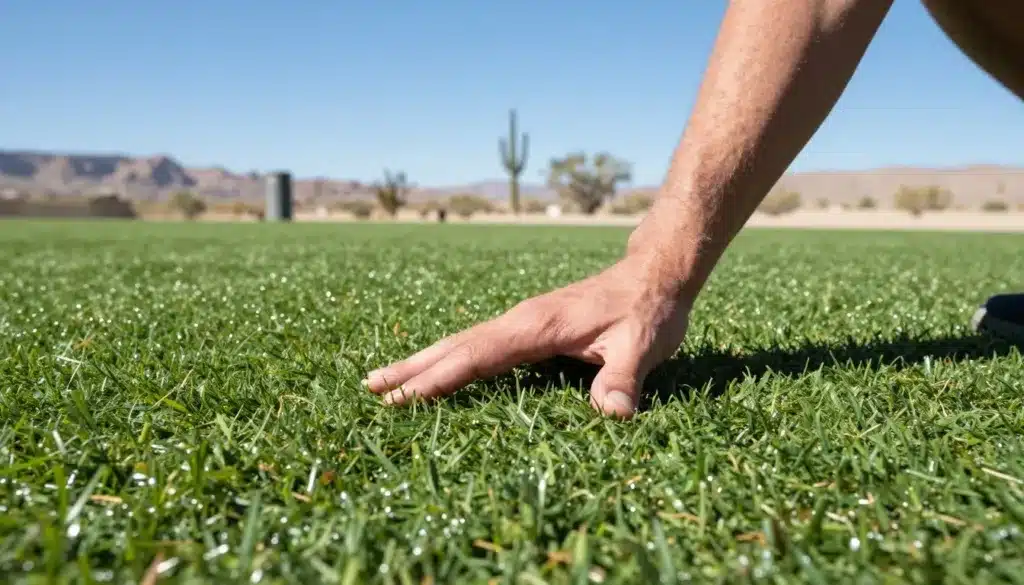
The biggest downside to artificial turf in Las Vegas is surface heat, which is measured, not theoretical. Turf can also fade over time, and it does not break down easily at the end of its life. Those trade-offs sit next to the water savings that draw many households to artificial grass instead of natural grass.
Summer Surface Temperatures
Artificial turf can reach temperatures up to 80 degrees higher than ambient air temperature. One study measured an artificial turf field at 160 degrees when the air was 87 degrees. Those numbers are why heat is the first thing to plan for.
Keep sun-exposed areas shaded with a tree, a fence or a shade structure where you can. Cooling infill is one option for the surface, but it costs more, as noted in the add-on section. Pets and children spend the most time on hot surfaces, so plan their play areas first.
Water Savings and Stormwater Runoff
An 1,800-square-foot artificial turf lawn saves about 99,000 gallons of water per year. That is a large cut for a desert yard, and it can show up as a lower water bill. The same surface also has a cost: artificial turf can increase stormwater runoff and reduce groundwater recharge.
Weigh the water savings against the runoff risk for your lot, using your current water bill as a guide. Good drainage design reduces the runoff problem, and you can read more about the benefits of synthetic turf in Las Vegas before you decide. Test the surface with the back of your hand at the hottest time of day before you choose a grade.
Nevada Water Rules and the SNWA Rebate
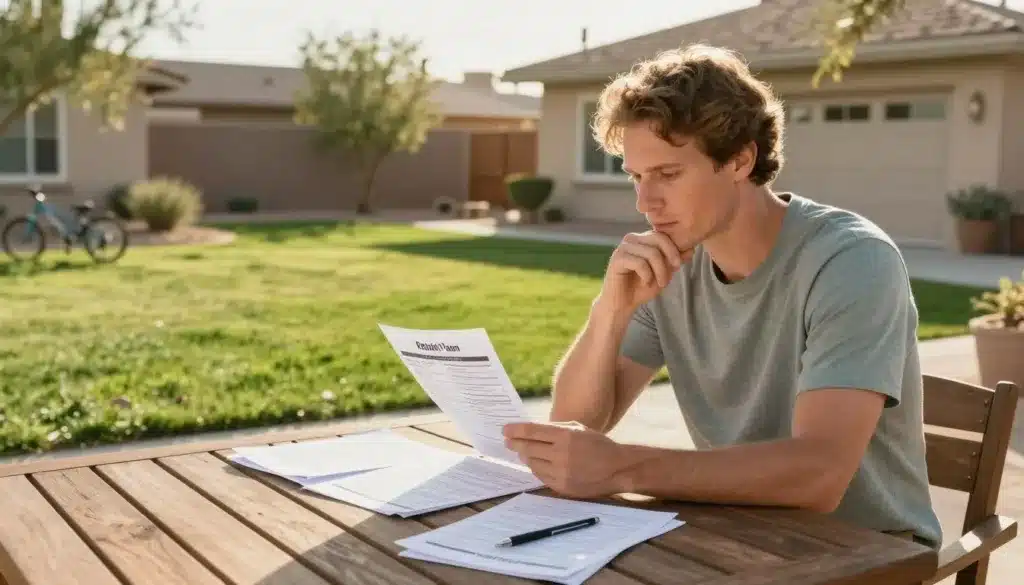
The 2027 Nevada rule does not reach the grass in a single-family yard, so the rebate is the reason to check it, not a deadline. The Southern Nevada Water Authority (SNWA) runs the rebate that homeowners can use for yard conversions. Check the rules before you replace any lawn with artificial grass.
Who the 2027 Nevada Rule Covers
The SNWA defines functional turf as irrigated grass that provides a recreational benefit. It must sit at least 10 feet from a street, on a slope below 25 percent. It also must lie outside street medians, streetscapes and front entryways.
A Nevada law taking effect in 2027 prohibits Colorado River water for nonfunctional grass. It covers commercial, multifamily, government and other covered properties. It does not apply to grass at single-family homes.
About 1,000 acres of nonfunctional turf remain at Southern Nevada residential properties, mostly in front yards. Those yards are the ones the rule’s rebate focus is meant to reach over time.
Rebate Math for a Typical Yard
The SNWA Water Smart Landscapes rebate has been listed at up to about $3 per square foot for converting grass to water-efficient landscaping. At that rate, a 1,000-square-foot conversion would come to about $3,000. Installed artificial turf for the same 1,000 square feet runs about $8,000 to $15,000.
The rebate offsets only part of the installed total, and it does not pay for installation labor. Check the current SNWA rate and the application steps before you sign a contract, so the rebate figure in your budget is current.
Questions to Ask Installers Before You Sign
A bid is only comparable when every installer shows the same line items, so start there. Turf warranties from manufacturers commonly run about 8 to 15 years. Ask each installer for the same six points before you compare prices.
- Ask for an itemized quote with material, base prep, labor, infill and accessories on separate lines.
- Ask for the turf’s face weight in ounces and its backing type.
- Ask for the turf warranty length in years and whether workmanship has its own warranty.
- Ask whether the company is licensed and insured for the work.
- Ask the manufacturer for a written statement on PFAS content.
- Ask to see a sample of the exact turf before ordering.
Signing a bid that shows only a total is a common mistake, because you cannot see what you are paying for. A warranty should cover both the turf and the workmanship, since many firms split the two. In February 2026, California regulators found that artificial turf containing PFAS met the criteria for potential exposure and potentially significant or widespread adverse impacts. They paused listing that product-chemical combination as a Priority Product while they gather manufacturer information and test products. Get the warranty terms in writing before you pay a deposit.
Keeping the Turf Looking Good Each Year
The routine is short, and it takes about the time a weekly rake would take. Owners often remove artificial grass because of surface heat, fading, odor from poor drainage, or a poor installation with visible seams or lifted edges. A simple routine helps a low maintenance yard stay that way.
- Brush or rake debris off the turf once a week when wind or pets leave it behind.
- Rinse dust, mud and pet residue off with a hose.
- Check seams and edges for loose spots every month.
- Repair small tears promptly with a matching repair kit.
- Avoid harsh solvents and sharp objects on the surface.
Quality artificial turf typically lasts well with regular cleaning and good drainage. Homeowners who skip cleaning often see flattened blades and matted spots in high-traffic areas. Repair a small tear the week you spot it, since a tear left alone spreads under foot traffic.
Ways to Lower the Installed Price
The fastest way to lower the total is to match the grade to the use, not to cut the base. Installed cost usually sits in the $8 to $15 per square foot range. Turf material ranges from about $1.50 to $8 per square foot depending on grade, so the grade is the largest lever you control.
- Choose a mid-range grade for moderate use instead of a premium grade for the whole yard.
- Ask for drainage planning as its own line, so you can see what it costs.
- Get at least three on-site estimates and compare the itemized totals.
- Ask whether the installer offers a slower season, when crews are less booked.
- Limit decorative borders to the visible edges.
Drainage planning runs about $0.50 to $1.50 per square foot, and base prep runs about $2 to $4 per square foot. Trimming base prep is not advised. Cutting it to lower a bid raises the risk of dips and standing water later, and repairs cost more than the saving.
Compare the bids on the same square footage and the same grade, or the savings are not real.
Conclusion
For a busy household, artificial turf in Las Vegas is a budget decision made on the installed total. The price of the turf product matters less than the base prep, drainage and access that come with the job.
The surface heat and runoff risk are the reasons to match the grade and shade to your yard. A yard used by pets or children needs a sturdier grade and a cooler plan than a quiet front lawn. Request three itemized on-site quotes for your square footage, with the base prep, drainage and infill lines shown. Book on-site quotes for your yard this month and compare them line by line before you choose.


